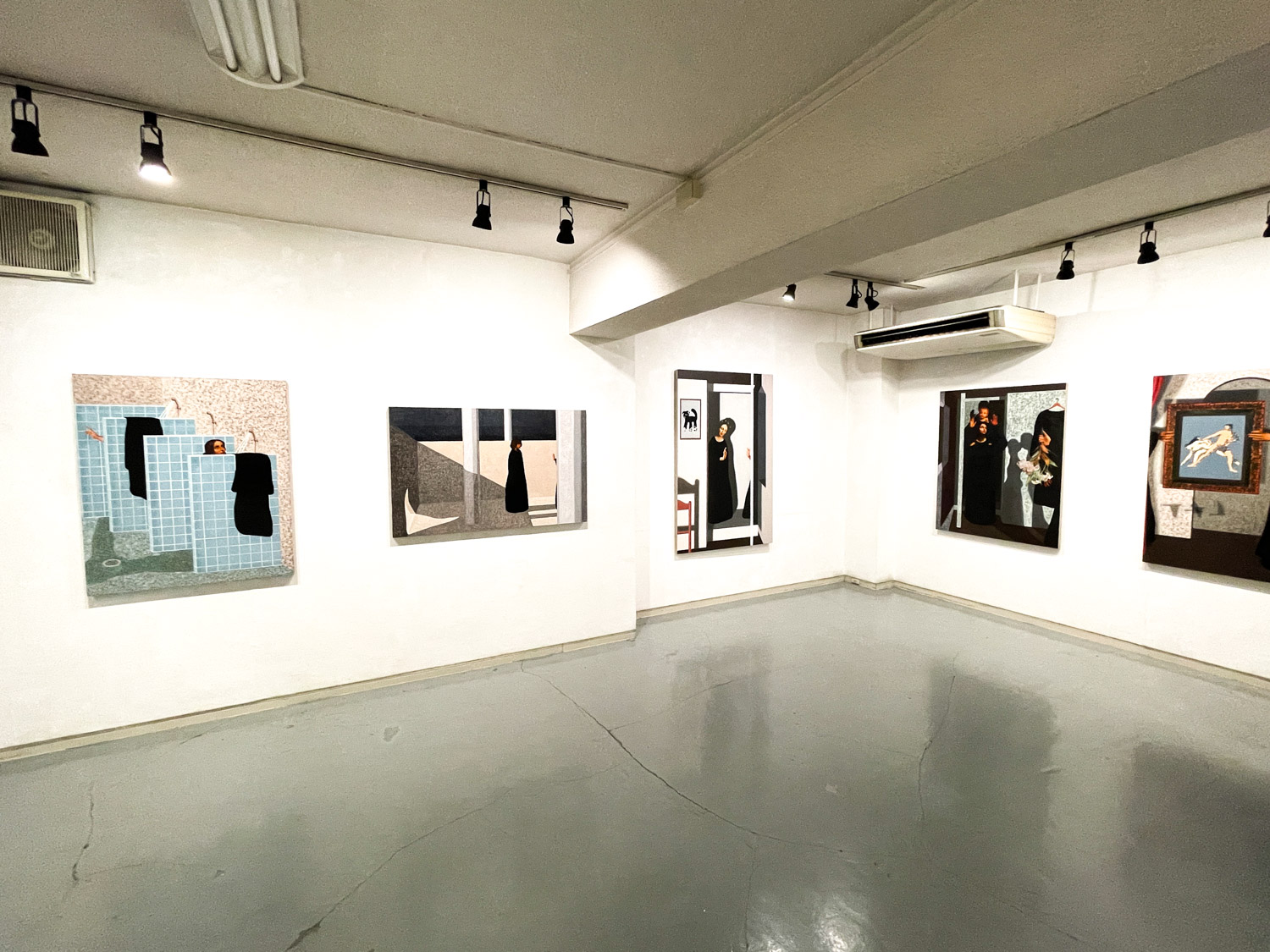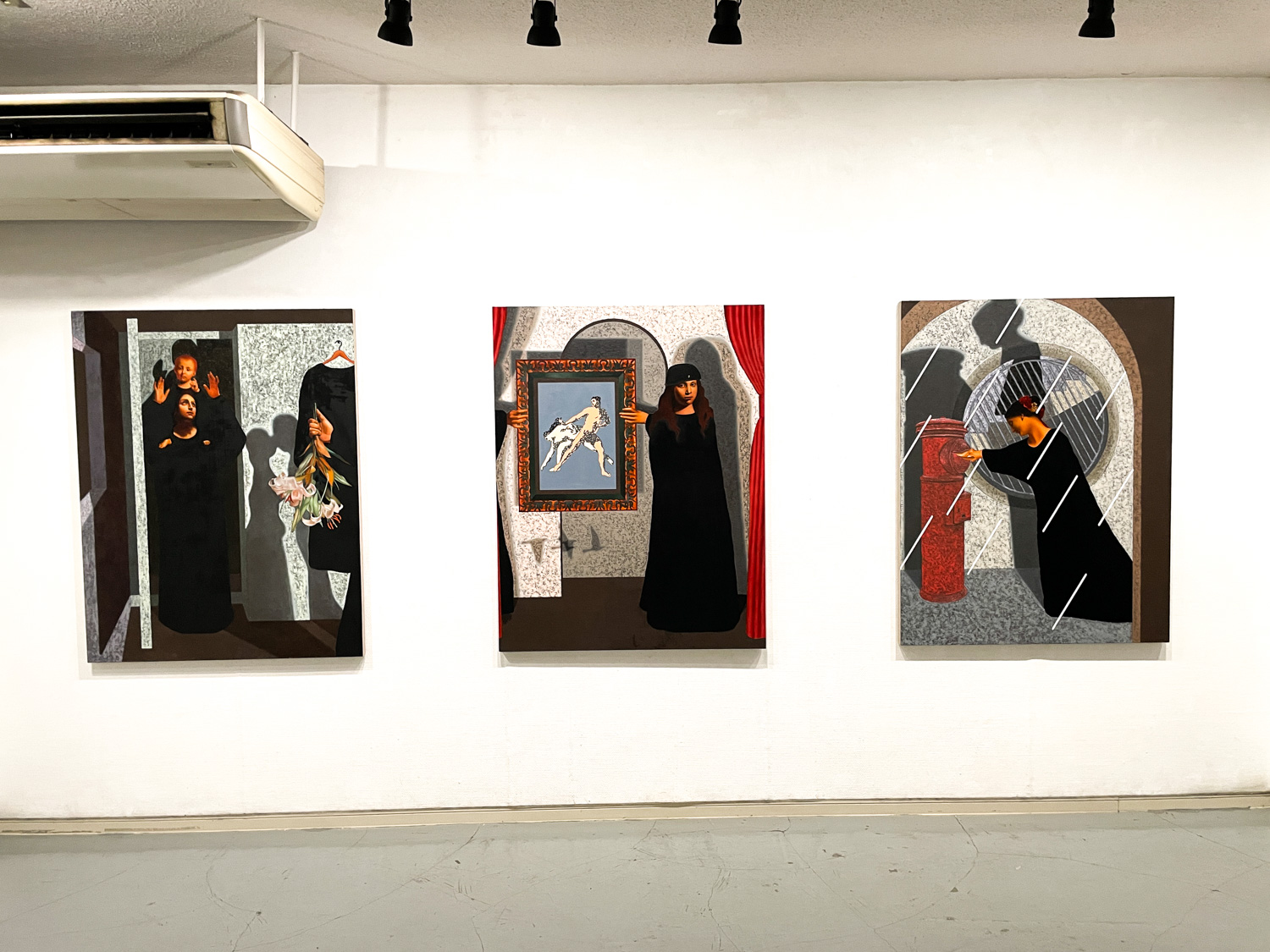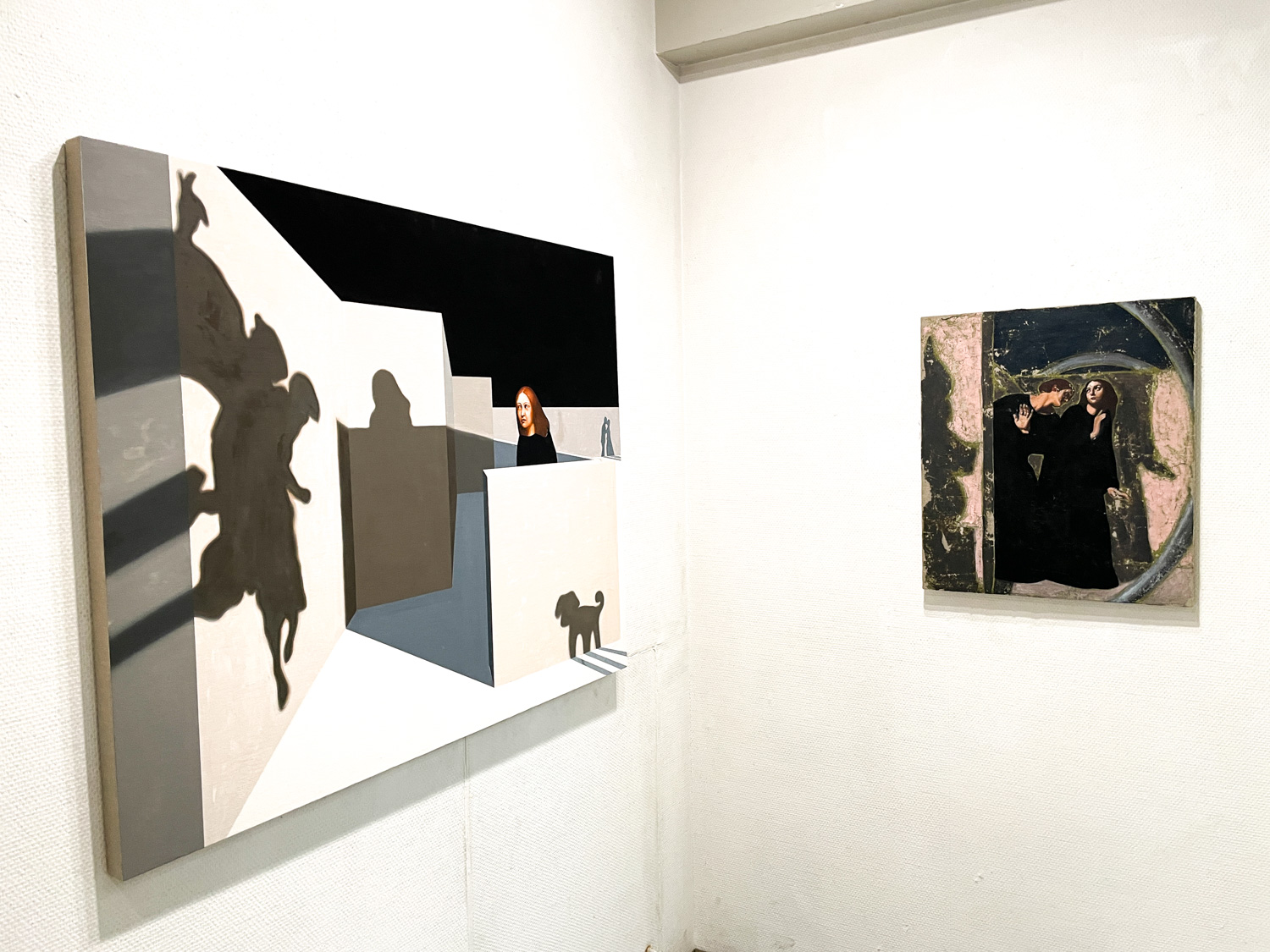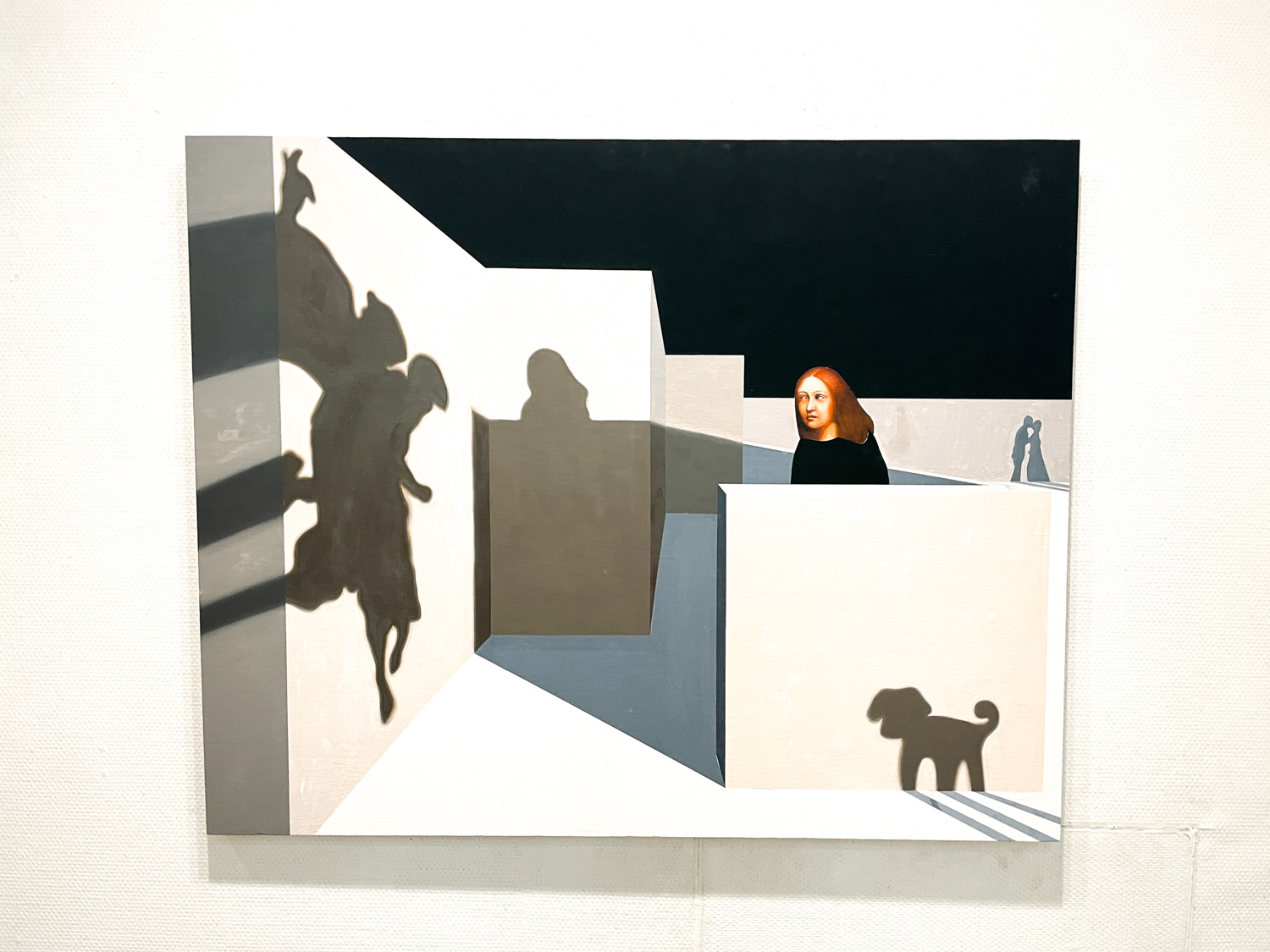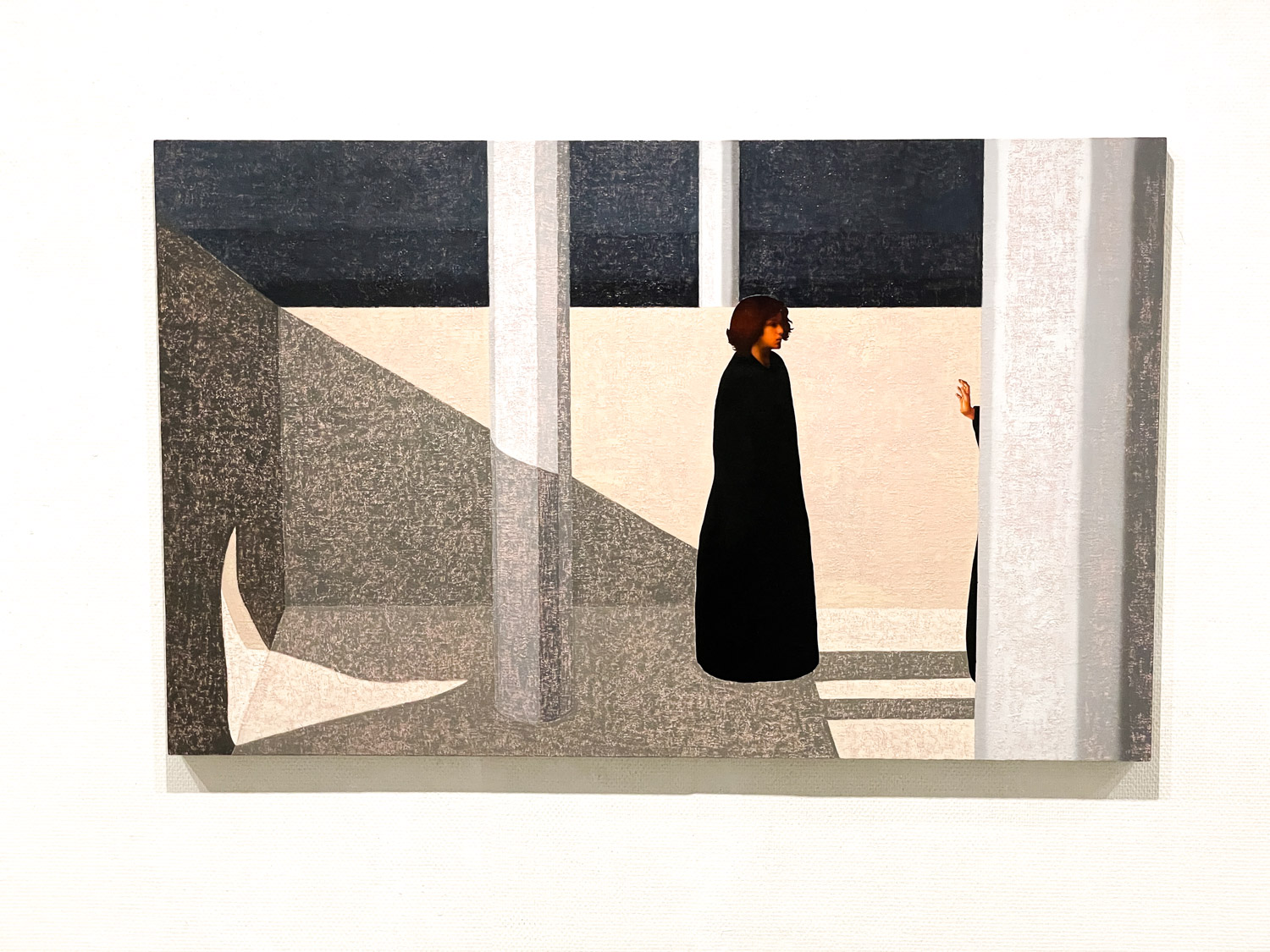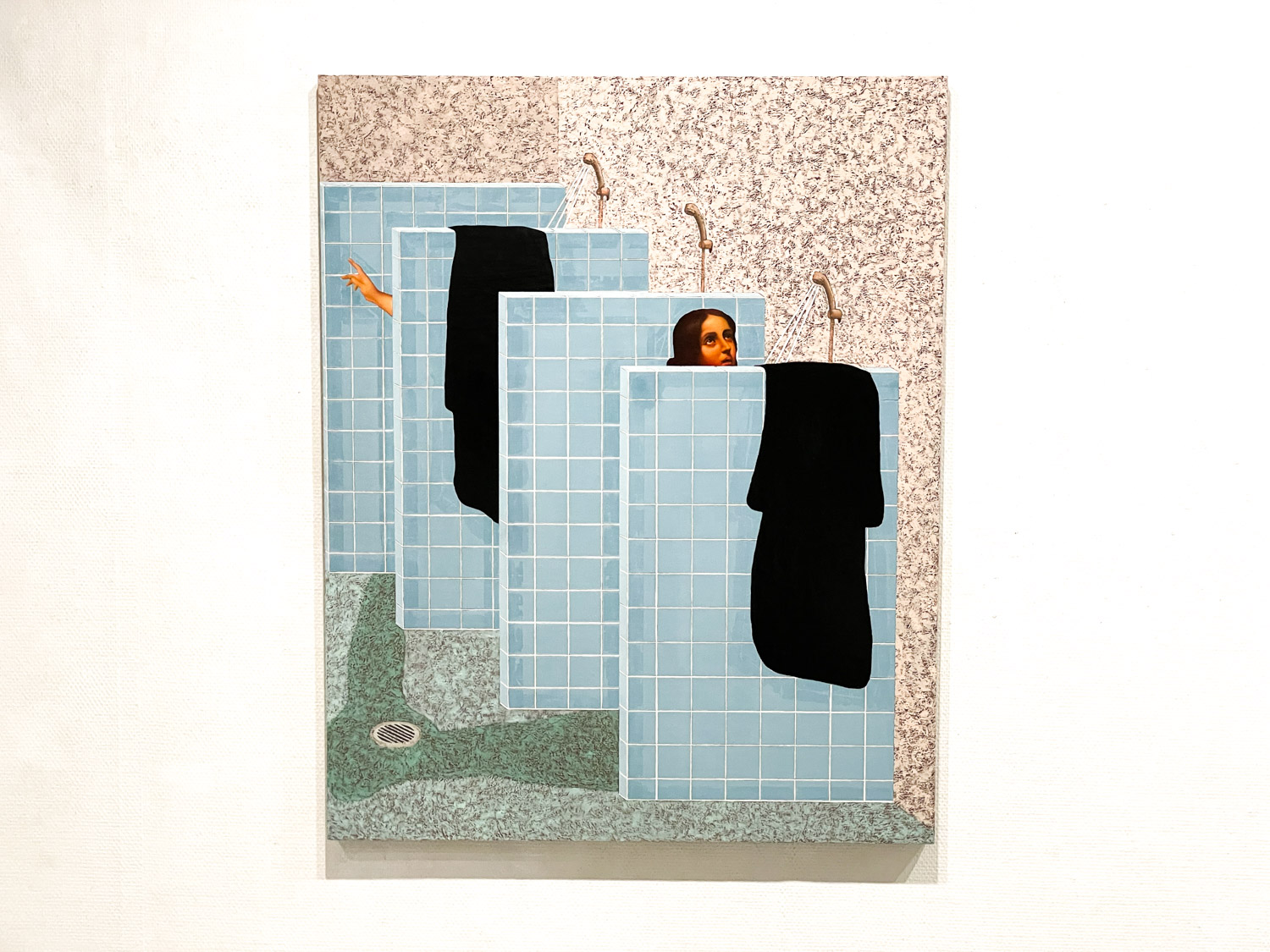
Akitsuna Komori “Elegy for Life”
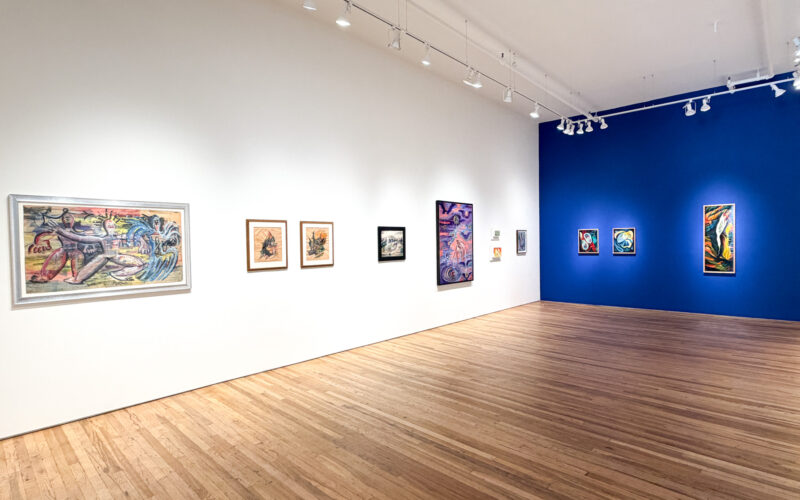
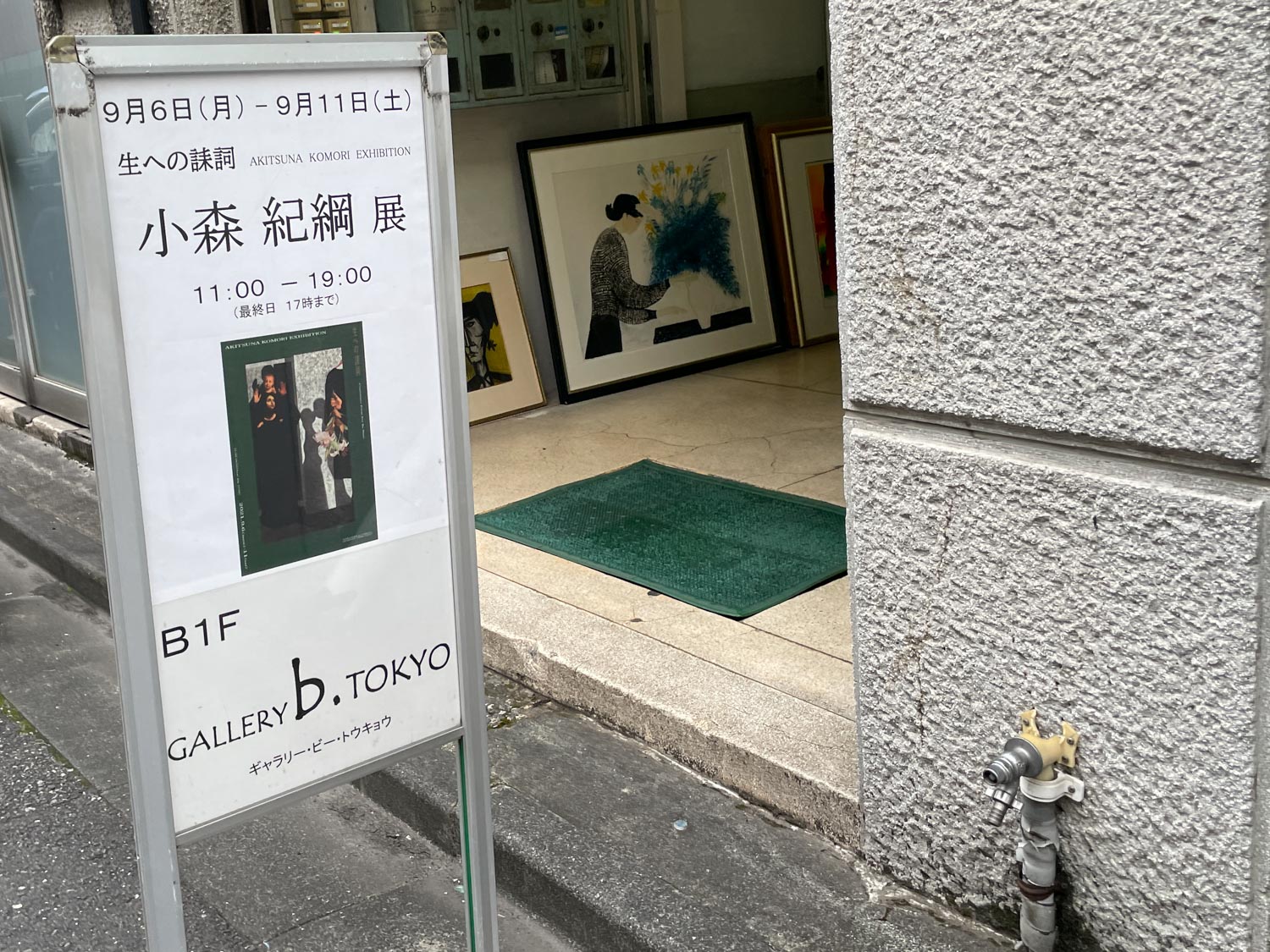
We visited Akitsuna Komori’s solo exhibition “Elegy for Life.” The venue is GALLERY b.TOKYO in Kyobashi.
Statement
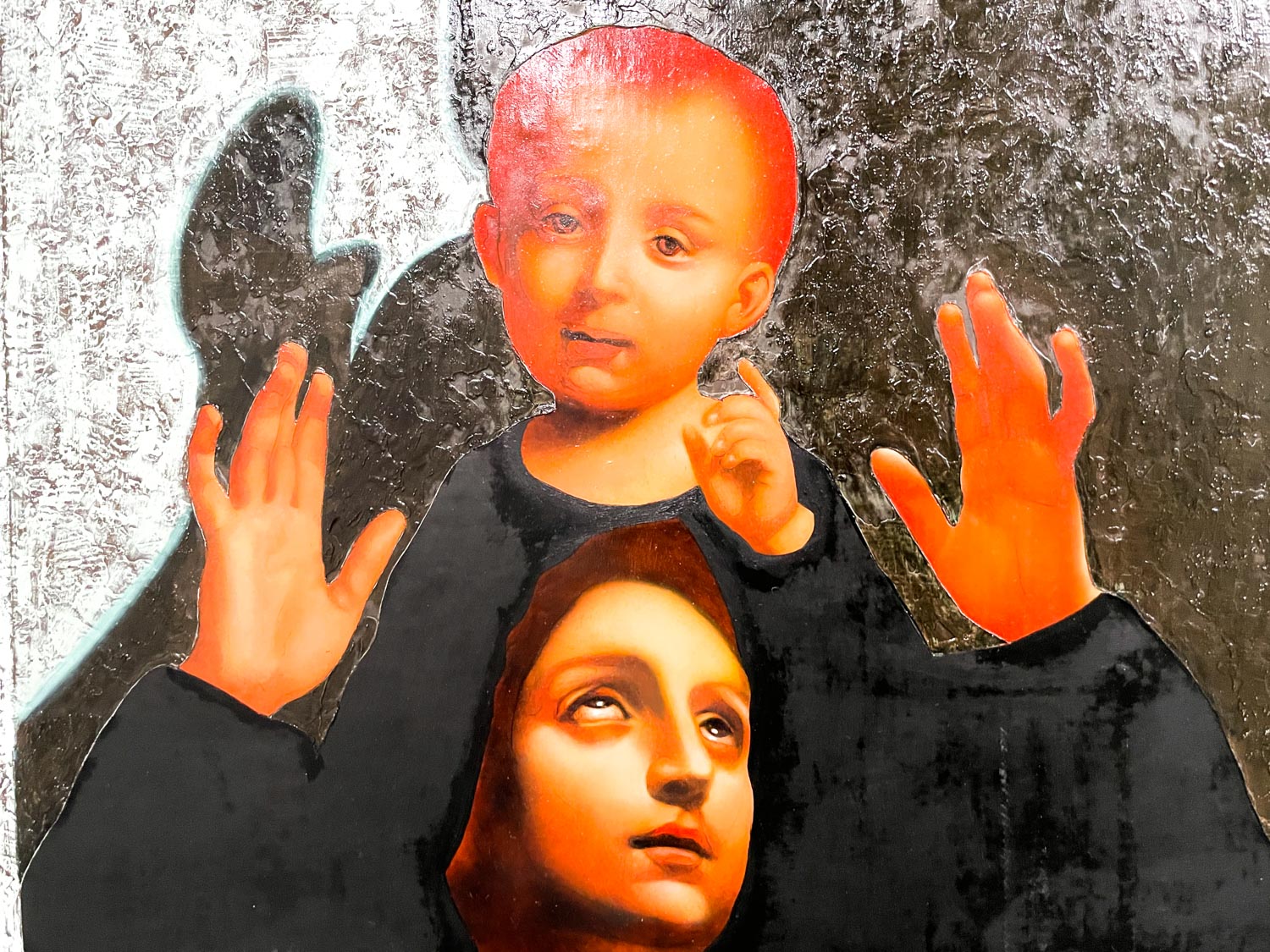
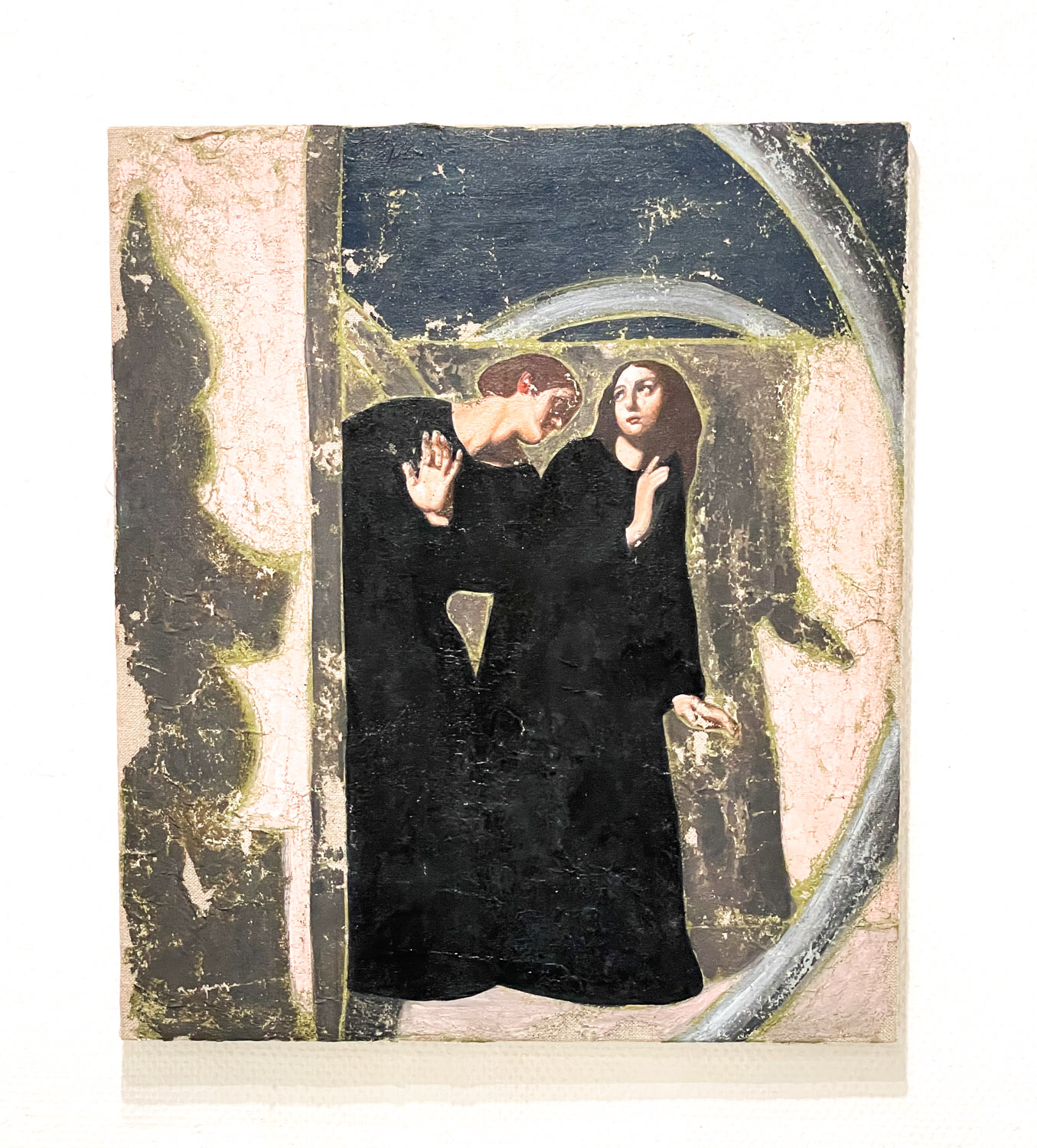
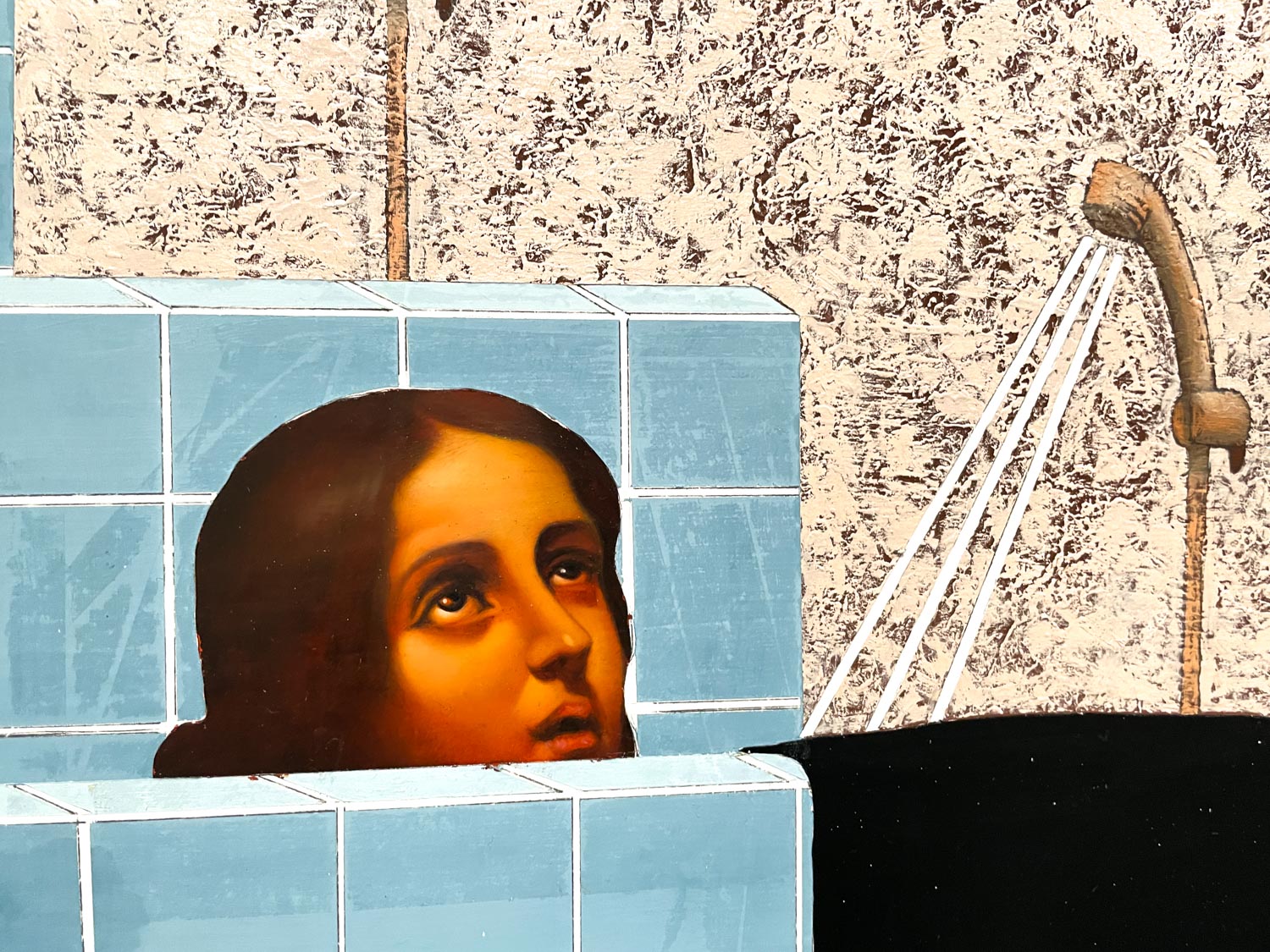
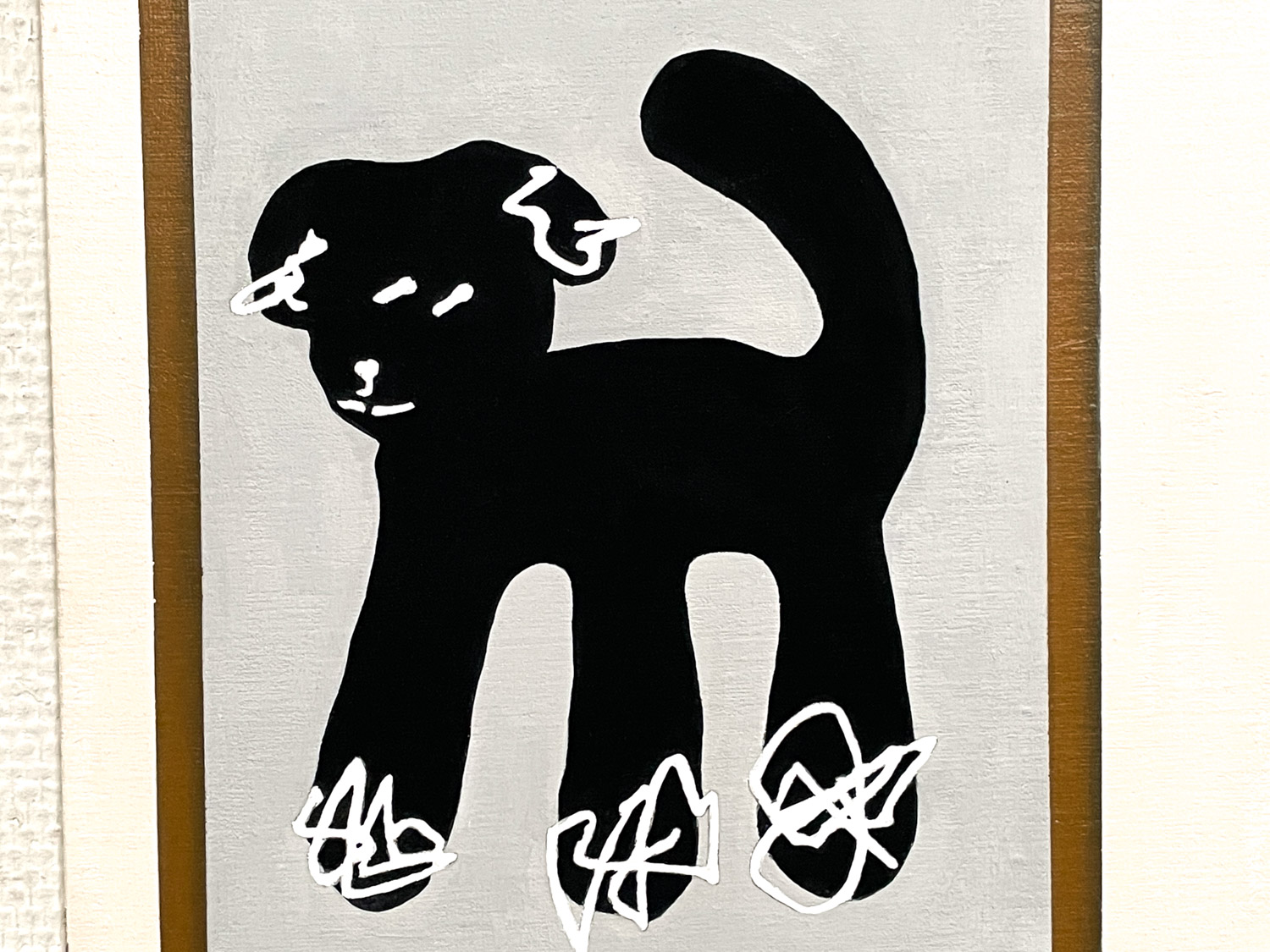
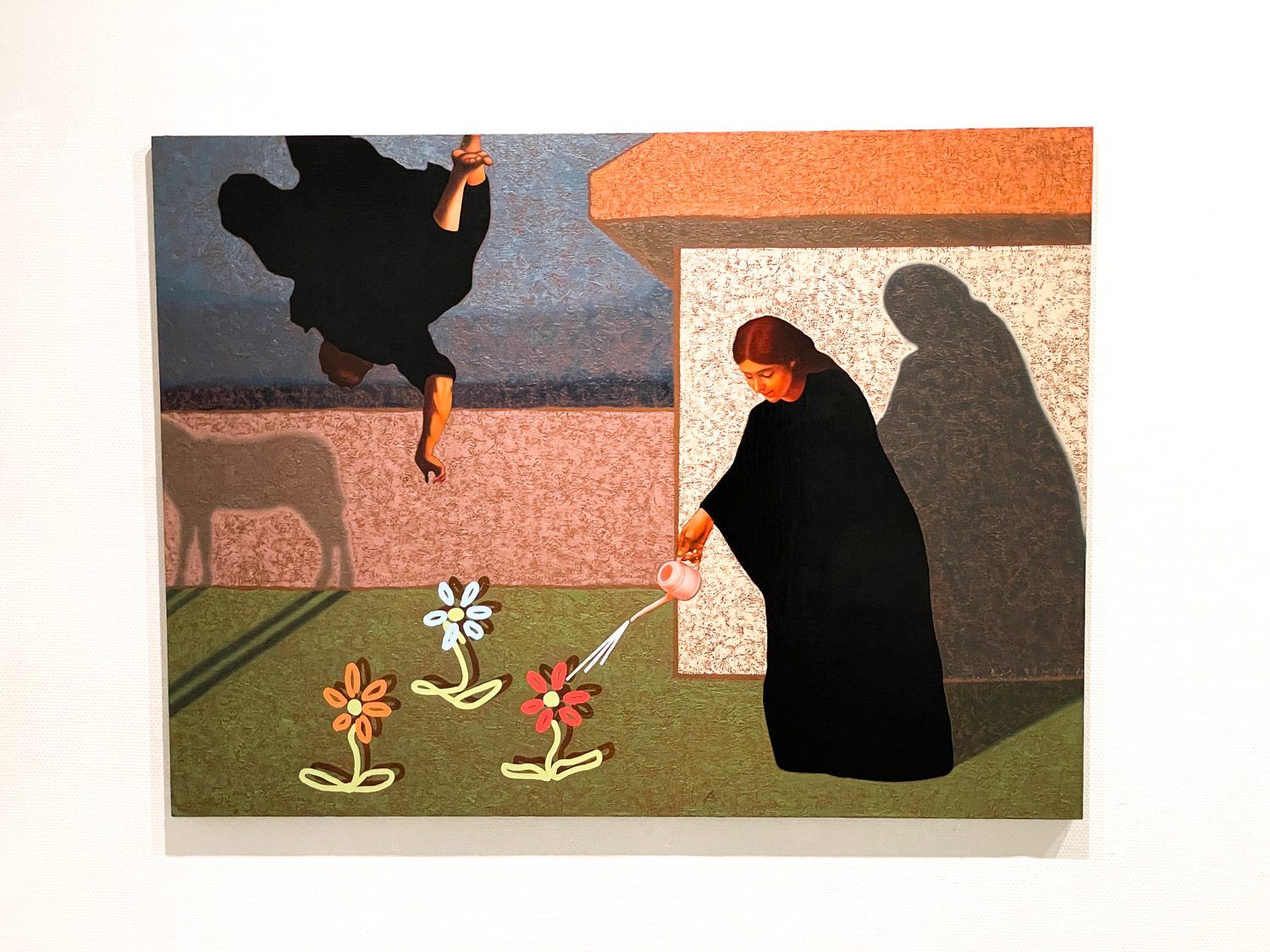
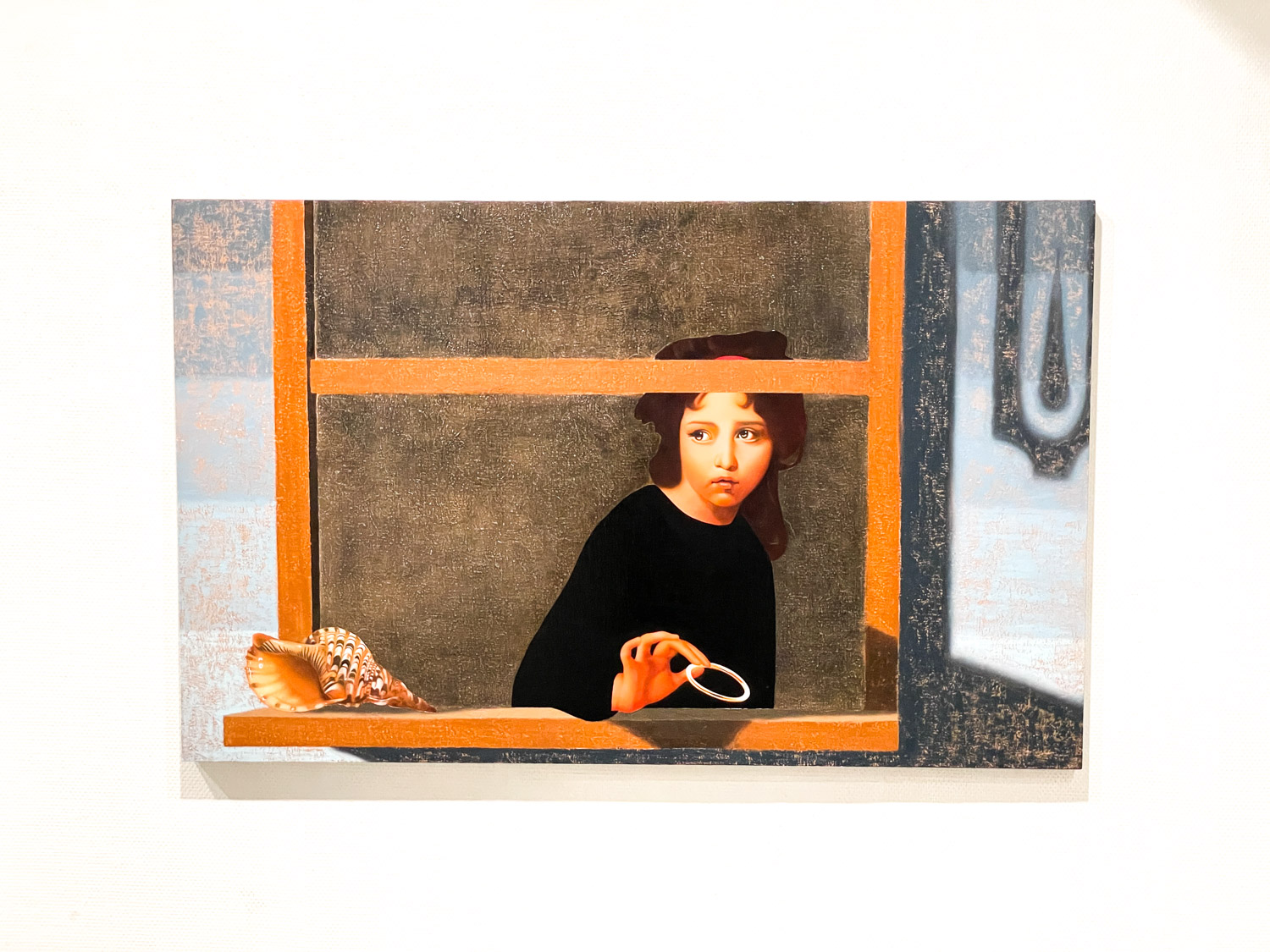
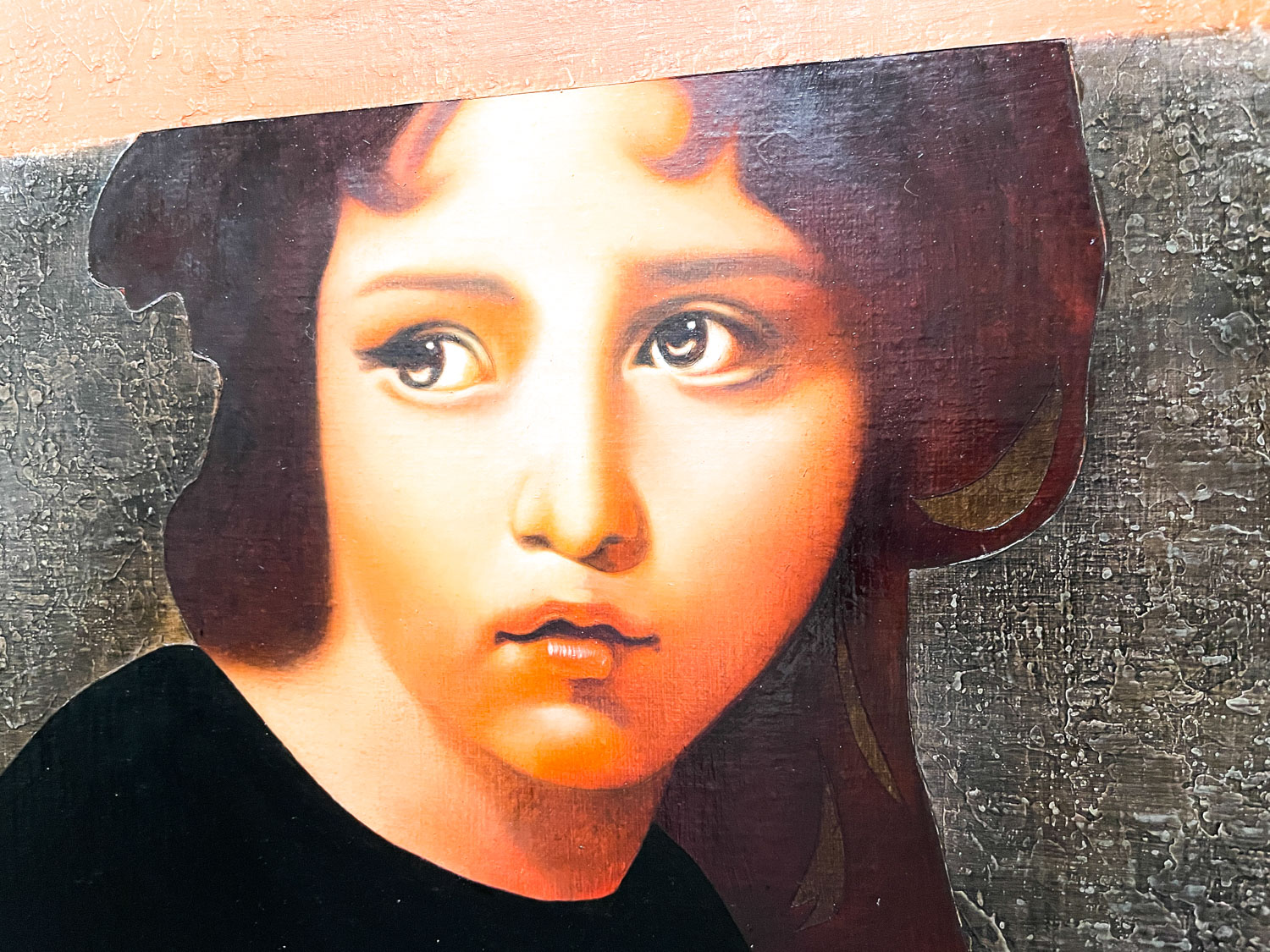
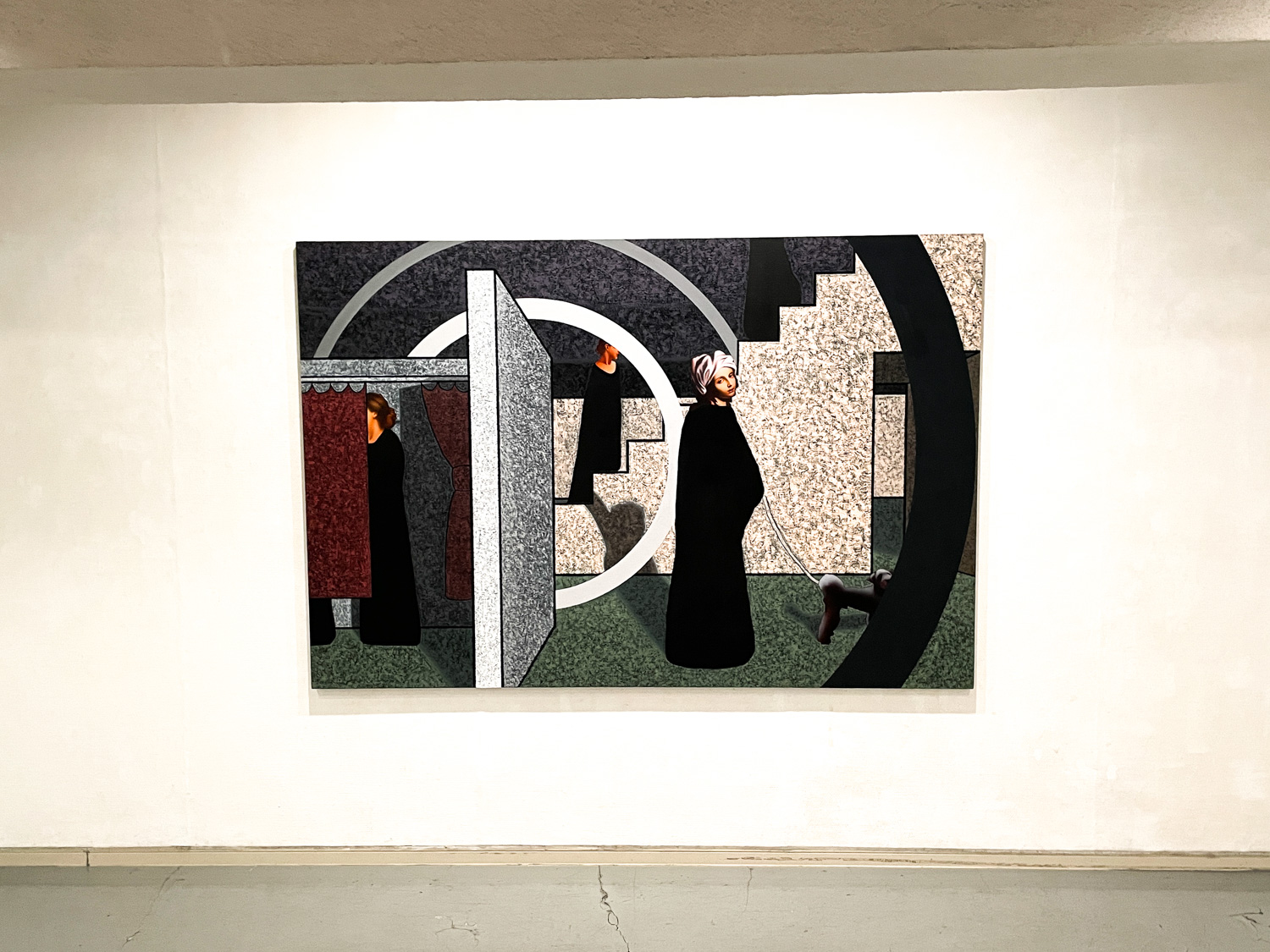
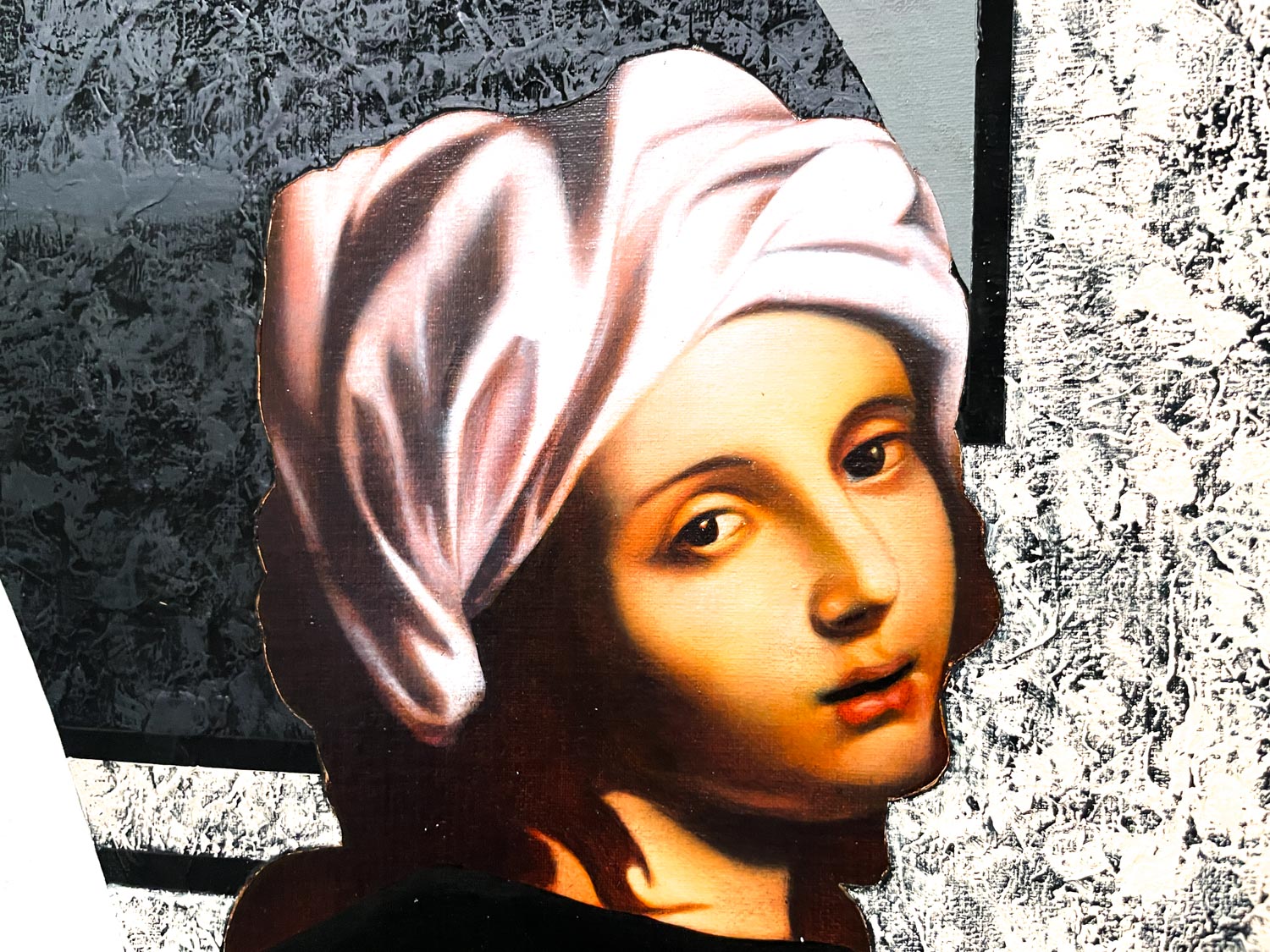
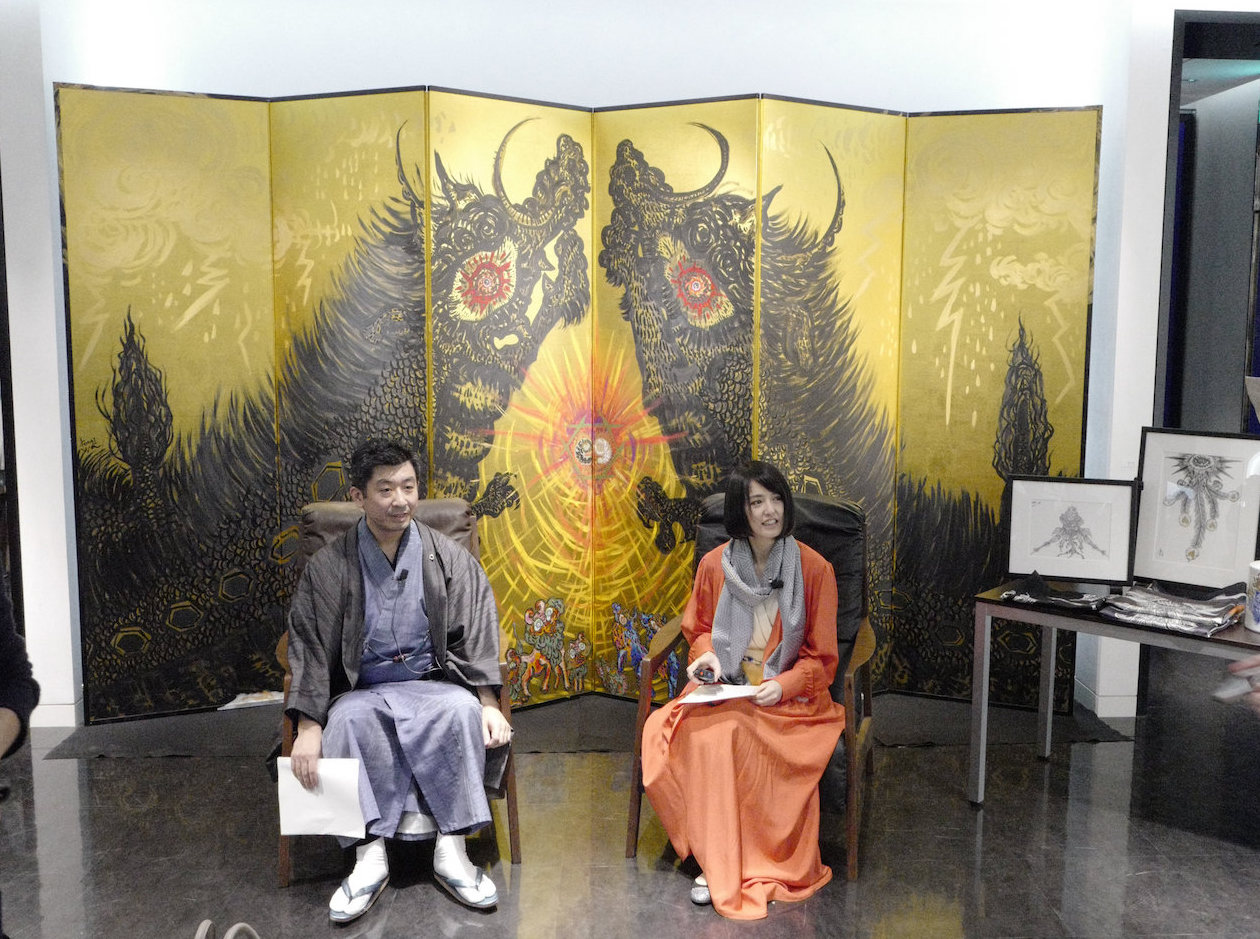
Akitsuna Komori produces metaphysical paintings by drawing on religious objects from various faiths and on the attributes of classical painting (the objects assigned to specific figures or deities). His painting practice starts from the episteme — iconographic interpretation, theoretical construction, religious ethics. He weaves together the basic elements that form a painting’s framework — composition, perspective, figures, attributes, color, light source — in intricate patterns, at times swapping them in mismatched combinations, so that codes accumulate to build a hyperreal painting. By collaging different religions and stylistic idioms together, the shared threads and divergences latent within things are drawn to the surface. The relations formed here are those that reel in phenomena standing in a topological relation to one another — brought about, one might say, by a gesture akin to topologically isomorphic diagramming.The religious portraits are transformed as Komori’s own religious worldview and natural philosophy are joined to “images derived in common from the impressions people hold toward something.” This religious sensibility rooted in Komori is deeply tied to his upbringing. Born to a family of Koyasan Shingon Buddhist temple heritage, Komori has parents from different faith traditions — his father a Buddhist monk, his mother from a family of Catholic believers. Having deepened his understanding of many forms of belief from an early age while under the influence of Esoteric Buddhist teachings, Komori came to see art as the sole means to bind together divergent value systems and religious forms.
Sampling primarily from the Renaissance and Baroque periods — the hand gestures of the Annunciation, the dramatic chiaroscuro exemplified by Caravaggio, and so on — introduces a circulating logic into Komori’s reasoning through Western art history, and enables the paired rendering of the organic and inorganic. Turning one’s gaze beyond the frame of cognition creates a world stretching out on the far side of reality and stitches together the multiple paradigms of art history and religious history. In other words, the very posture presented in these paintings overlaps with Komori’s own faith.
Text: Tomochika Hara