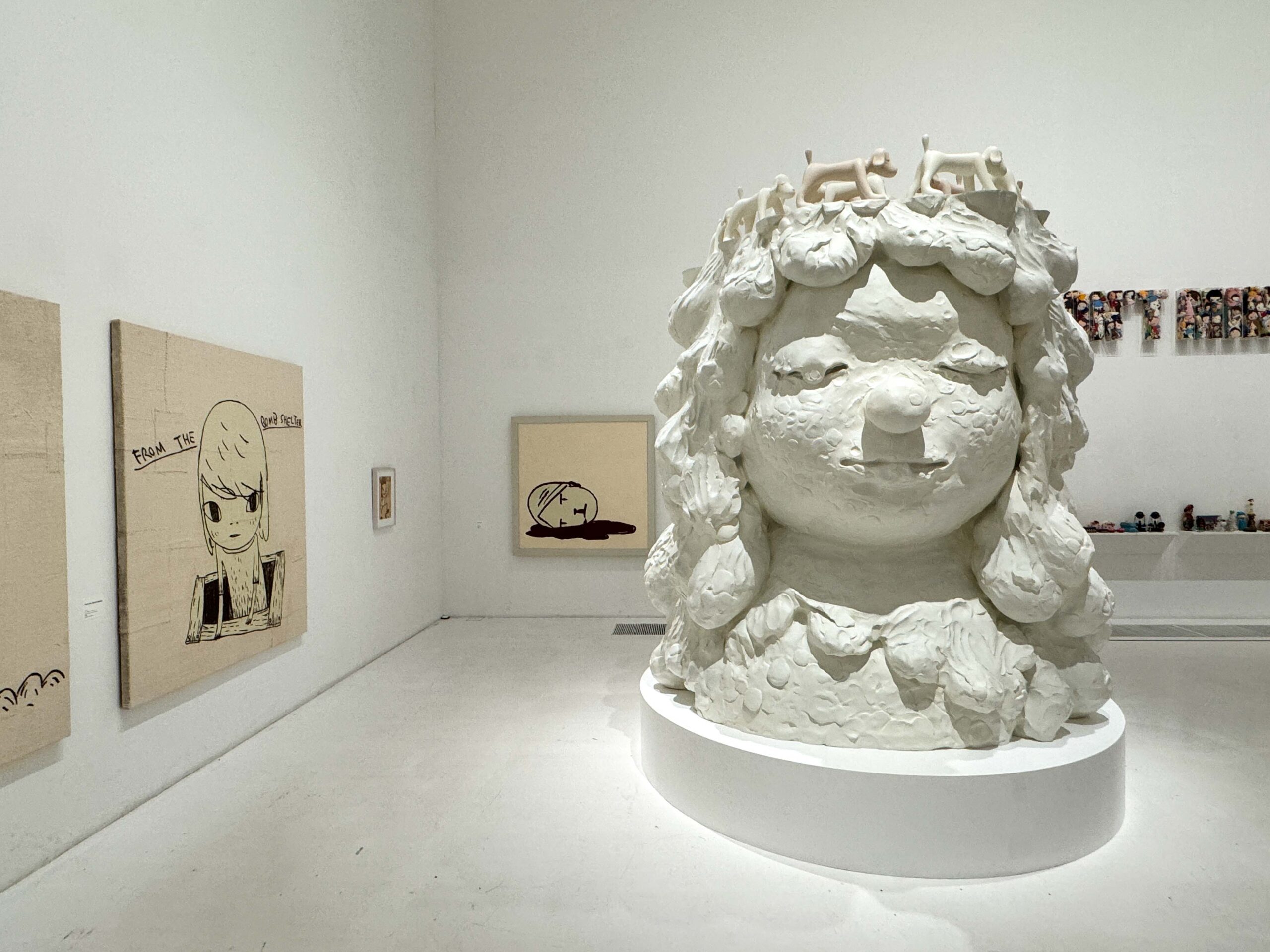
Yoshitomo Nara: The Beginning Place
I visited Yoshitomo Nara’s solo exhibition “Yoshitomo Nara: The Beginning Place” at the Aomori Museum of Art.
As a solo exhibition in his hometown by Nara — a currently active Japanese contemporary artist celebrated worldwide — this was a show I had long wanted to see, and I finally managed to catch it on the very last day.
Because there is no touring version, this was a precious exhibition that could only be seen by traveling to Aomori. I’ve compiled the below as a photo report.
The exhibition was broadly divided into five sections.
1. Home
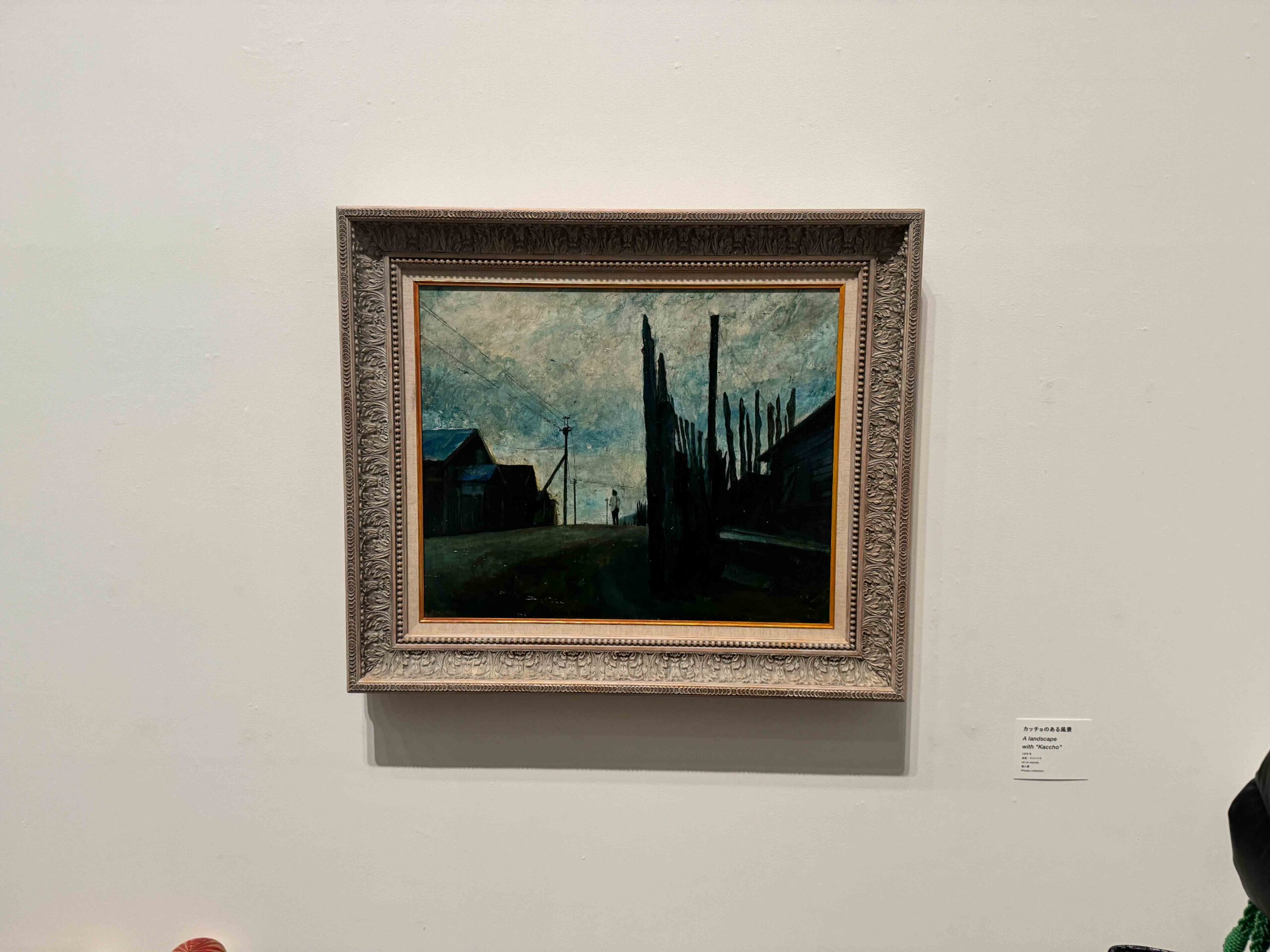
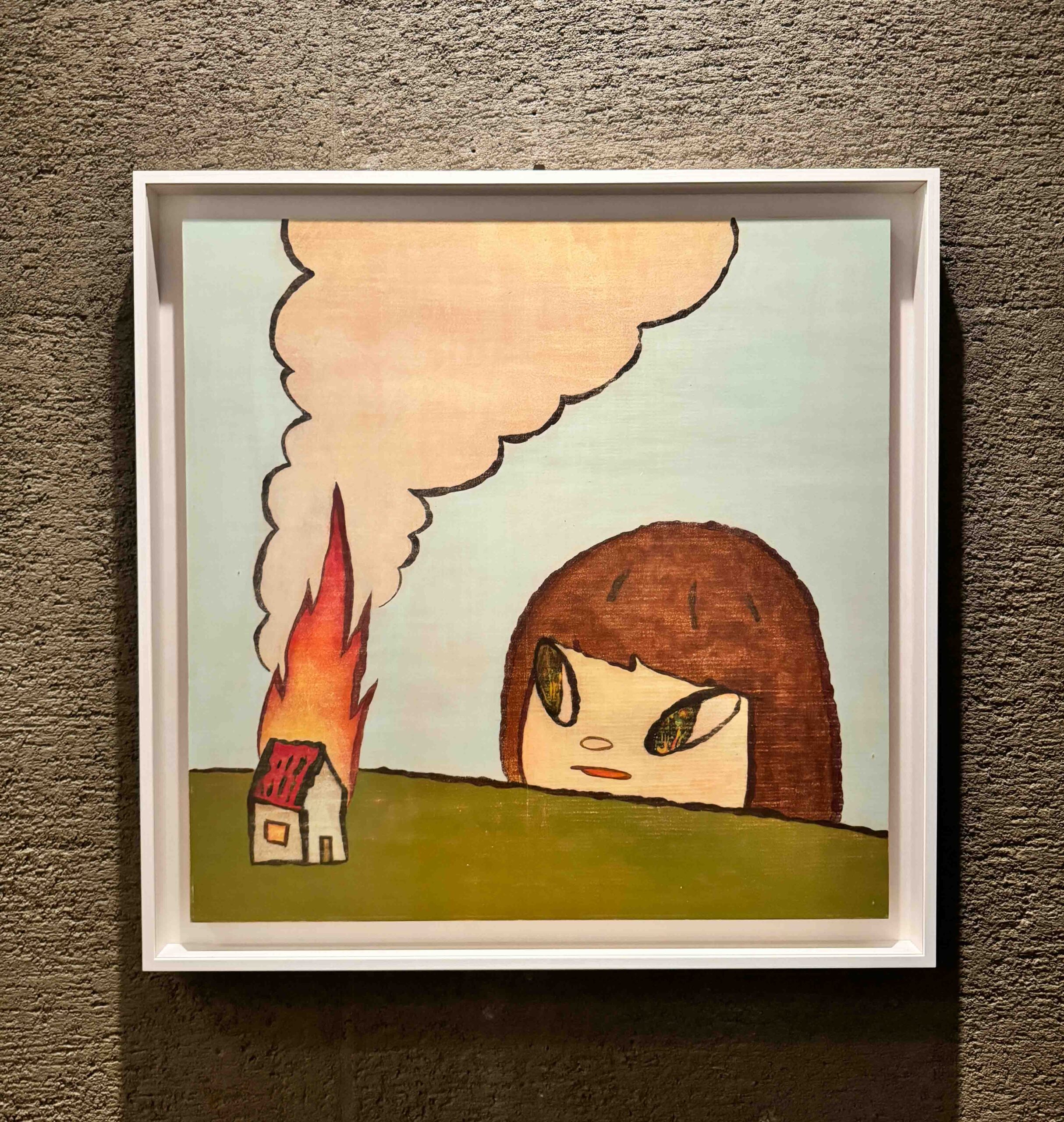
This is the first time that early works from the 1980s have been presented together. In Nara’s works prior to his move to Germany, “houses” frequently appeared as a motif. The very first work is “A landscape with ‘Kaccho'” (1979). “Kaccho” refers to the wooden windbreak fences erected in the Tsugaru region. “It’s an oil painting I would be too embarrassed to show if it were up to me. A friend went out of their way to pick it up after I had thrown it out.” (Nara)
This piece was one that Hiroshi Sugito — a former student when Nara was teaching at a prep school — had found and preserved after Nara had left it neglected. This exhibition marks its first public showing.
2. Time-Space of Layers
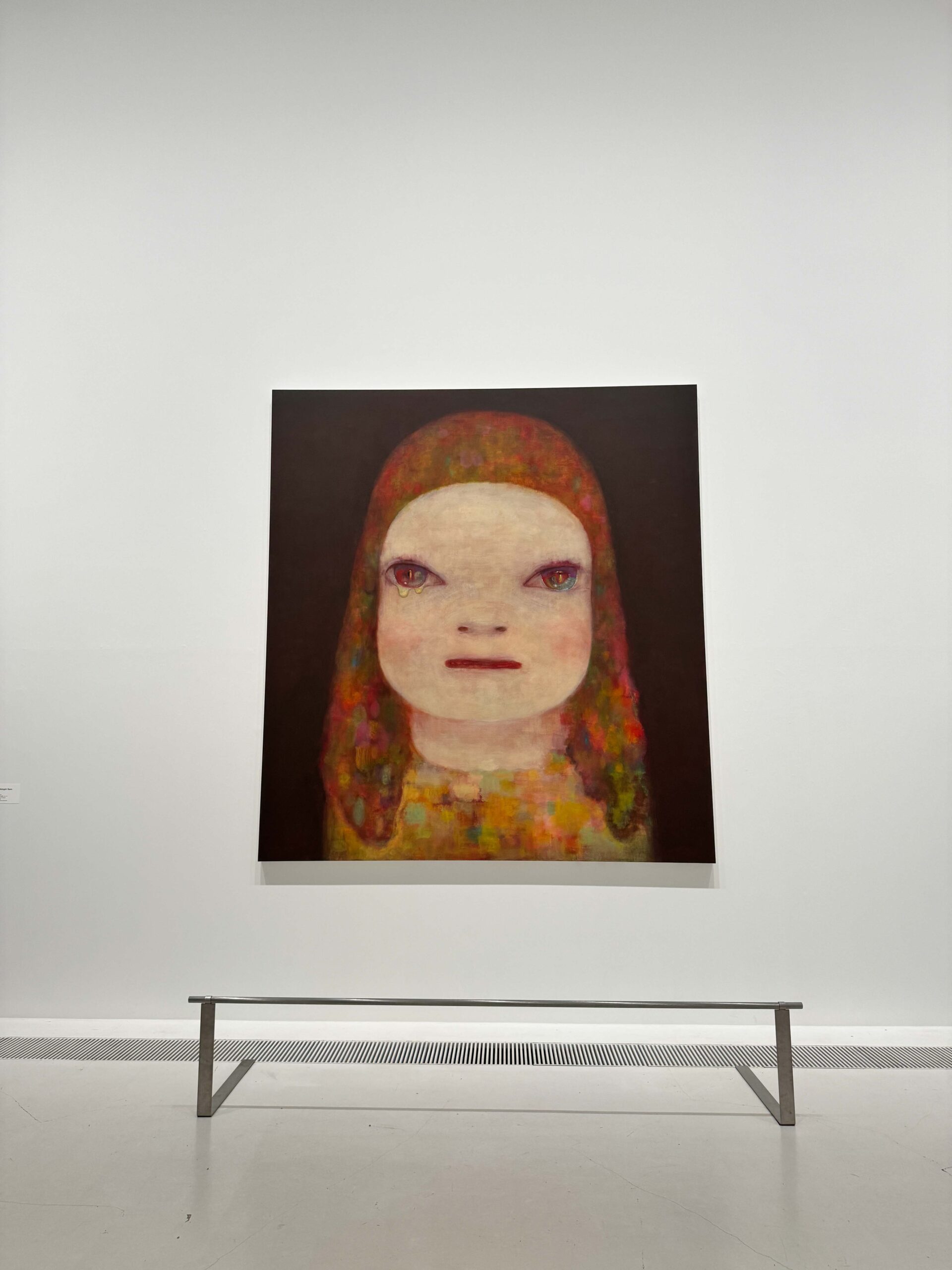
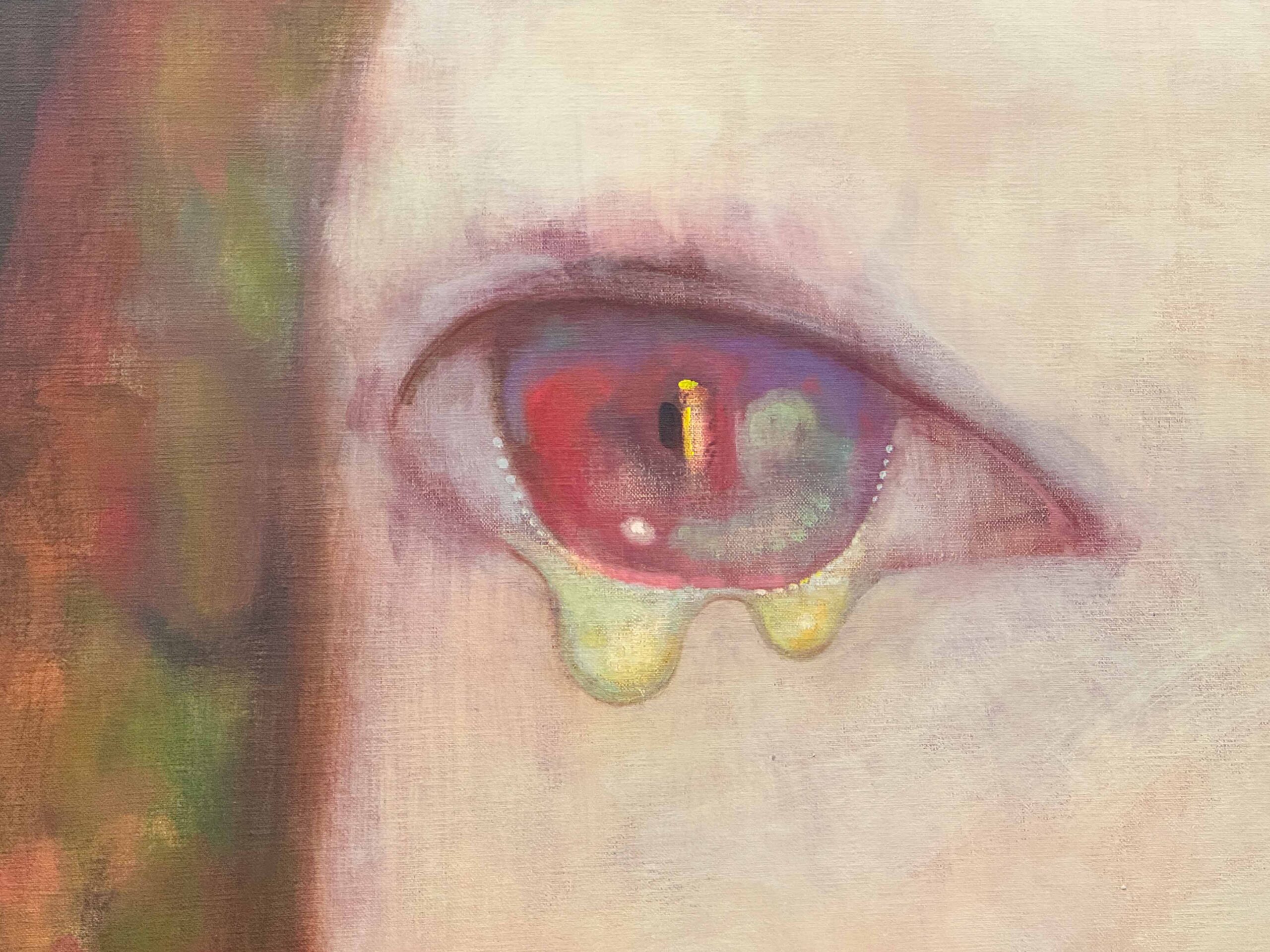
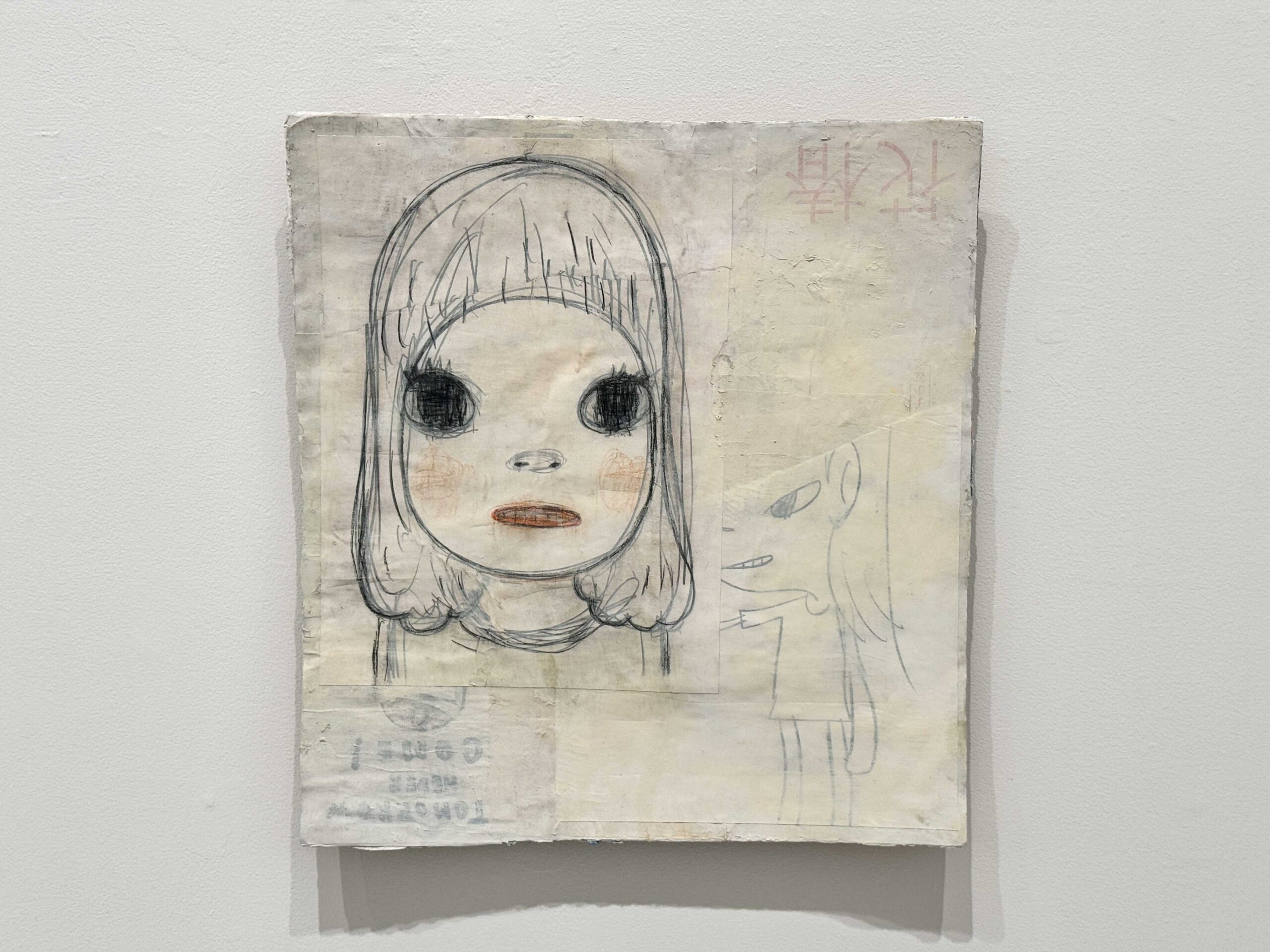
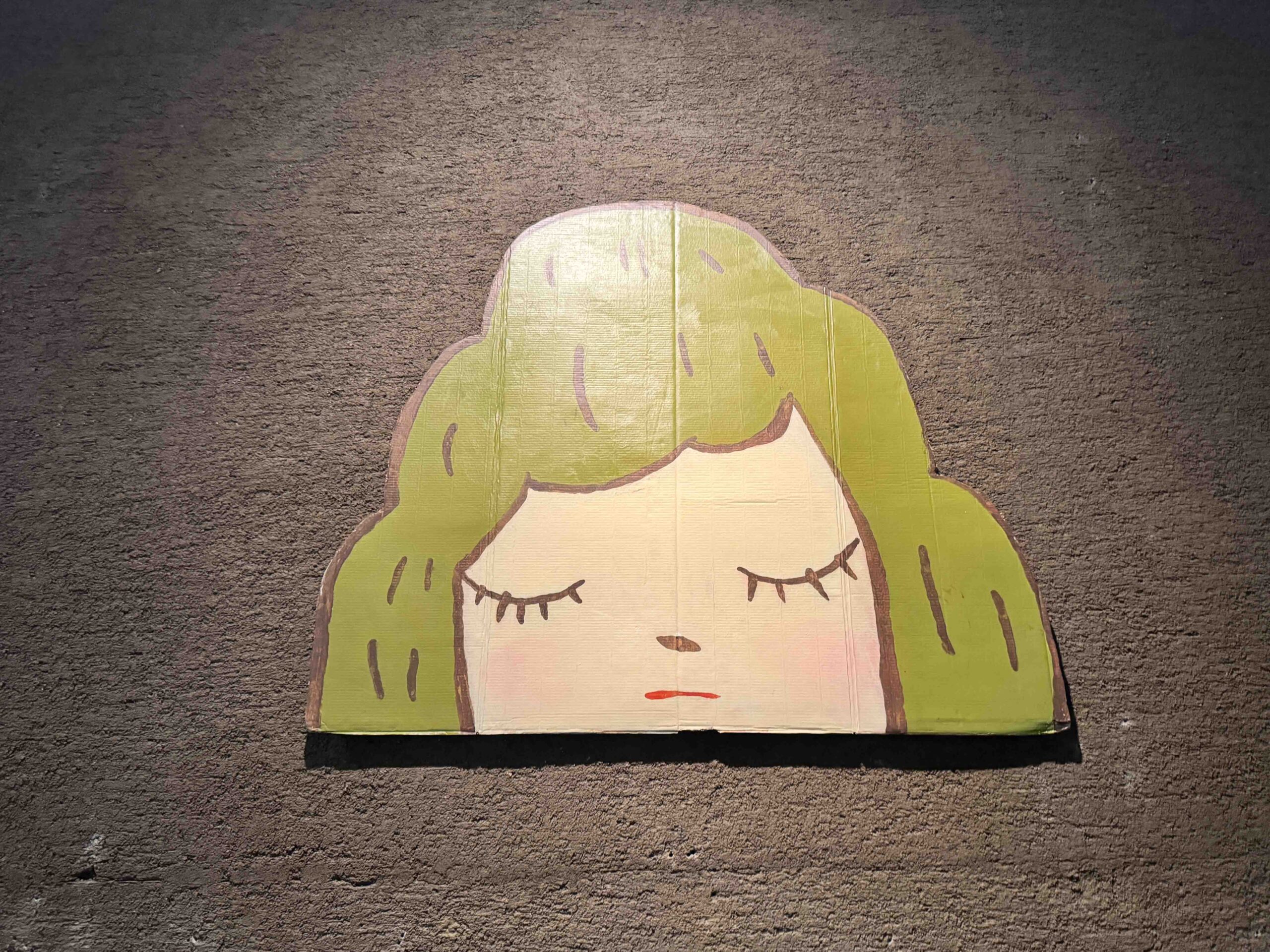
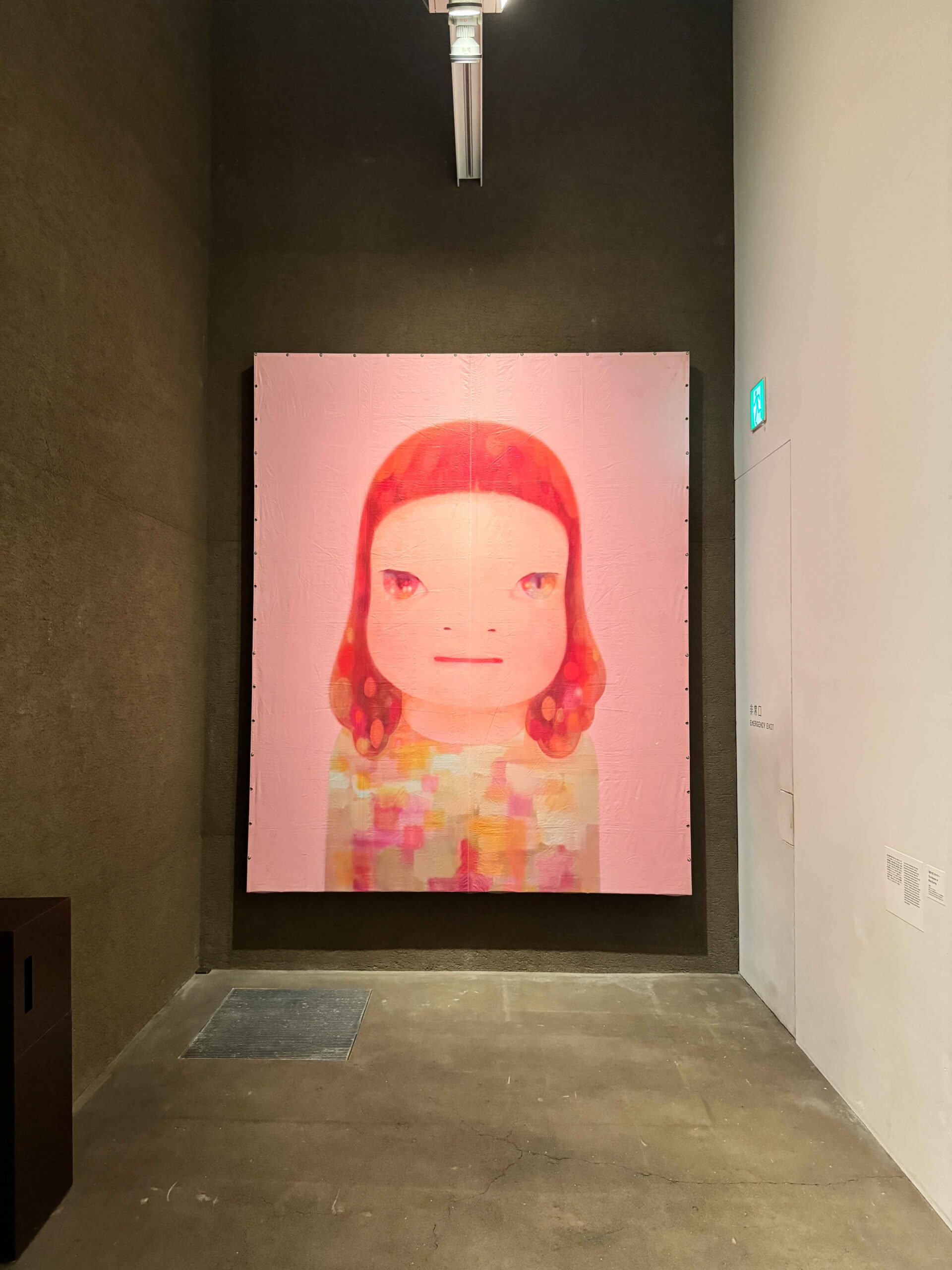
The images of girls that Nara has painted repeatedly throughout his career have evolved in recent years into works born from ambiguous outlines that emerge from a color expression based on complex layers of paint. The life breathed into these many stacked layers stirs the sensibilities of those who stand before them.
“I always paint in a way that accepts the accidental as the inevitable — if I can’t paint one eye well, I’ll stick a bandage on it, doing whatever comes to mind on the spot. …It’s a way of only noticing at the very end.” (Nara)
Nara has said that the method changes every time. The painting he wants to bring into being always lies deep in the wrinkles of his brain, and he arrives at the moment he finally “hits upon” it through countless cycles of thought.
The new work Midnight Tears gave me the sensation of being drawn in and swallowed.
3. Journey
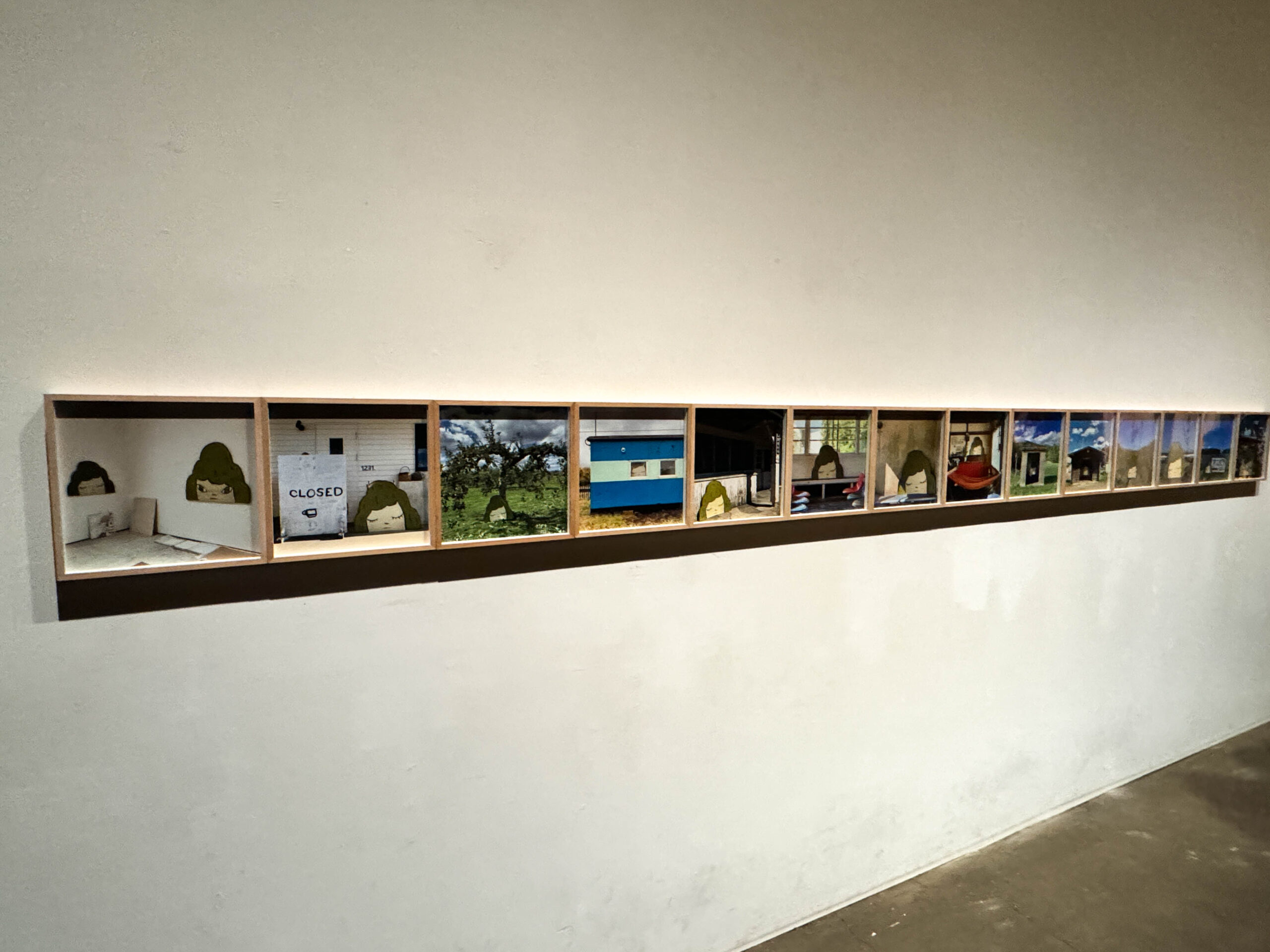
Struck by the Great East Japan Earthquake in 2011, Nara himself underwent a complete change of direction. Unable to hold a brush or stretch a canvas, he began touching clay, searching for something. “From summer to winter, I wrestled with clay bare-handed as a form of rehabilitation. …When you dialogue with clay, you don’t have to think. In that process I began to consider — and research — my own roots and the Tohoku region.” (Nara)
4. No War
Anti-war messages and peace marks have been embedded in Nara’s works as a motif since his early period. This has become Nara’s own policy, shaped by the music of 1970s musicians who stood up against war and violence.
And after the earthquake, at demonstrations opposing the restart of nuclear power plants, his drawing “No Nukes” was reproduced with Nara’s authorization and held aloft as placards — one part of his ongoing work of embedding anti-nuclear messages in the public consciousness via subculture channels.
A white cube emerges as you walk down the corridor.
The message “I DON’T MIND, IF YOU FORGET ME.” is also the title of Nara’s 2001 solo exhibition at the Yokohama Museum of Art.
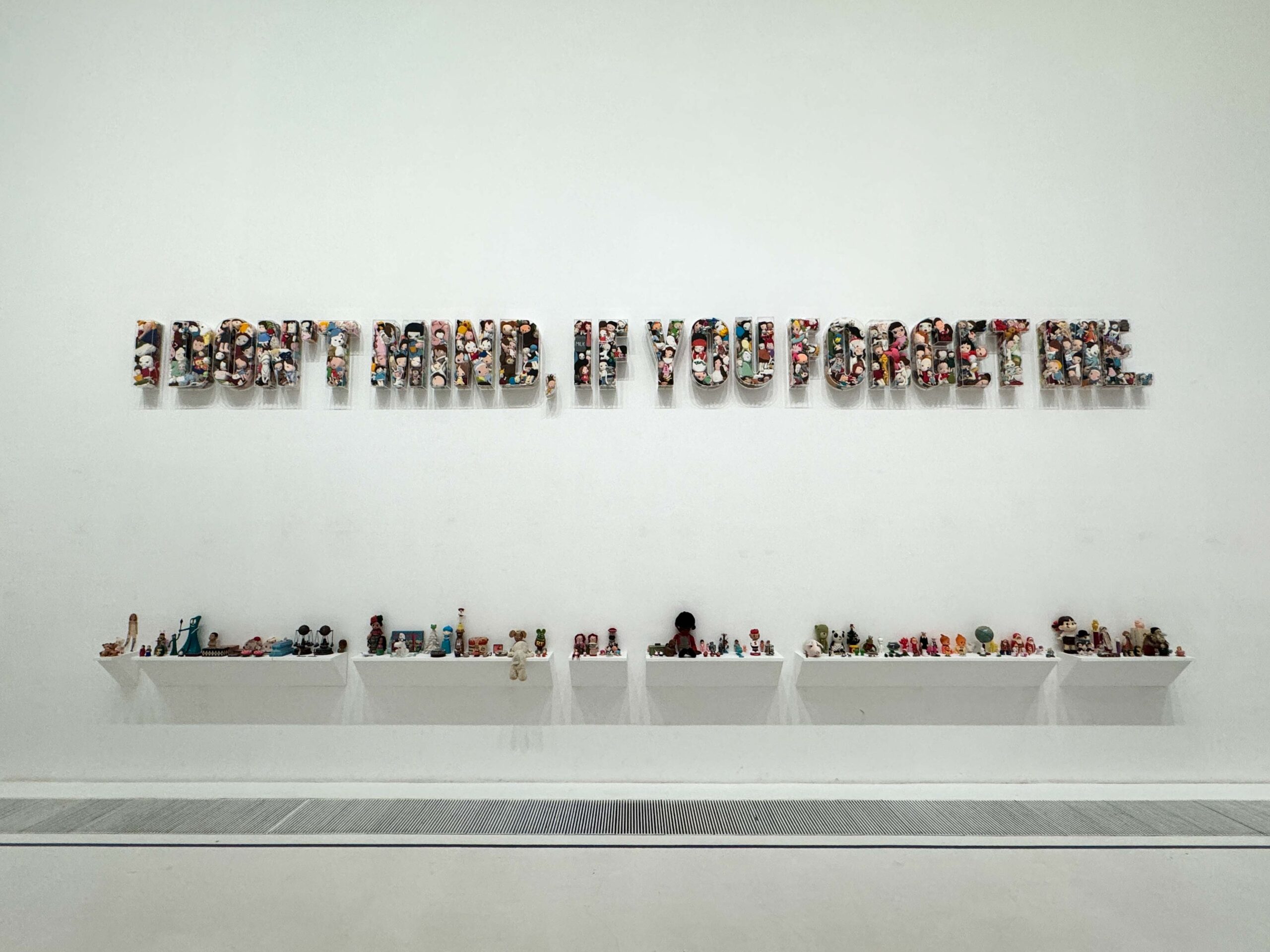
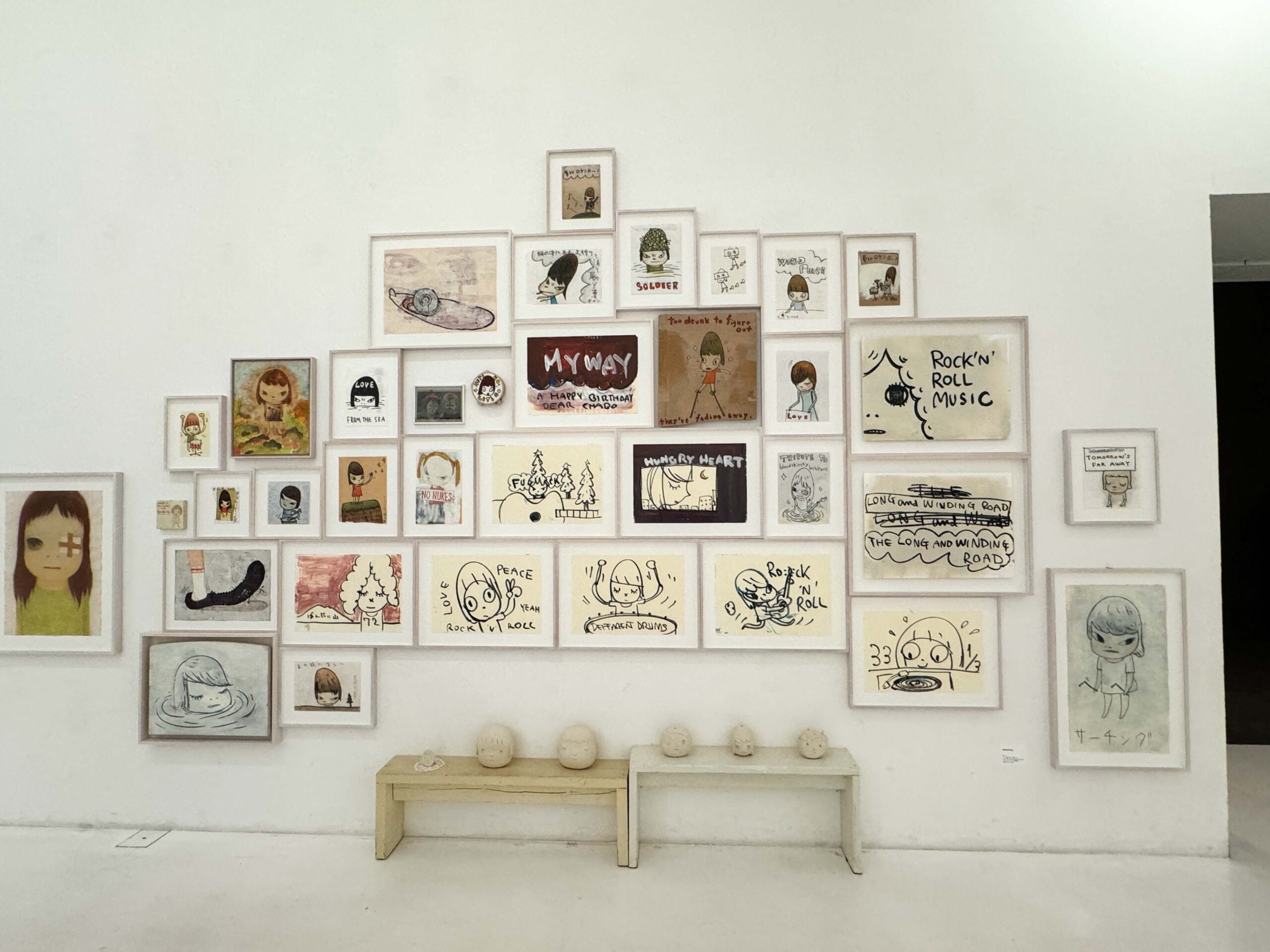
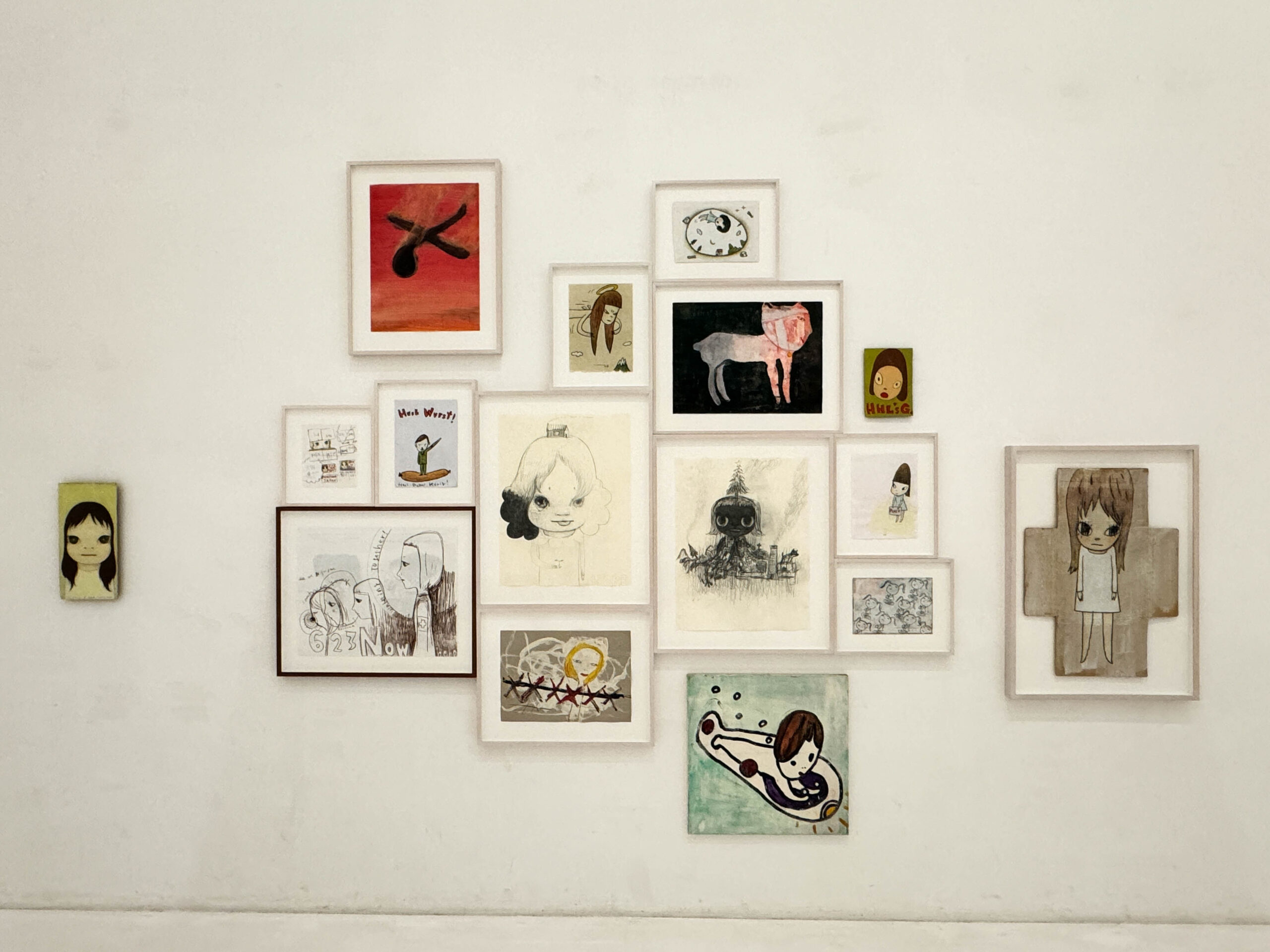
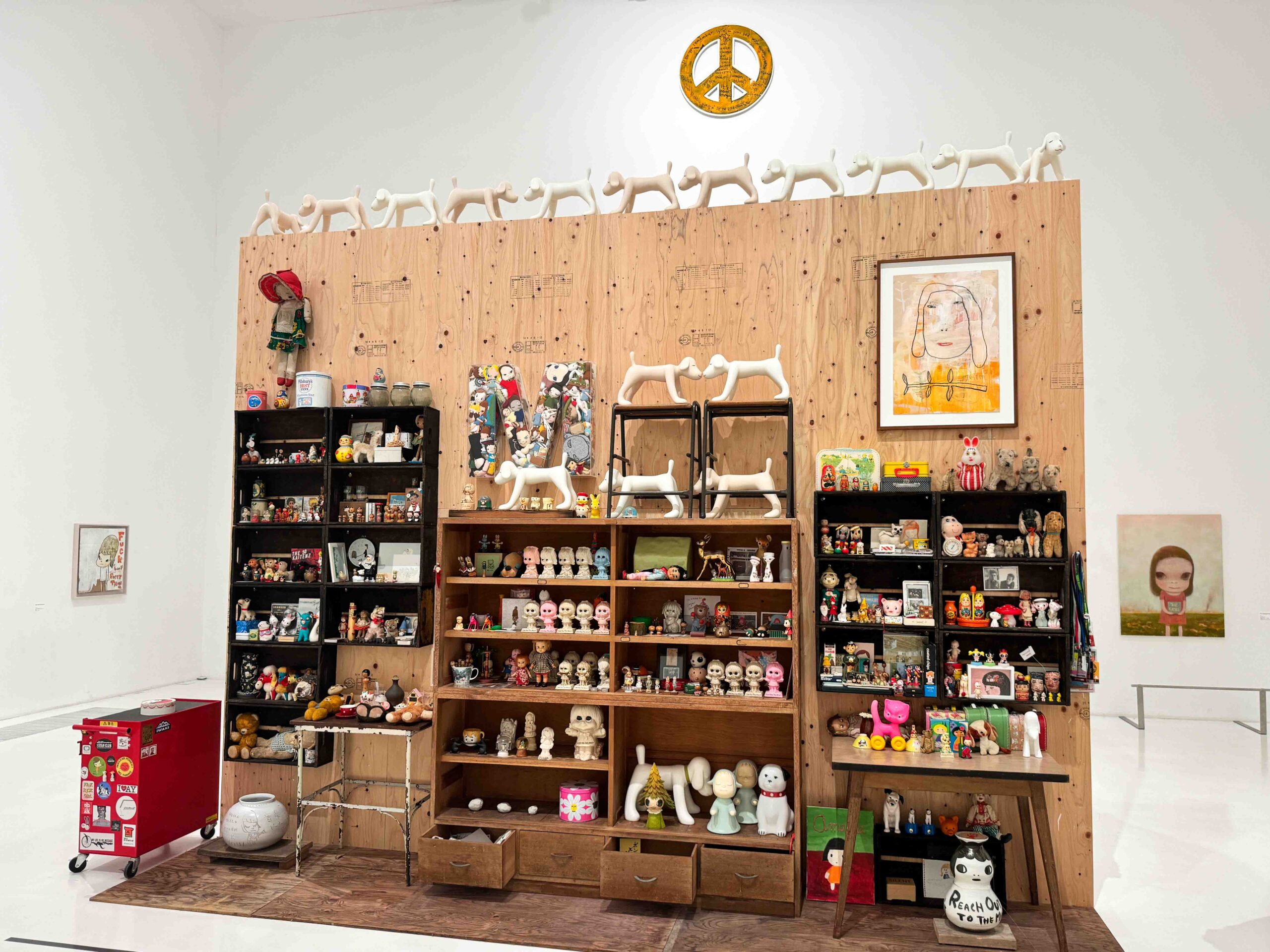
The installation “Altar of Peace,” set within the exhibition room, arranges toys Nara has personally collected in a distinctive configuration. Various toys also decorate the wall beside the altar, and Nara arranges all of these many items himself. In fact, Nara laid out the entire show himself — in only five days! “I’ve known this museum since it was being built; my body understands its structure and space. So installing the exhibition feels almost like redecorating my own room.” (Nara) In his talk show, Nara declared, “I’ve become convinced that I’m more talented at arranging things than at making them.” But during his student days he was known as “Nara Can” — Nara can do anything.
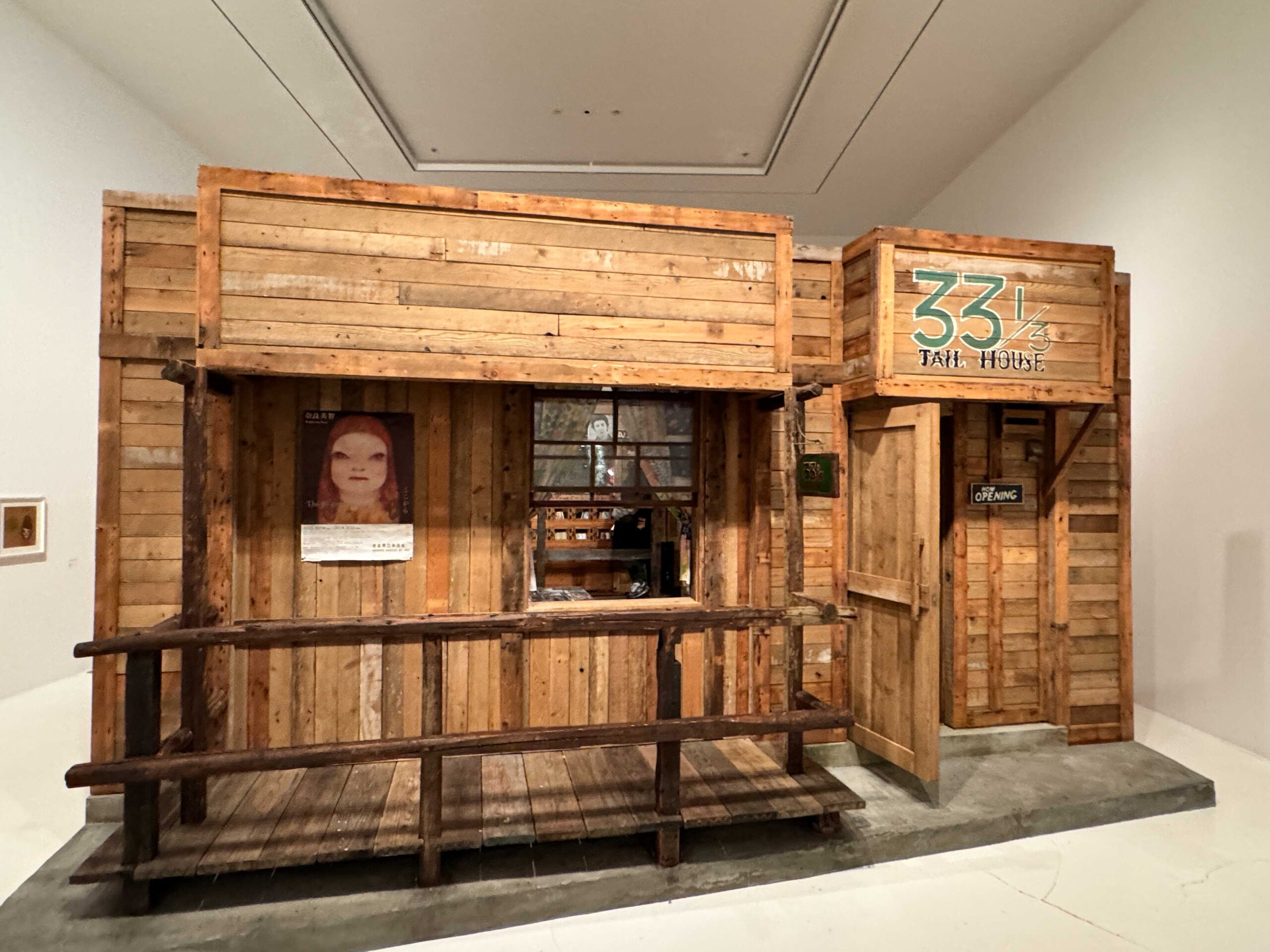
5. Rock café “33 1/3”
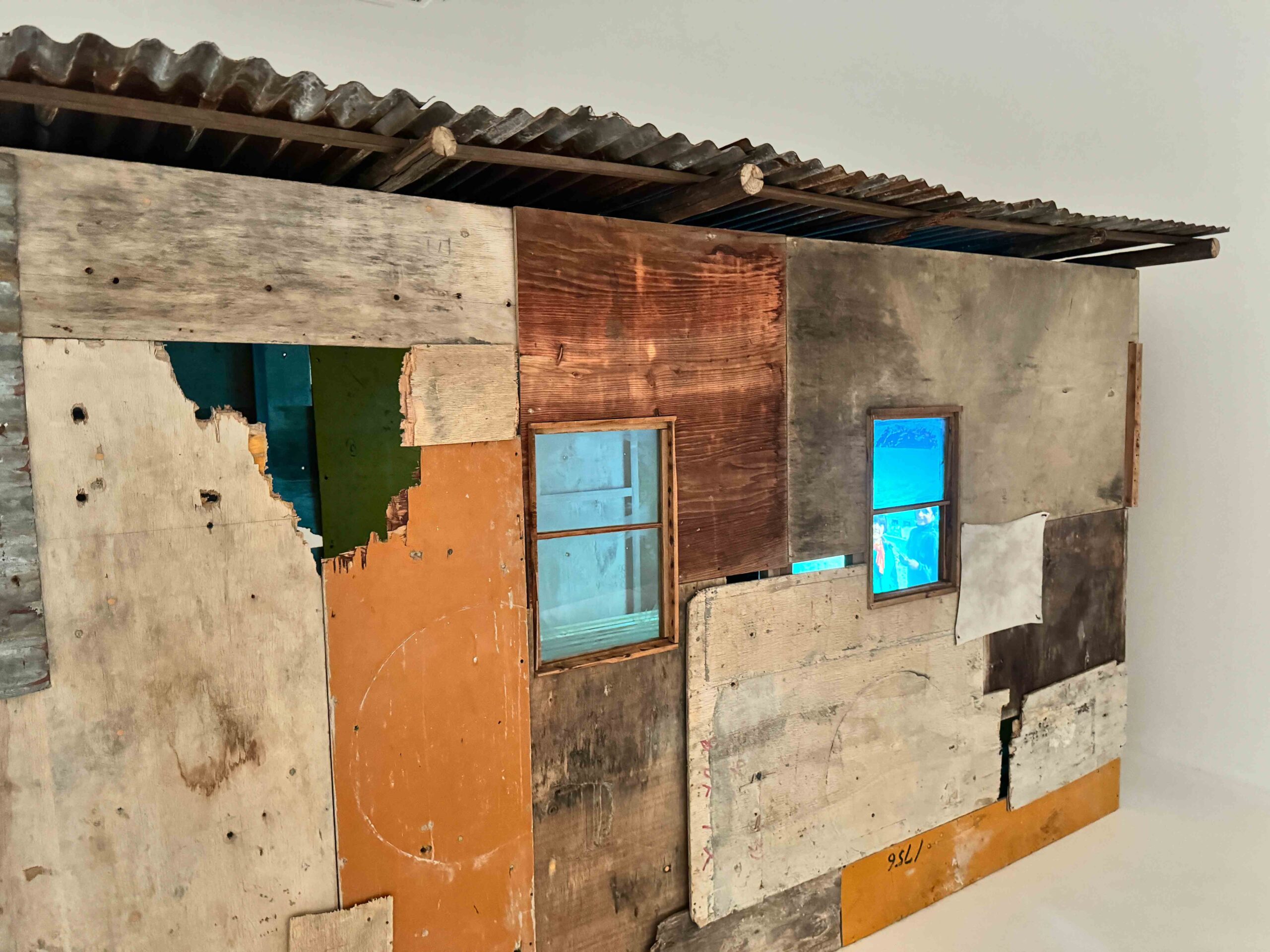
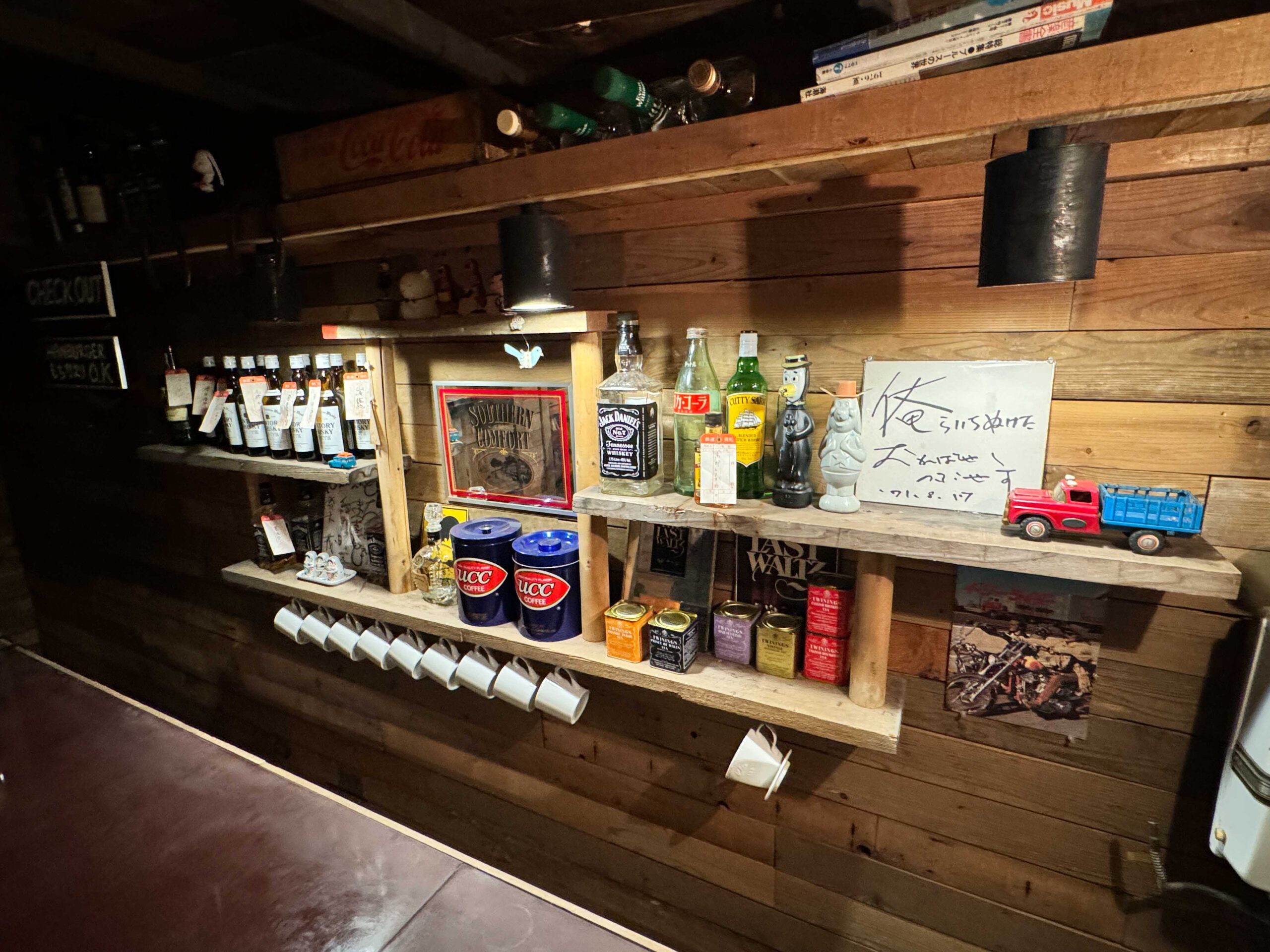
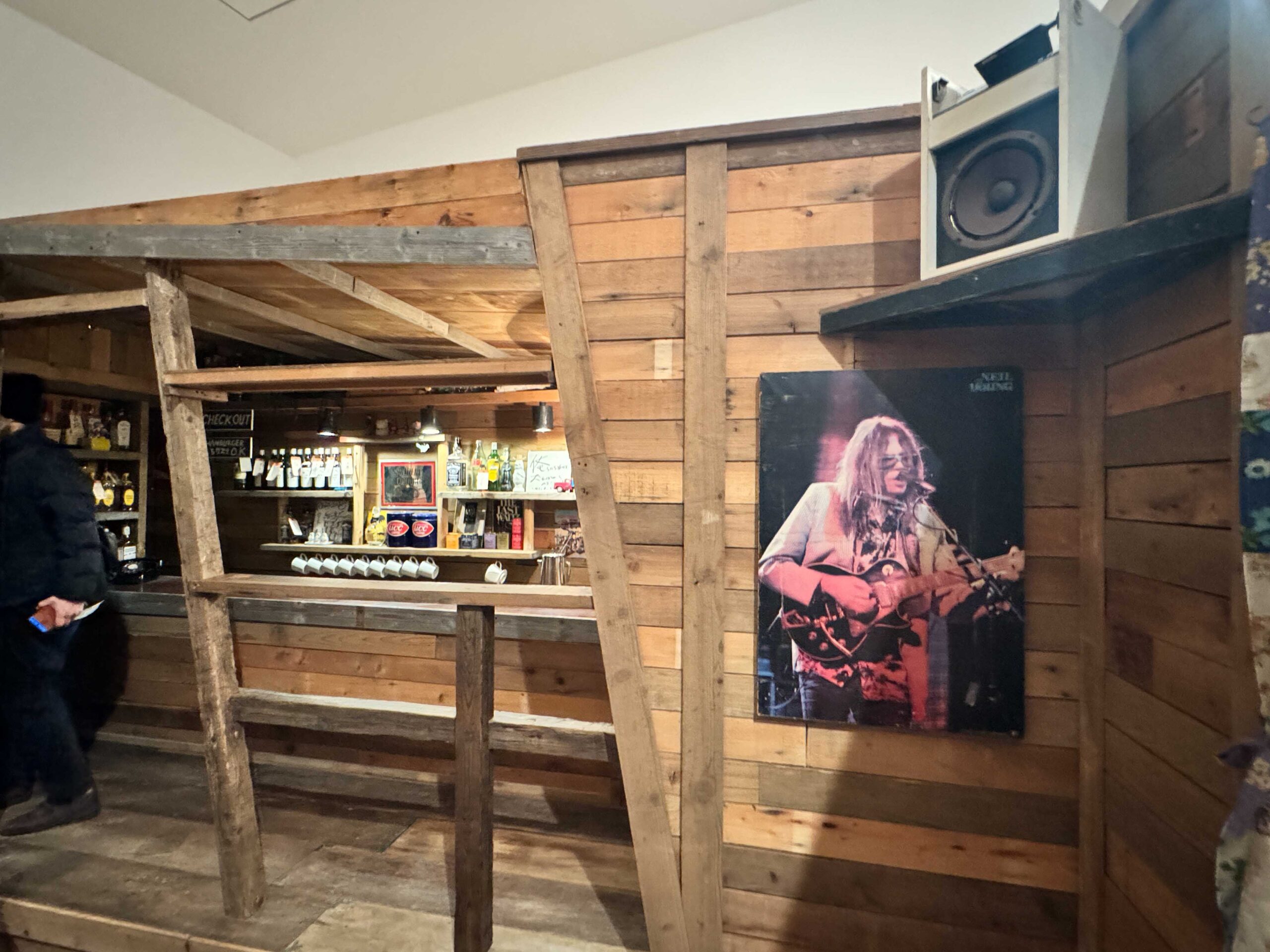
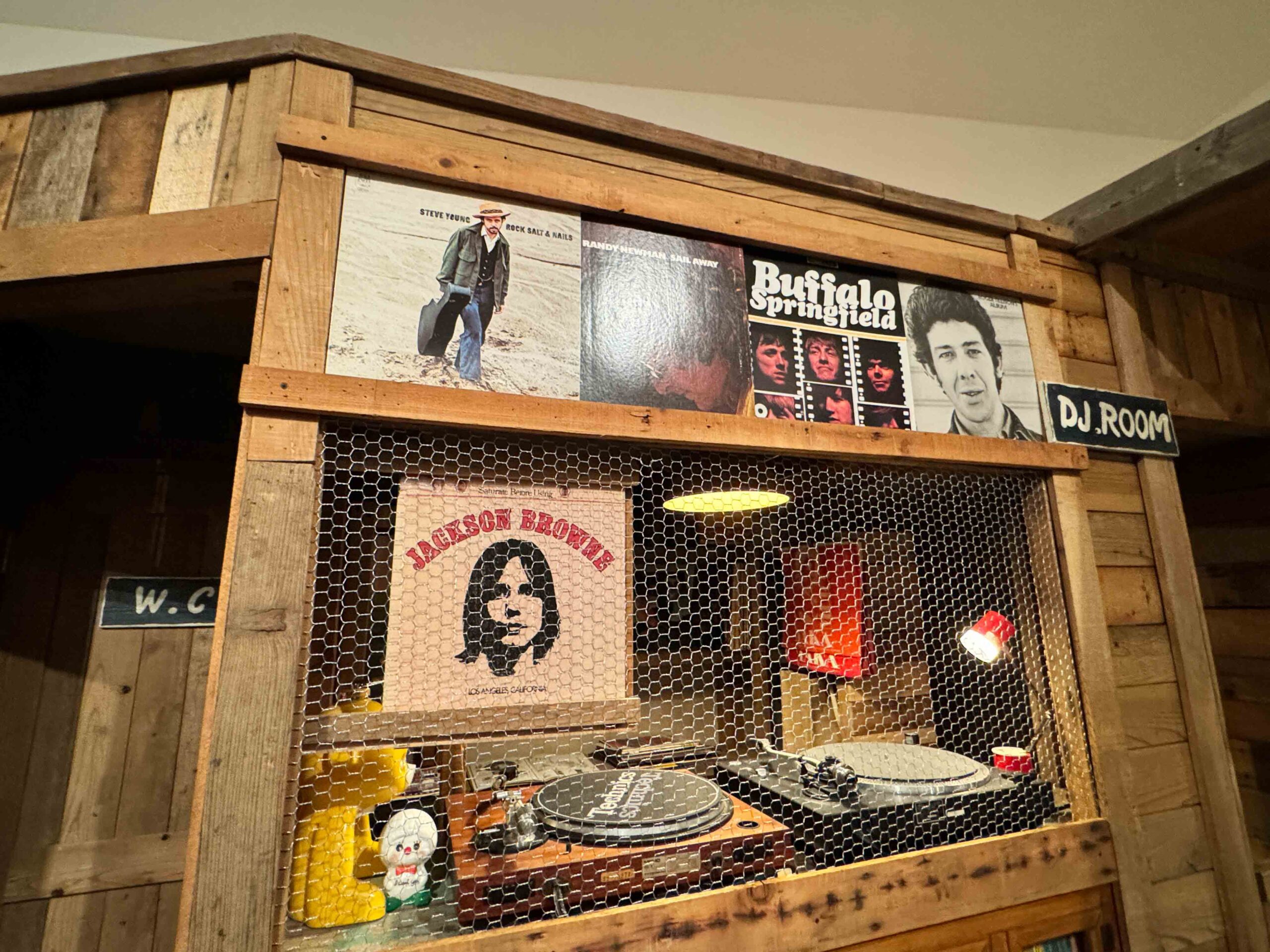
As a high school student in Hirosaki, Nara frequented local live music venues, and in his third year he was invited by an older friend to help build a rock café. They finished the exterior and interior of the building by hand, and Nara would step into the DJ booth to select and spin records. Interactions with the people who gathered there began, forming a small community. “That’s where I met, for the first time, friends I could do what I loved with. I realized that the rock café we made together was the starting point of my life.” (Nara) The rock café, which closed in 1980 and was demolished, has been faithfully reconstructed within the exhibition venue. It really does feel like slipping back in time — as if the young Nara and his friends were right there.
A section where you can experience Nara’s roots.
The café he actually ran has been reconstructed, offering a place where you can physically feel the musicality that resides in his works.
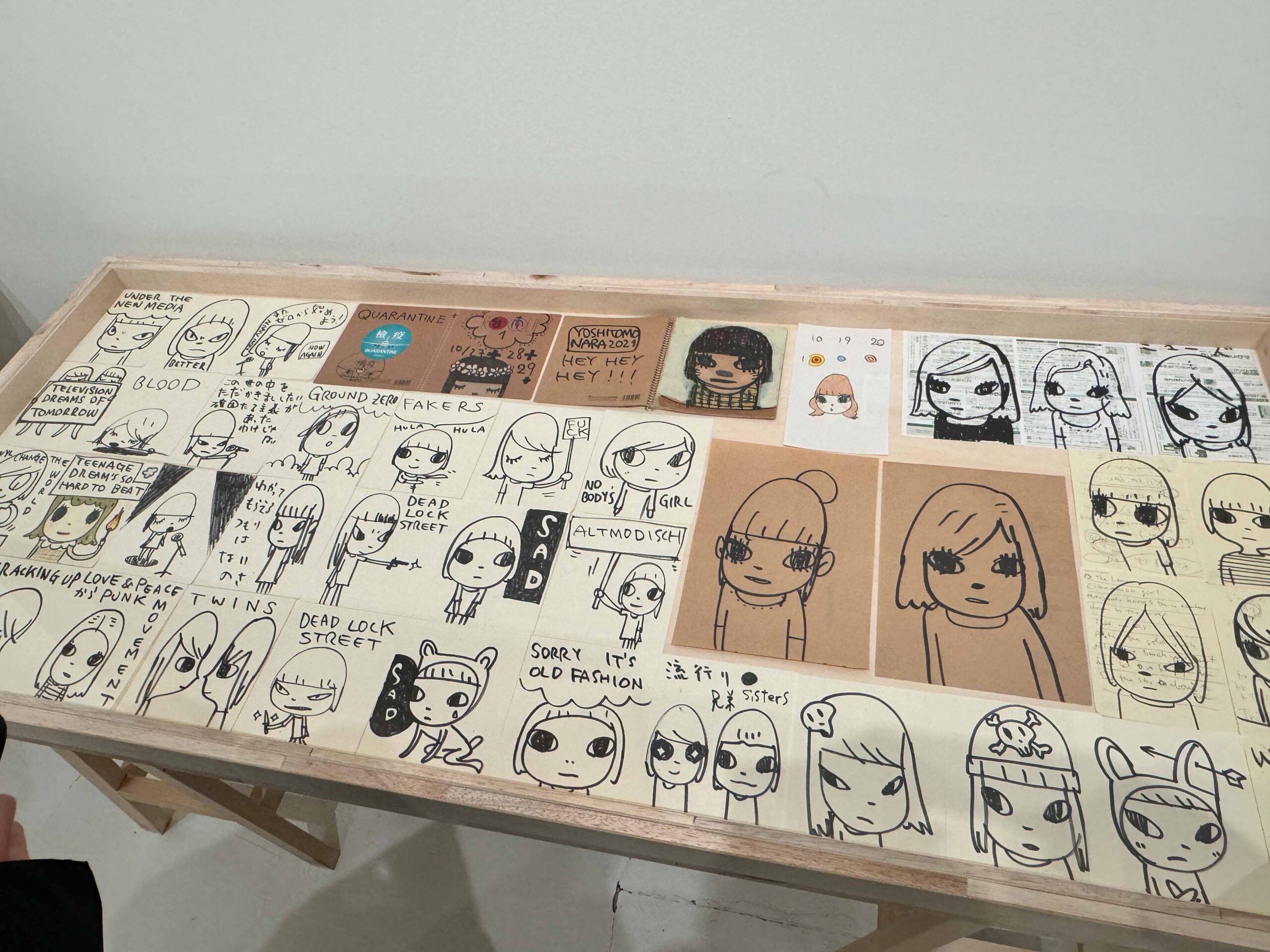
A magnificent solo exhibition that presented painting, drawing, sculpture, photography, installation, and other work styles all at once, from new pieces to older ones. Each of the many works Yoshitomo Nara creates overflows with originality and is rich in message, and there was a constant sensation of having our viewer’s hearts shaken.
It was a wonderful exhibition that made the meaning of its being held at this place, at this time, deeply felt.