Nerhol “Tenjin, Mume, Nusa” Dazaifu Tenmangu Shrine Treasure Hall
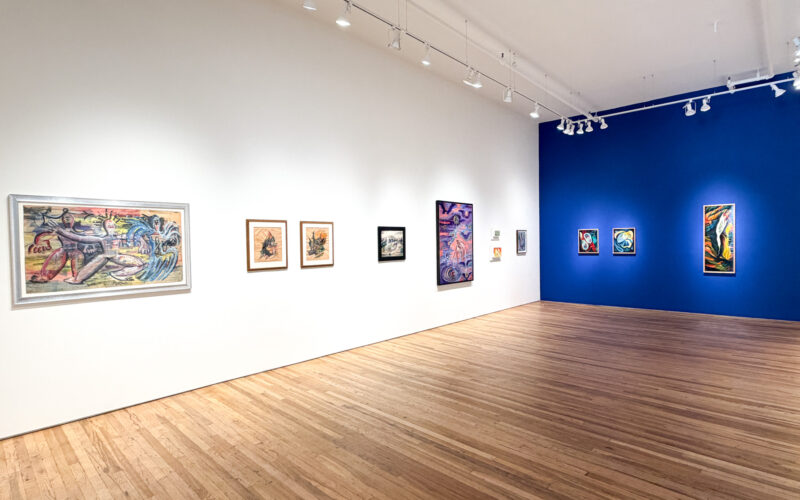
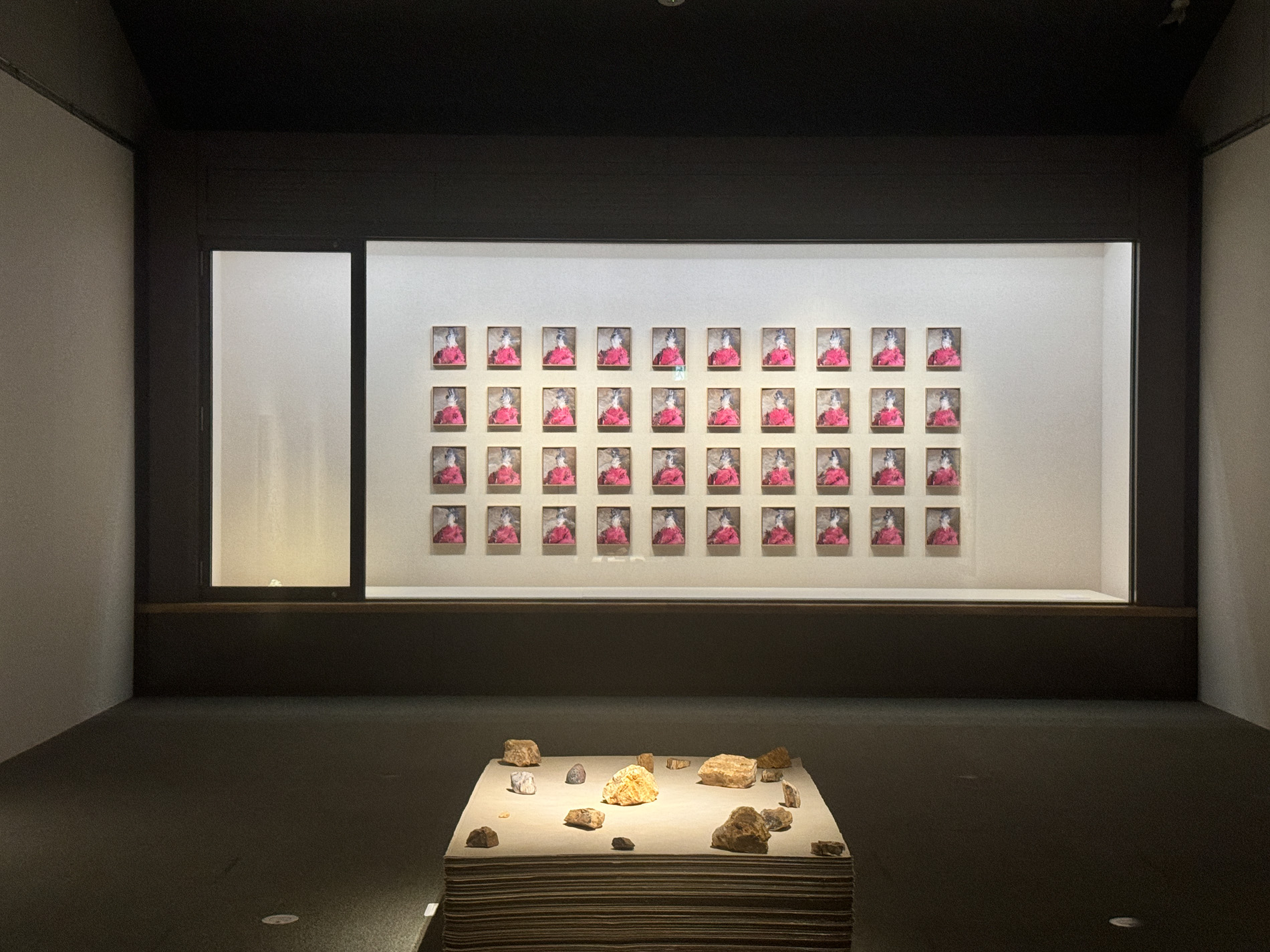
I visited Nerhol’s solo exhibition “Tenjin, Mume, Nusa” held at Dazaifu Tenmangu Shrine in Fukuoka Prefecture.
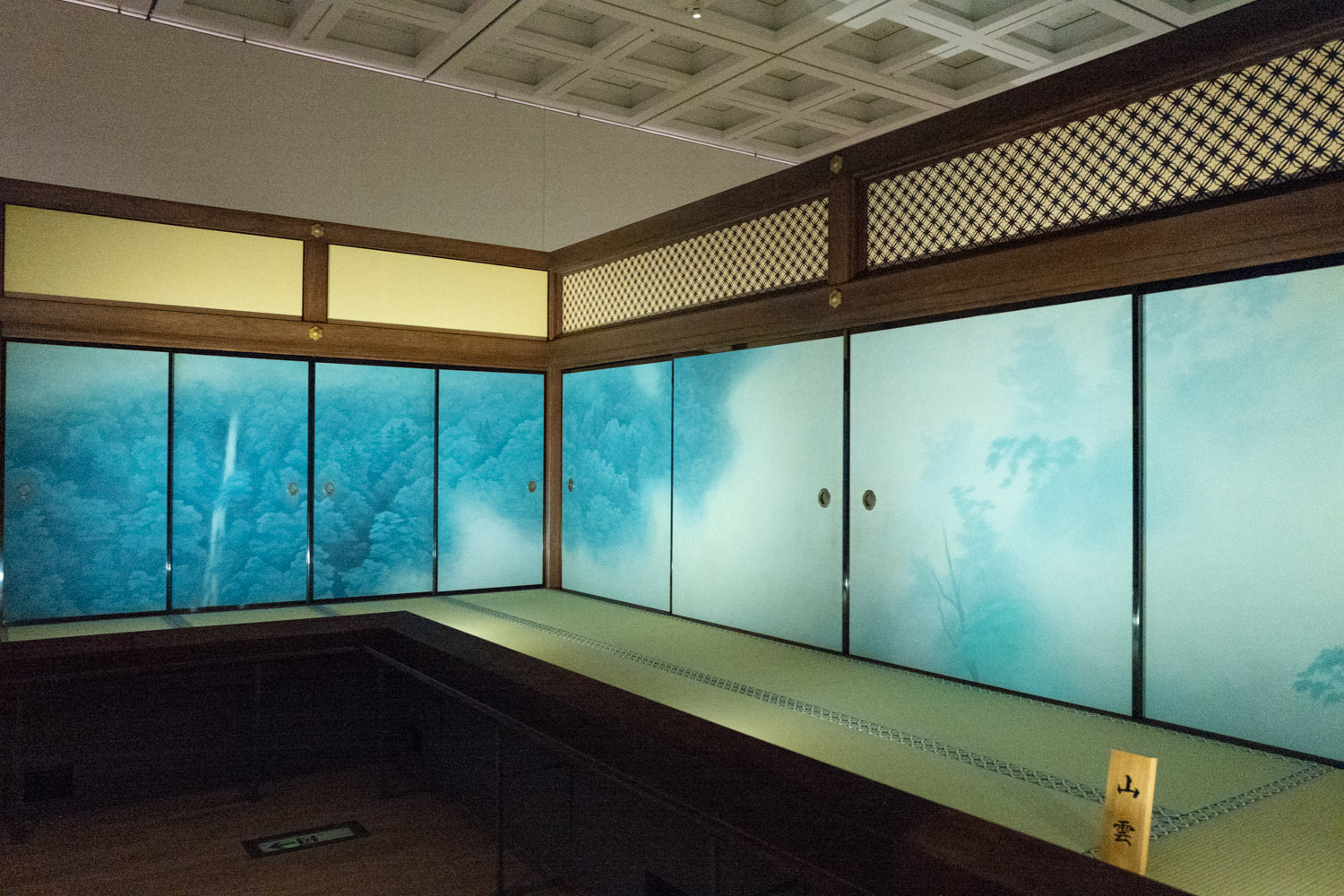
The venue is the Treasure Hall of Dazaifu Tenmangu Shrine.

The exhibition “Tenjin, Mume, Nusa” by Nerhol, an artist unit consisting of Ryuta Iida and Yoshihisa Tanaka.
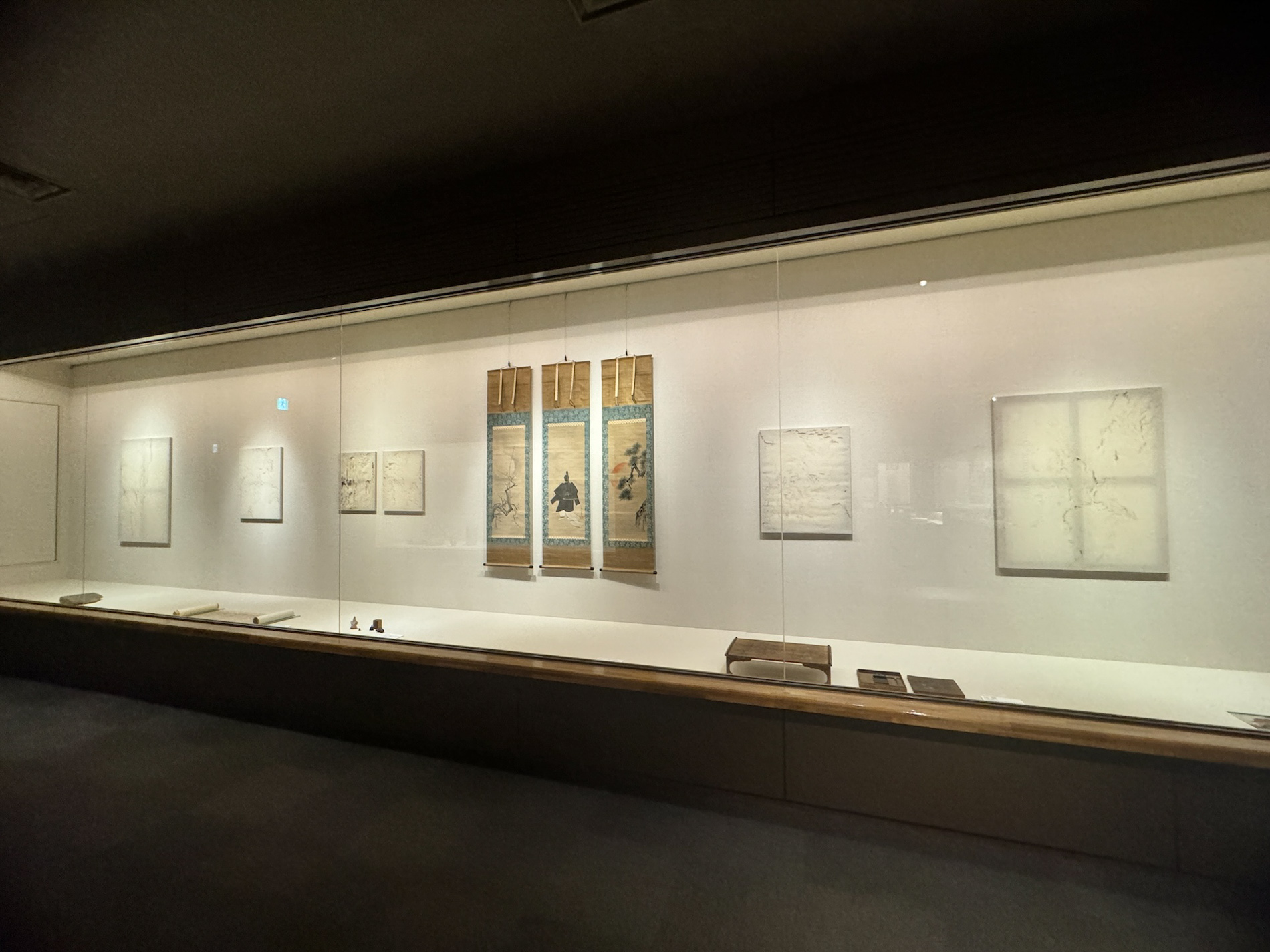
Taking its name from “Tenjin,” the “mume” (plum) beloved by Tenjin, and the “nusa” (hemp) indispensable to Shinto rituals, this exhibition also displays cultural properties from the collection of Dazaifu Tenmangu Shrine selected by Nerhol.
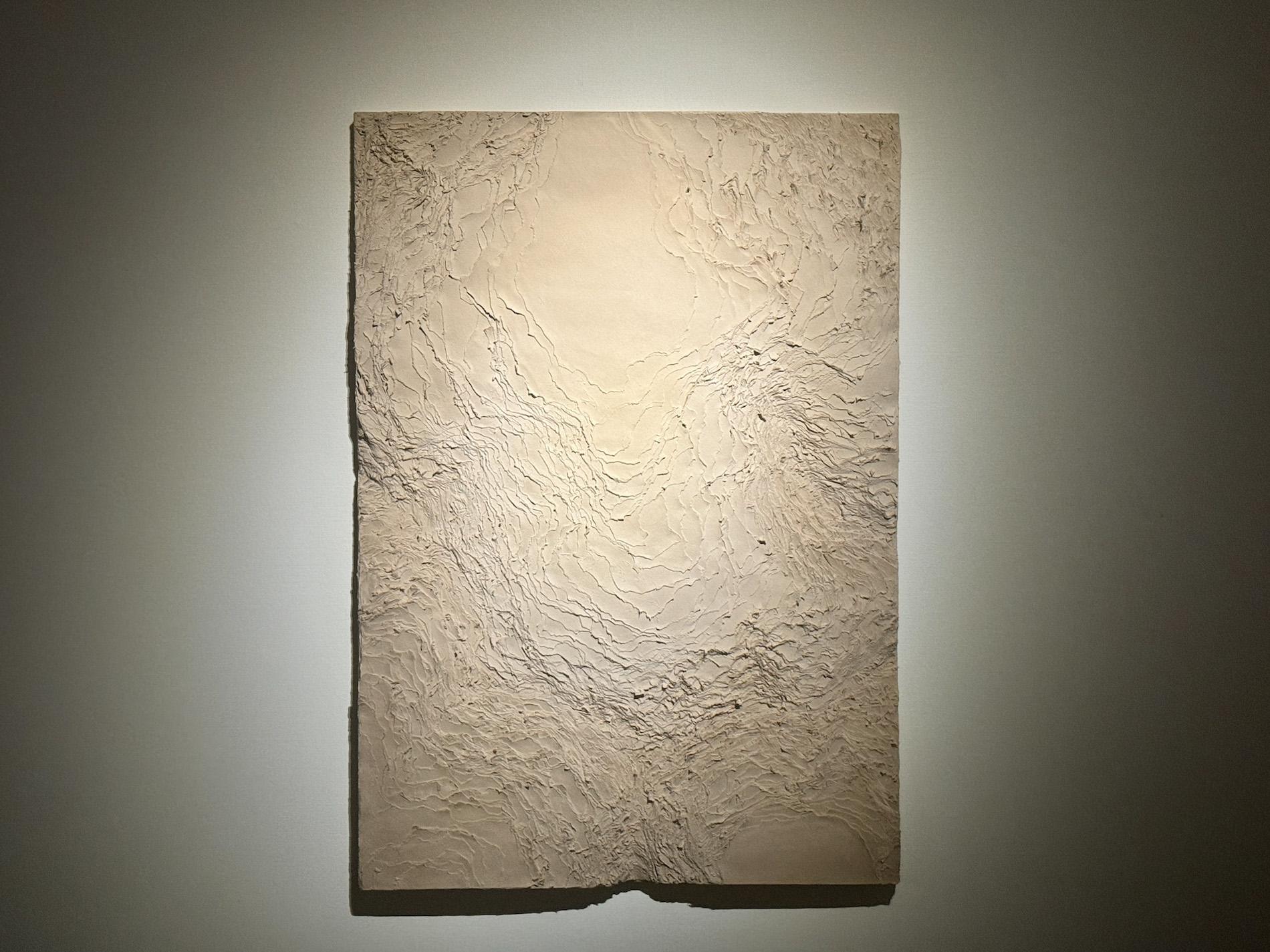
Ox glue, cedar
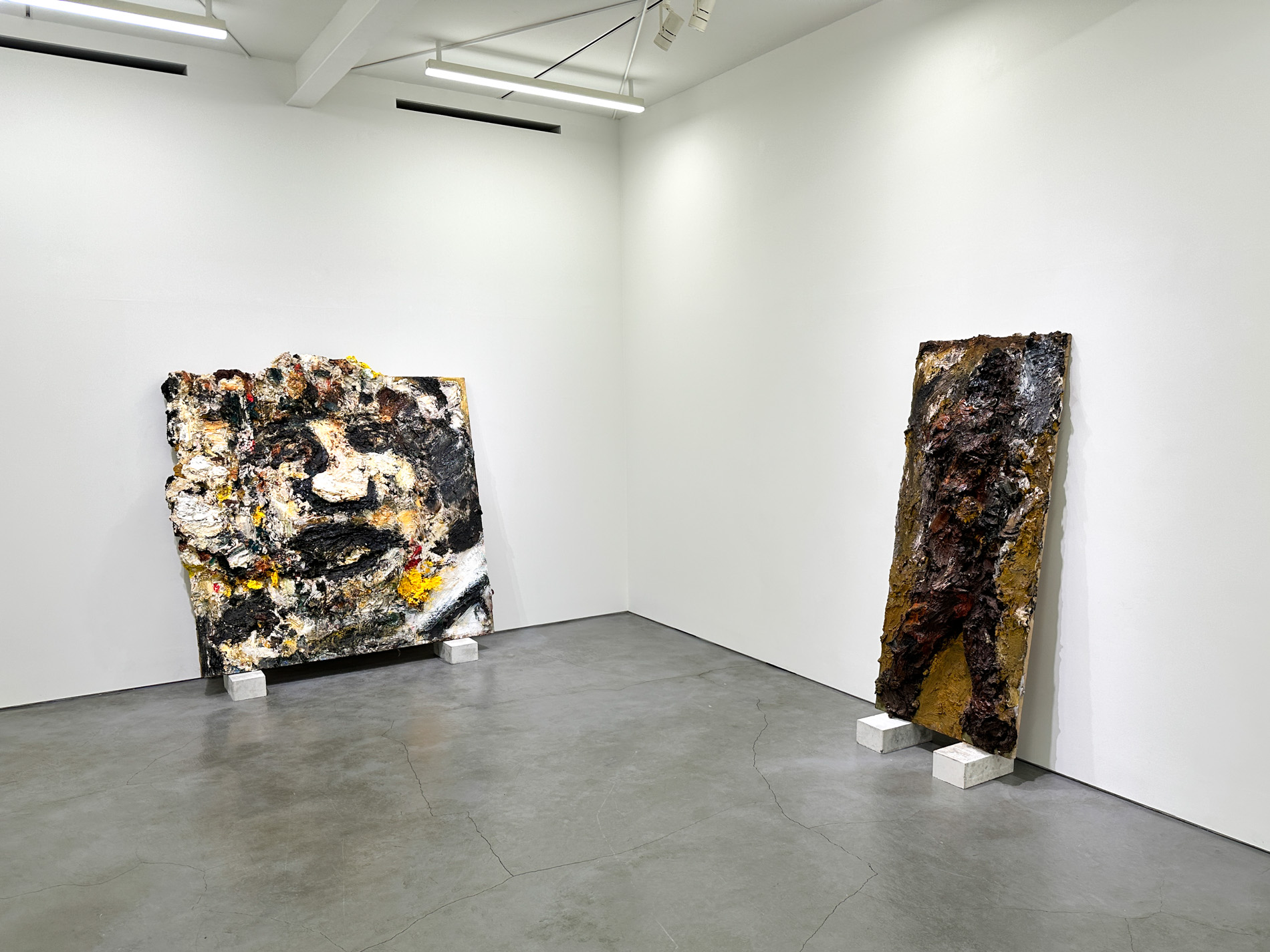
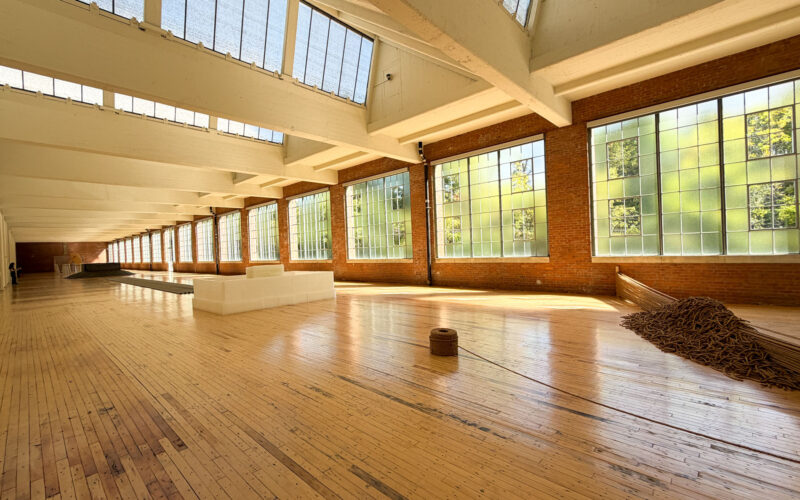
Learning that the origin of paper lay in hemp, and having reconsidered Japanese culture through hemp, the pair felt they should return to hemp paper. With the cooperation of artisans, they made a canvas of one hundred percent hemp paper by pounding hemp fibers into paper, cutting the paper into thin strips, twisting it into thread, and weaving it on a loom. This dizzyingly laborious process is, for them, layering itself.
By varying between plain weave and jacquard weave to change the surface expression of the canvas, they rub and scrape the surface until holes form, then repeatedly apply layers of glue. What glimmers on the surface is glue, and among ancient painting materials they employ ox glue, which has deep ties to Tenmangu.
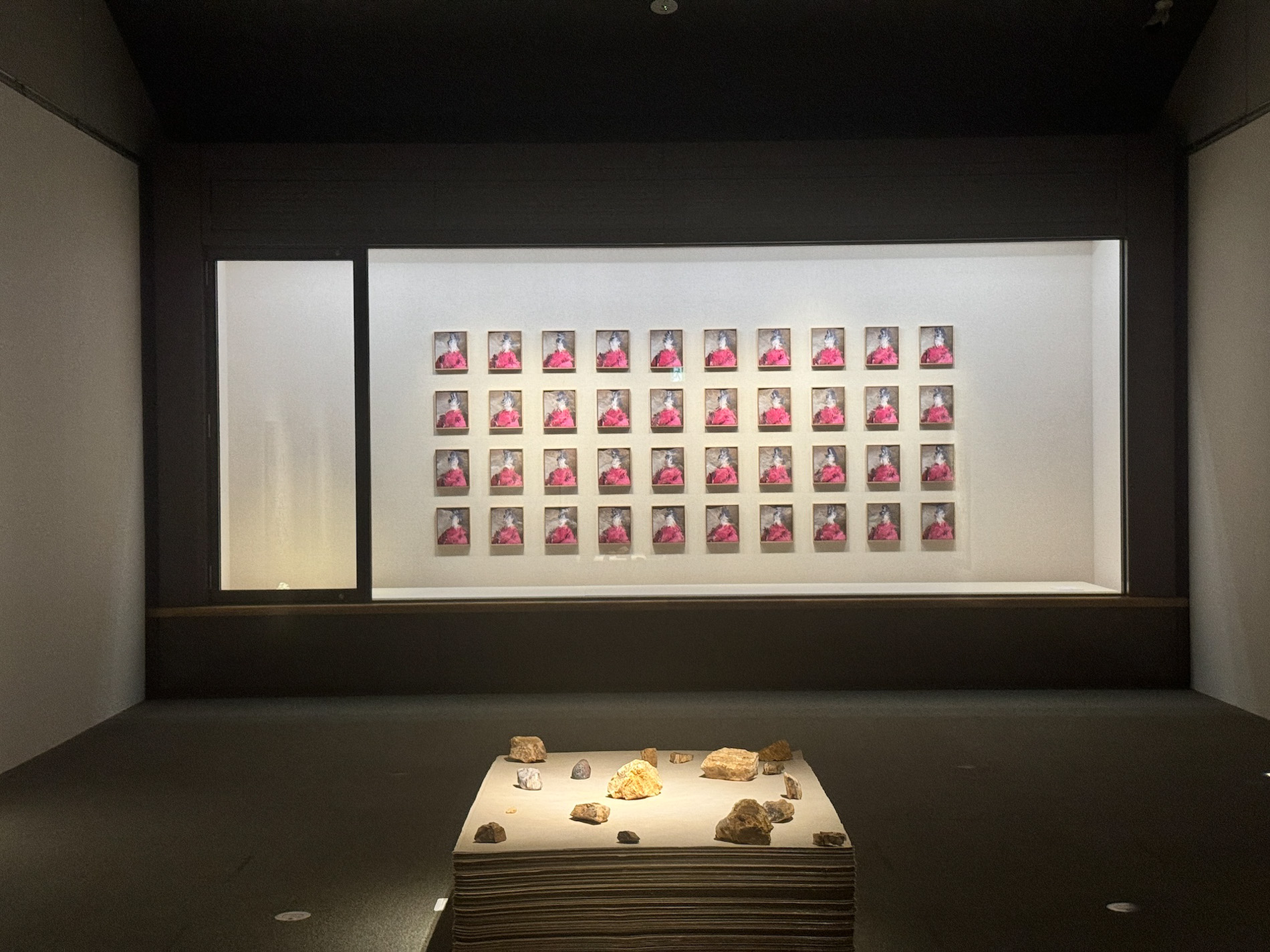
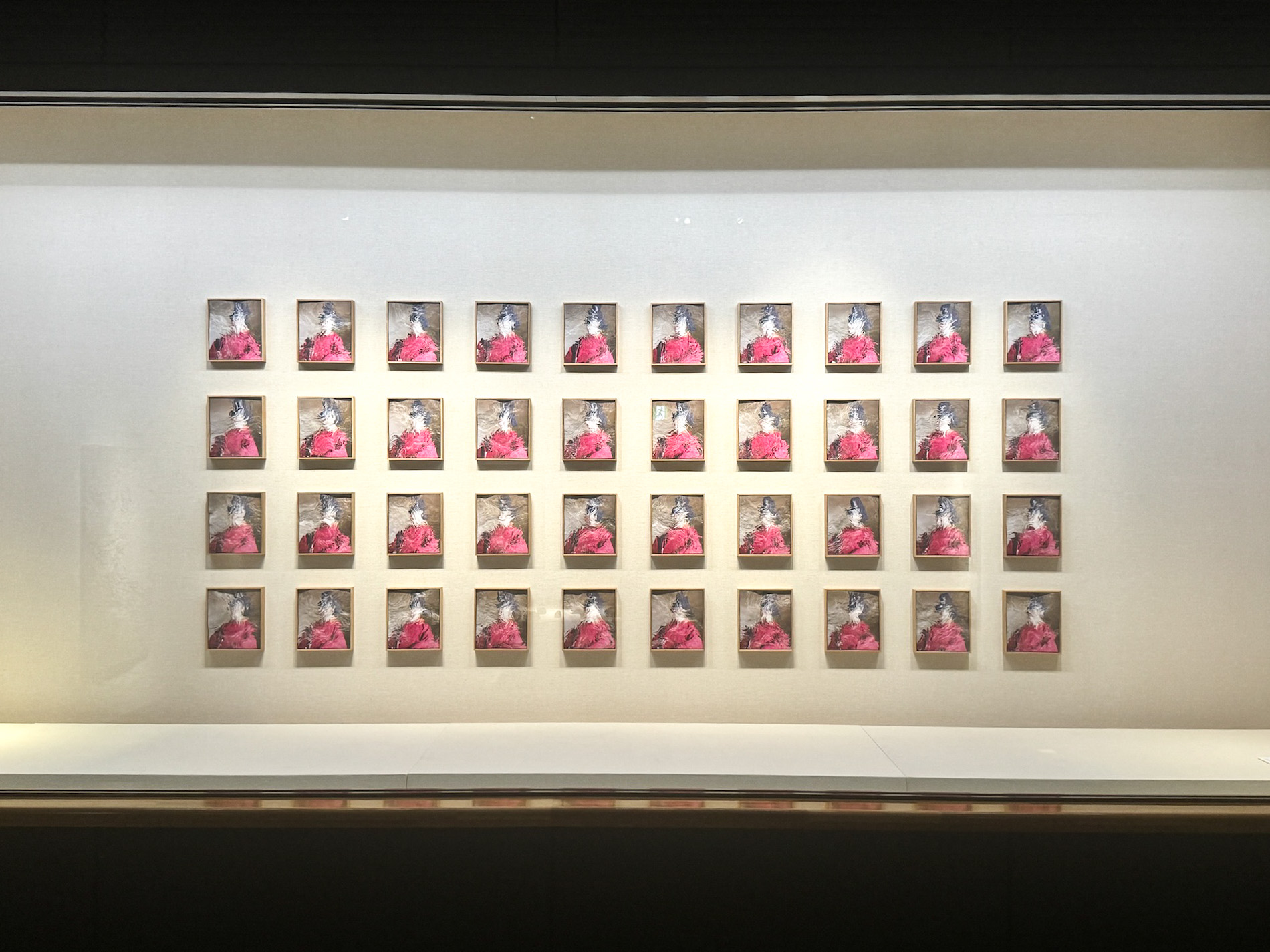
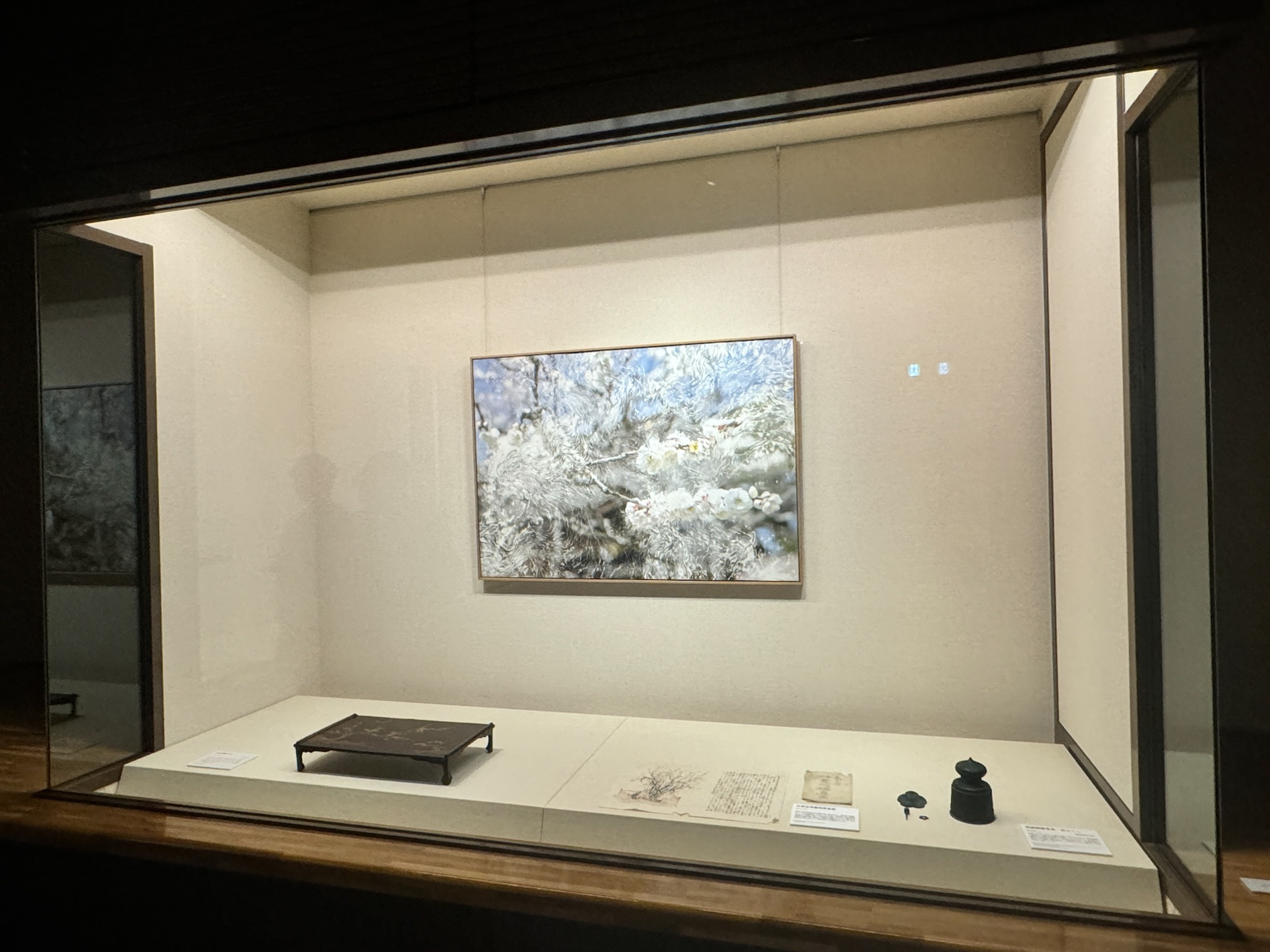
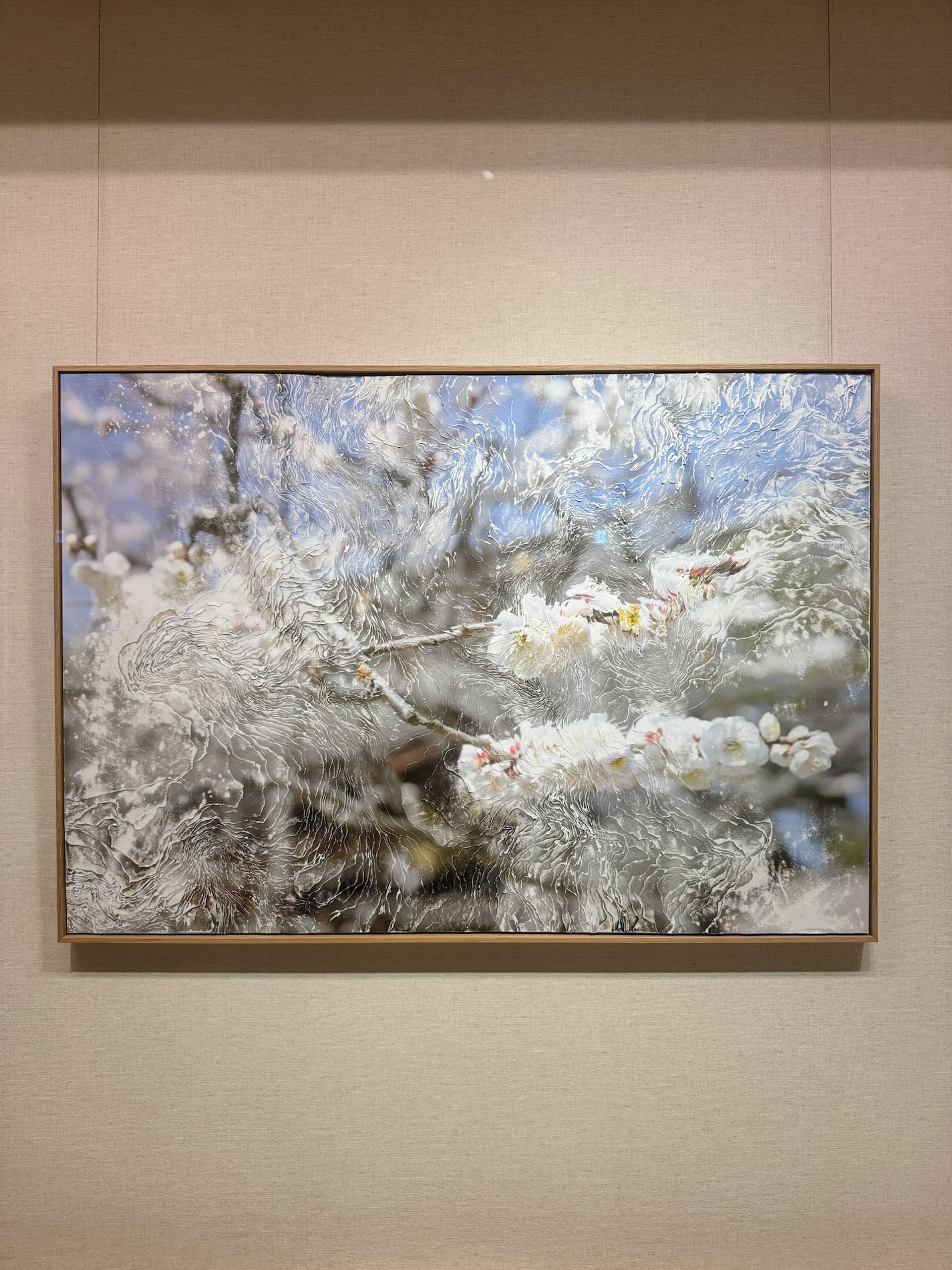
The “mume” in the plum’s Latin name “Prunus mume” derives from the archaic Japanese word “mume.”
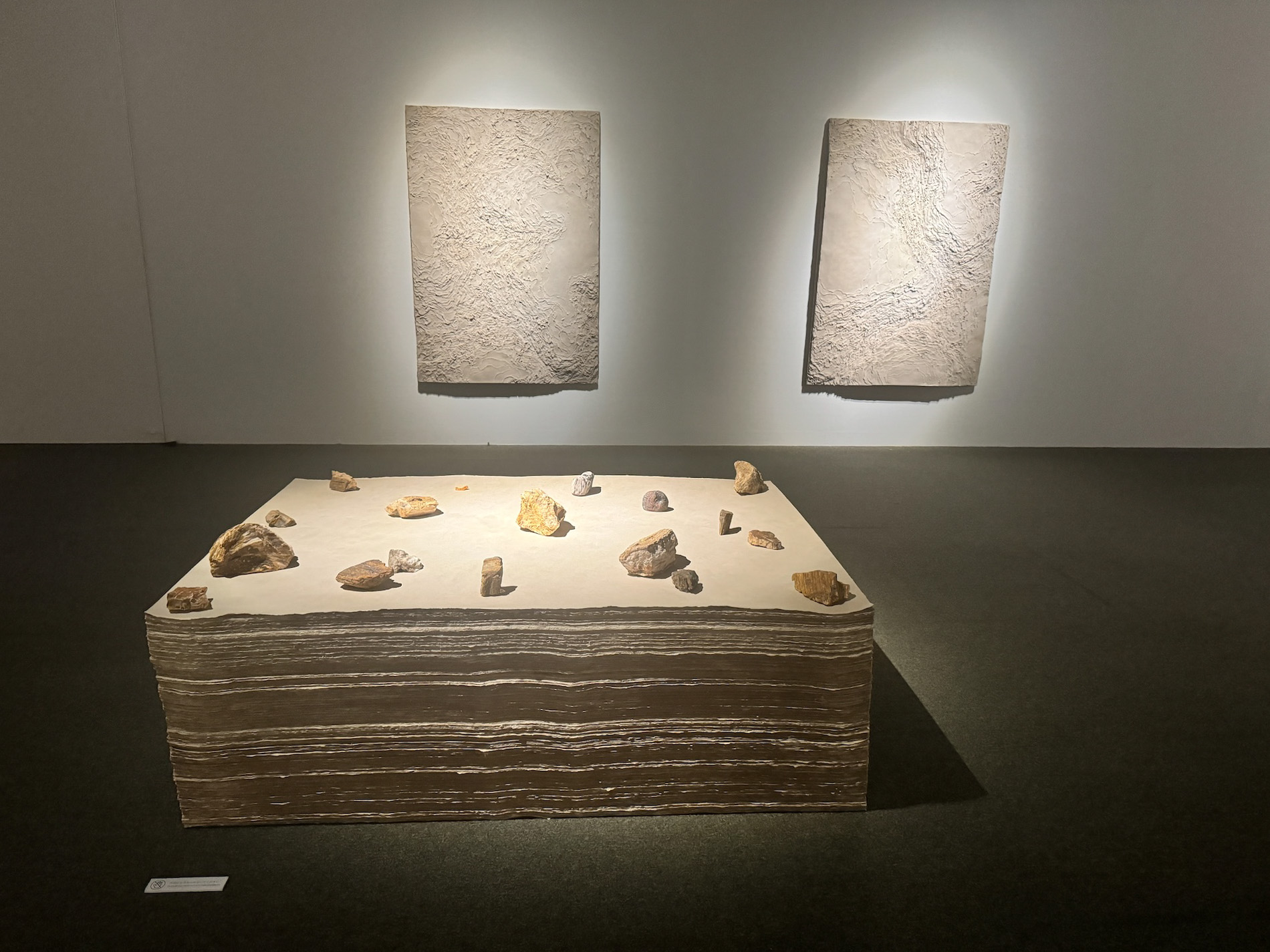
Video footage of “Tobiume” (Flying Plum)—the sacred tree of Dazaifu Tenmangu Shrine—was printed as a sequence of stills, layered chronologically, and then carved. They roughly carve with a chisel and grinder, use a cutter to remove the paper’s cross-sections, and further shave with a file, letting the plum blossoms’ white, the paper’s white, and the light’s white intermingle—resulting in a painterly expression in which the material paper itself stands out.
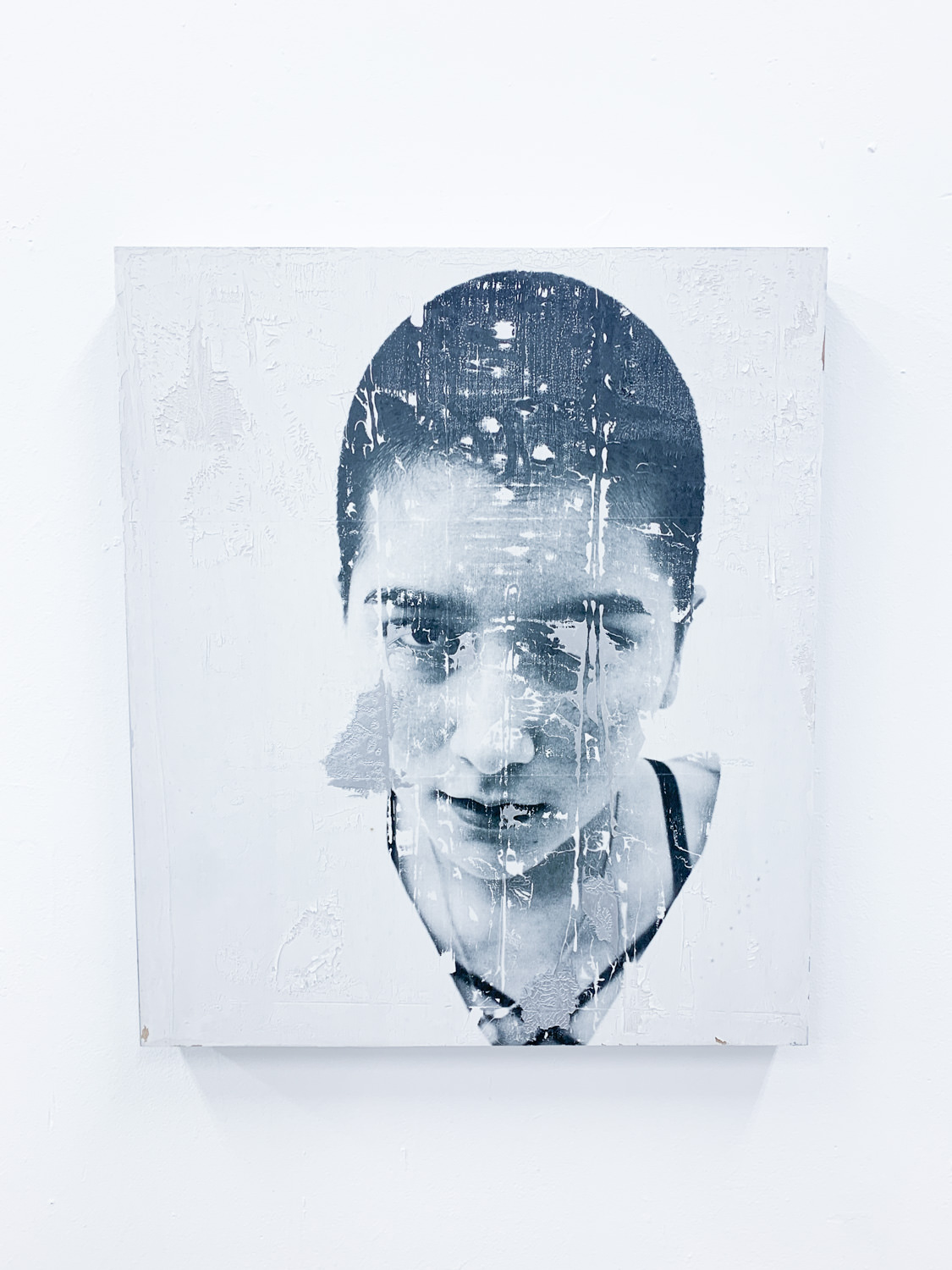
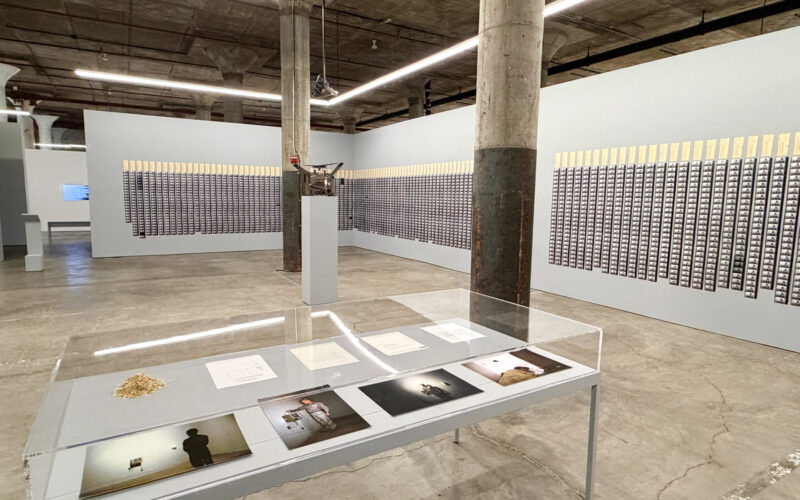
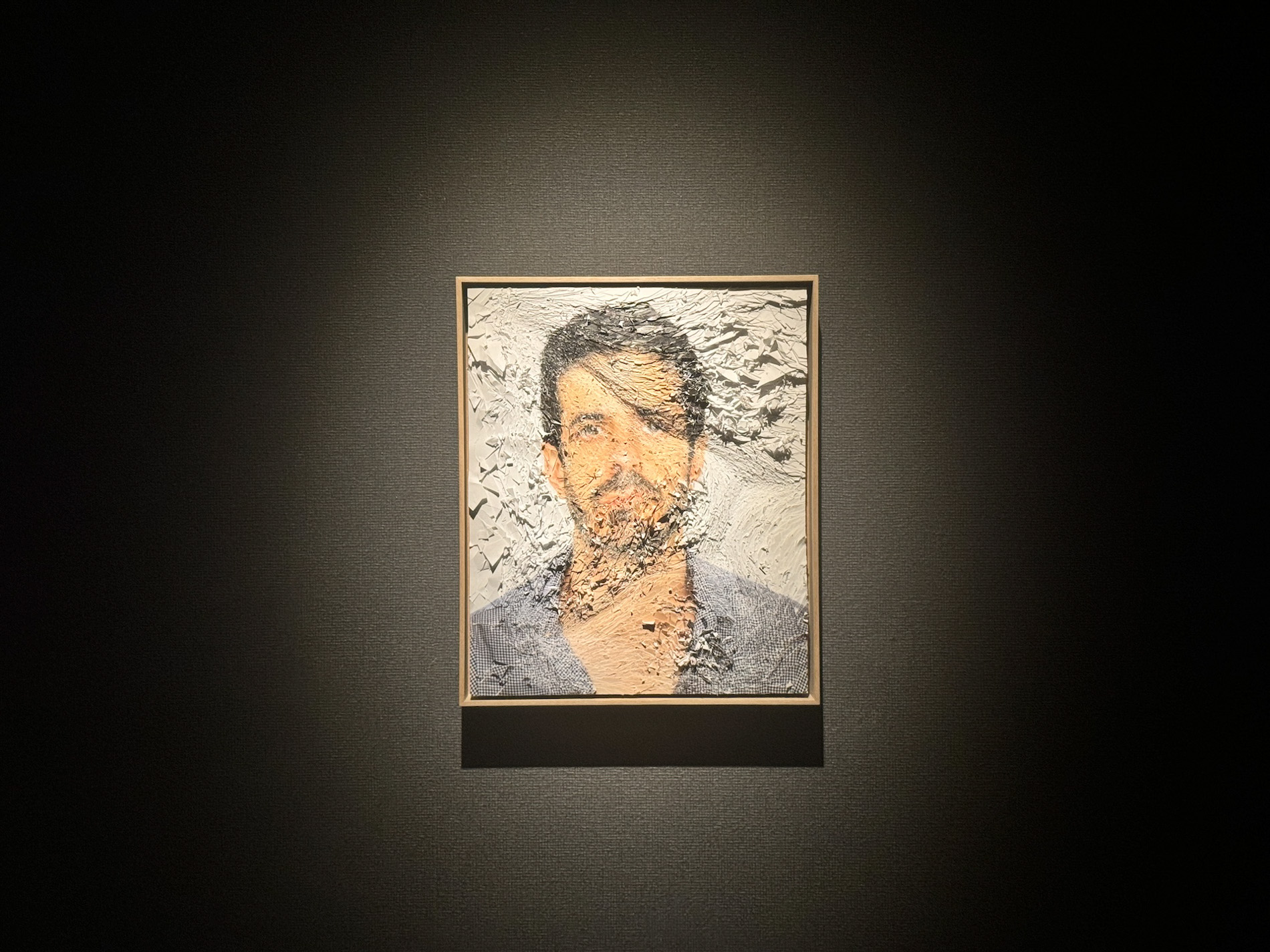
《Untitled (Alec Soth)》 at the entrance to the exhibition room is a work released eight years ago. Compared to that earlier work—which layered 200 photographs shot in rapid succession over three minutes and cut them out finely with a cutter, placing importance on showing them as photographs—this new piece reveals the pair’s shifting interest toward the landscapes that emerge from carving away layers.