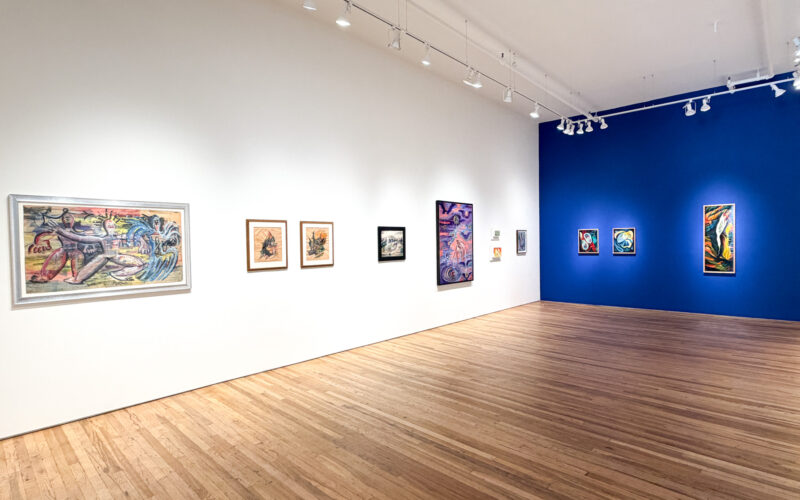
As a gallery director and an art collector, I think about the relationship between art and society.
This time, at the invitation of the president of ProStyle Design—a firm with extensive achievements and expertise in interiors and architecture—I was fortunate to have the chance to visit the world’s largest design event, Salone del Mobile Milano.
In this article, I want to record the atmosphere of Salone del Mobile seen from a contemporary-art perspective, and the insights I gained there.
What is Salone del Mobile Milano?
Salone del Mobile Milano is the main exhibition of Milan Design Week, one of the world’s largest design events, held every April in Milan, Italy.
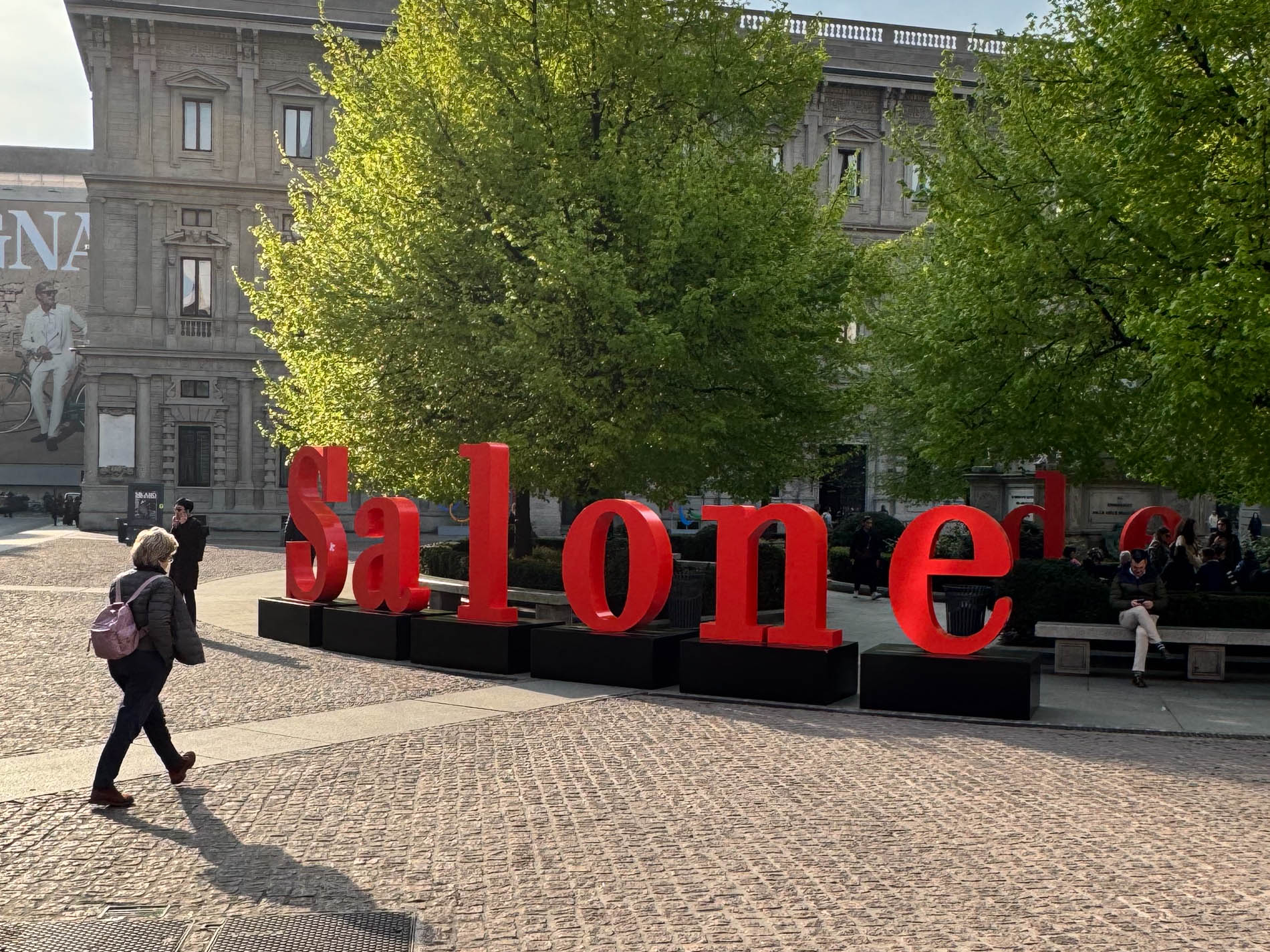
I have seen many editions of Art Basel—held in Switzerland, Paris, and Hong Kong—but this was my first time seeing an international design exhibition like Salone del Mobile. *You can watch footage of the Art Basel (Basel) venue in this video. At art fairs, lines form before the doors open on the first day, but this time we arrived right after Salone del Mobile opened, and it was a quiet start.
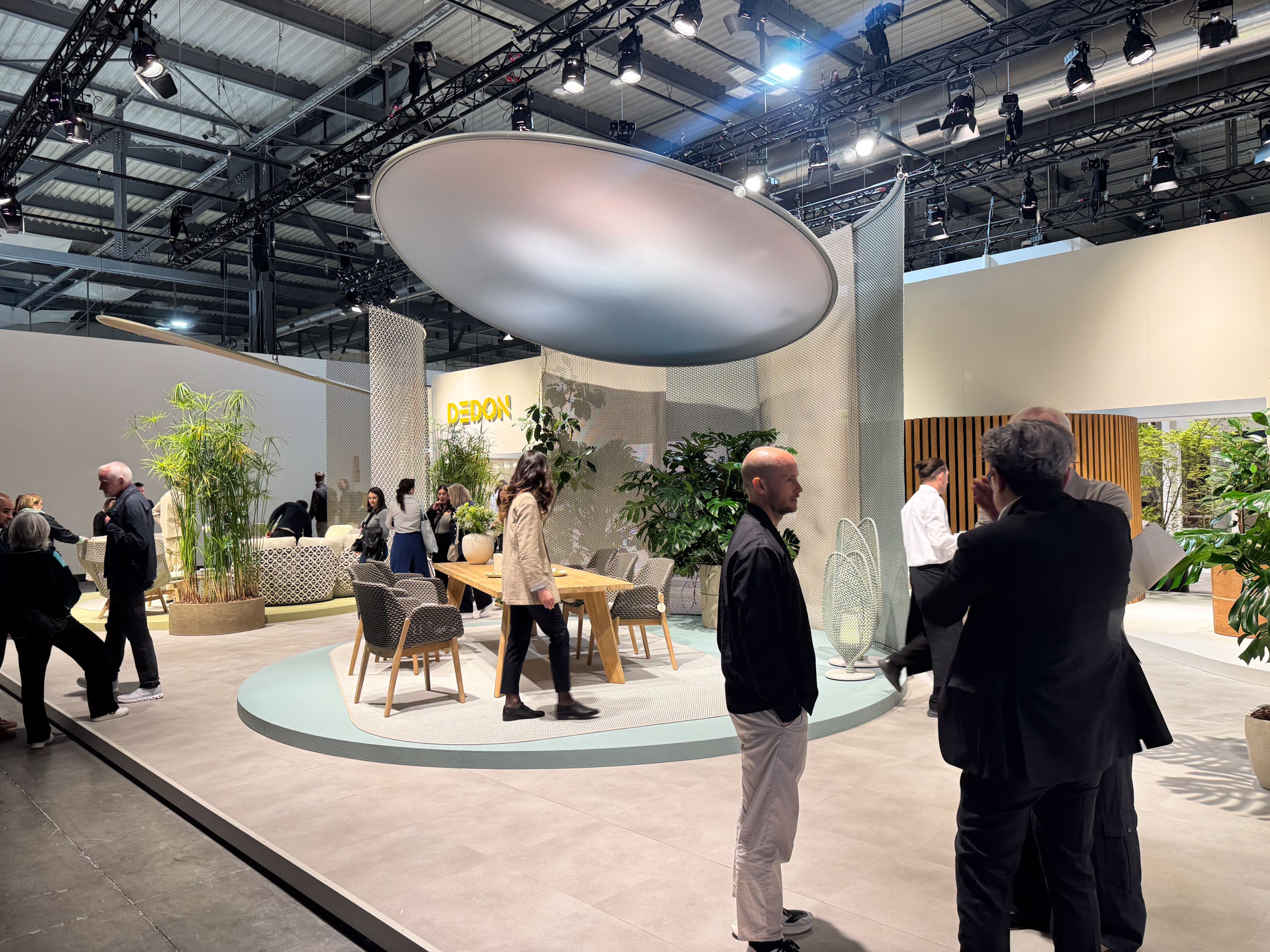
Accompanying me was a design firm called ProStyle Design, which produces entire spaces comprehensively—not just architecture but also furniture, lighting, acoustics, and art. We are currently asking them to handle the design of a certain property, and it was through this connection that I joined them this time. I was accompanied by the company’s president, Mr. Koga. Having visited Salone del Mobile more than 20 times, he is truly a “pro among pros.”
Salone del Mobile is not a sales exhibition like an international art fair; it is fundamentally a business-to-business (BtoB) international trade fair. On the first day we entered, there were few individual end users, and many booths were reservation-only, so at times it felt somewhat difficult for general visitors. In the latter half (mainly Friday to Sunday), general visitors and students reportedly increase.
For a first-time individual participant like me, being able to tour the venue while receiving careful explanations of each brand was a very valuable opportunity. Incidentally, the products I saw this time will reach Japan in autumn of this year at the earliest. Lighting, which takes time to obtain PSE certification, may take two to three years.
A vast venue layout
The venue, “Fiera Milano,” is an enormous facility—so large that even Tokyo Big Sight and Makuhari Messe combined would not match it. This year’s Salone del Mobile spread across a total of 16 halls.
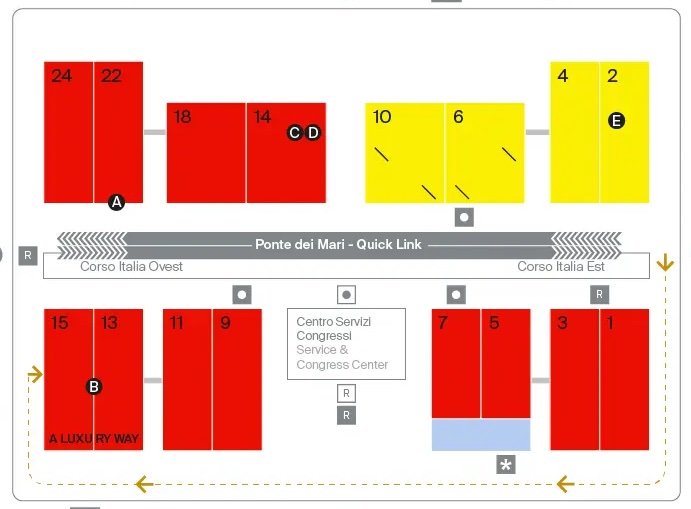
The booths within the venue were all designed to be very spacious; some could be accessed directly from the aisle, while many brands created completely closed spaces with restricted entry. As a result, reservations were often required to visit booths, and lines of people waiting to enter formed here and there.
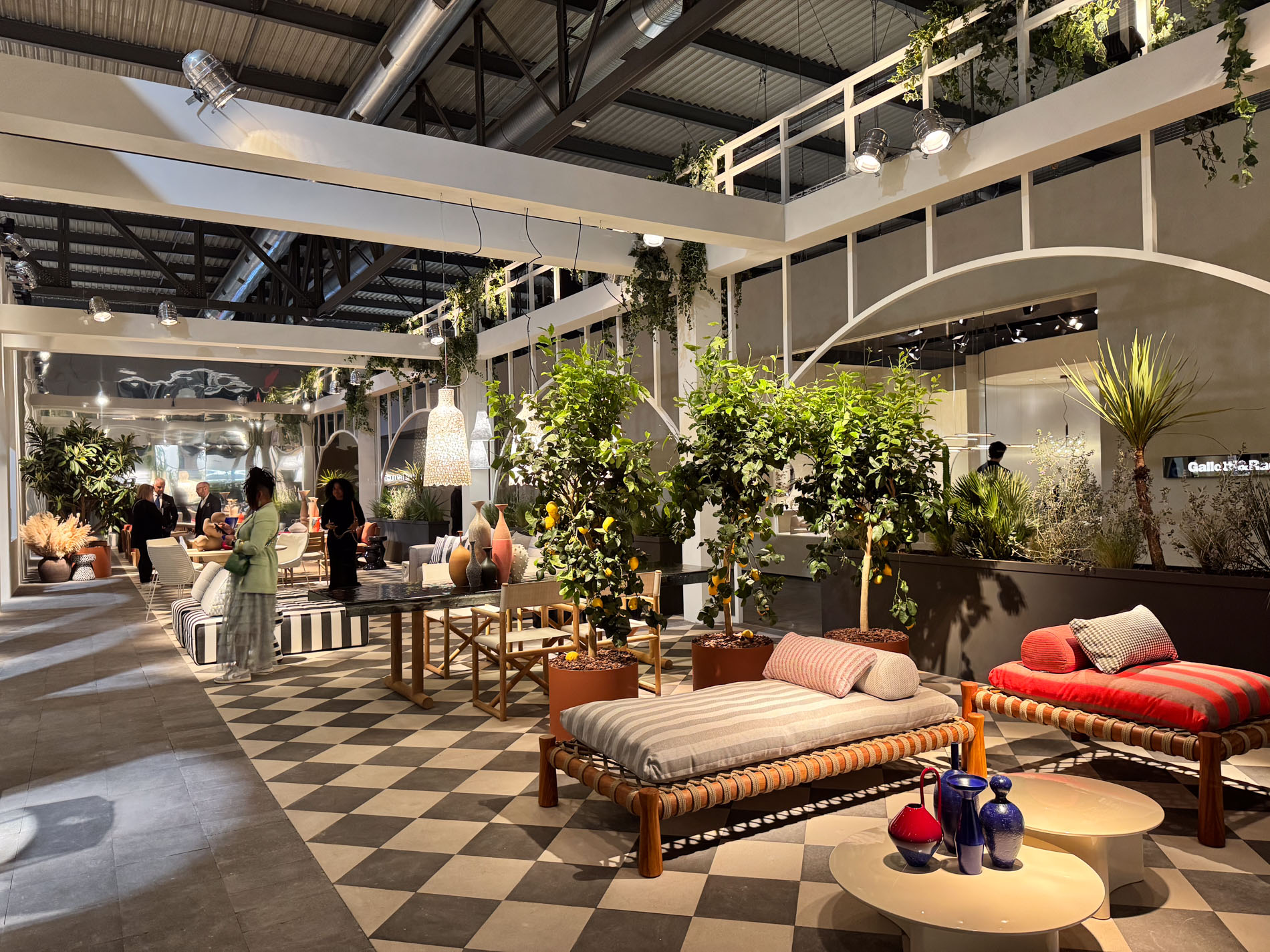
Unlike a so-called art fair, the scale of each brand’s exhibit is enormous, and the amount of money spent is on another level. I heard some booths were built at a cost of over one billion yen.
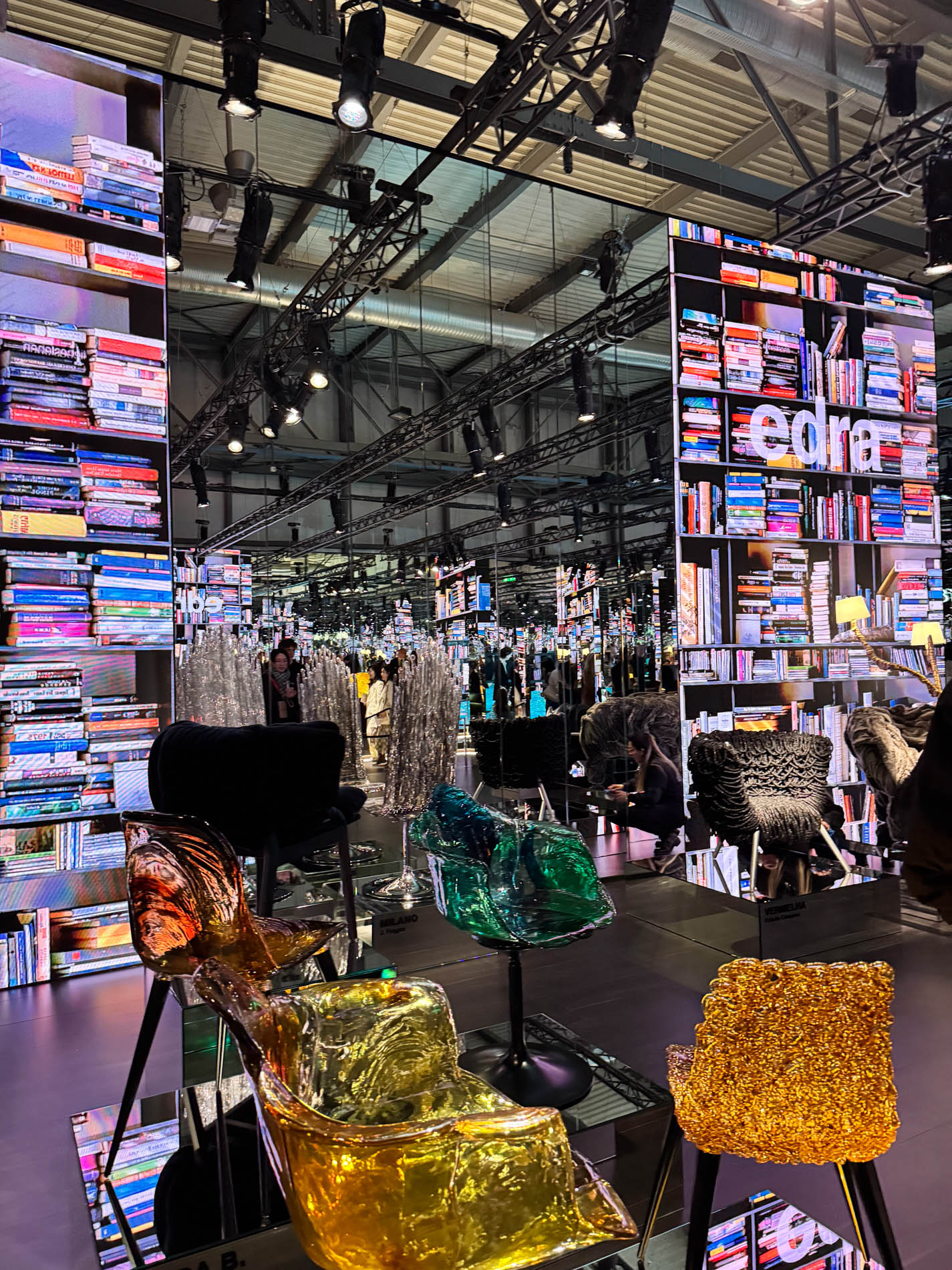
“Euroluce,” held in odd-numbered years
Because 2025 is an odd-numbered year, “Euroluce,” one of the world’s largest lighting exhibitions, was held. The relevant areas were Halls 2–4 and 6–10 within Fiera Milano.
In even-numbered years, the format instead holds EuroCucina (a kitchen exhibition) and the International Bathroom Exhibition.
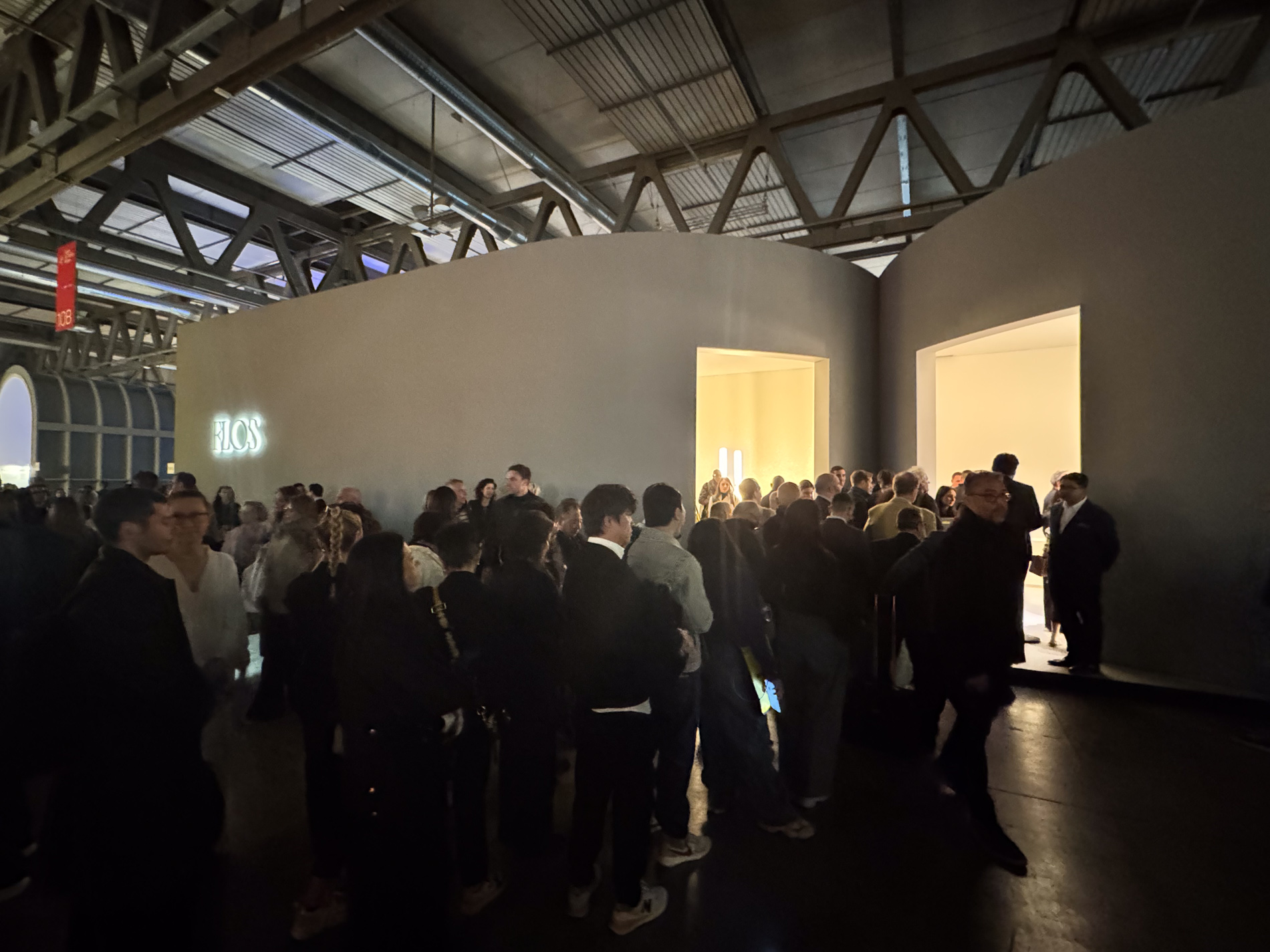
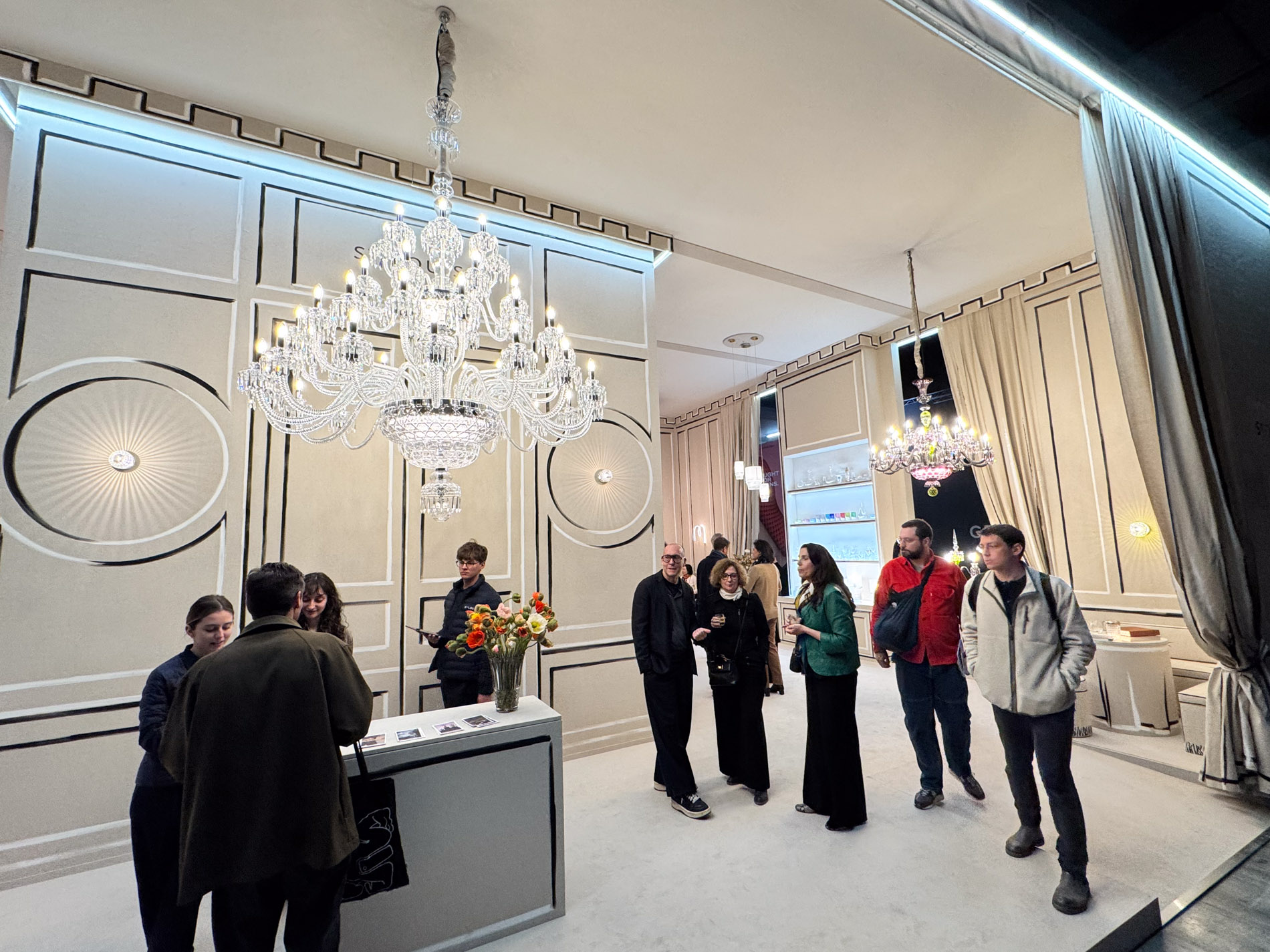
What is Fuorisalone?
In contrast to the Salone held within the Fiera Milano venue, exhibitions and events held at various facilities throughout the city of Milan are called “Fuorisalone.”
In Italian, “fuori” means “outside,” and it has become a major design week that involves the entire city.
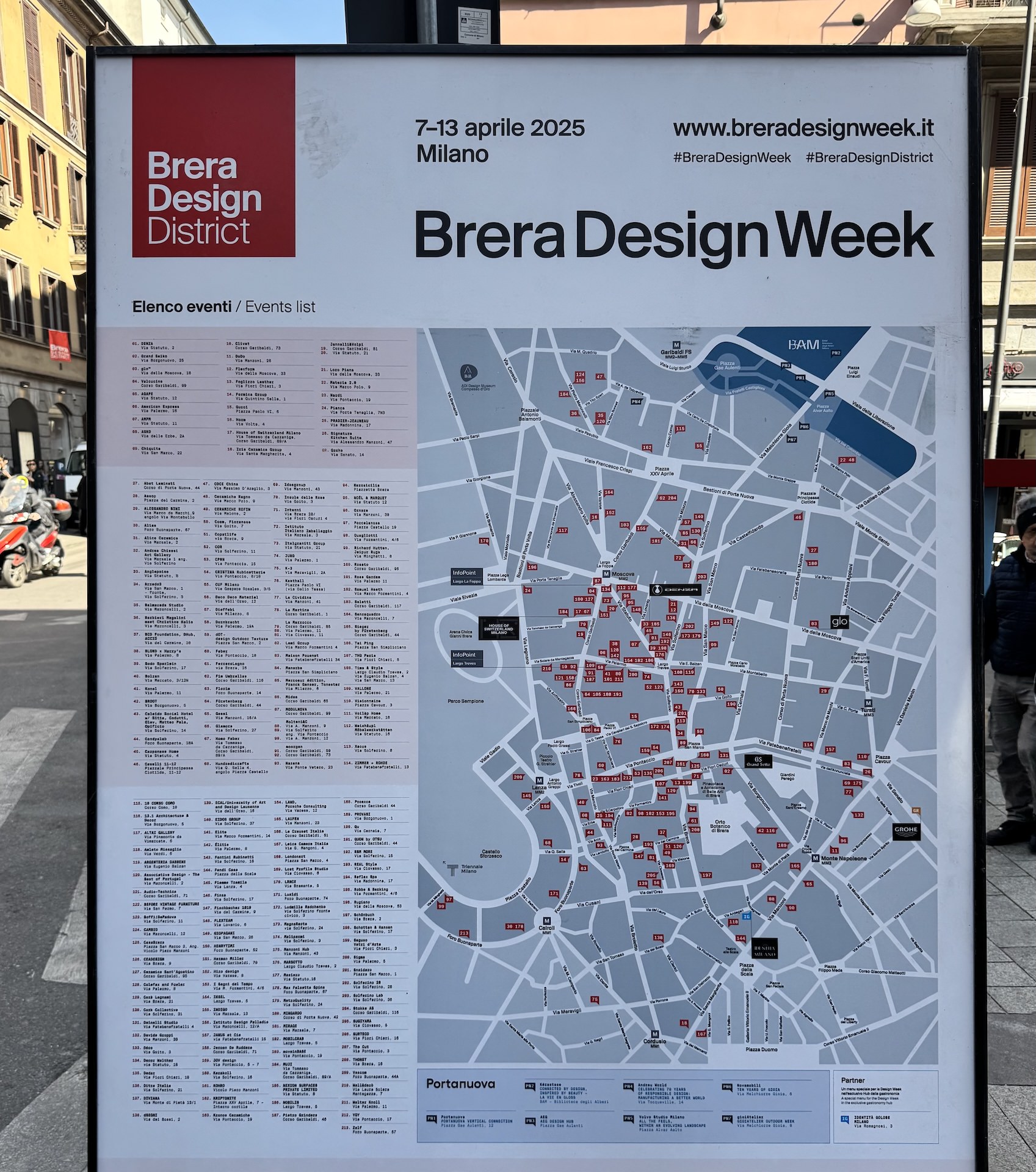
Among them, the most closely watched is “Brera Design Week.” Events are also held in multiple area districts such as Tortona, Isola, Porta Venezia, and 5Vie. In recent years, an increasing number of brands place more emphasis on communicating through Fuorisalone than on exhibiting at the Fiera venue. For example, Baxter’s showroom uses a building converted from a former cinema in central Milan, making the most of its appeal as a permanent space.
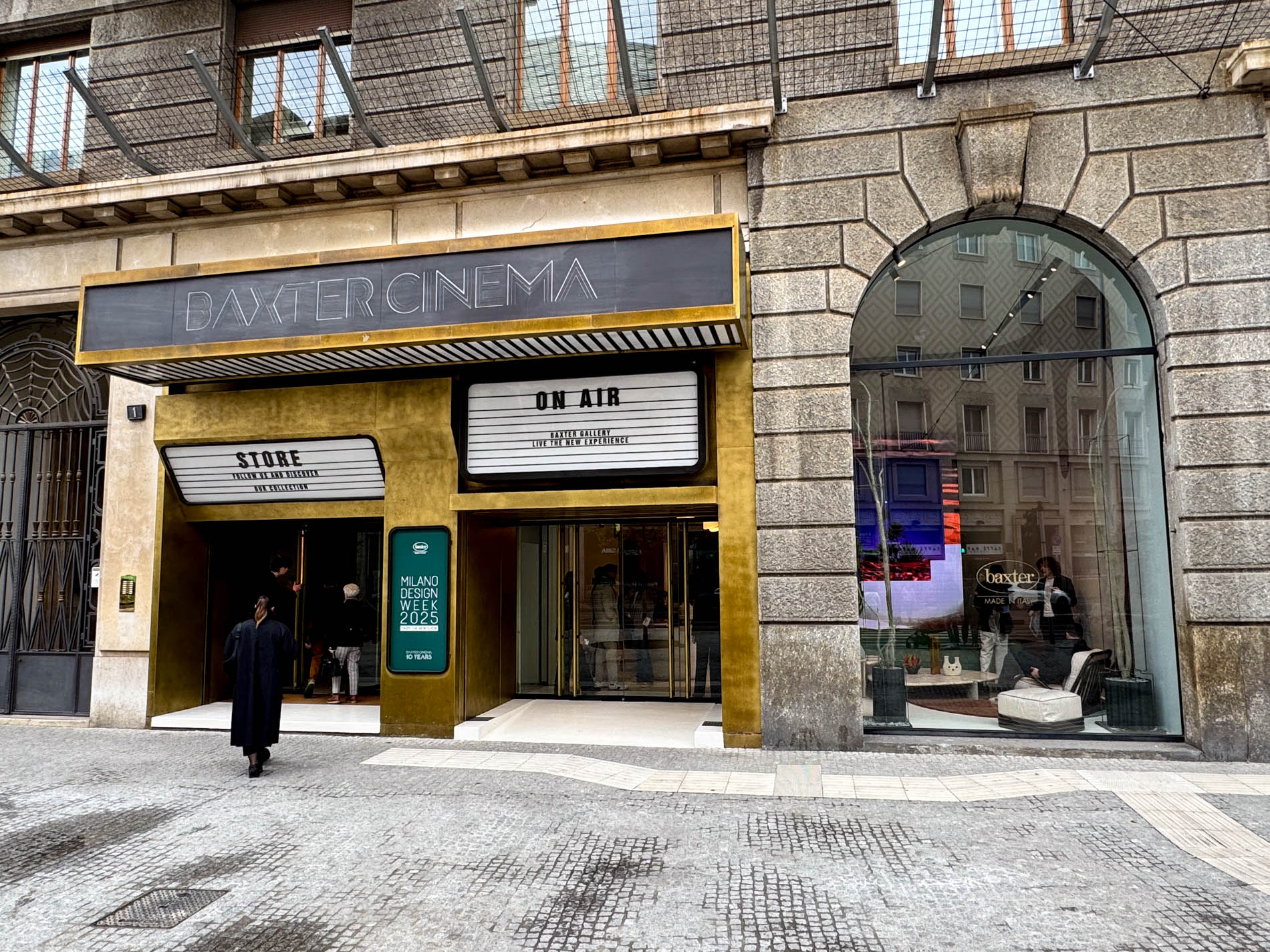
Booths at the Fiera venue are constructed for the Salone, but after the six-day period ends, they are destined to be demolished. Rather than burning through a large sum in a short period, some brands aim to establish permanent spaces within Milan as a long-term initiative—holding events and parties during the Salone in an environment cut off from other brands, thereby deepening engagement with customers.
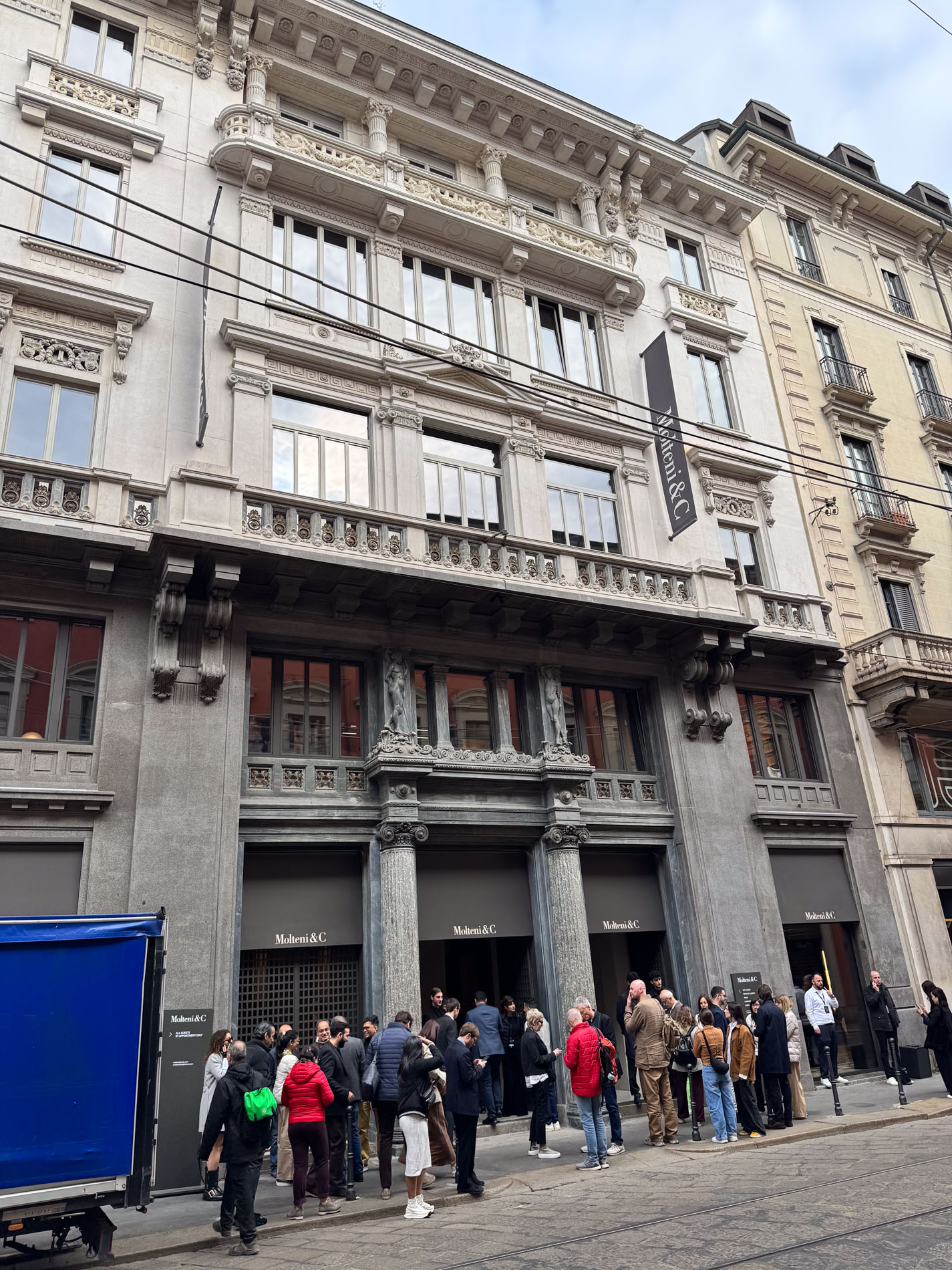
For our inspection this time as well, we spent one day at the Fiera venue and devoted the rest of the schedule to touring central Milan and its outskirts.
Notable brands
Through this stay, I would like to introduce the brands that personally caught my interest.
As this year’s trend colors, it was striking that natural tones such as moss green and terracotta were widely adopted.
Baxter
Baxter is a luxury furniture brand founded in 1989 in Brianza, Italy. It is known especially for sofas made of fine leather, pursuing natural textures and feel. Baxter’s furniture spans a wide range beyond sofas—tables, cabinets, rugs, and more—each staging a space with a high-sense, high-quality worldview.
Paola Lenti
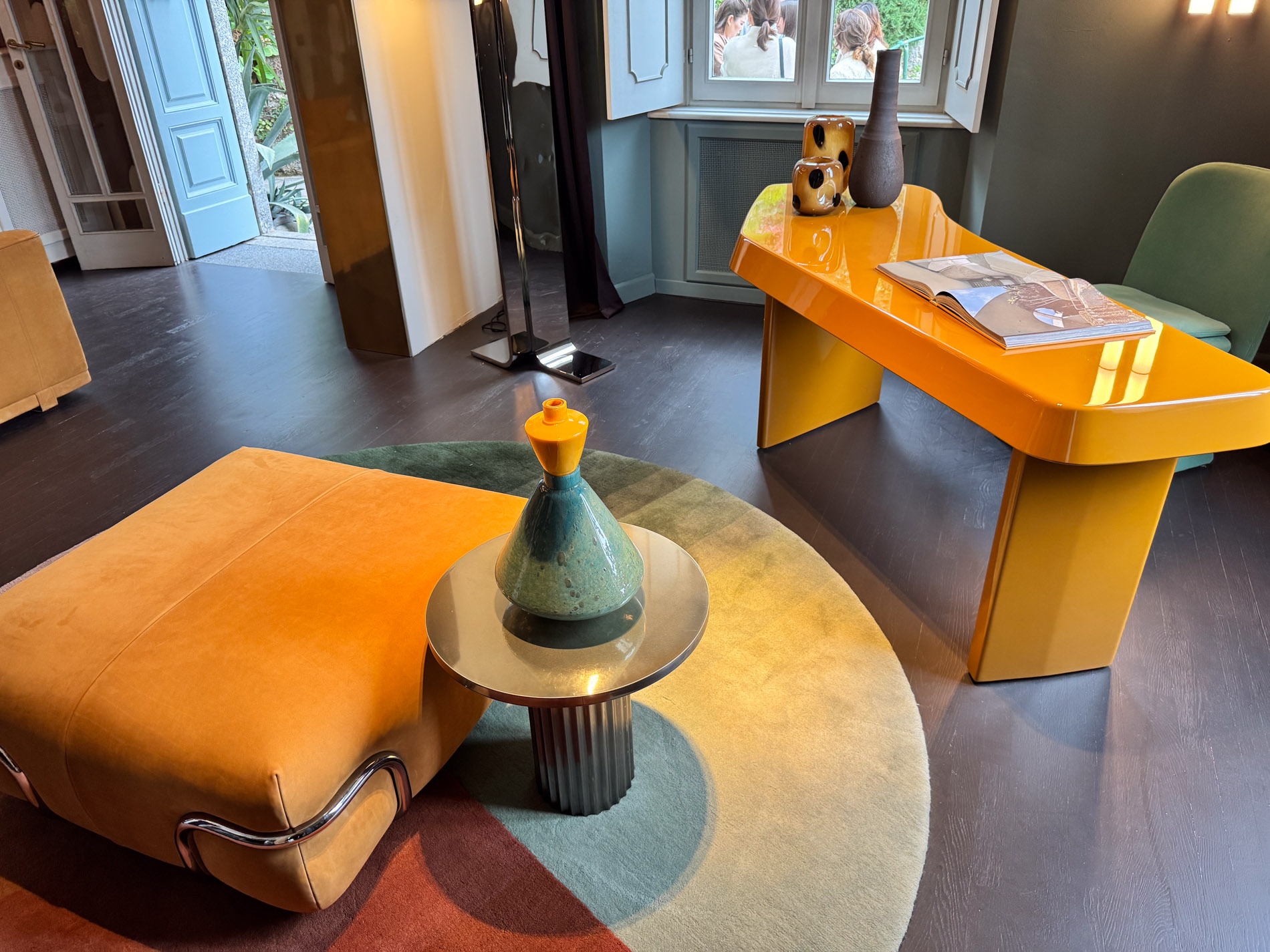
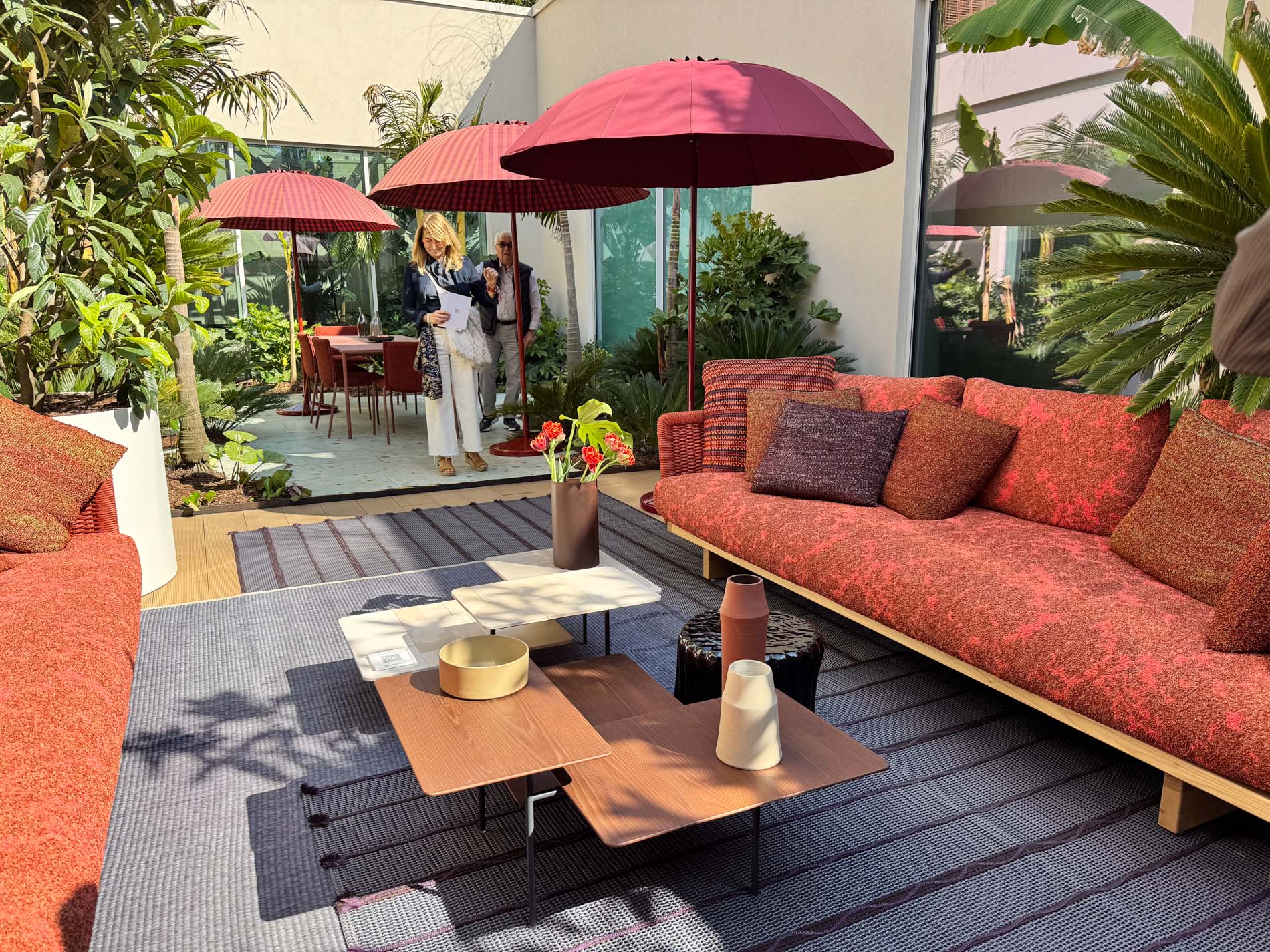
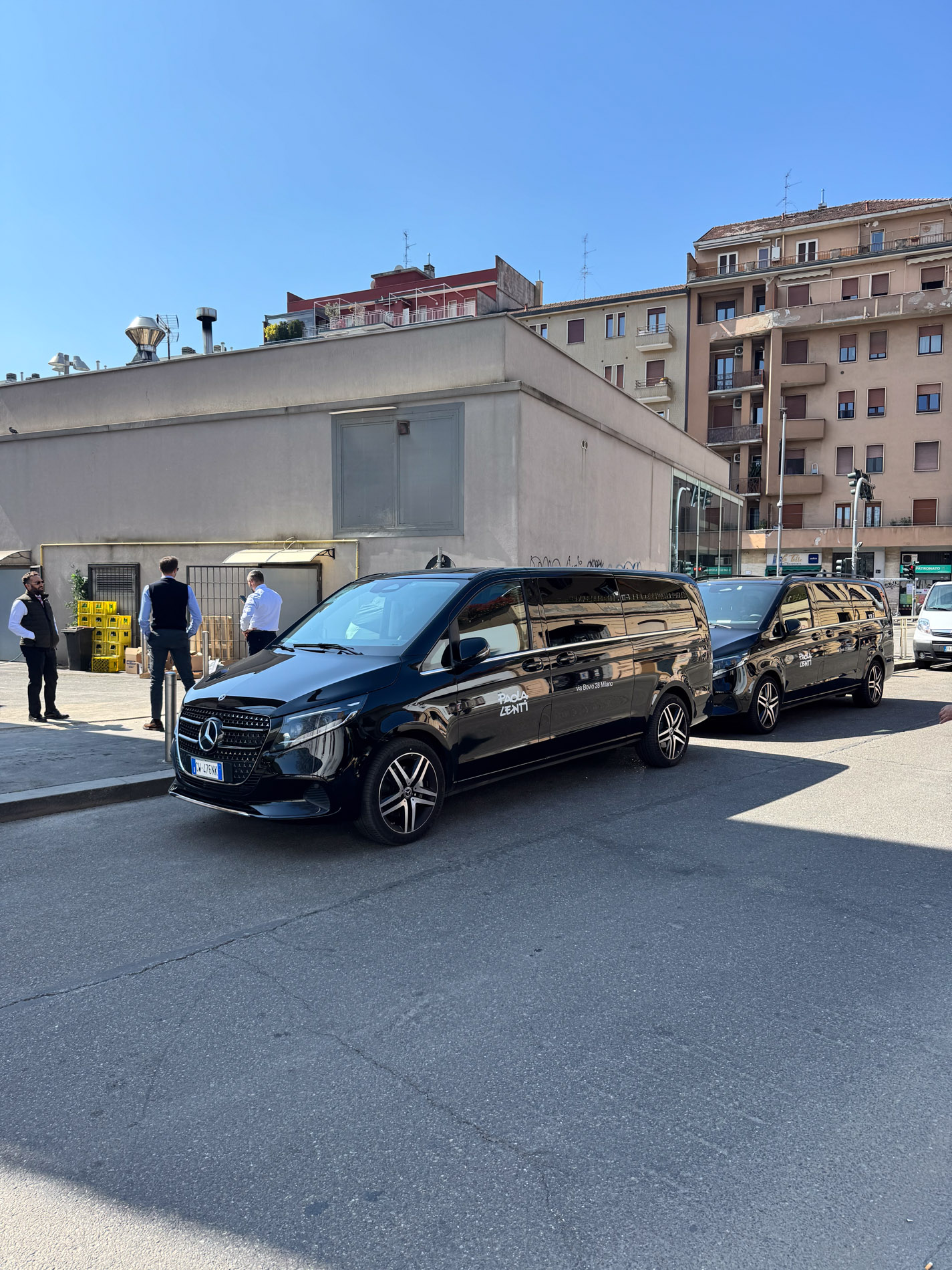
A furniture brand established in Milan, Italy in 1994; its female founder, Paola Lenti, came from a graphic-design background. Her craft is characterized by starting from materials rather than design, and through highly durable outdoor fabrics and original fiber materials, she sends original and functional outdoor furniture out to the world.
Poltrona Frau
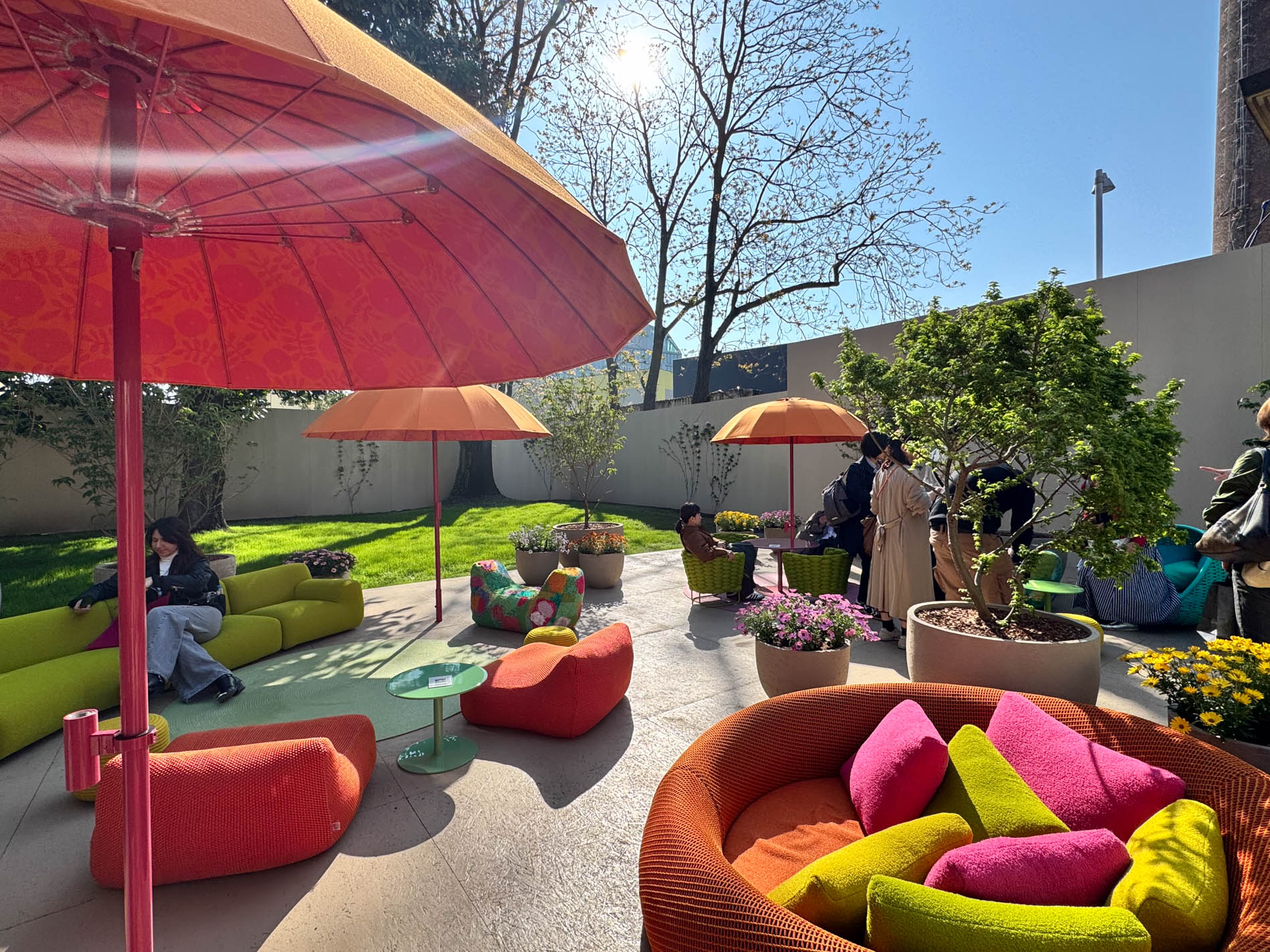
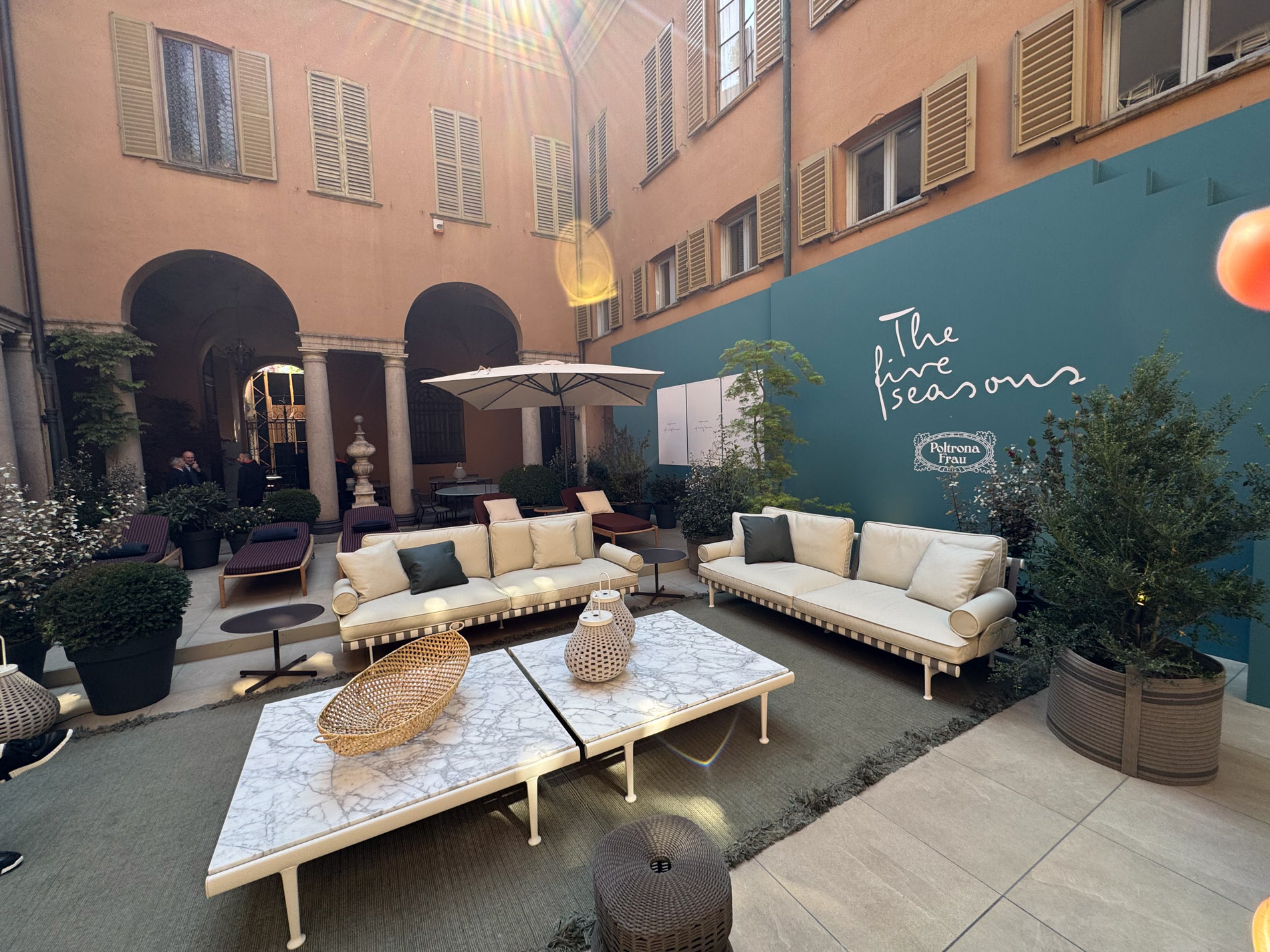
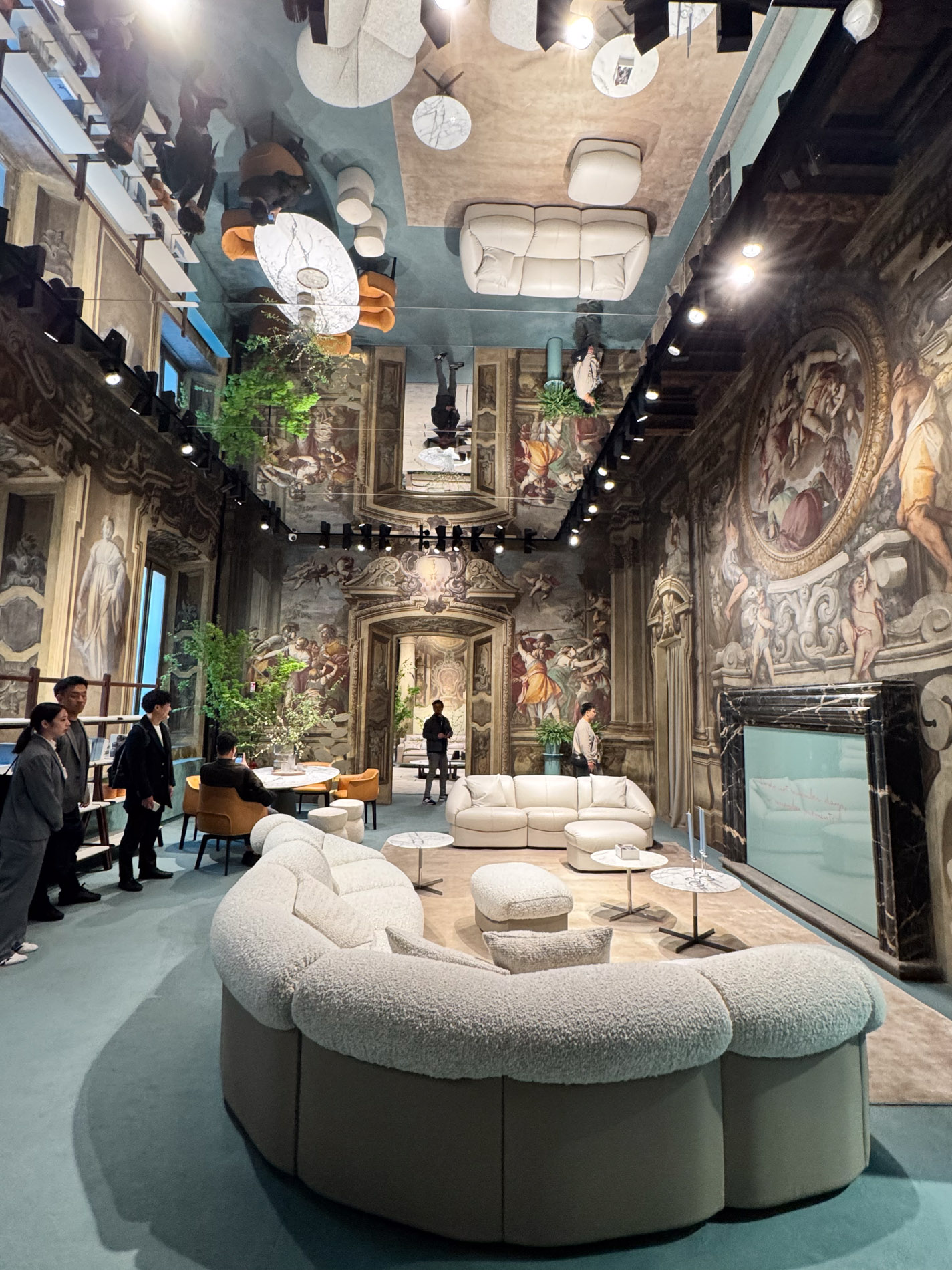
Poltrona Frau is a luxury furniture brand founded in 1912 in Turin, Italy. Fusing traditional craftsmanship with contemporary design, it is known for sofas and chairs made with the fine leather “Pelle Frau®.” This leather is also used in the interiors of luxury cars such as Ferrari and Maserati, earning worldwide acclaim.
Bocci
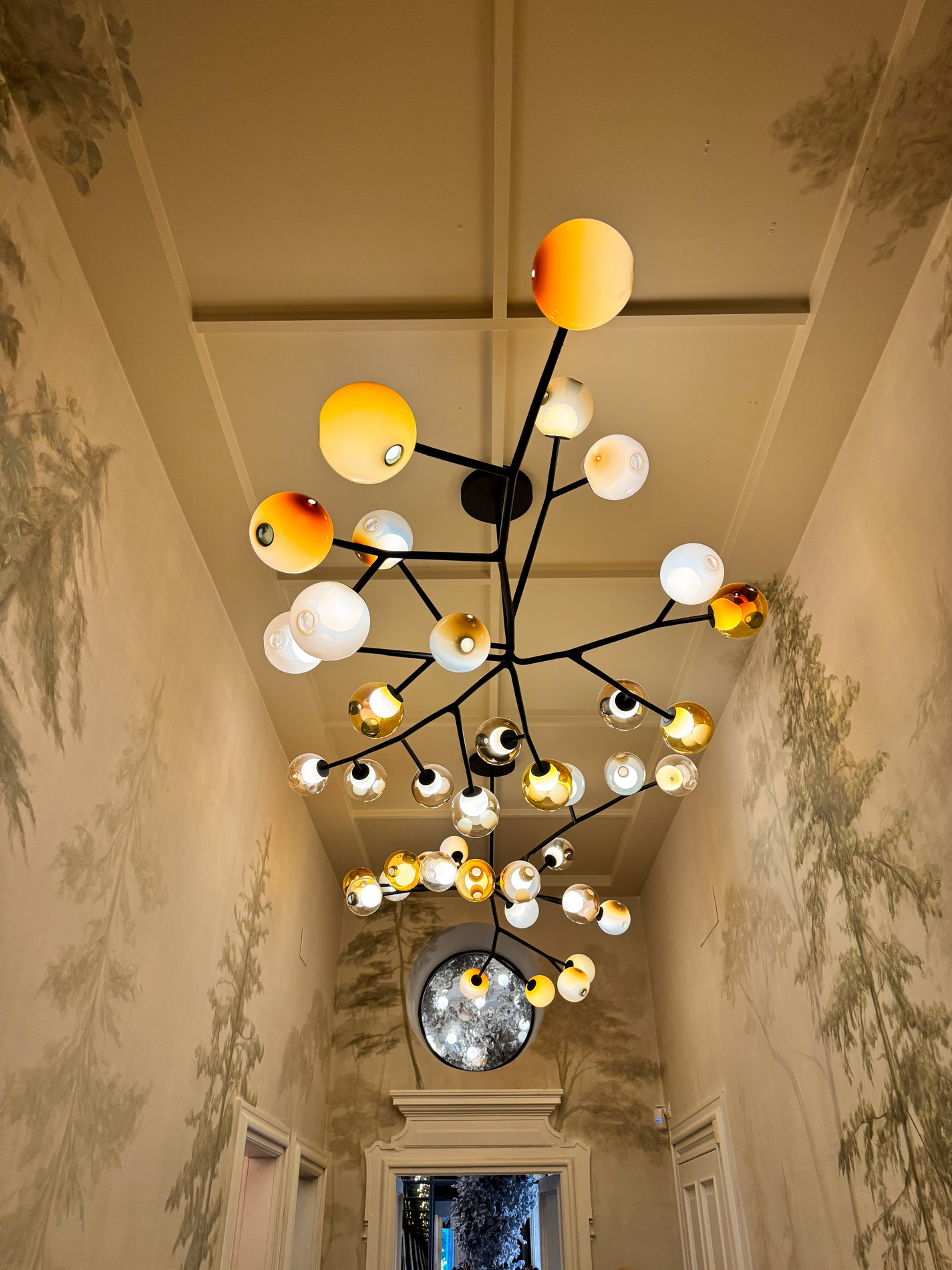
Bocci is a lighting brand established in 2005 in Vancouver, Canada. Its hand-blown glass pendant lights are acclaimed as works that fuse art and functionality. Bocci’s lighting brings poetic light to spaces and has won wide support.
Bomma
Bomma is a lighting brand founded in 2012 in the Czech Republic. While inheriting the traditional techniques of Bohemian glass, it develops innovative designs. Its hand-blown crystal-glass lighting is meticulously designed down to the details, emitting beautiful light of high transparency. It now attracts attention in interior scenes around the world.
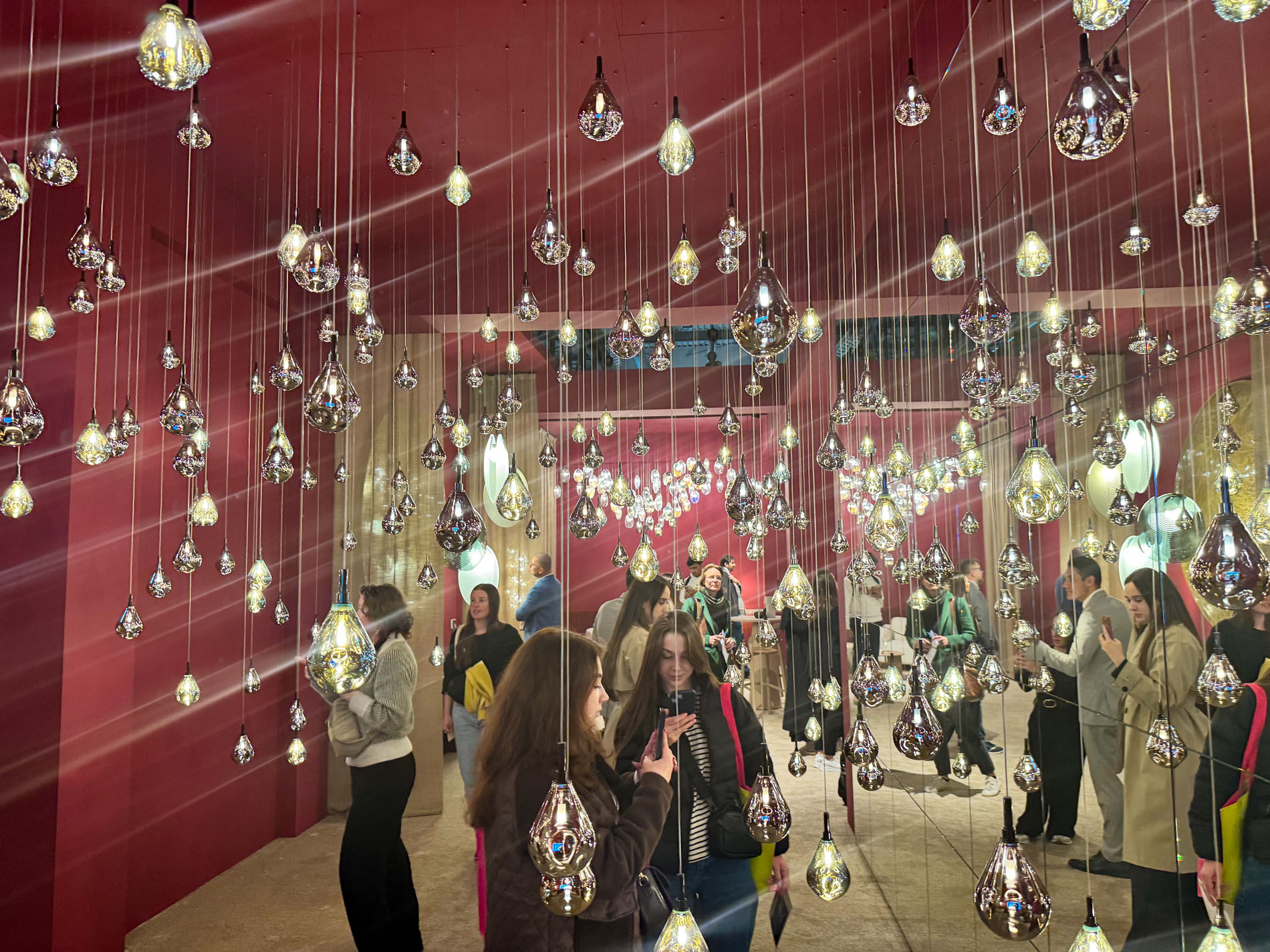
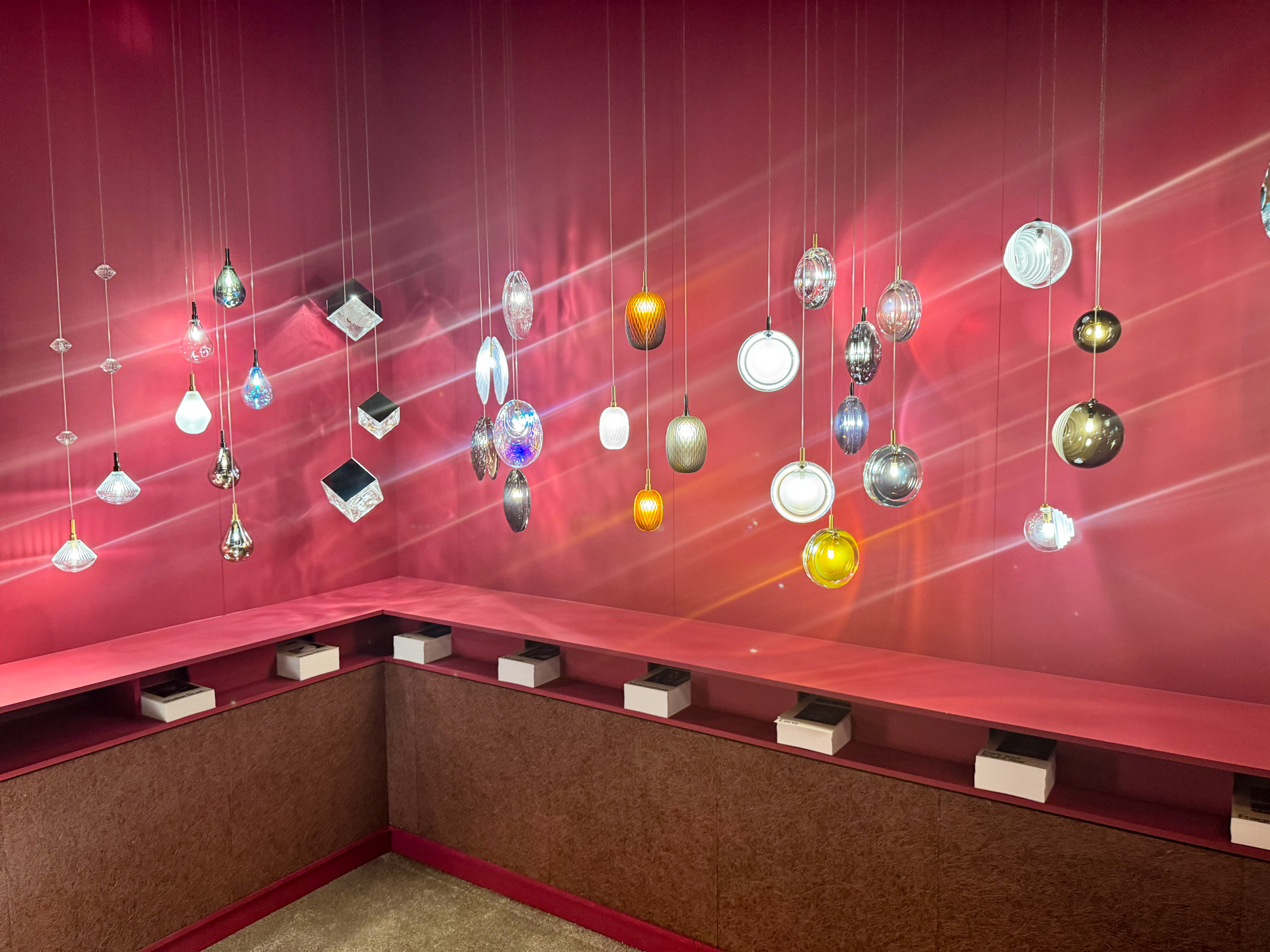
The relationship between art and interiors
The most impressive thing about this inspection was how “expression” is handled in the interior industry.
Elements such as furniture and lighting were integrated with the overall color and composition of the space, and every exhibit was highly staged.
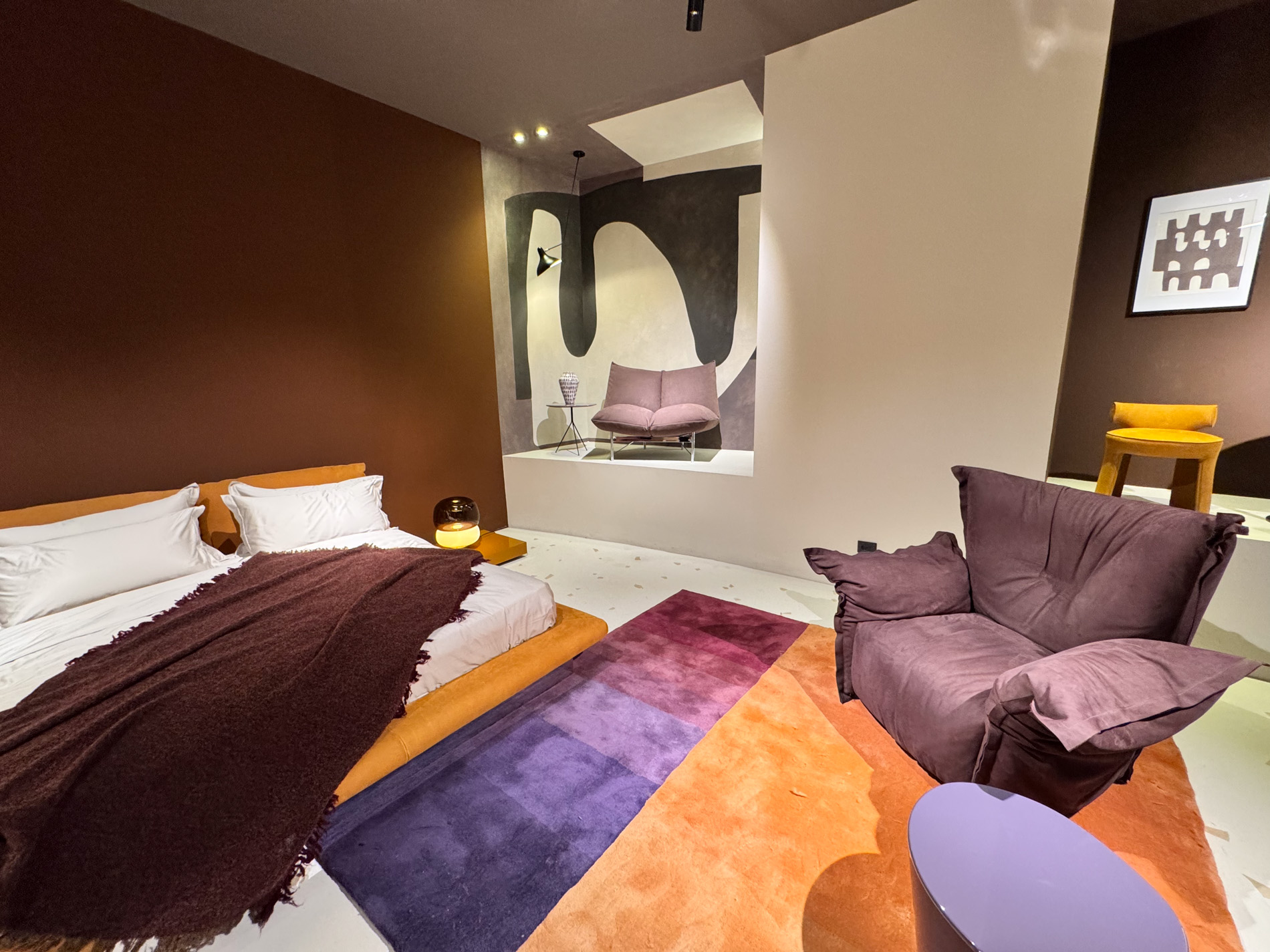
While not being afraid of bold color use, they have the sense to ultimately land on calm and harmony; many exhibits used impactful colors such as red, purple, orange, and green, yet blended beautifully into the space without being garish.
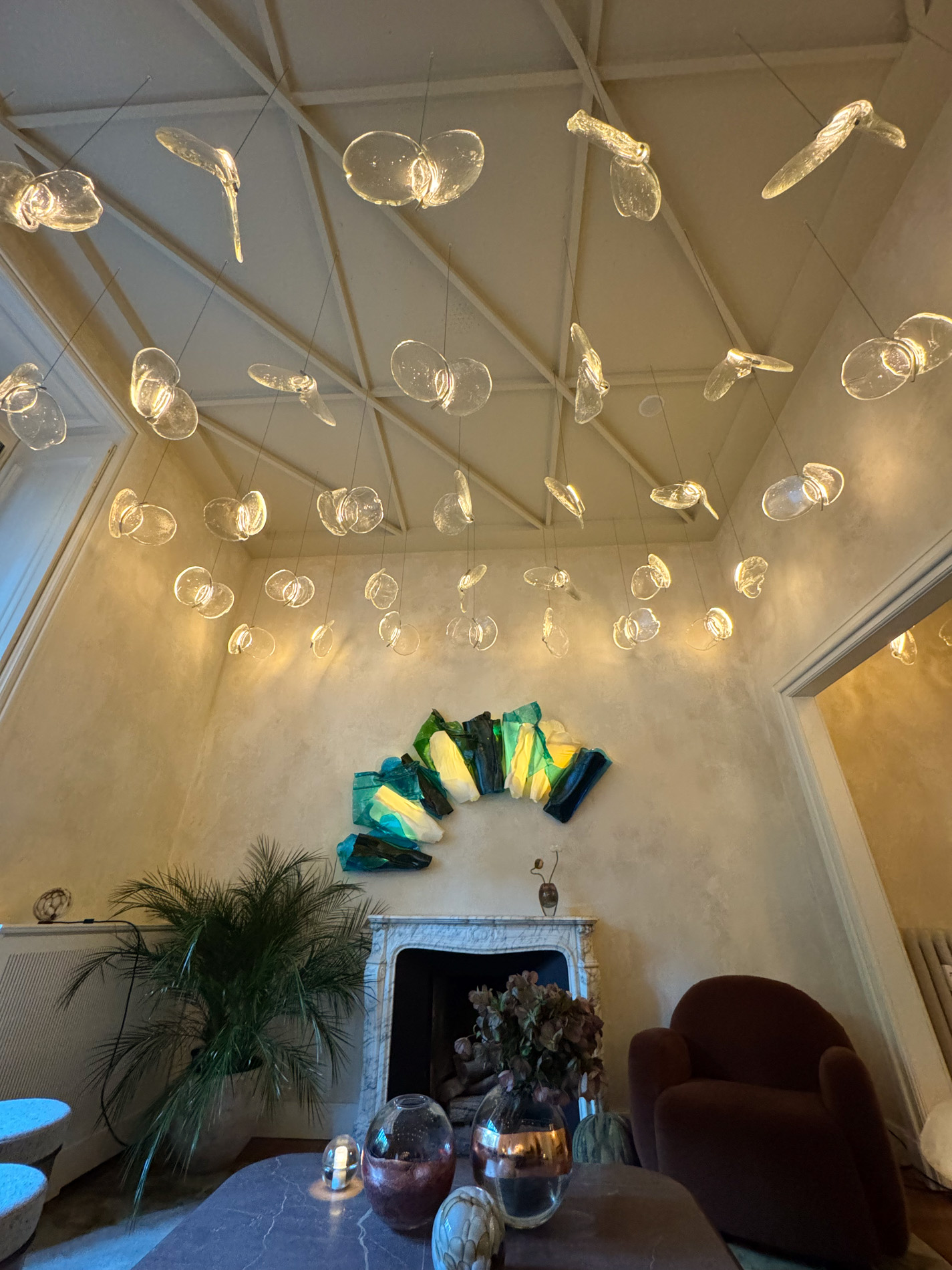
What was even more interesting was that a great many brands placed artworks within the space alongside furniture and lighting.
Art was not merely placed as wall decoration but treated as something supporting the overall concept and atmosphere of the space. It felt as if they regarded art as something that “should exist together with” the space, rather than something merely “to display.”
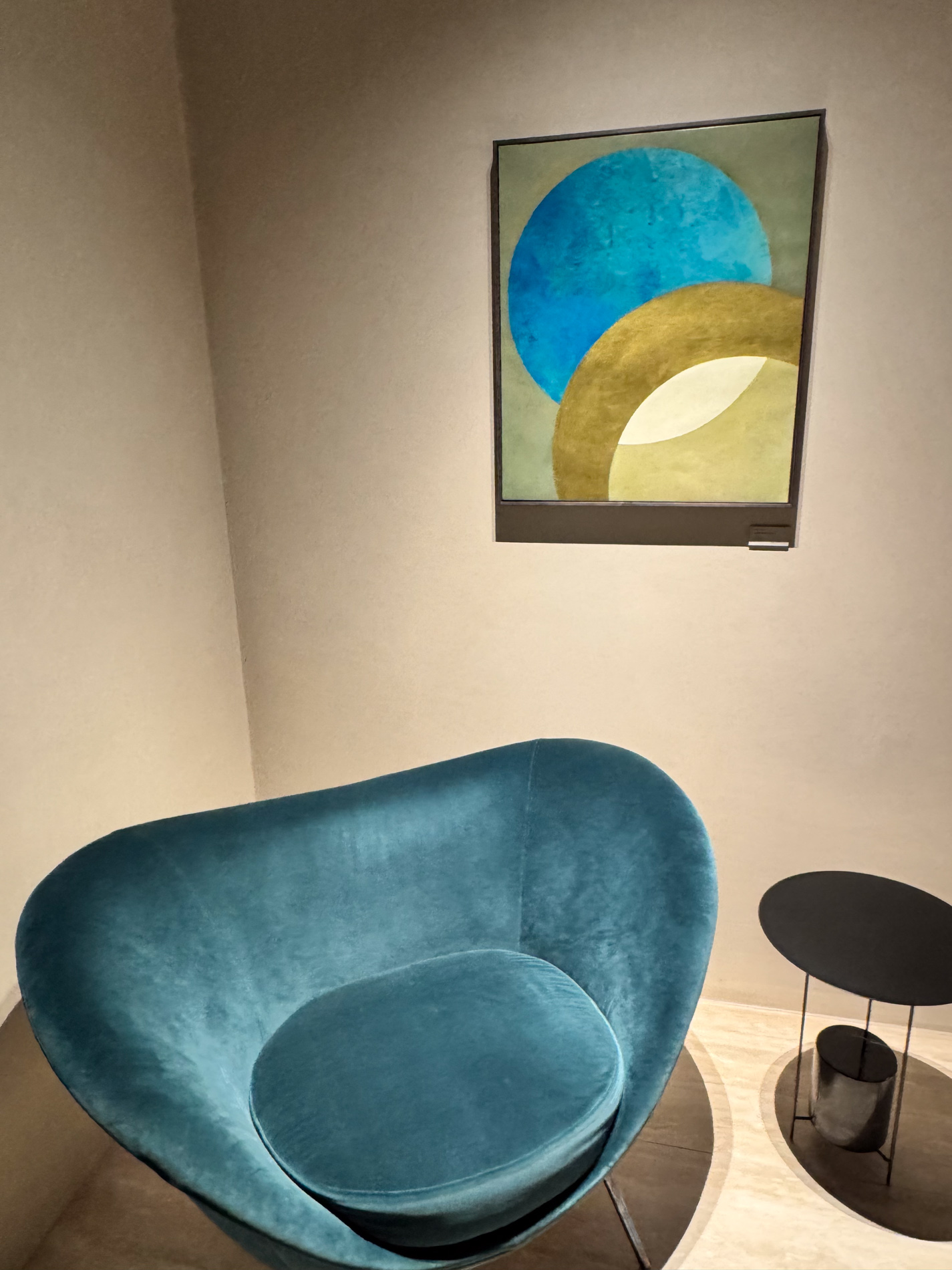
The positioning of art in the interior industry differs from the general impression in Japan of it being “something special” or “something with a high threshold”; rather, it felt as though art was incorporated as something naturally embedded into daily life, in a more practical and intimate relationship.
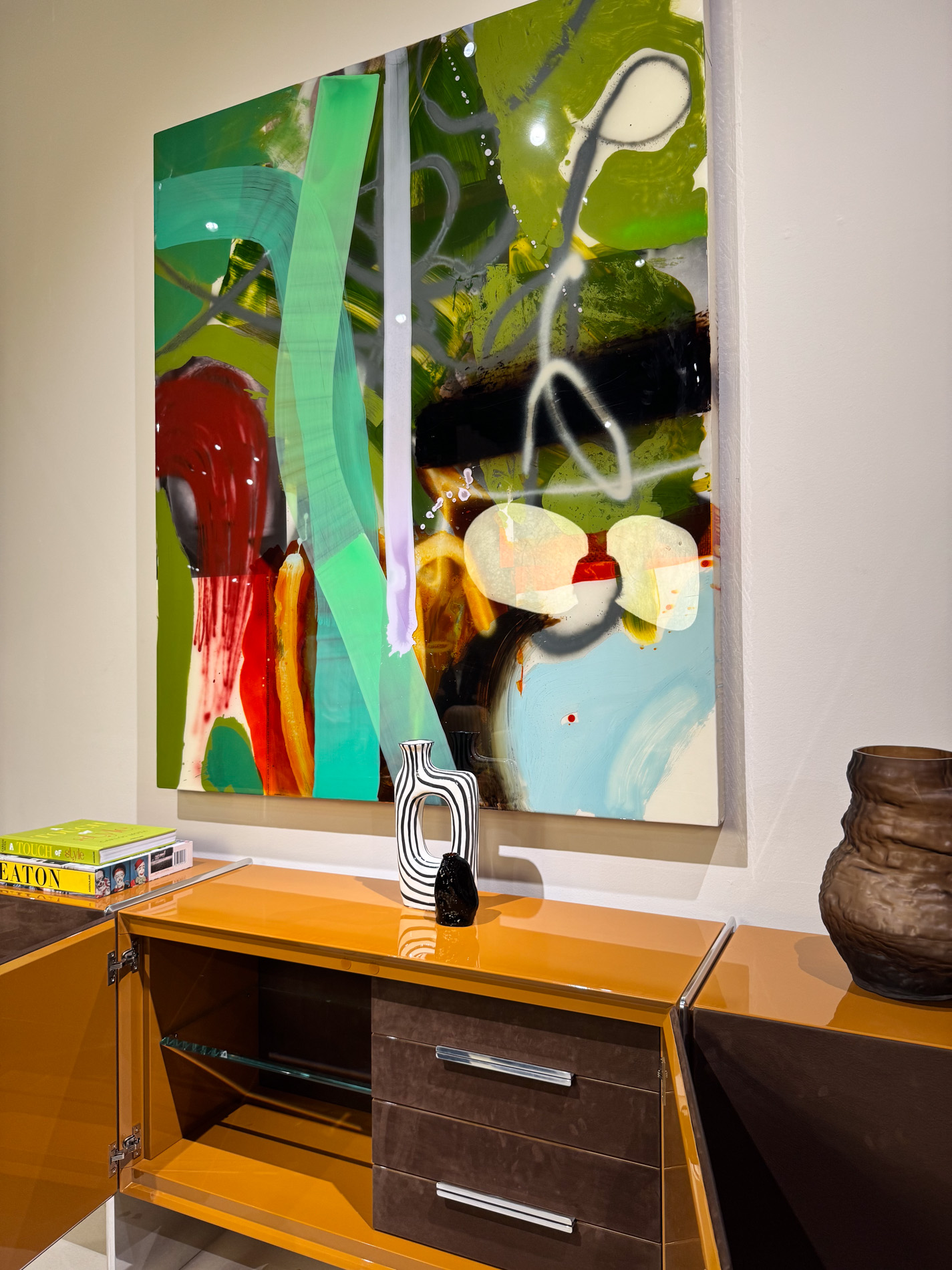
Looking at the “art market” and the “interior market” on a global scale
What I felt throughout Milan Design Week is that the scale is overwhelmingly different from contemporary-art-related events. This stems from a fundamental difference in market size; below, I have compared the two based on the latest survey results.
Comparison of market size (2024)
| Field | Global market size | Japan market size | Global share |
|---|---|---|---|
| Contemporary art | $57.5 billion | Approx. $680 million | Less than approx. 1% |
| Interiors (furniture + lighting) | Approx. $770 billion | Approx. $31.5 billion | Approx. 4% |
Source:Art Basel&UBS Global Art Market Report 2025、Statista、IMARC、Allied Market Research(2023〜24)
Notes
-
- The contemporary art market saw more transactions, but sales posted negative year-on-year growth (-12%) due to contraction in the high-price segment
- The interior market is growing steadily. Furniture is +6%, and lighting is up more than +10% thanks to the spread of LEDs
- Japan is a niche market in art, but ranks among the world’s leading consumer countries in interiors
At this Milan Design Week, many Japanese participants were seen at the venue and throughout the city of Milan. Japan’s position in the interior industry is high; reportedly, if something is evaluated in the Japanese market, it also ripples out to Asia including China, so its presence is significant. Accompanying Mr. Koga, we too received careful explanations at various places and were treated to espresso, touring the brands without stress.
Japanese distributor representatives were also on site, standing in showrooms, and industry people such as real-estate and interior professionals moved around in groups—so I could sense quite a scale. This is in stark contrast to Art Basel in Basel, Switzerland, where I hardly saw any Japanese people.
In closing
Through this inspection, I keenly felt the diversity of expression in the world of design and interiors, and the strength of the stance of conveying through the space as a whole. Products such as lighting and furniture are not spoken of in isolation but are assembled into a single space together with color, materials, composition, and art, and their staging power was extremely high. In the Fuorisalone format, where each brand’s worldview extends even into the city, and in the scale of the Fiera venue—where enormous investments are made just for six days—I sensed a strong will to connect deeply with customers on a global level.
Also, the fact that lighting and furniture were placed in the space at the same level as artworks, and treated as “part of daily life,” became an occasion for me to reconsider the distance between the domains of interiors and fine art. What was impressive as I walked the sites was that everything, including decorative elements, was handled with a sense of being close to daily life.
In fact, at each venue tea and coffee were served, and spaces were staged as if cutting out a part of life (I relaxed so much I even forgot to photograph such scenes). From that exquisite sense and way of creating spaces, I gained many insights worth learning.
Milan Design Week is, I think, an event that serves as a reference not only for people in the interior industry but for everyone interested in exhibition-space creation and brand strategy.