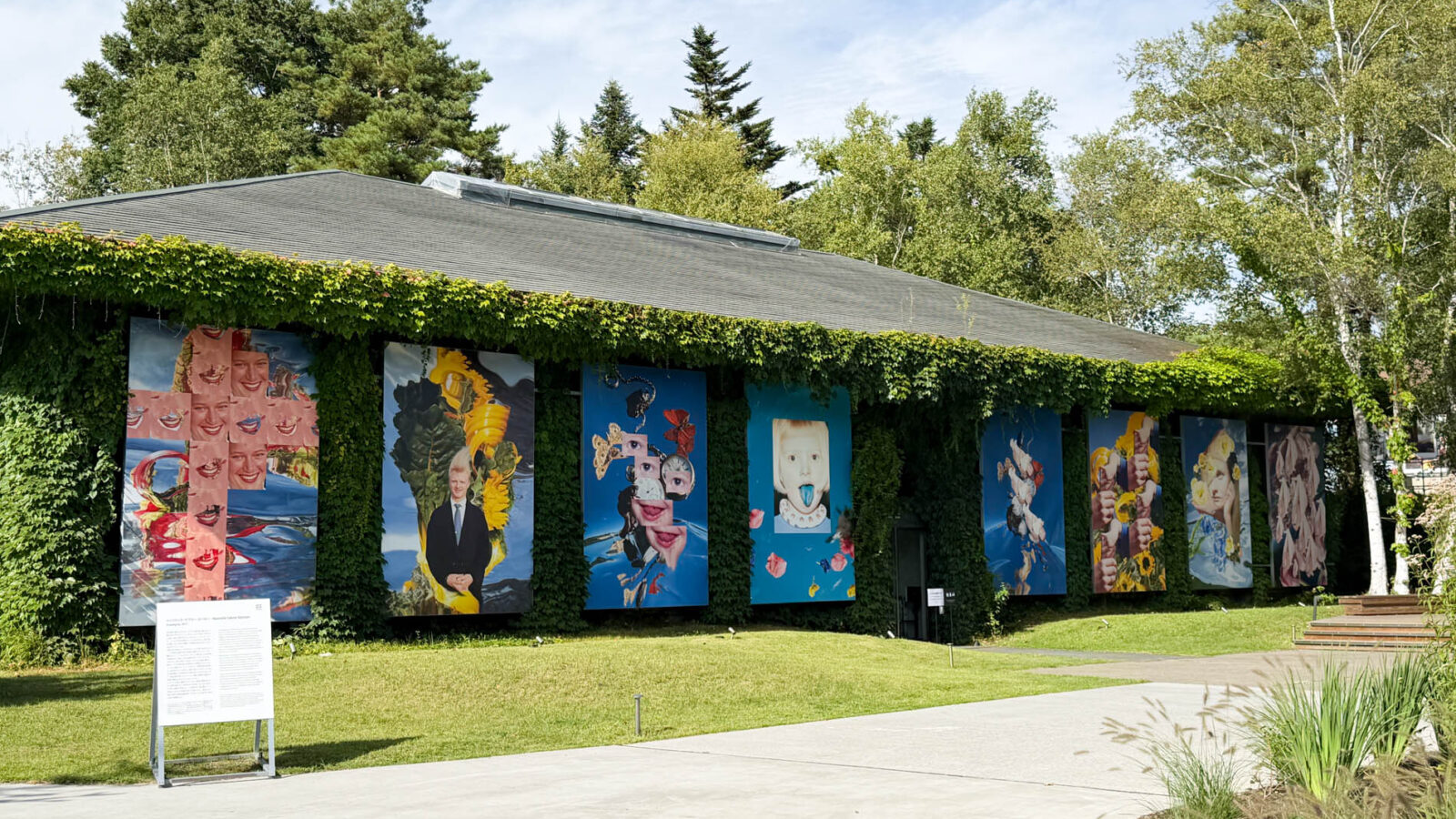
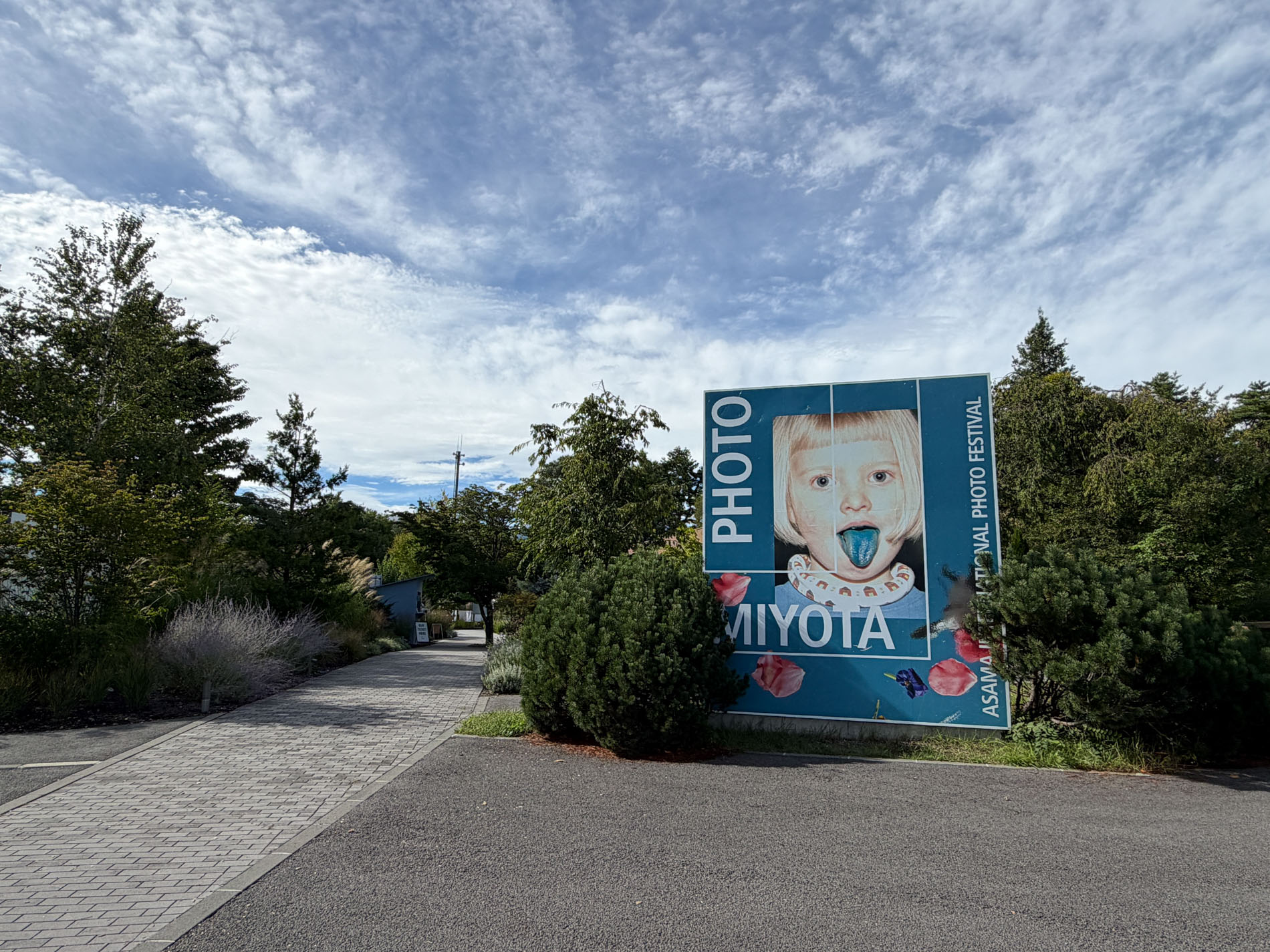
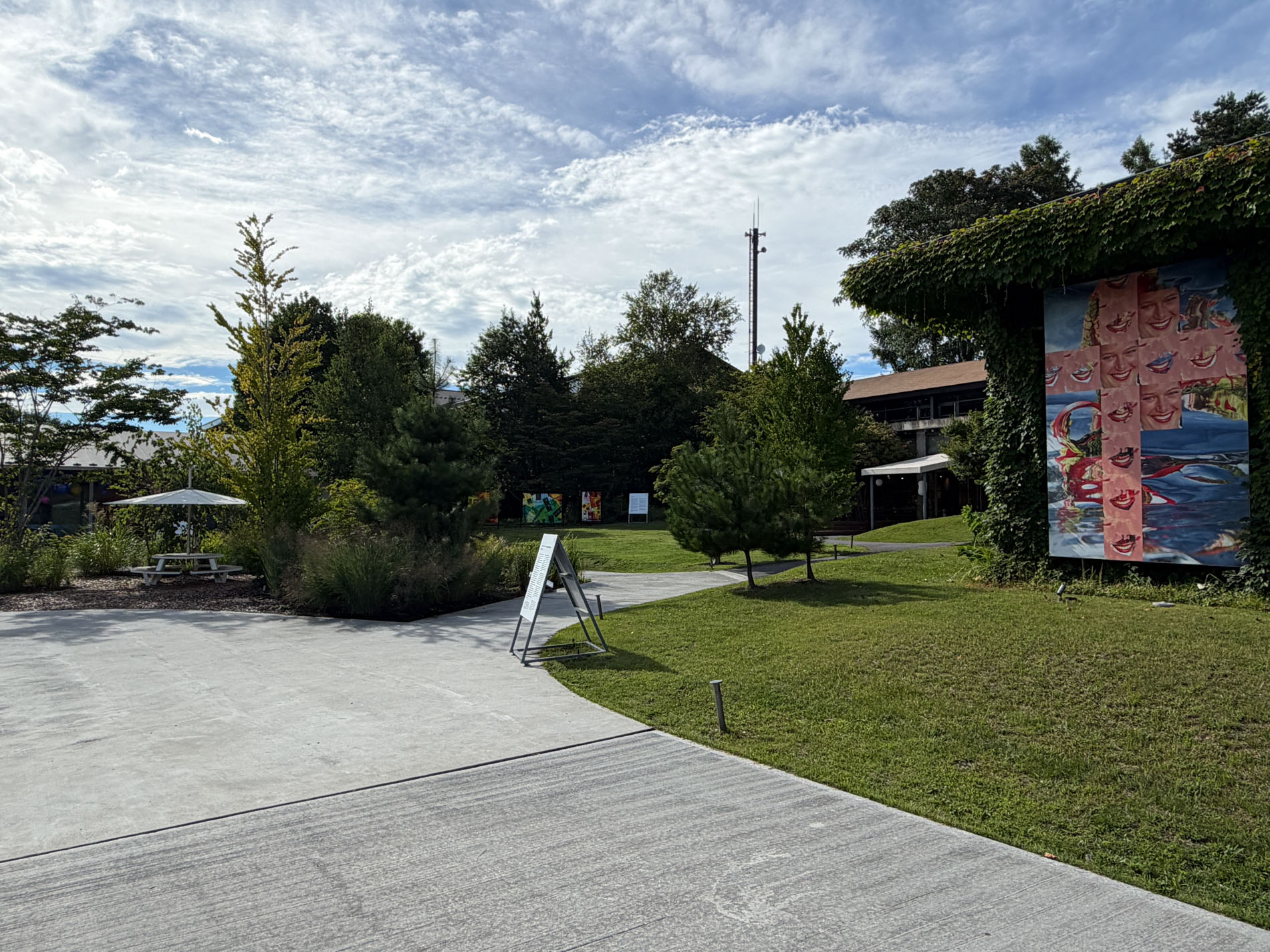
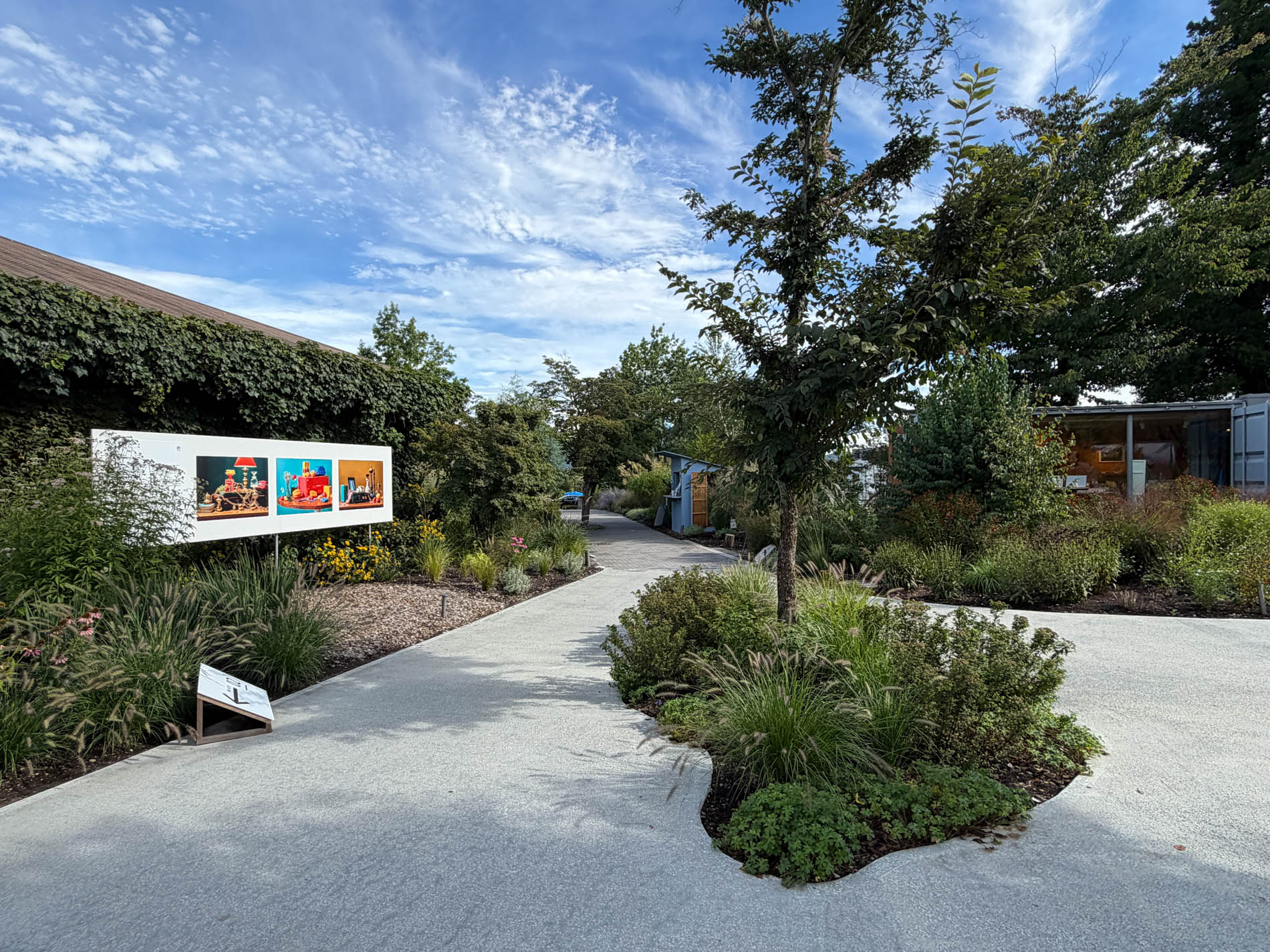
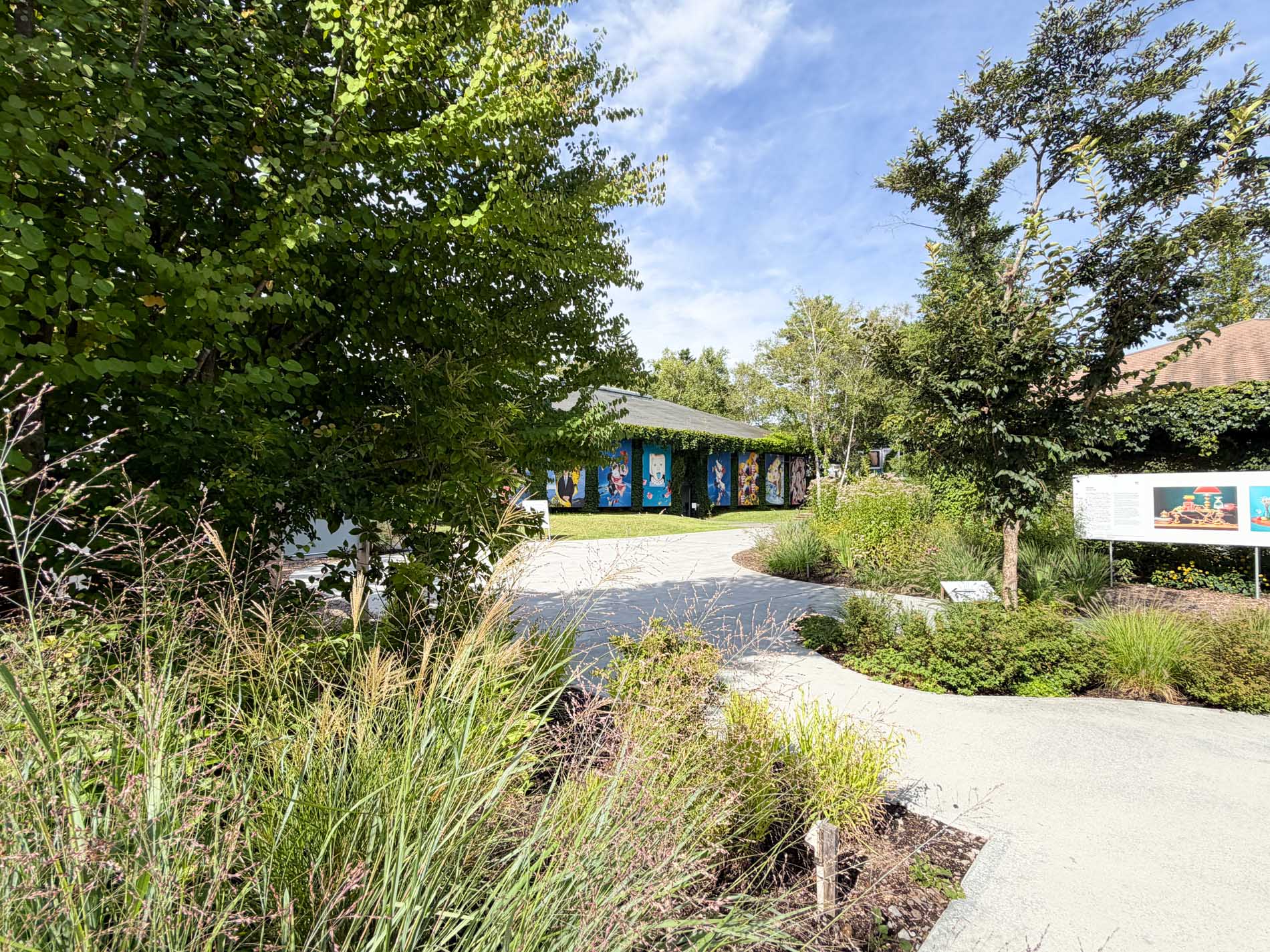
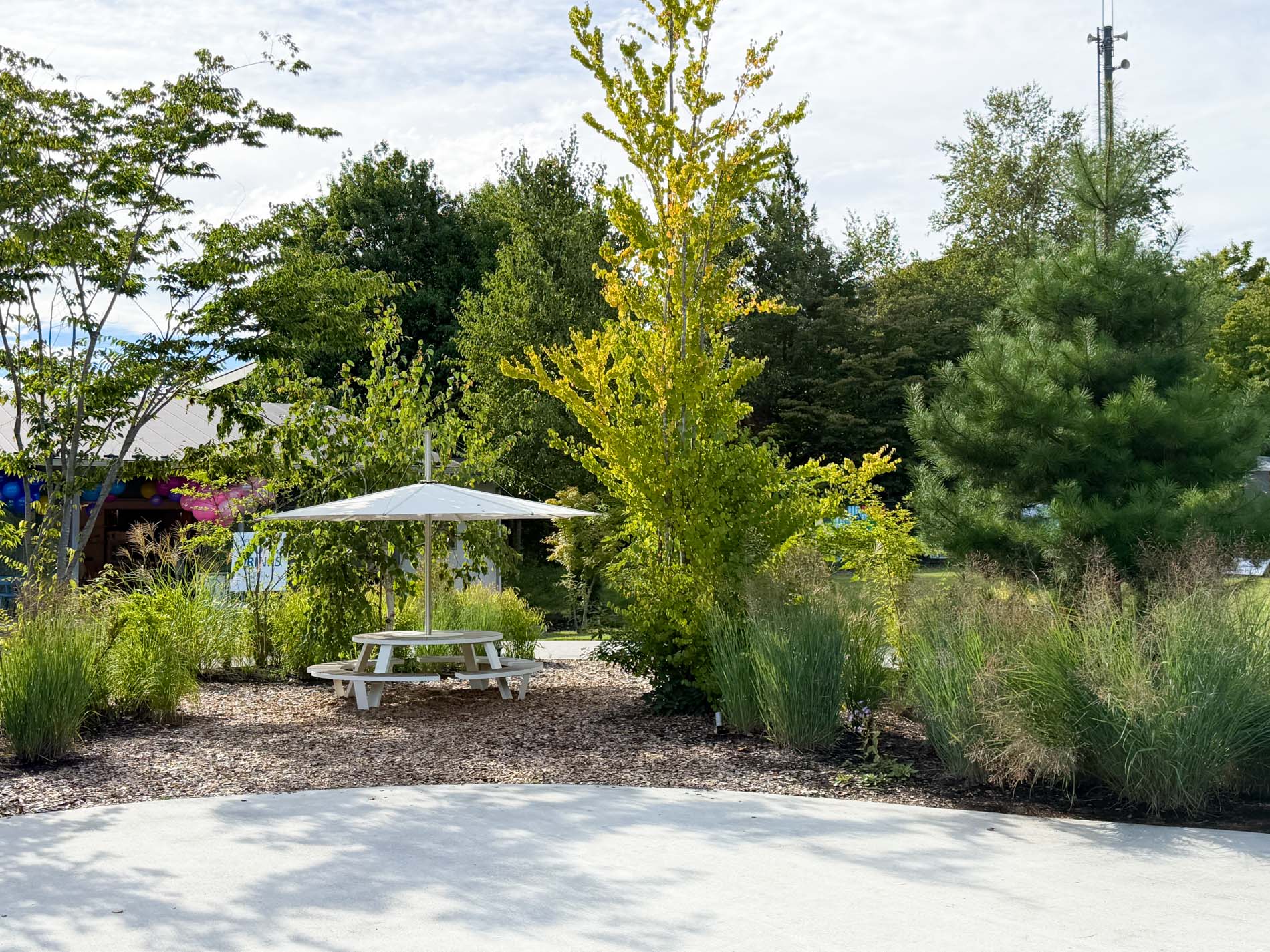
At the southern foot of Mt. Asama lies the town of Miyota, Nagano Prefecture. Ten minutes on foot from Miyota Station on the Shinano Railway, up a gentle slope, stands a complex called MMoP. Across grounds planted with lawn and ornamental grasses, photographs printed at large scale are shown outdoors.
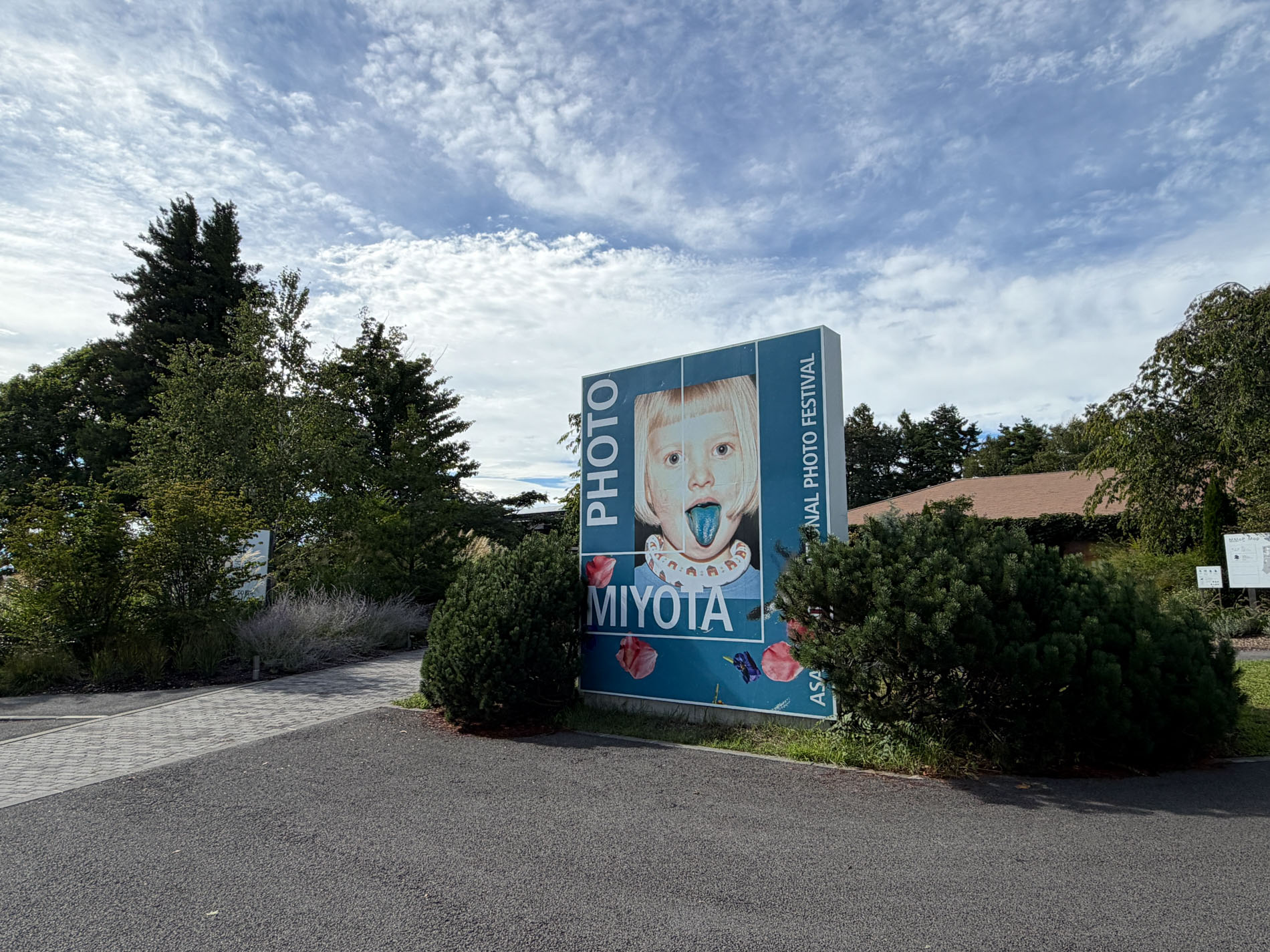
ASAMA INTERNATIONAL PHOTO FESTIVAL 2026 PHOTO MIYOTA; this year’s theme is “After the Image.”
A photograph is not finished at the instant the shutter falls; it keeps changing meaning as it is looked at, shared and remembered. That is the theme this show sets out. And so this photo festival shows photographs on ivy-covered walls, hangs them among the trees and stands them on the lawn, turning them into something exposed to wind, rain and light. Twenty-two artists and groups from Japan and abroad; around three hundred works on view.
Children Lined Up on a Wall of Ivy
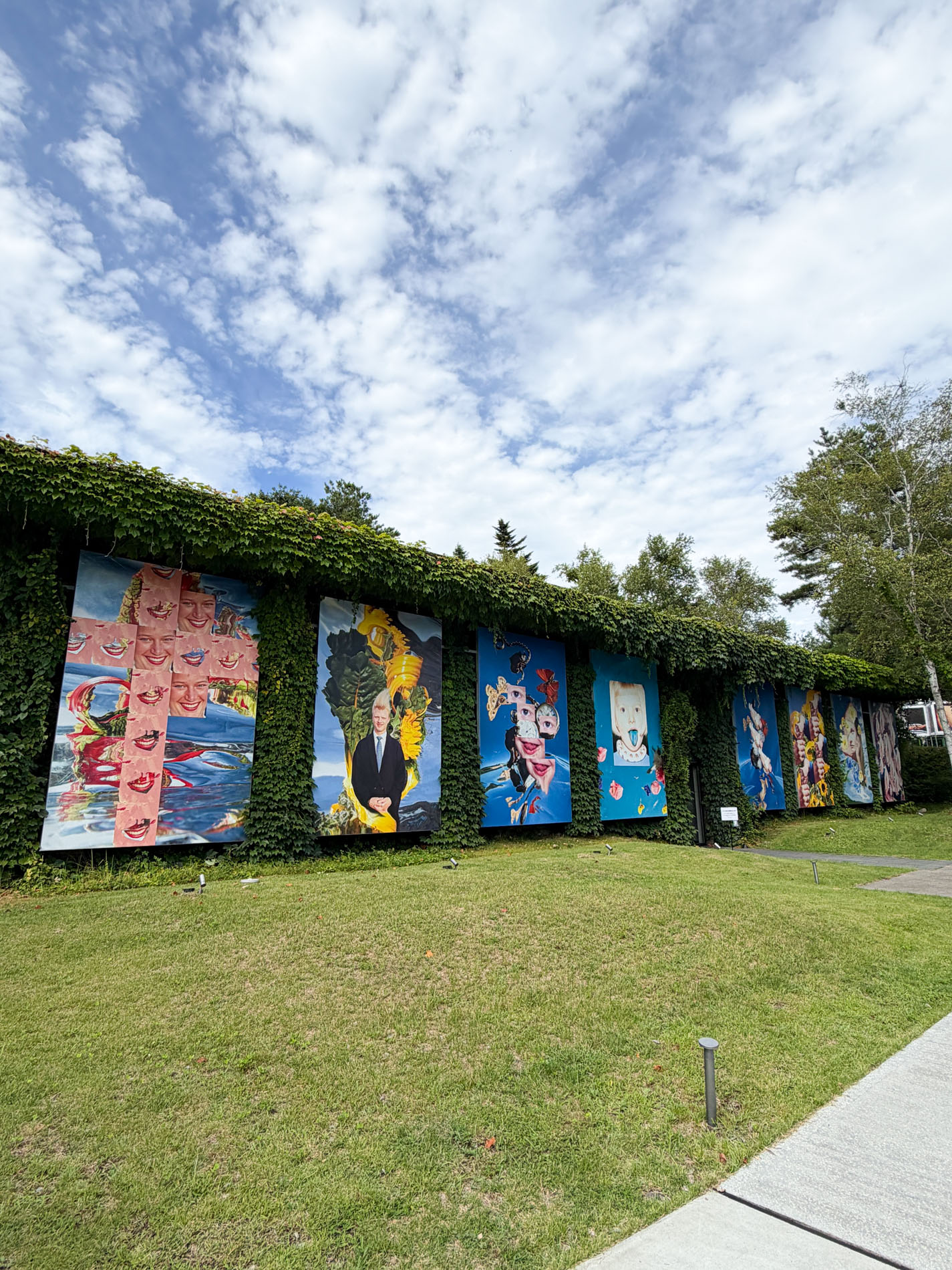
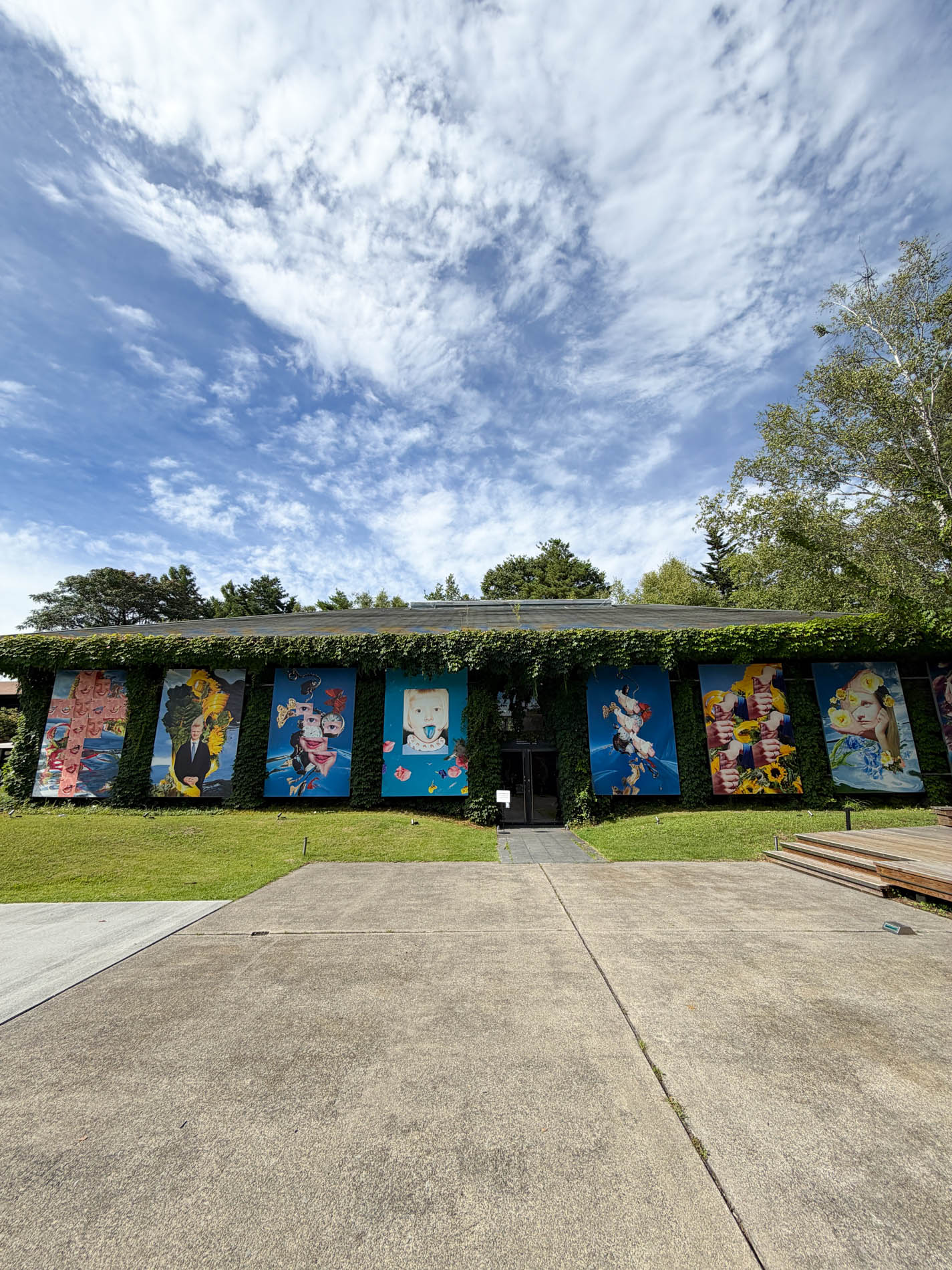
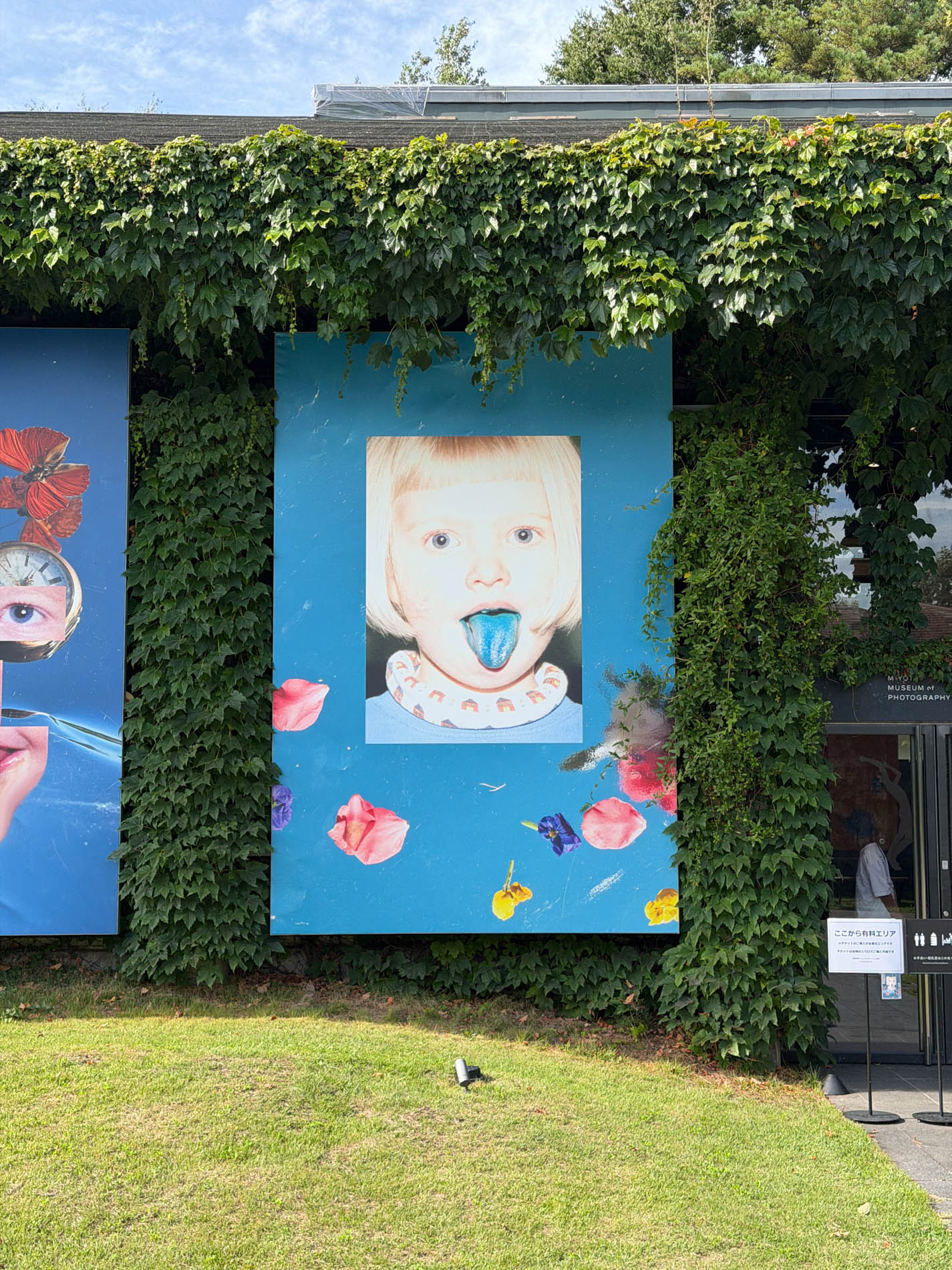
The first thing you see on entering is a run of large-format prints hung the full length of an ivy-covered building: Henriette Sabroe Ebbesen‘s Growing Up (2017–), by the Danish photographer and filmmaker. This year’s key visual was taken from this work as well.
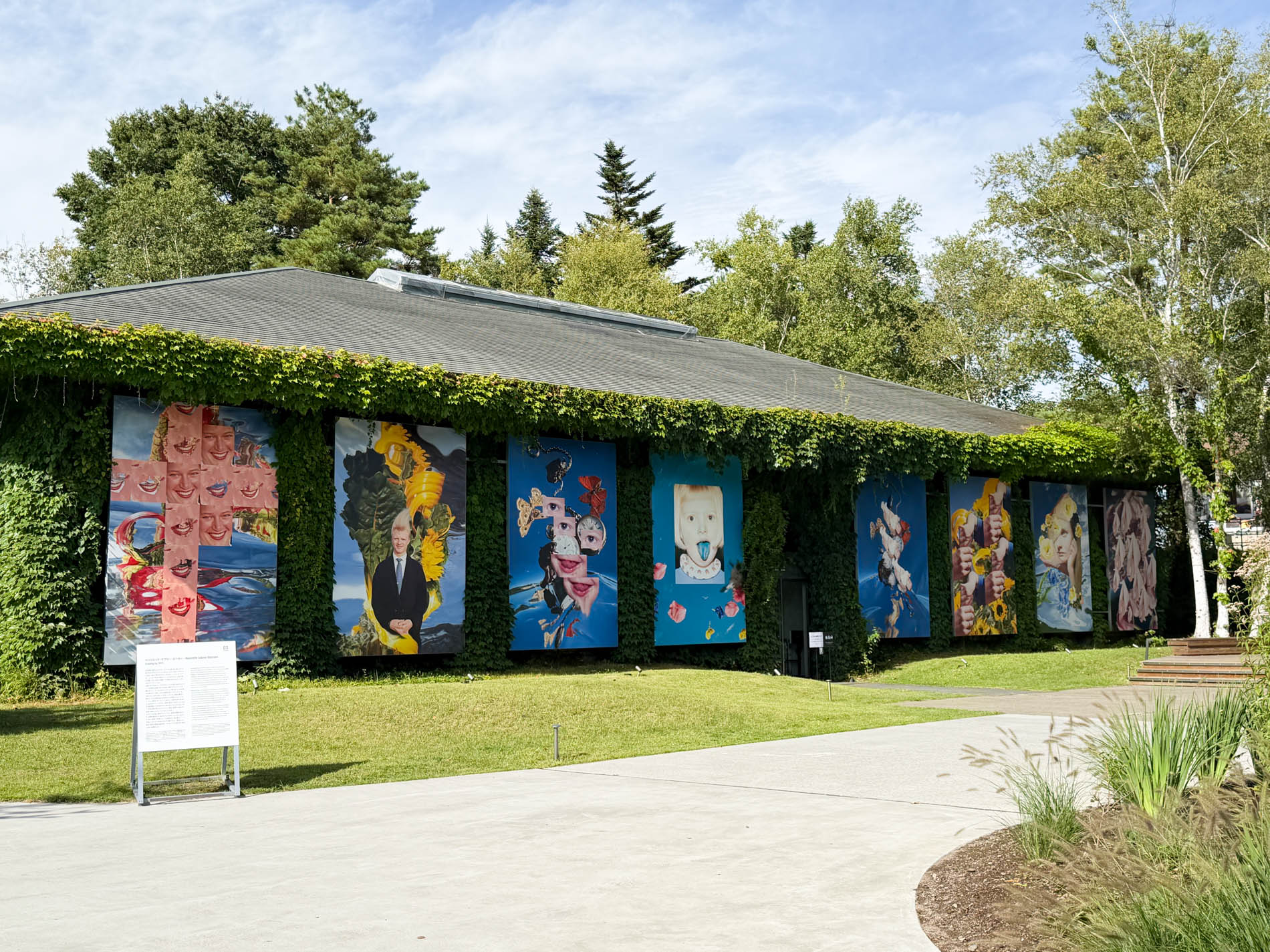
Old family photographs from her father’s album, layered as collage with the photographs she is making now. So in front of this wall two spans of time press against each other inside a single frame. A man in a suit surrounded by sunflowers; a screen where lipstick-like mouths repeat in tiles; someone with the face of an animal. Each drifts a little further from whatever the words “family photograph” would lead you to expect.
Human Outlines and the Grain of Fireworks
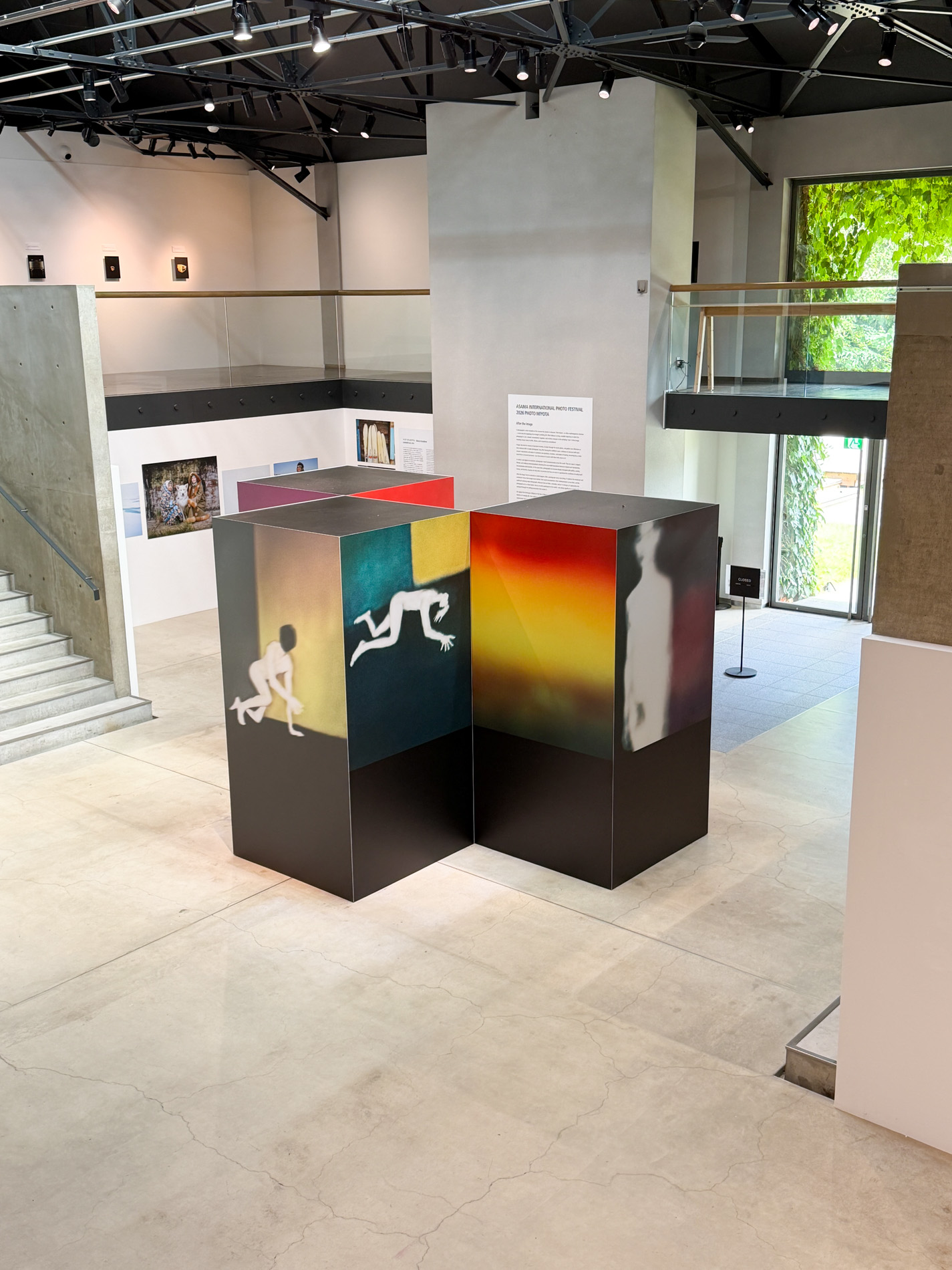
Entering the exhibition room, a black screen-like structure stands directly ahead: Jörgen Axelvall‘s Most likely the flames will destroy themselves / Looking Up. The artist was born in Sweden and lives in Tokyo.
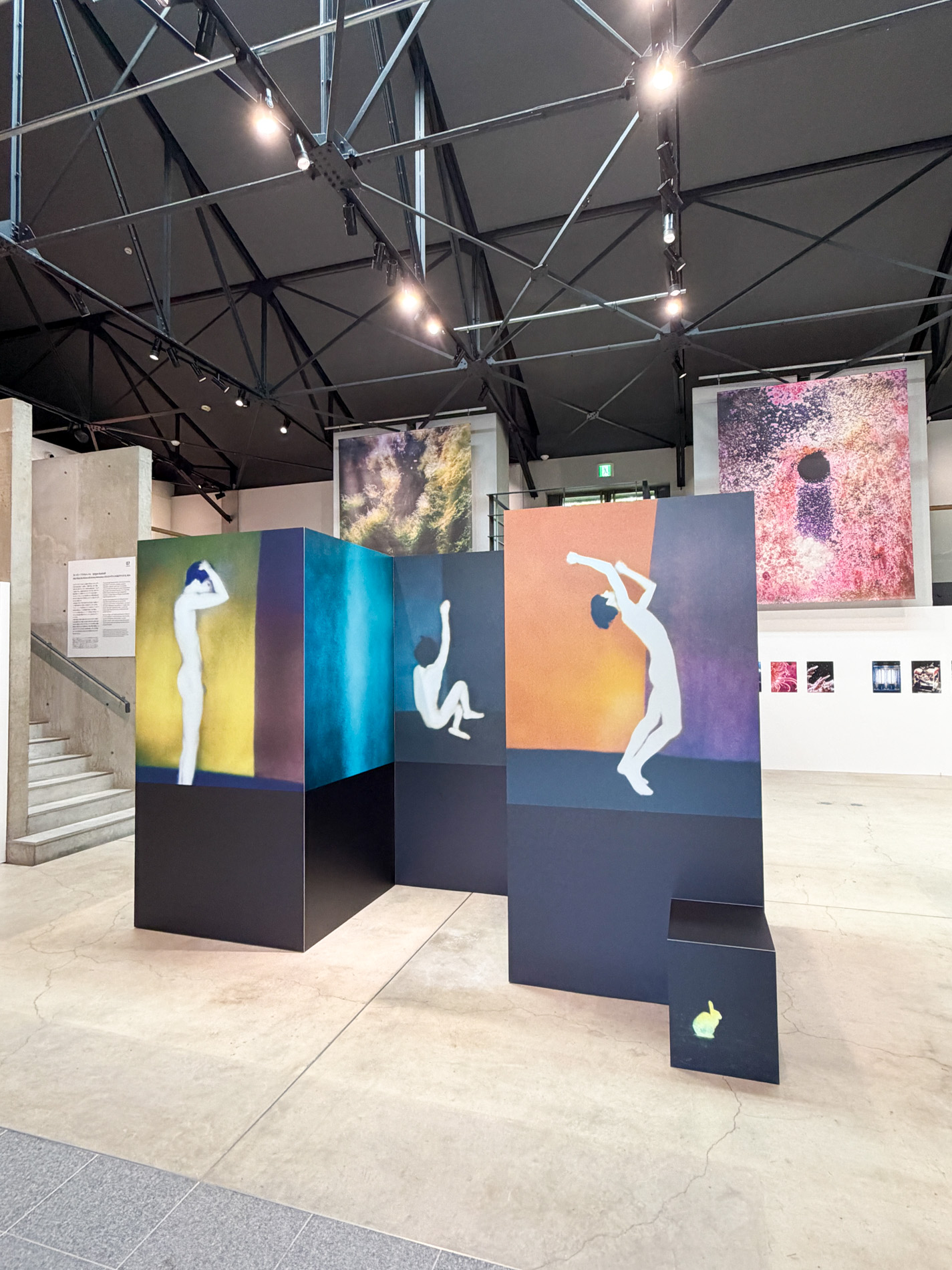
Human outlines surfacing faintly, and close-ups of the instant a firework’s brilliant burst scatters, stand side by side in the same view. Both are Polaroids blown up large, so that even the film grain and the noise become visible. Against a strong ground running from orange into yellow, a figure cut out in white. Only the outline, so neither face nor clothing can be read.
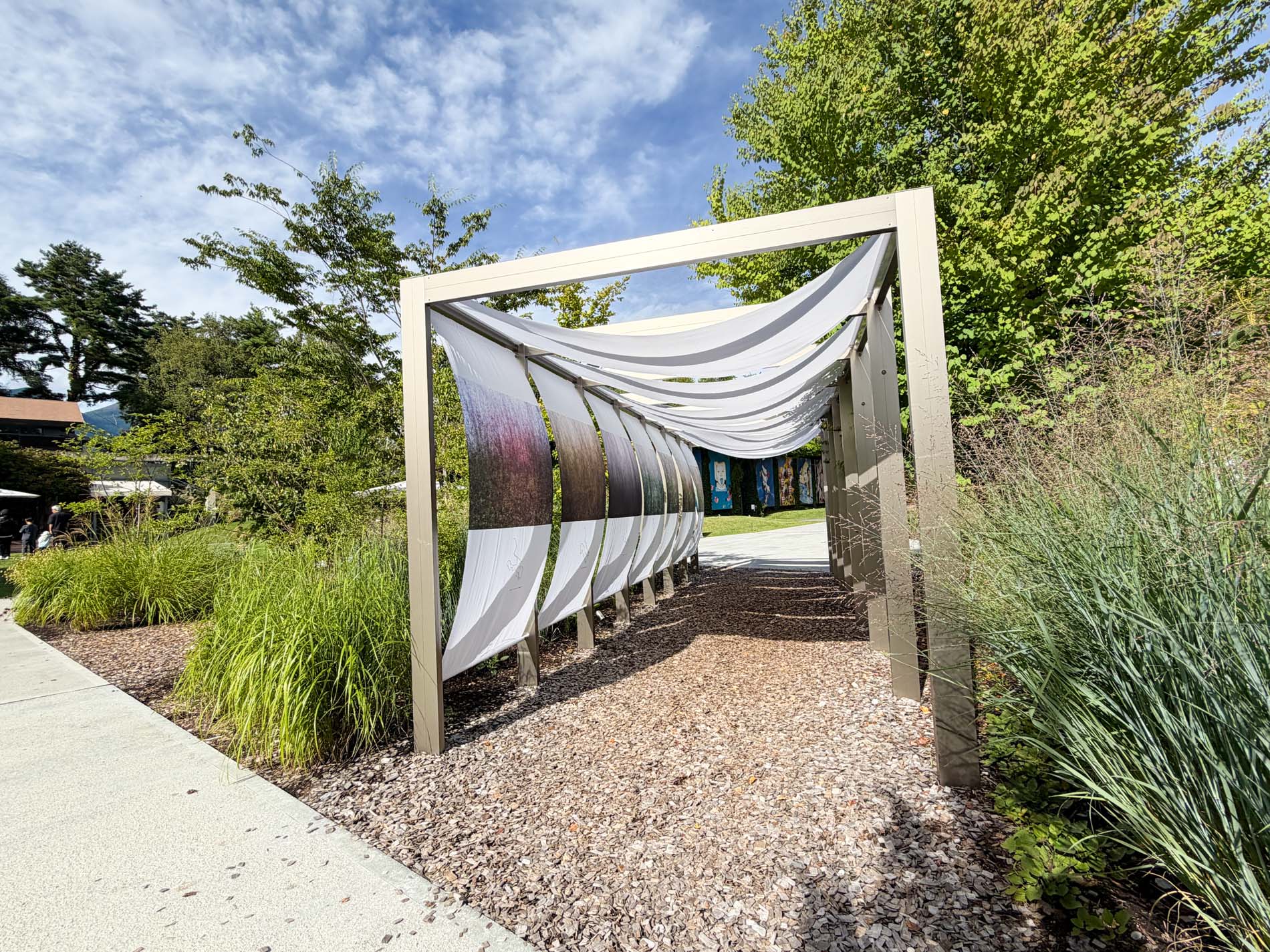
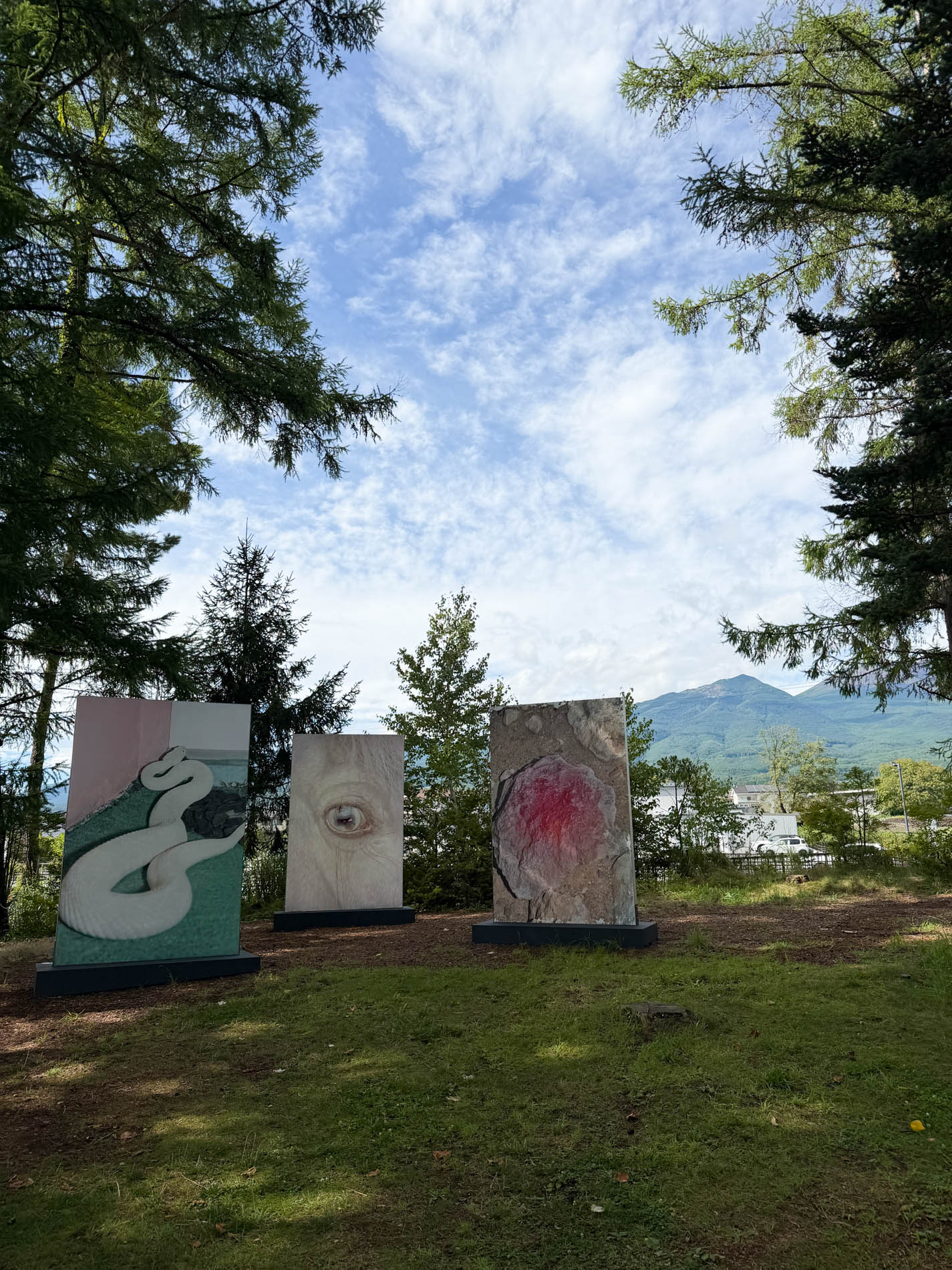
The large banners hanging at the back are Taiyo Onorato & Nico Krebs‘s Water Column, which grew out of a residency at a research facility on the Red Sea. Using underwater cameras, pigment and photograms, they re-photographed existing images with corals and shells placed in front of them. One work scatters pink grain across the whole surface with a black circle opened at its centre; the other is a swirl of gold and green. The roof trusses are left bare, so you have to raise your eyes before the whole thing comes in.
Sky Hung Out to Dry Among the Trees
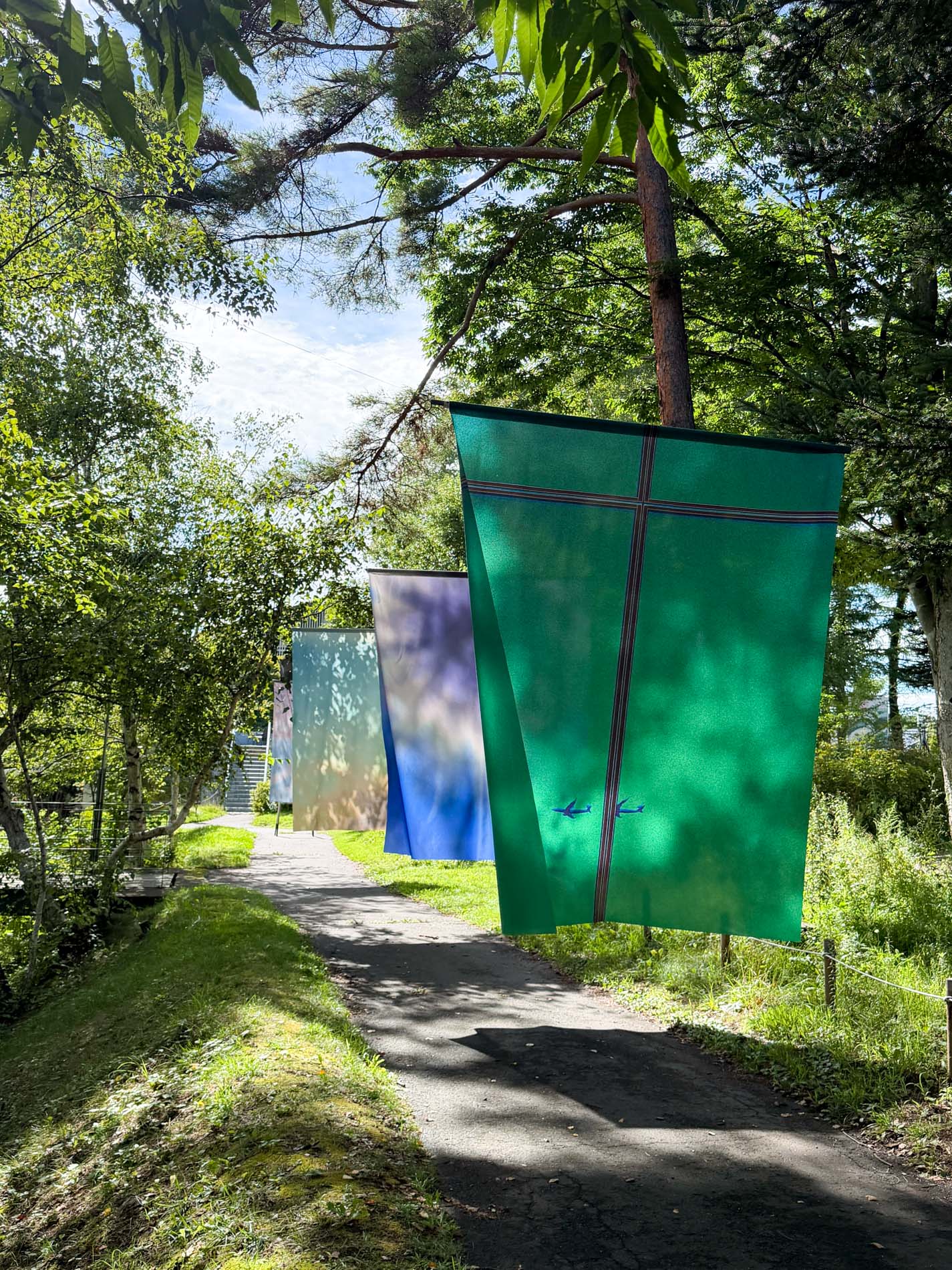
Round the back of the building, large lengths of fabric hang one after another along a woodland path. This is Jörgen Axelvall again — Looking Up: a series photographing aeroplanes crossing the Tokyo sky, made with the solarisation technique.
The fabric is semi-transparent, so the stand of trees behind shows through; when the wind blows it sways, and the shadows of real branches cross over the photographed sky. Photographs of the Tokyo sky rise up into the sky of Miyota.
Godzilla Standing in an Old Ethnographic Photograph
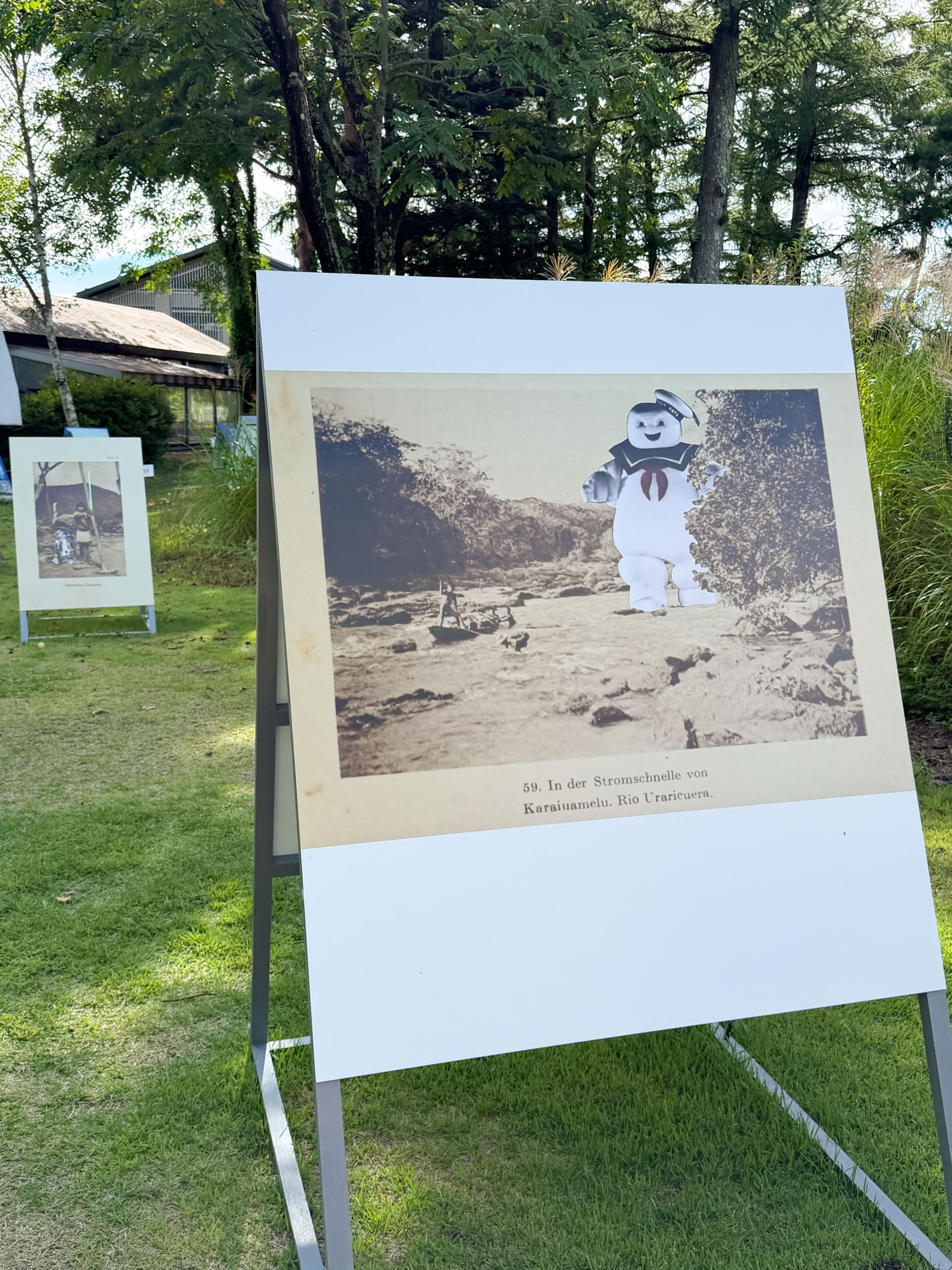
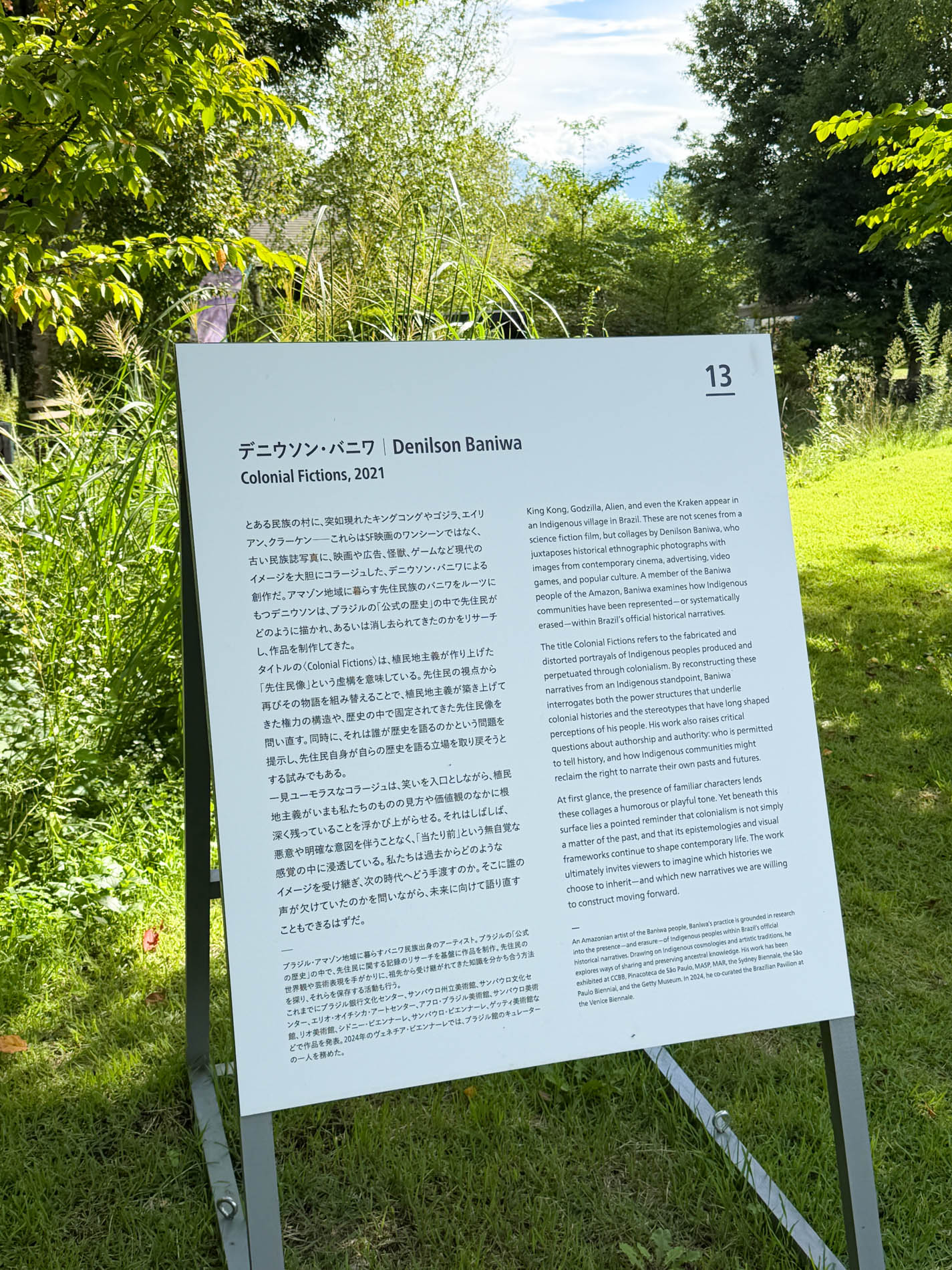
An area where easel-like panels are scattered across the lawn. Denilson Baniwa, an artist of the Baniwa people of the Brazilian Amazon: Colonial Fictions (2021).
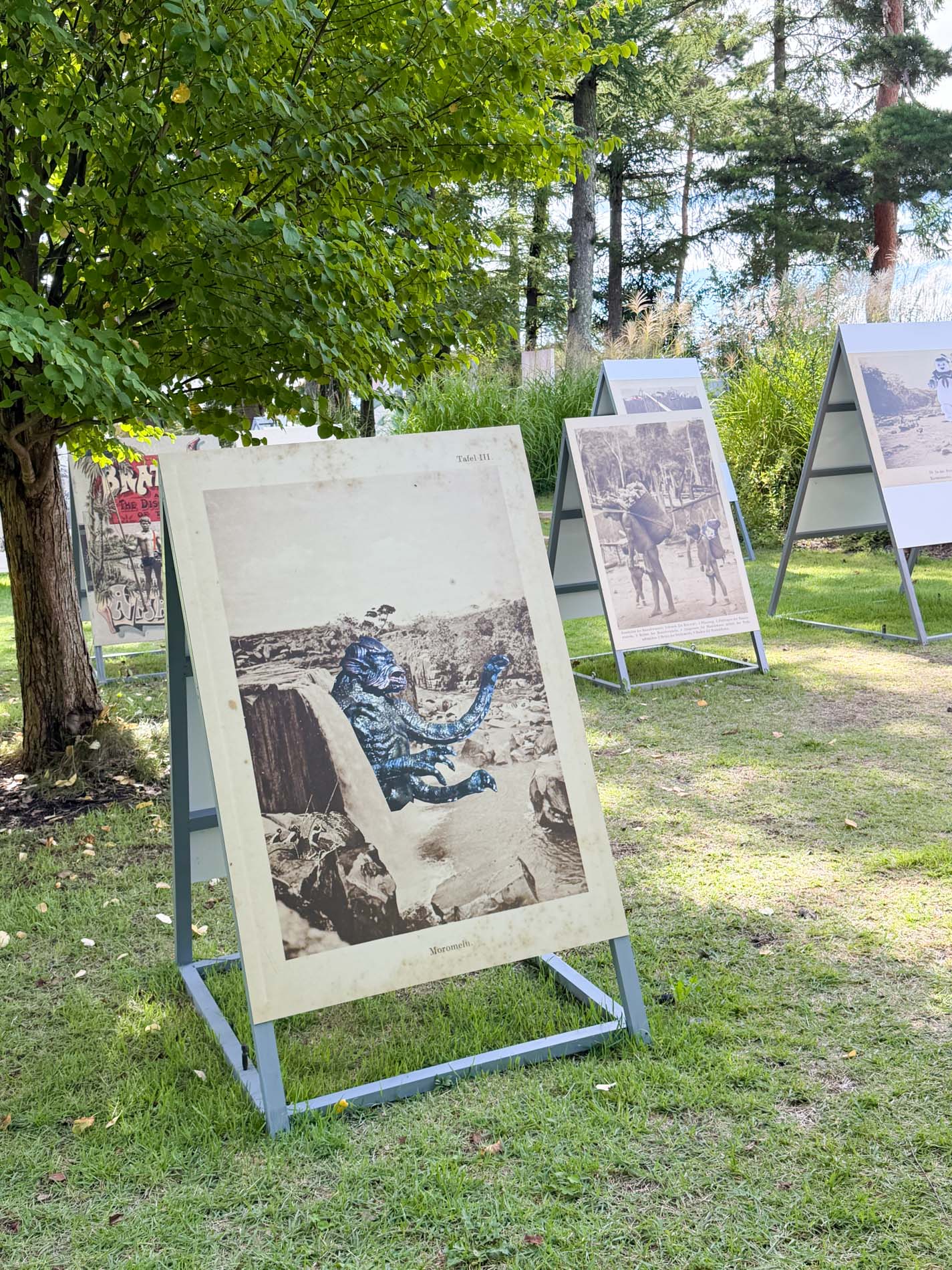
Photographs taken from the nineteenth into the early twentieth century by Western expeditions and anthropologists to document “primitive peoples.” Into them, images from the movies — King Kong, Godzilla, the Alien, the Kraken — have been composited without apology.
Walking the Garden
Taking Photographs Out from Under the Roof
An hour and a half from Tokyo by Shinkansen and local line; twenty minutes by train from Karuizawa. On until 27 September. ¥1,500 lets you return as often as you like during the run, so there may also be pleasure in going twice, to see the difference between summer light and early-autumn light.