We took the Metro-North Hudson Line north from Grand Central Terminal in New York City, about eighty minutes, to visit Dia Beacon, the museum in Beacon, New York.
We went on a Monday. Dia Beacon is open four days a week, Friday to Monday, and closed Tuesday to Thursday.
North along the Hudson
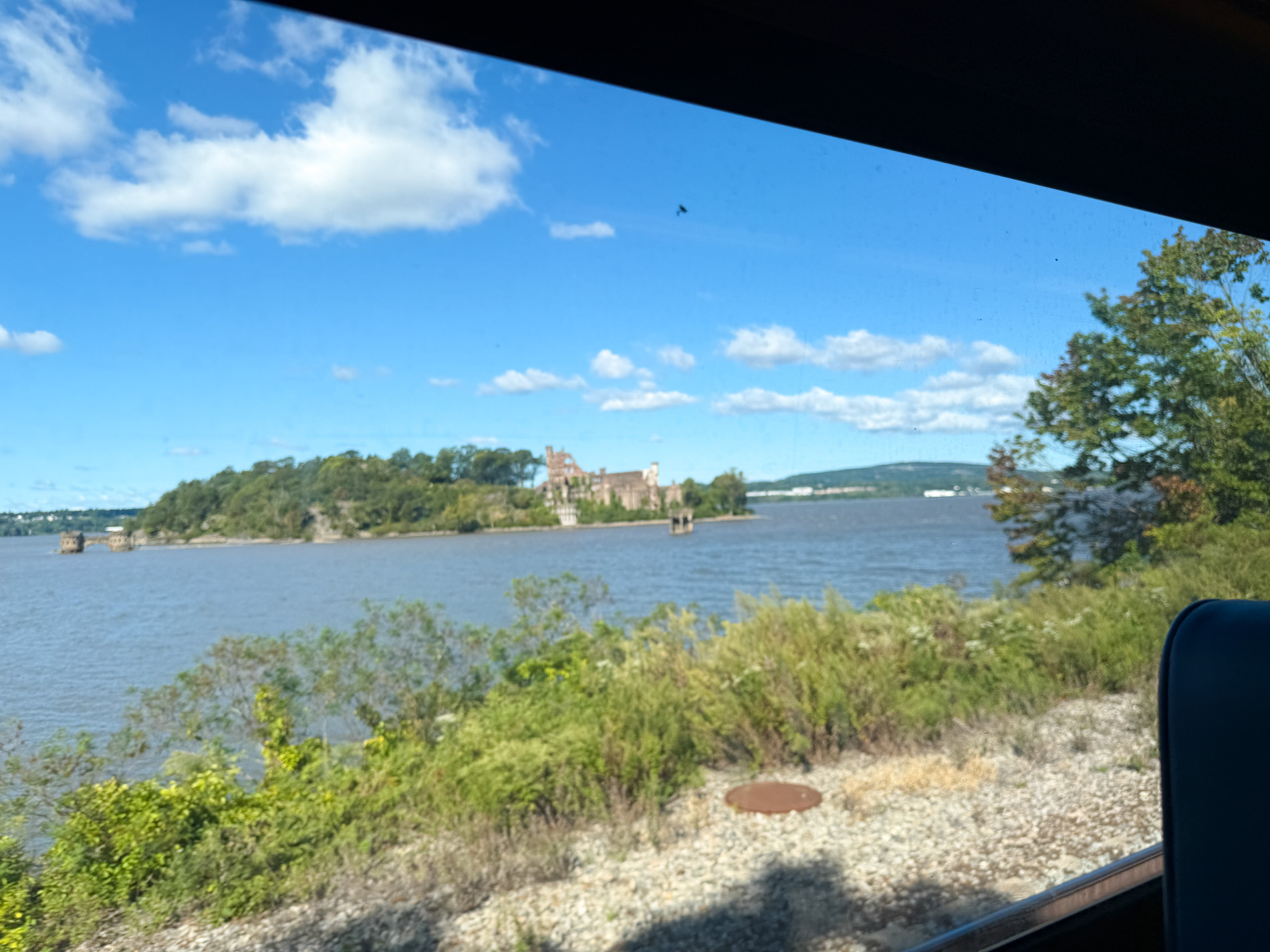
The tracks run along the east bank of the Hudson, so if you sit on the left in the direction of travel you can watch the river for almost the whole journey. Most of the other passengers were sitting on the left as well.
Shortly before Beacon, the ruins of Bannerman Castle come into view on a small island in the river.
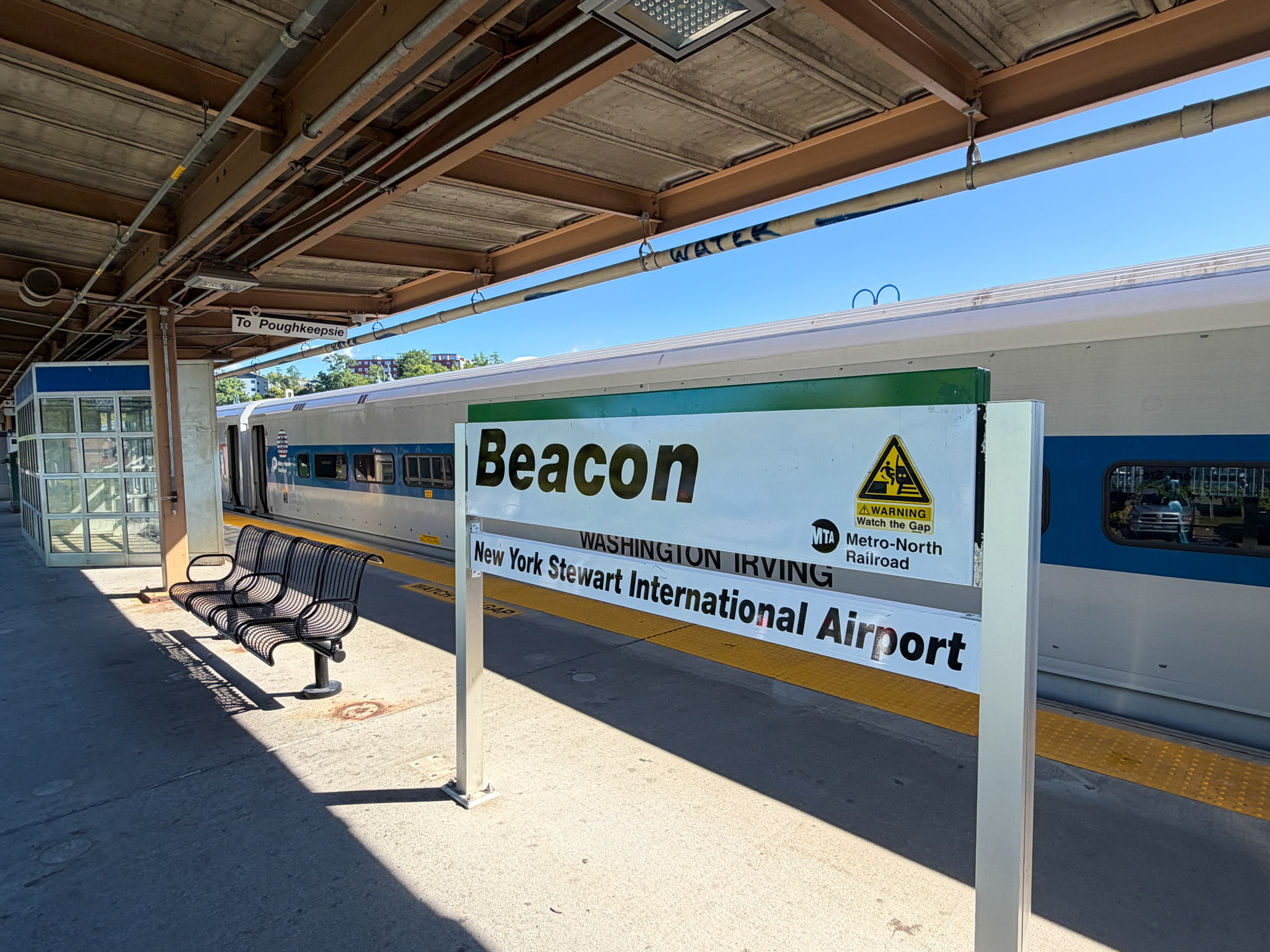
The museum is about a ten-minute walk from the station along the river. A free shuttle bus is said to run as well, though it did not appear to be operating when we visited.
Once a Nabisco printing plant
The building was put up by Nabisco in 1929 as a plant for printing the boxes its biscuits came in. It has a floor area of roughly 28,000 square metres, and reopened as a museum in 2003.
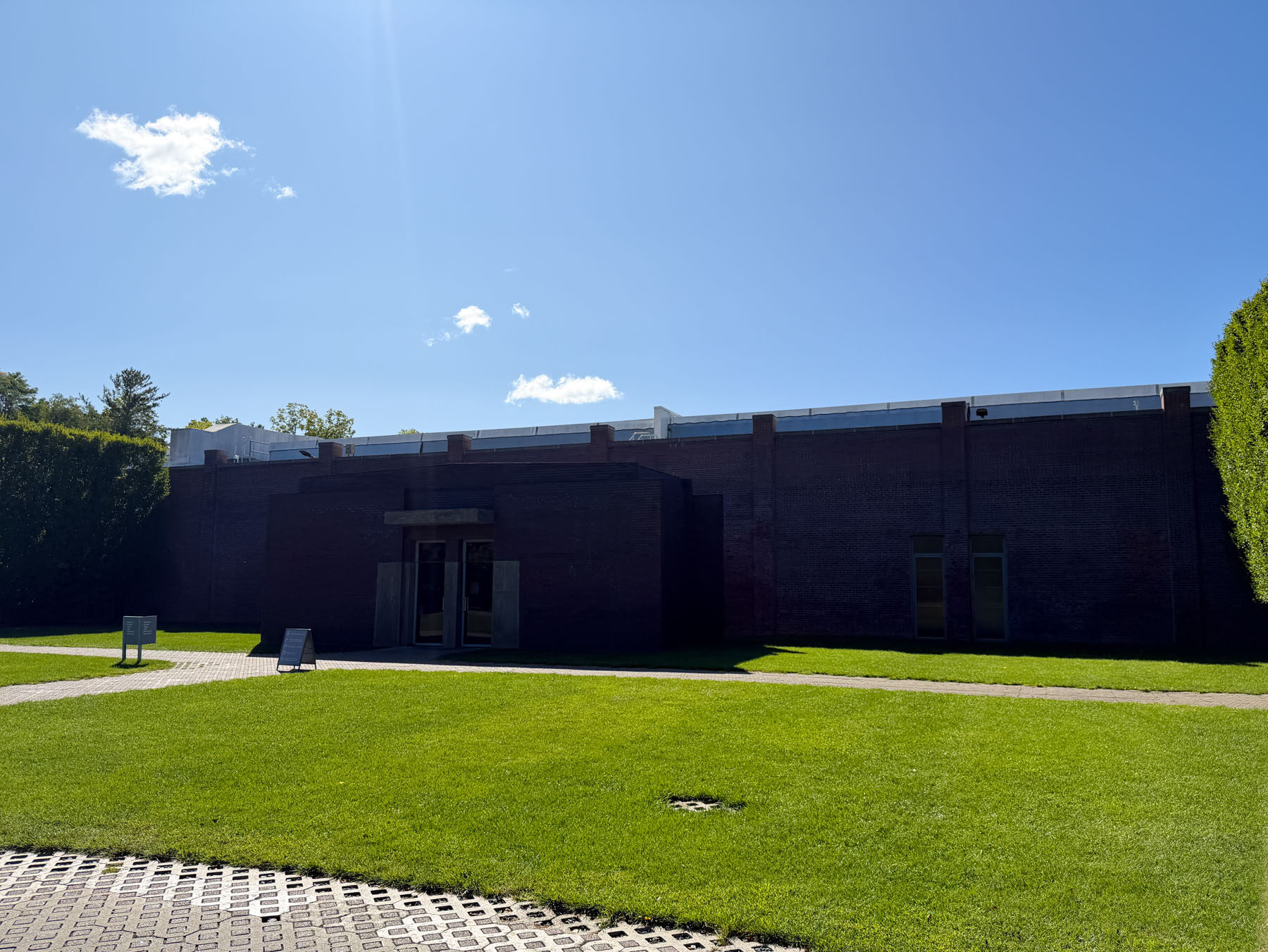
Dia chose the building because the columns stand far apart and the roof carries rows of skylights. The skylights add up to more than 3,000 square metres, and the museum presents itself as one that shows art by natural light. The master plan for the conversion was drawn up not by an architect but by the artist Robert Irwin. The name Dia, incidentally, comes from the Greek word meaning “through.”
Japanese-language articles about Dia Beacon often feature Dan Flavin’s fluorescent light works and Andy Warhol’s Shadows. Neither was on view on the day we went: the Flavin installation closed on 23 September 2024, and Shadows on 6 July 2026. It is a museum built around a collection, but the displays change little by little, so it is worth checking the official website for what is on view before you go.
Ninety-three banners hung from the ceiling
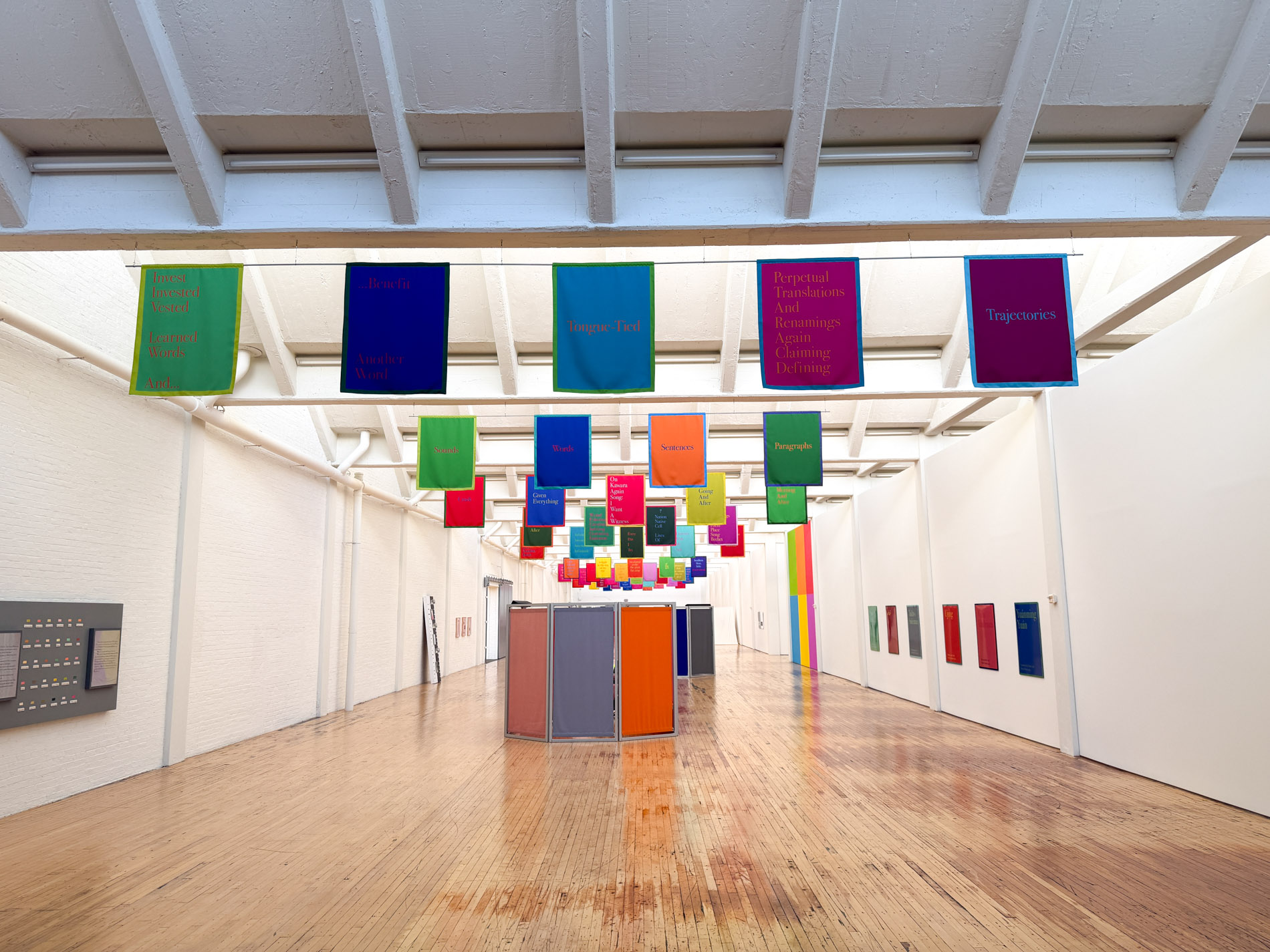
In the central gallery just inside the entrance was Renée Green’s solo exhibition The Equator Has Moved (through 12 October 2026).
The colourful fabrics hanging from the ceiling are Space Poem #14 (Long Poem in Four Parts) (2025), with a short phrase printed on each of the ninety-three banners. The fabric screens standing on the floor, Bichos, form small spaces you can step inside to watch video and listen to sound.
Sol LeWitt’s wall drawing
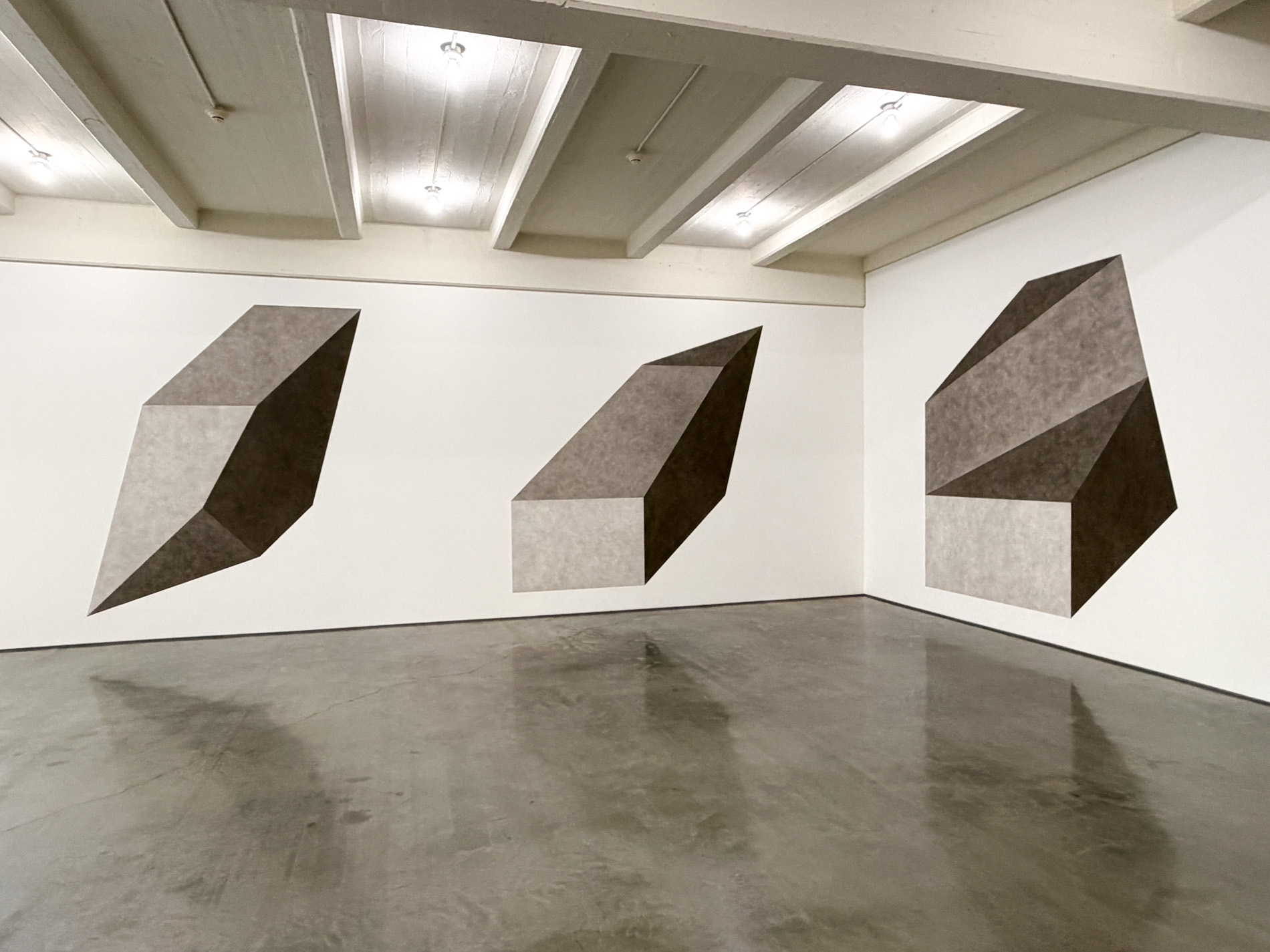
In Sol LeWitt’s Wall Drawing #411, solids painted in gradations of grey appear to rise out of the wall.
LeWitt’s wall drawings are completed by other people, who draw on the wall following instructions written by the artist. This one was drawn by Hidemi Nomura and Jo Watanabe, and was made in 2003, the year the museum opened.
A six-metre-deep hole in the floor
Michael Heizer’s North, East, South, West (1967/2002) is cut into the gallery floor itself. Holes shaped like a cone, a cube and a wedge run in a line, about thirty-eight metres in all and some six metres deep. The scale of the work on show here is simply enormous.
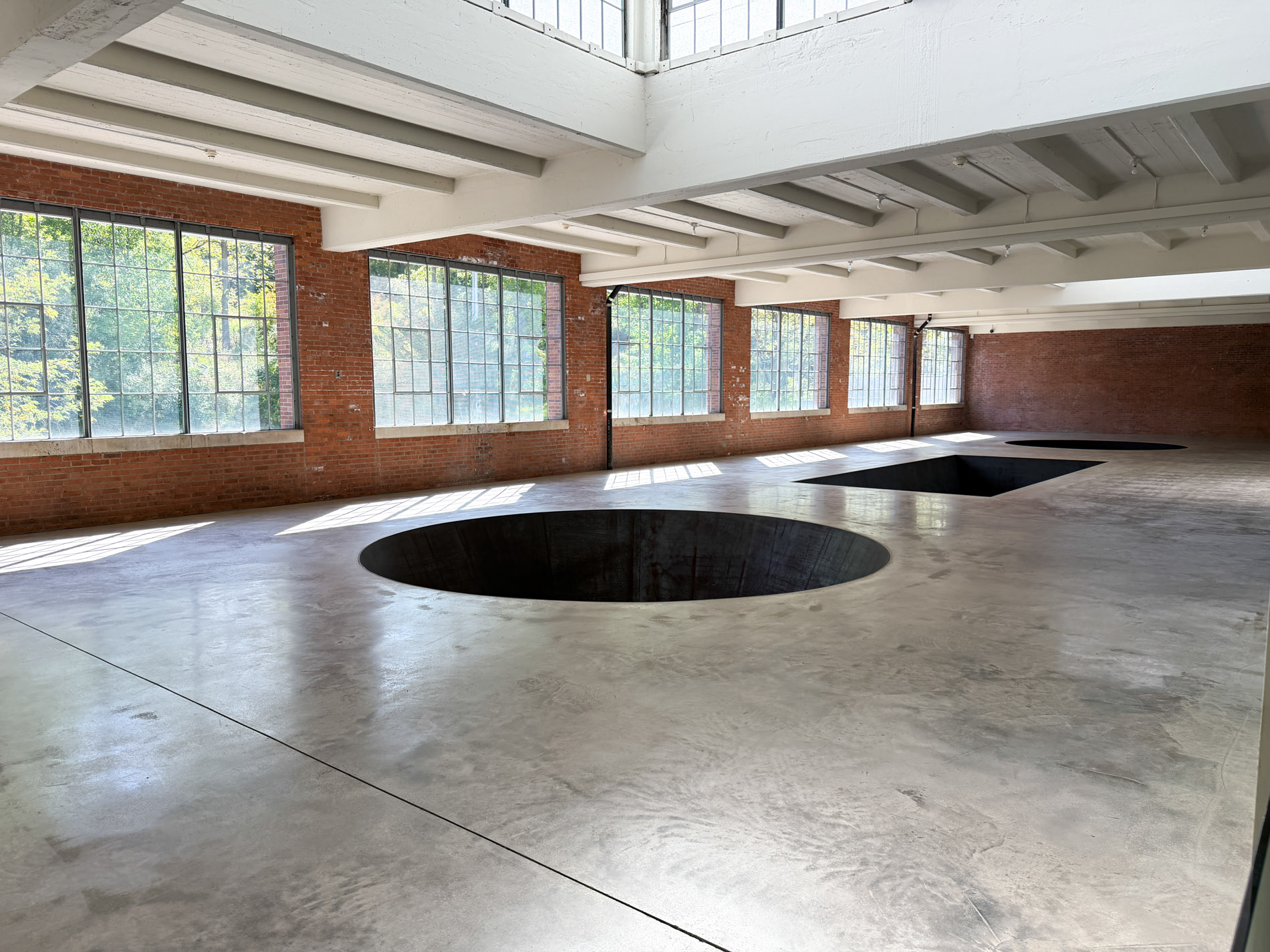
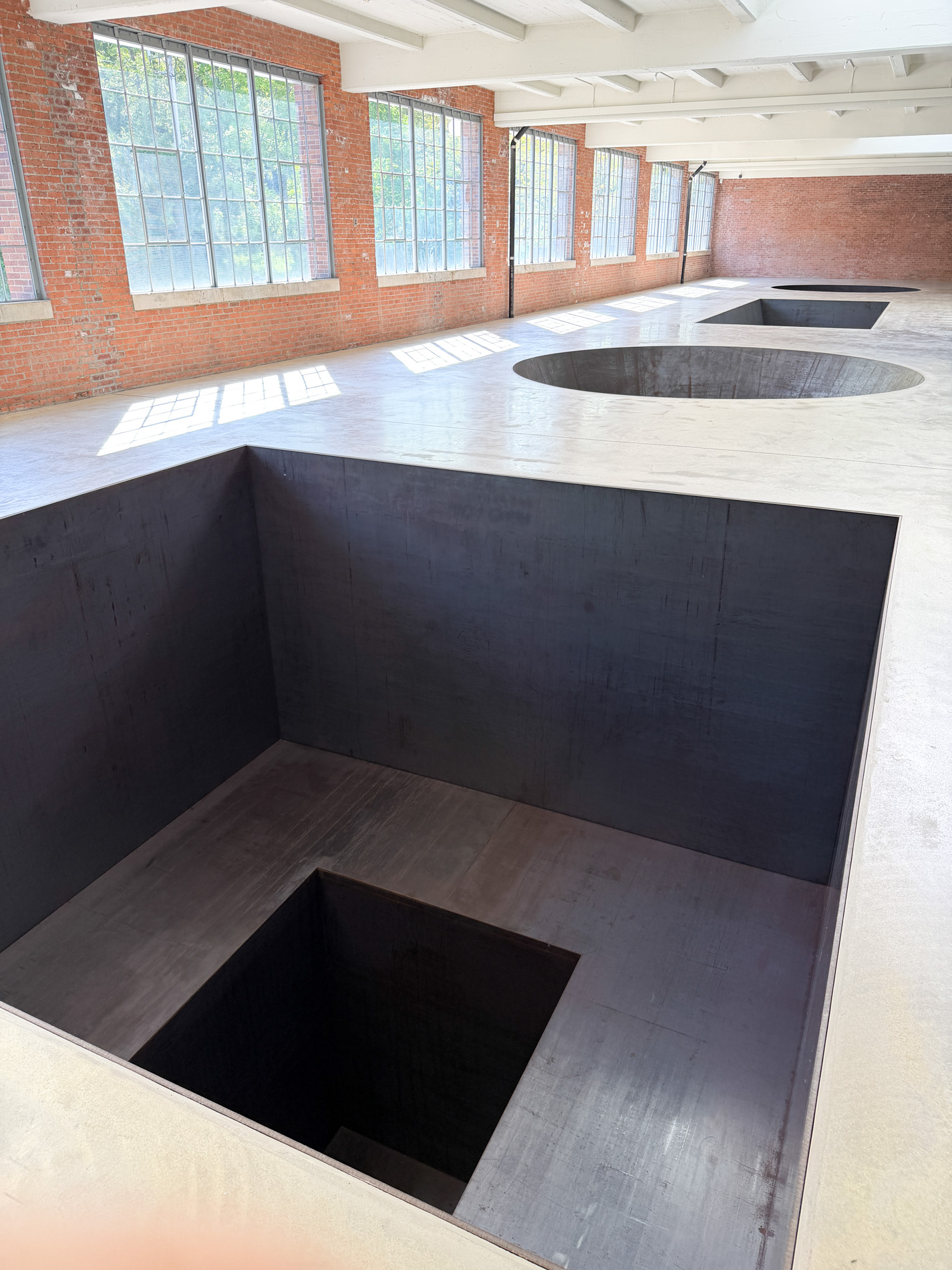
According to the wall text, Heizer held that sculpture capable of inspiring awe could not be achieved at a small scale. Glass barriers surround the openings, but looking down into them is dizzying, and the text explains that this sense of danger makes the experience of the work stronger.
Skylights reflected in grey mirrors
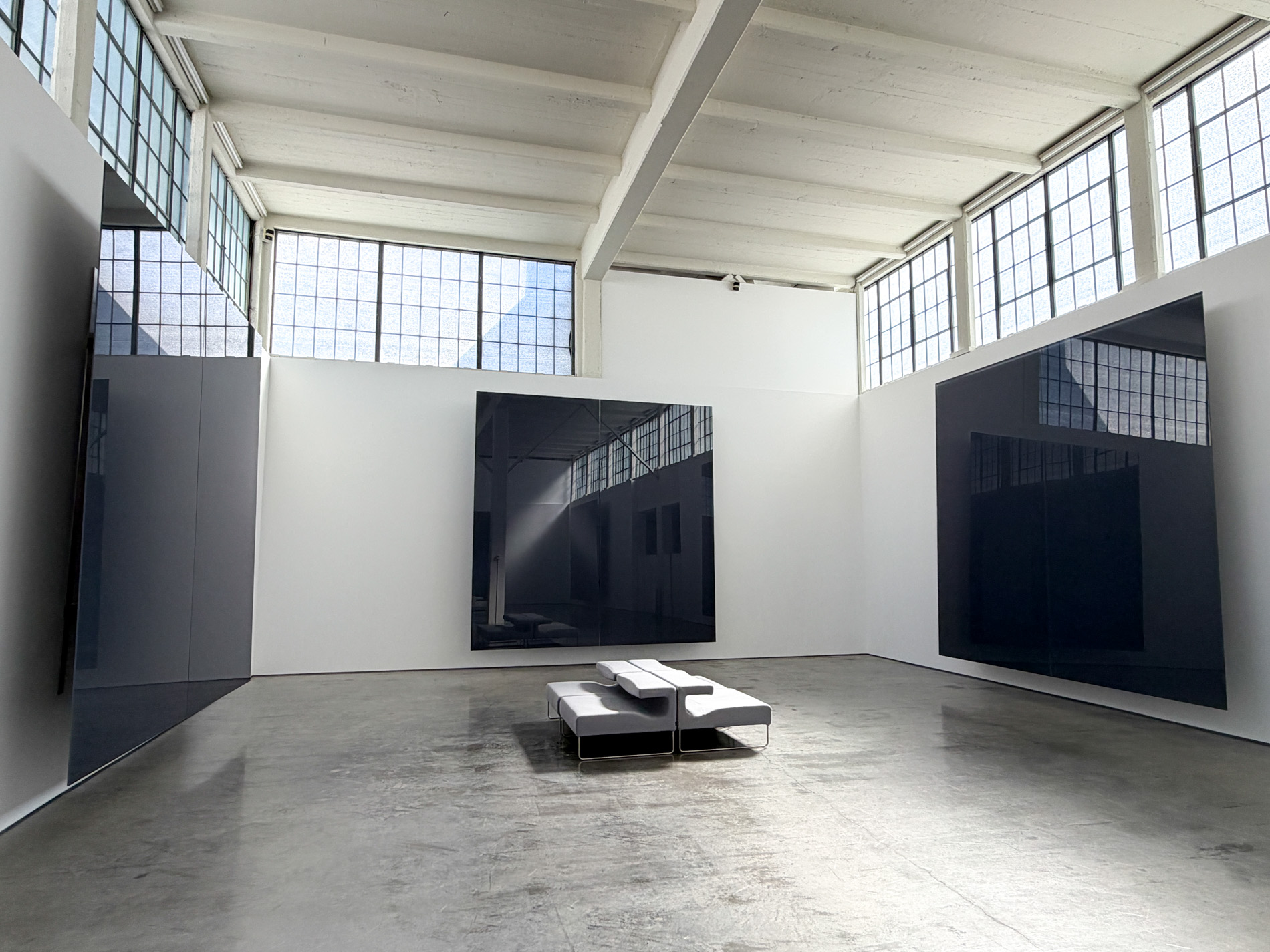
Gerhard Richter’s Six Gray Mirrors (2003) consists of six panes of tempered glass coated with grey enamel. They reflect the room like mirrors, but everything that appears in them looks dark and subdued.
Kishio Suga
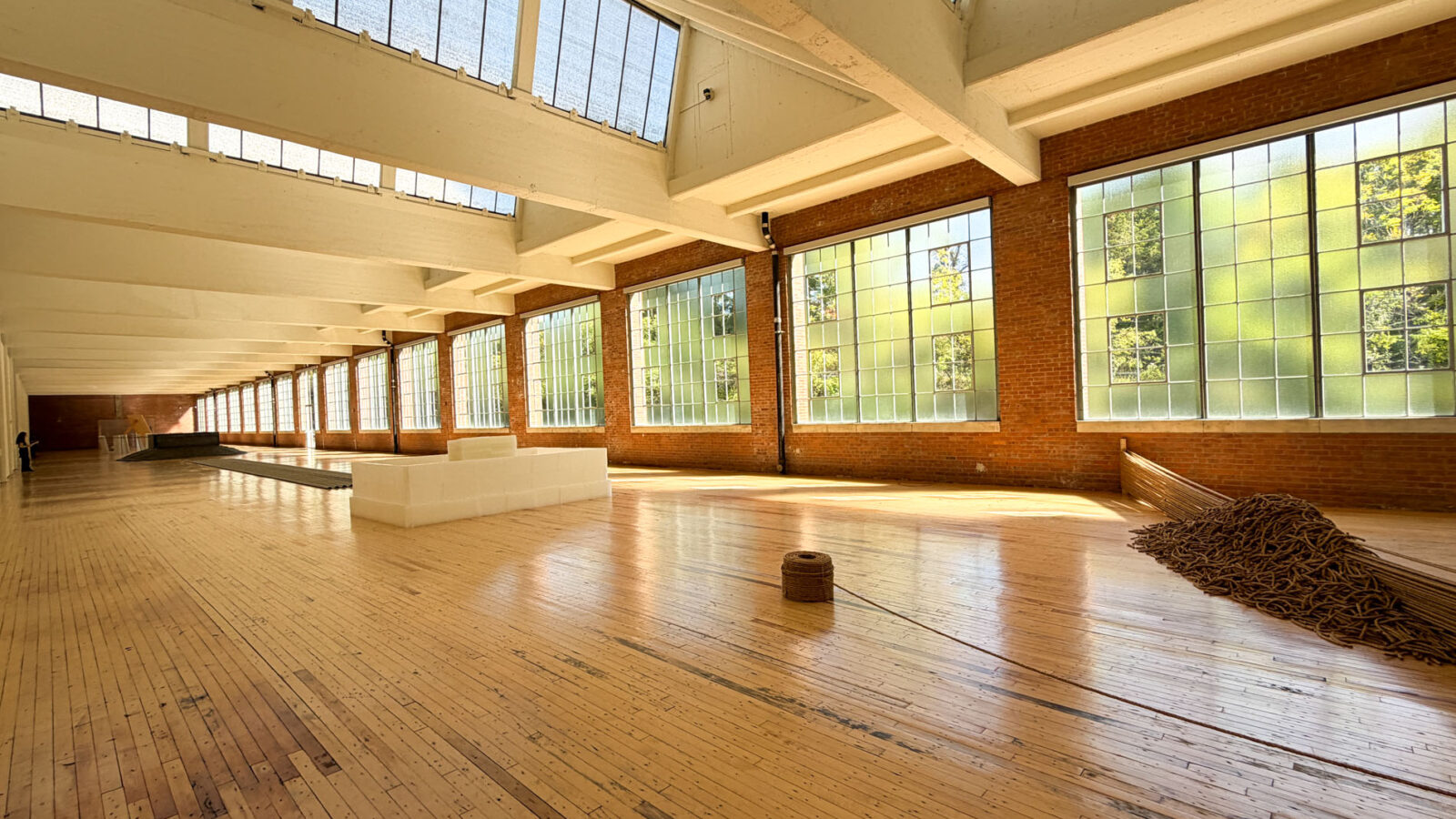
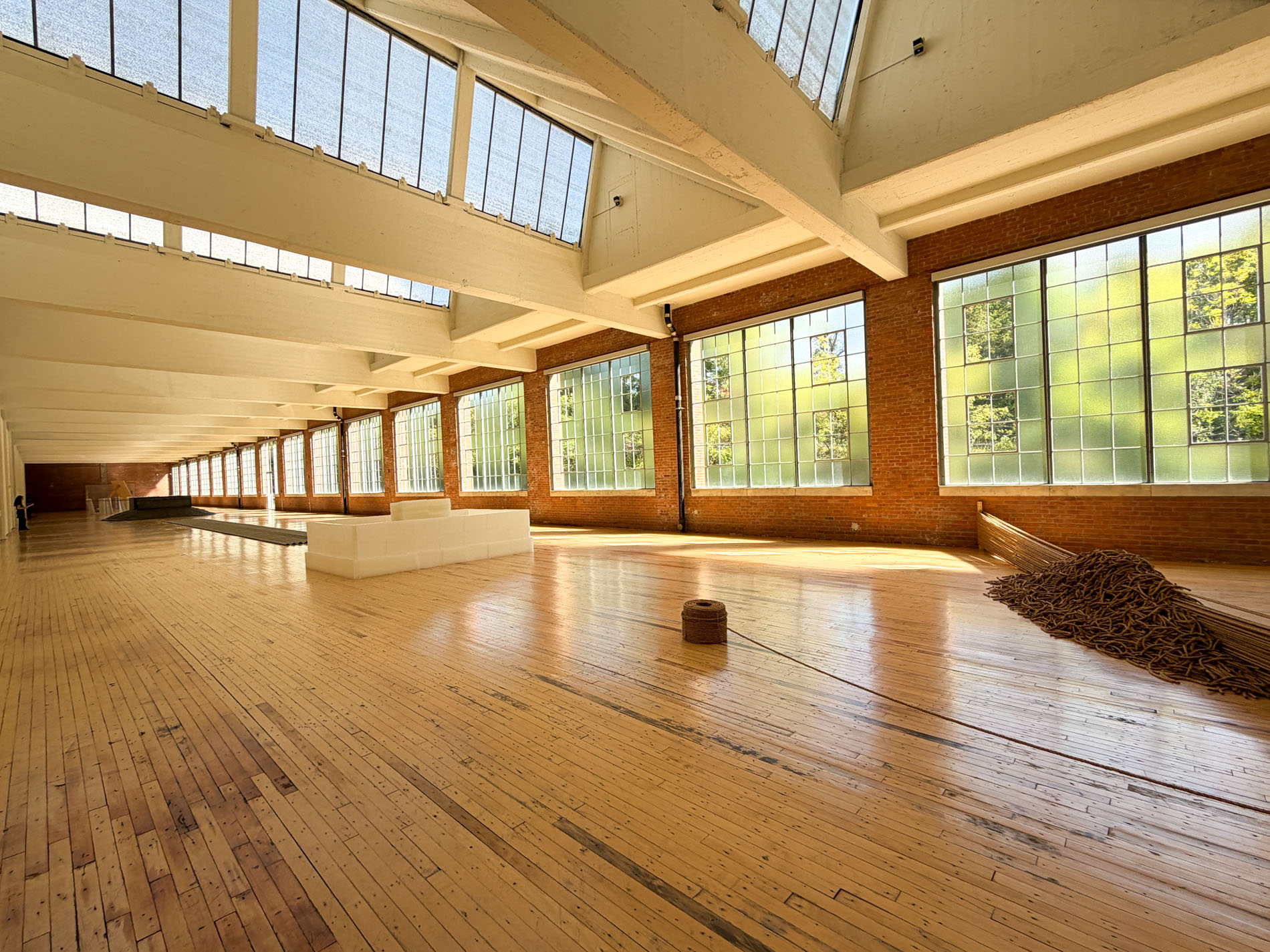
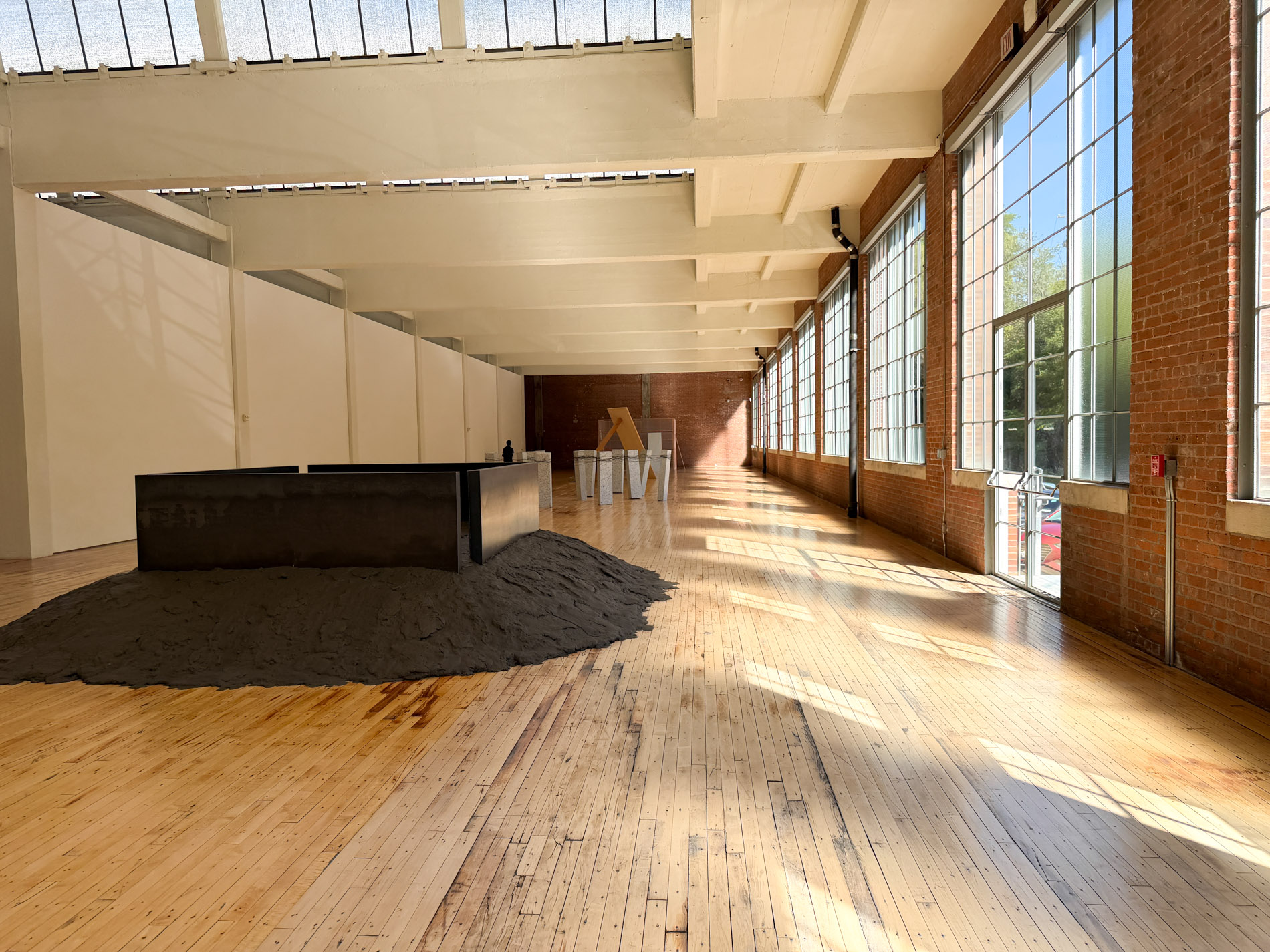
In the long gallery lined with windows, an installation by Kishio Suga has been on view since July 2025. On 7 August 2026 a second room was added.
The works include Fieldology (1974/2025), a heap of straw rope; Parallel Strata (1969/2025), an enclosure of paraffin blocks; and Soft Concrete (1970/2025), made with concrete and machine oil. Two dates are given because the works were remade in 2025.
On 24 October, Dia Chelsea in Manhattan is said to be holding a talk on Japanese artists of Suga’s generation.
Lee Ufan’s paintings, given by the artist
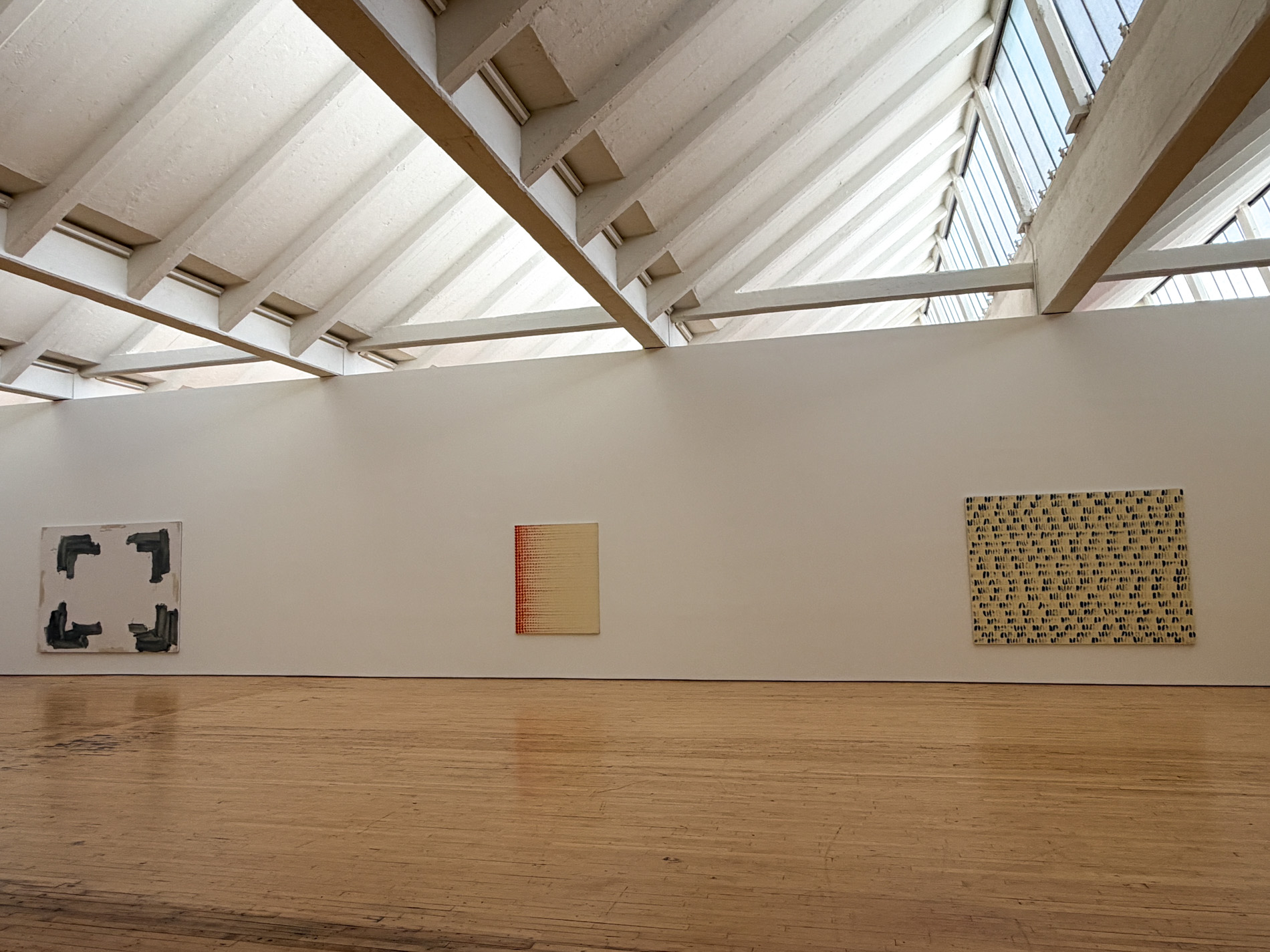
The Lee Ufan display opened in May 2026. The eight paintings, from the 1970s to the early 1990s, were given to Dia by the artist himself.
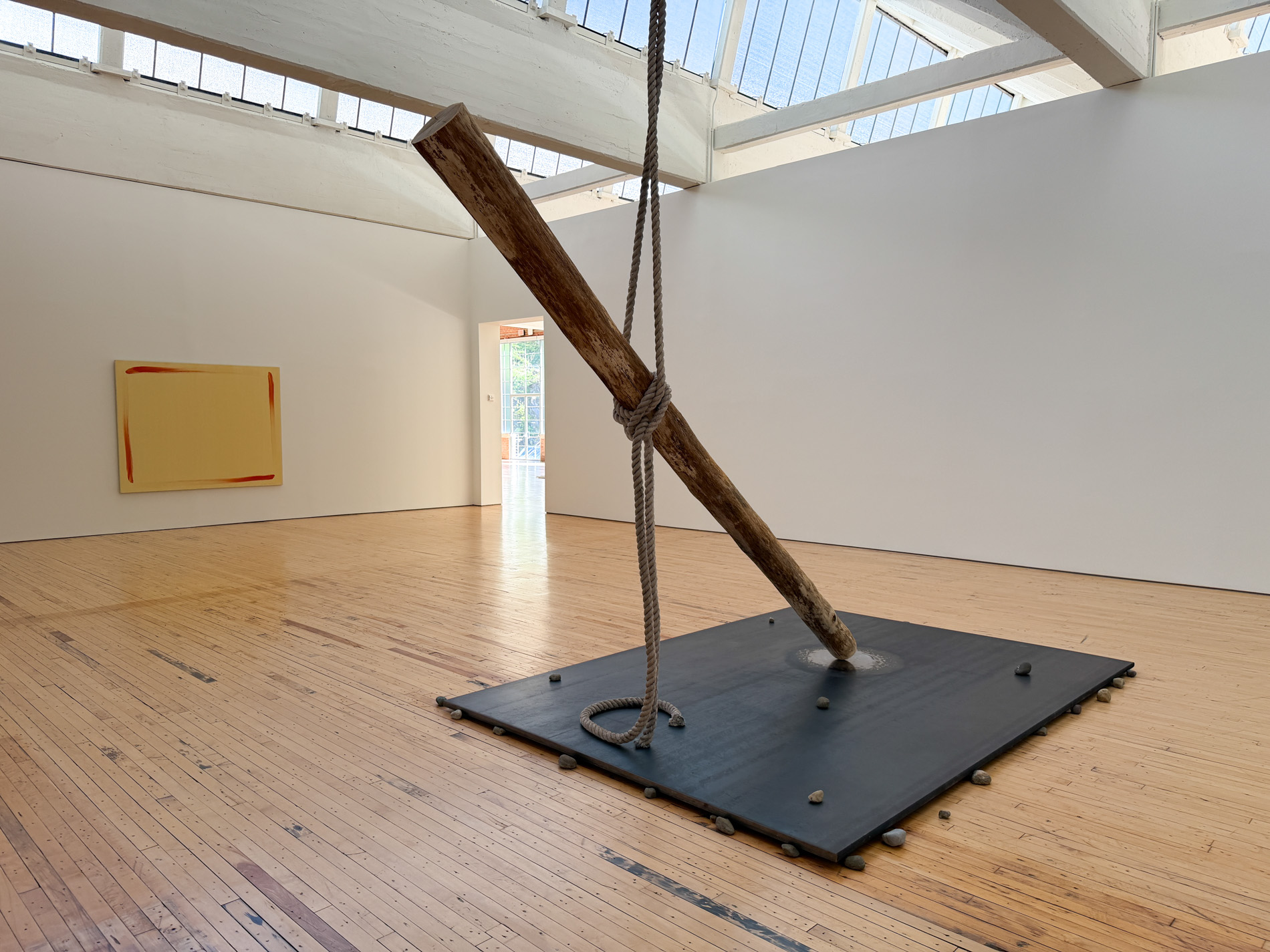
They include With Winds (1991) and From Point (1975 and 1980). The same display also has Relatum (1974/2019), in which a log tied with rope leans at an angle on a steel plate.
Orange panels floating in the air
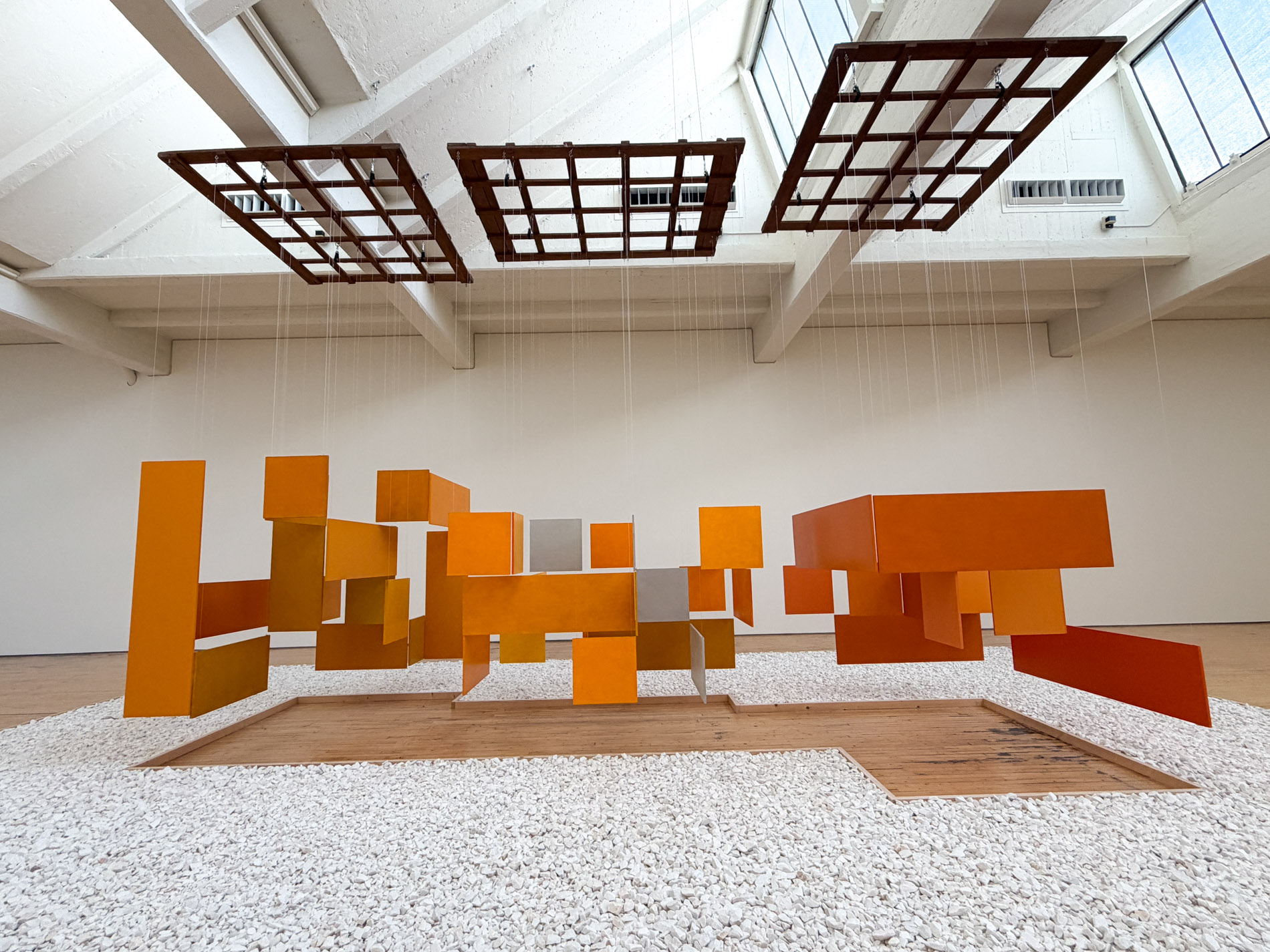
In Hélio Oiticica’s Grande Núcleo (Grand Nucleus) (1960–66), yellow and orange panels hang from the ceiling and appear to float above white gravel.
On the walls are Relevos Espaciais (Spatial Reliefs) from the same period. The display has been up since December 2025 and was organised by Humberto Moro, deputy director at Dia.
On Kawara’s Today series
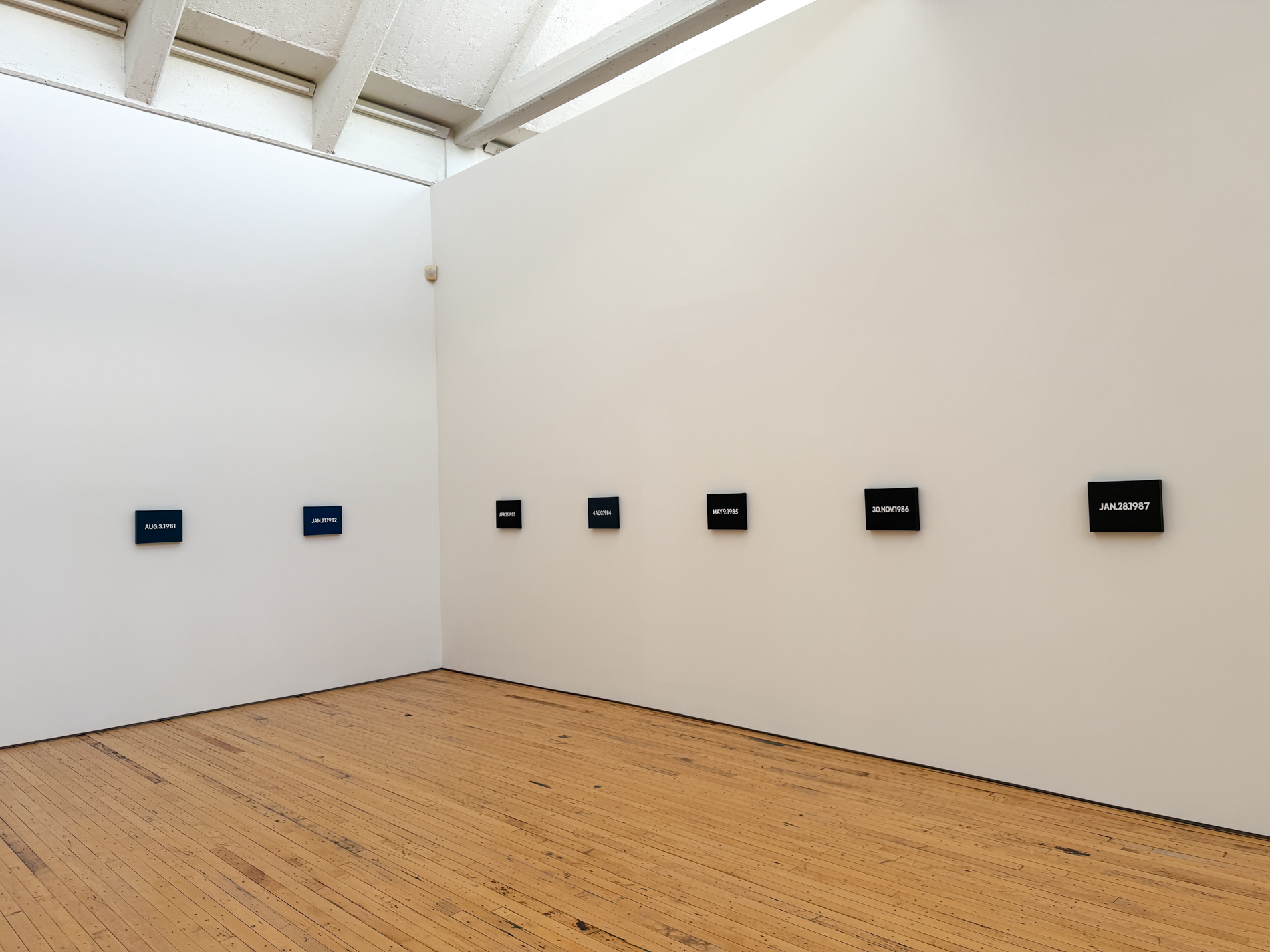
On Kawara’s room holds thirty-six works from the Today series, painted between 1966 and 2000, each showing nothing but a date.
The date is written in the language of the place where the painting was made, and Esperanto is used for countries that do not use the Roman alphabet. “18 MAI 2000” is French; “4 AŬG.1984” is Esperanto (used when the country does not use the alphabet). Beneath the floor of this room, at the artist’s instruction, lies Japanese white charcoal.
Richard Tuttle
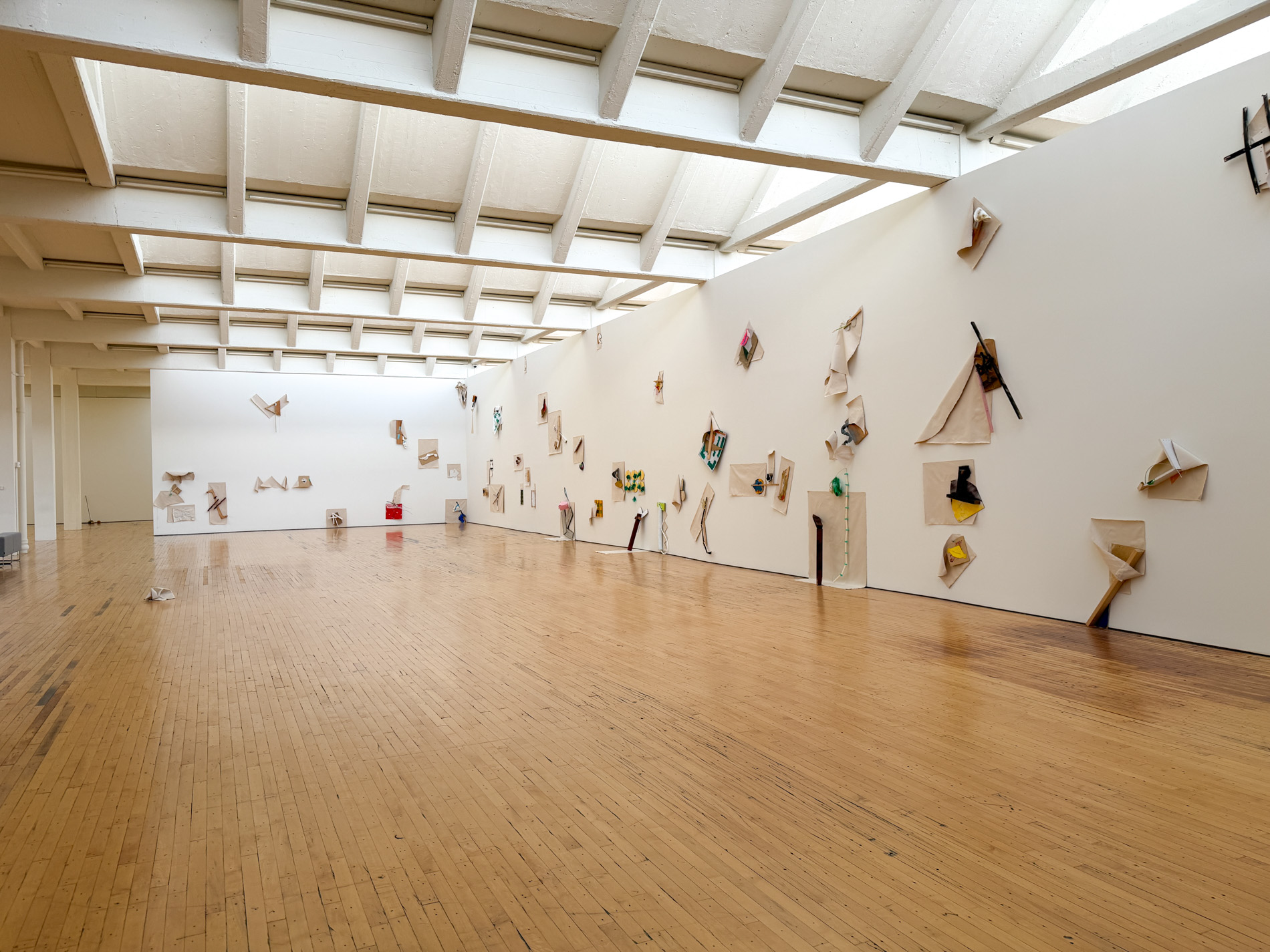
In Richard Tuttle’s solo exhibition Half-Light, which opened at the end of July 2026, Good Idea, 1–80 (2025–26) — unbleached cloth combined with small coloured objects — was scattered across the wall and down onto the floor.
Chamberlain
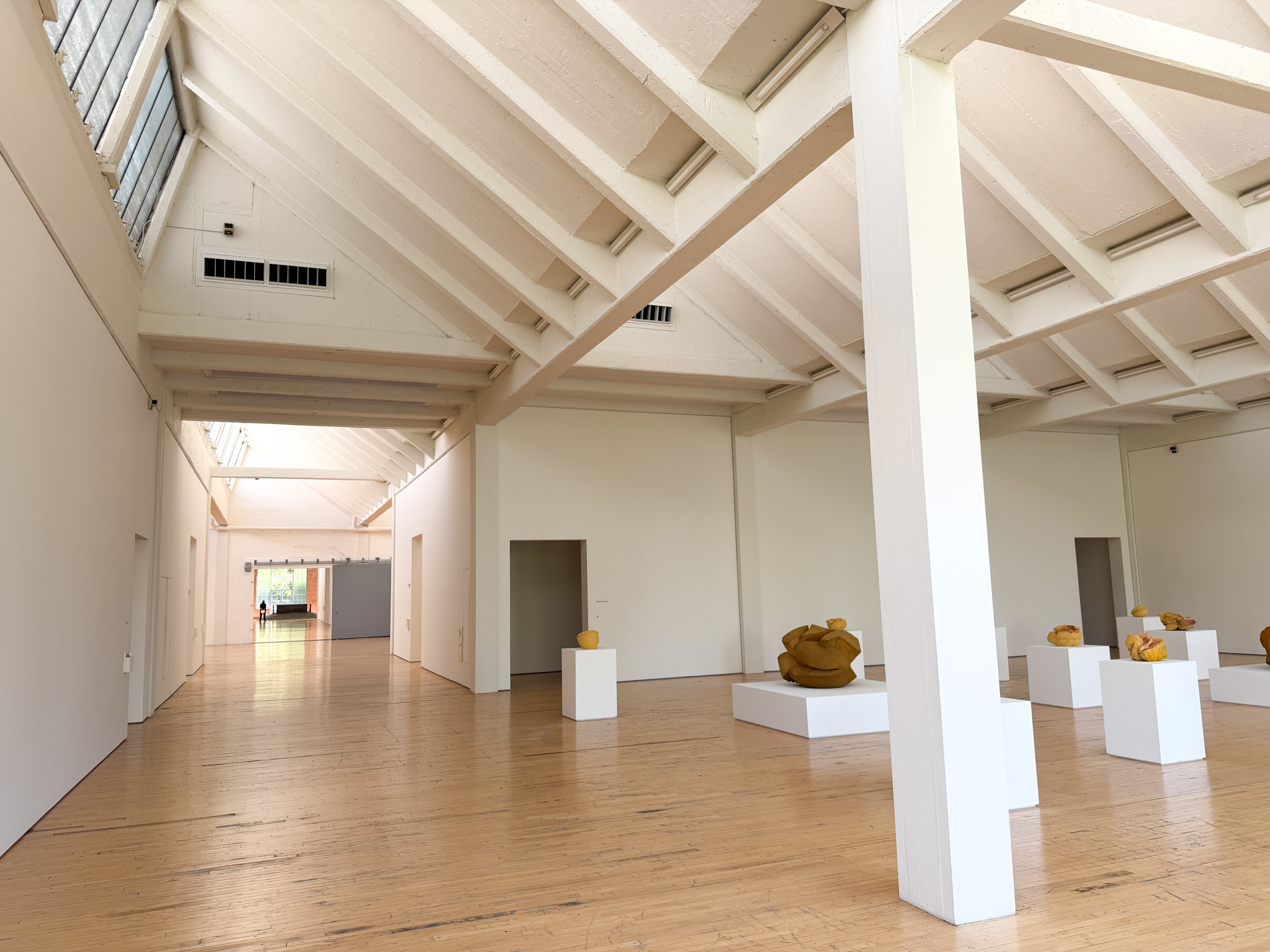
The long gallery at the far end holds sculptures by John Chamberlain: works assembled from crushed car bodies, and yellow pieces formed by binding urethane foam. They are scheduled to remain on view until 2028.
Tehching Hsieh (lower level)
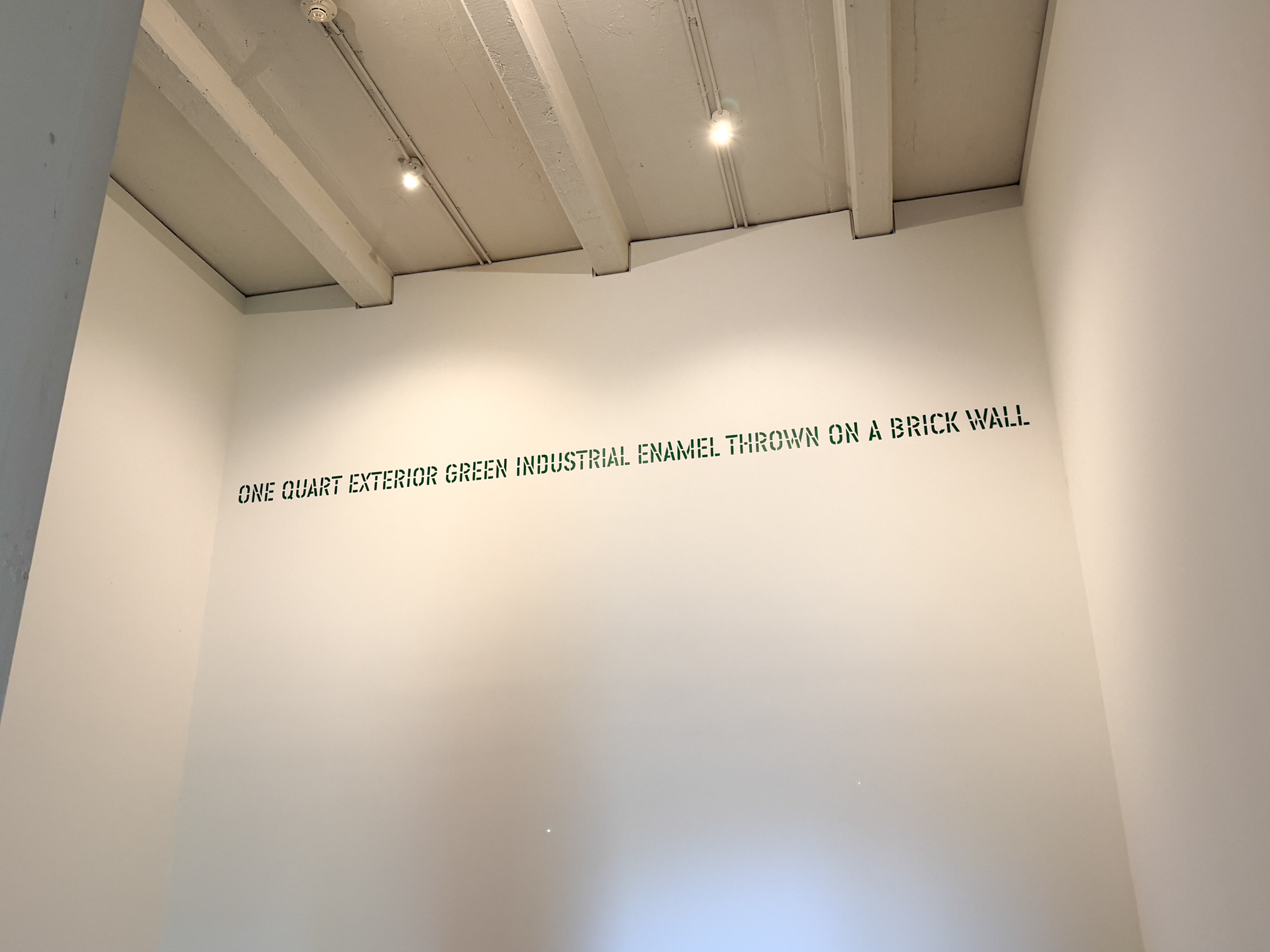
On the wall of the stairwell down to the lower level is Lawrence Weiner’s text work ONE QUART EXTERIOR GREEN INDUSTRIAL ENAMEL THROWN ON A BRICK WALL (1968). The line says exactly what it names: a quart of green exterior industrial enamel, thrown at a brick wall.
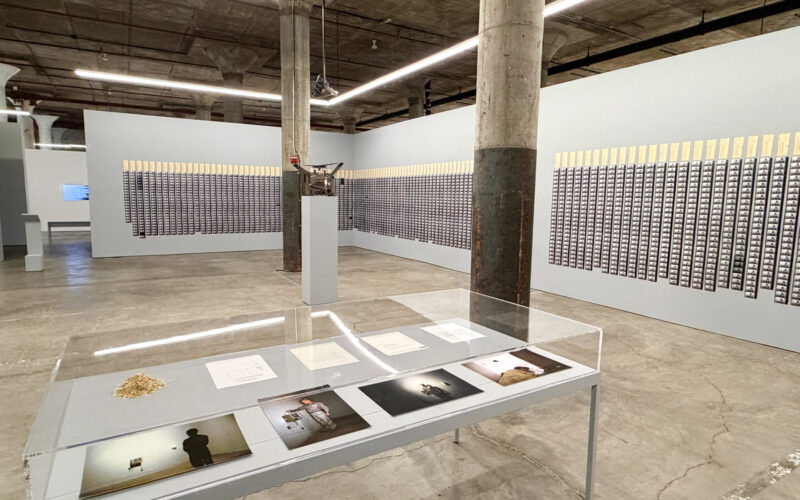
The wide concrete space on the lower level is given over to a single artist, Tehching Hsieh, who was born in Taiwan. It is a rare chance to see five of his year-long works together, and we cover it in a separate article.
→ [Photo Report] The Singular Art of the One Year Performances — Tehching Hsieh: Lifeworks 1978–1999 | Dia Beacon
Haegue Yang’s new work from October
On the day we visited, Larry Bell’s room (which closed on 24 August) was shut off behind a temporary wall. Behind it, preparations were under way for Haegue Yang’s solo exhibition Through, opening on 10 October.
It is a new work spanning both the ground and lower levels, and Haegue Yang is said to be the first artist to use both floors of Dia Beacon. The title, Through, means the same thing as the word the name Dia comes from.
A serious bookshop inside
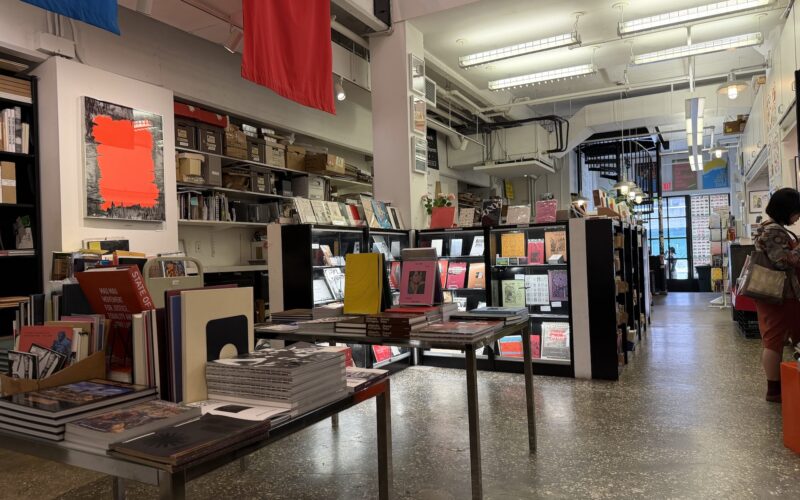
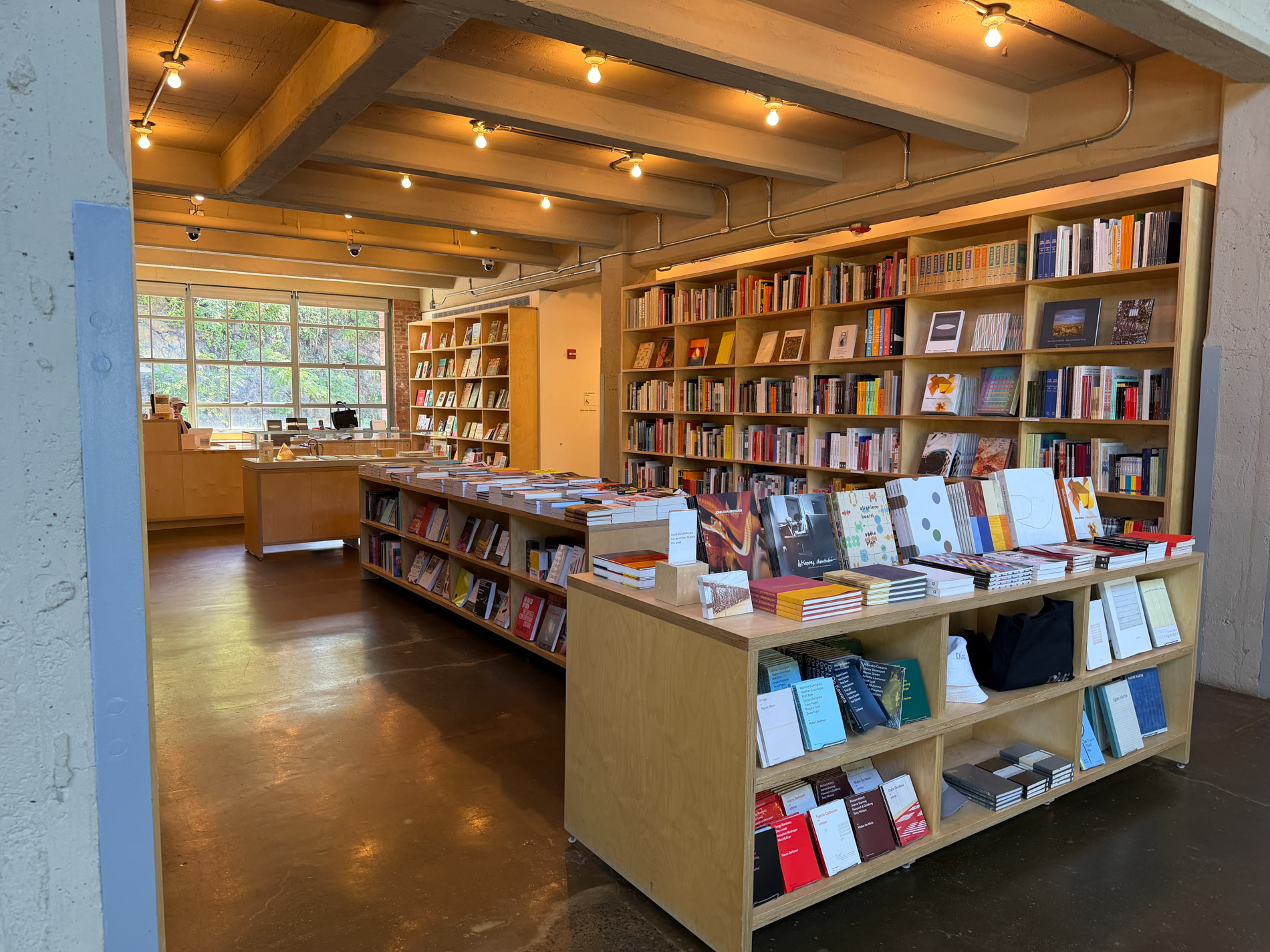
The bookshop inside feels less like a museum shop than a specialist bookseller. The shelves held books connected to what is on view: books on On Kawara, Donald Judd Interviews, and a book on the stained glass Imi Knoebel made for Reims Cathedral. There is a café as well.
If you go
The museum is open Friday to Monday from 10 am to 5 pm, with the closing time varying by season. Last admission is 4.30 pm. Admission is $25 general, $18 for those 65 and over, and $12 for students.
The artist says that simply walking through the lower-level display takes about two hours. Allow plenty of time after you have finished the galleries upstairs.
Words and photographs: art on editorial team