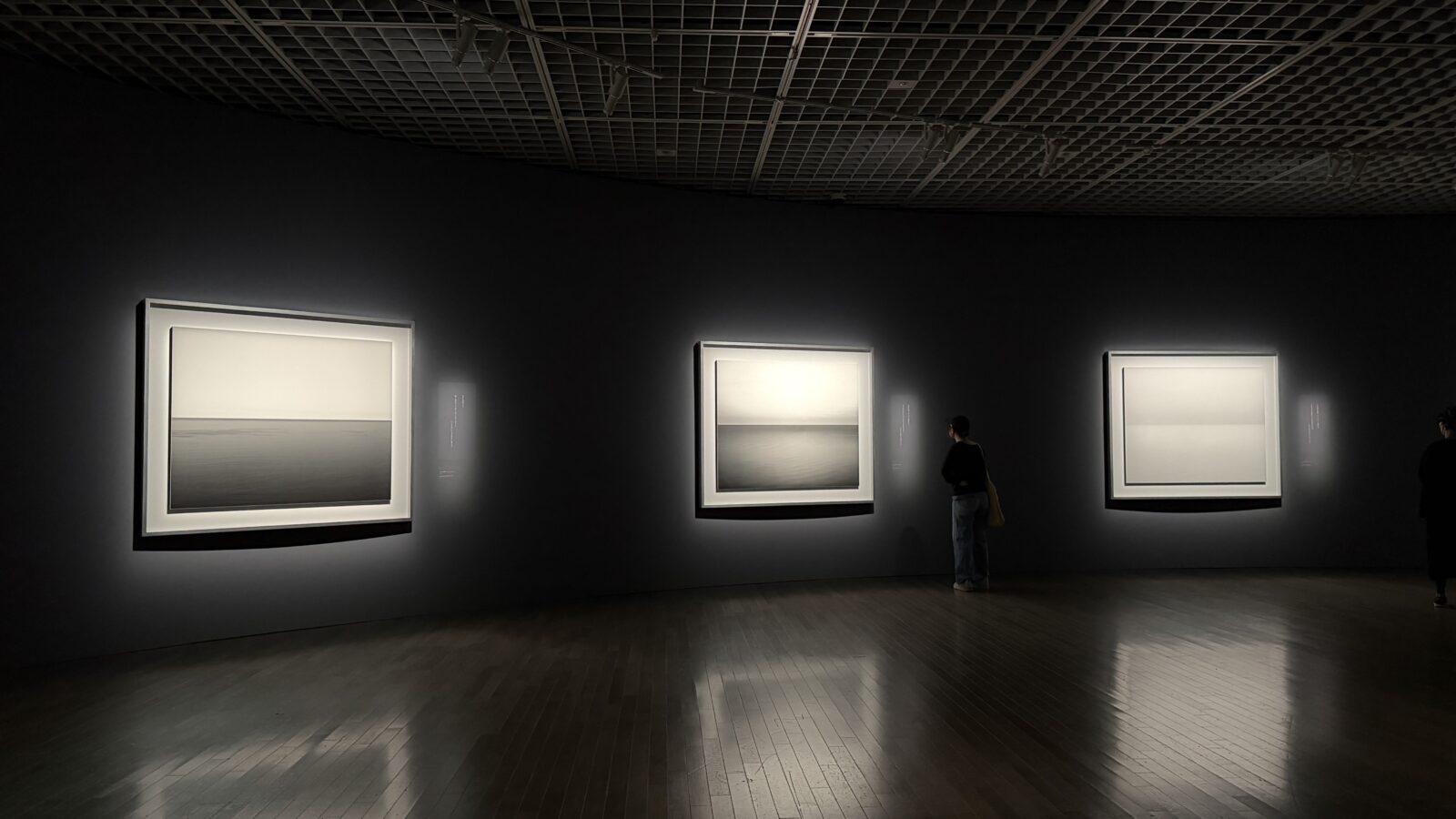
I went to see “Hiroshi Sugimoto: Extinction” at The National Museum of Modern Art, Tokyo. The show closes on Sunday 13 September — only a few days left.
From the early Dioramas to new works made in 2025, the exhibition brings together around 60 silver halide photographs, organised into three chapters covering all 13 series. According to the museum, this is the first solo exhibition in Japan devoted entirely to Sugimoto’s photographic work since his 2005 show at the Mori Art Museum.
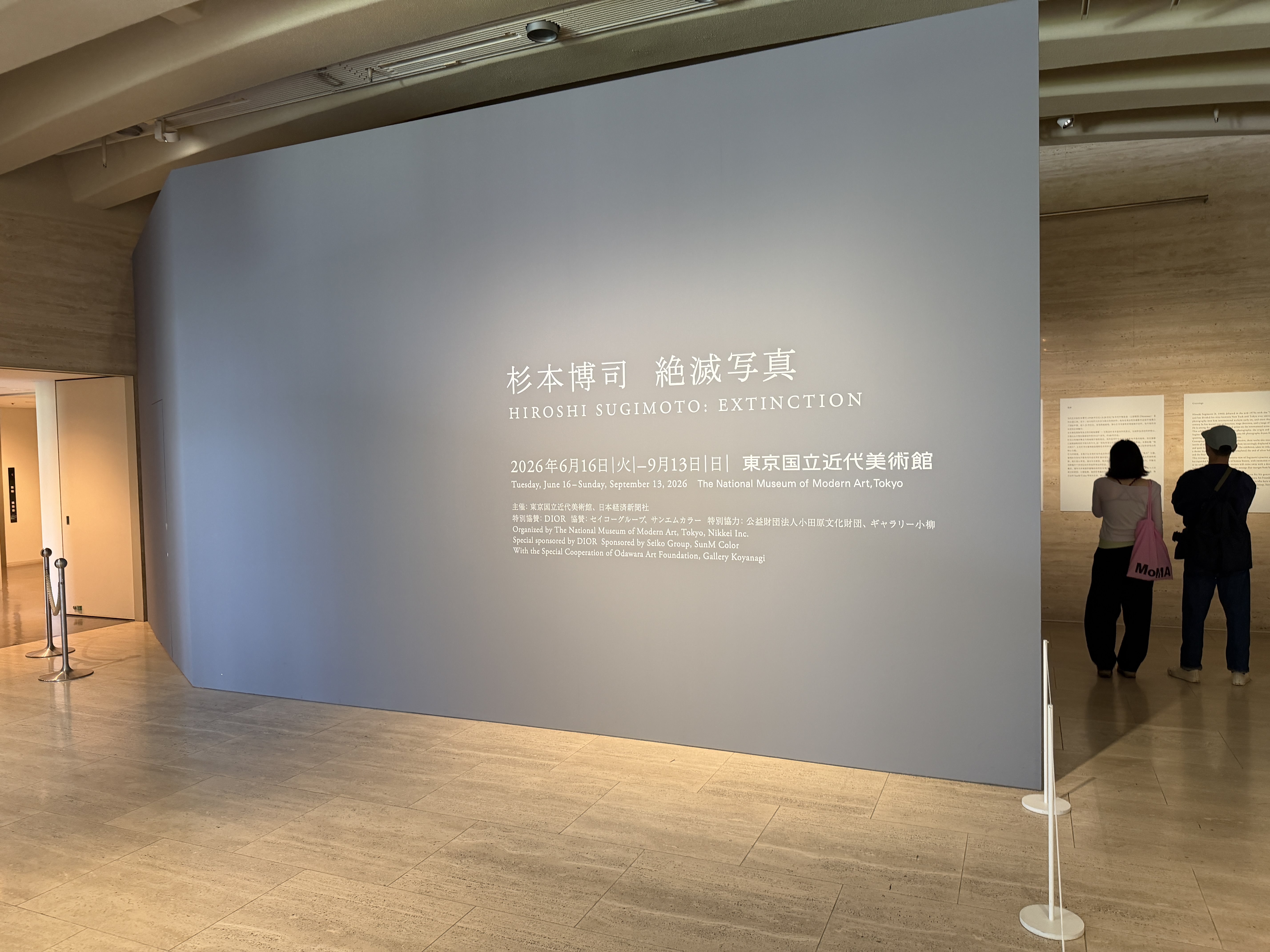
What is going extinct?
The statement Sugimoto wrote for this exhibition opens with this sentence.
What has become extinct in photography today? Nothing other than its power to serve as evidence. Photography went digital rapidly once the twenty-first century began, and a digital image can be transformed in any way at all.
There is another striking passage in the same text, about receiving the Praemium Imperiale in 2009.
Ironically, however, the prize I received was in the painting category. […] I was both glad and sad. Painting is a medium for depicting fiction. Photography is a medium for depicting truth. Do not mistake it, I wanted to say. And yet today photography seems to have been reduced to a substitute for painting.
A career that began with the ambition of raising photography up is repaid with a prize in the painting category. Sugimoto writes about that irony head-on. The “extinction” of this exhibition is first of all the extinction of silver halide photography as a medium, and at the same time, it seems, the closing act of the artist’s own practice.
A comic poem for every work
The biggest surprise of this exhibition: every one of the thirteen series carries a section text, and every individual work a commentary — and to all of them a thirty-one-syllable poem has been attached.
The poet is credited as “Suttonkyō”, a pen name of Sugimoto’s own; the word means something close to “absurd” in Japanese. At the foot of each panel stood a tongue-in-cheek credit: “Work commentaries: Hiroshi Sugimoto / Kyōka: Suttonkyō (Hiroshi Sugimoto)”.
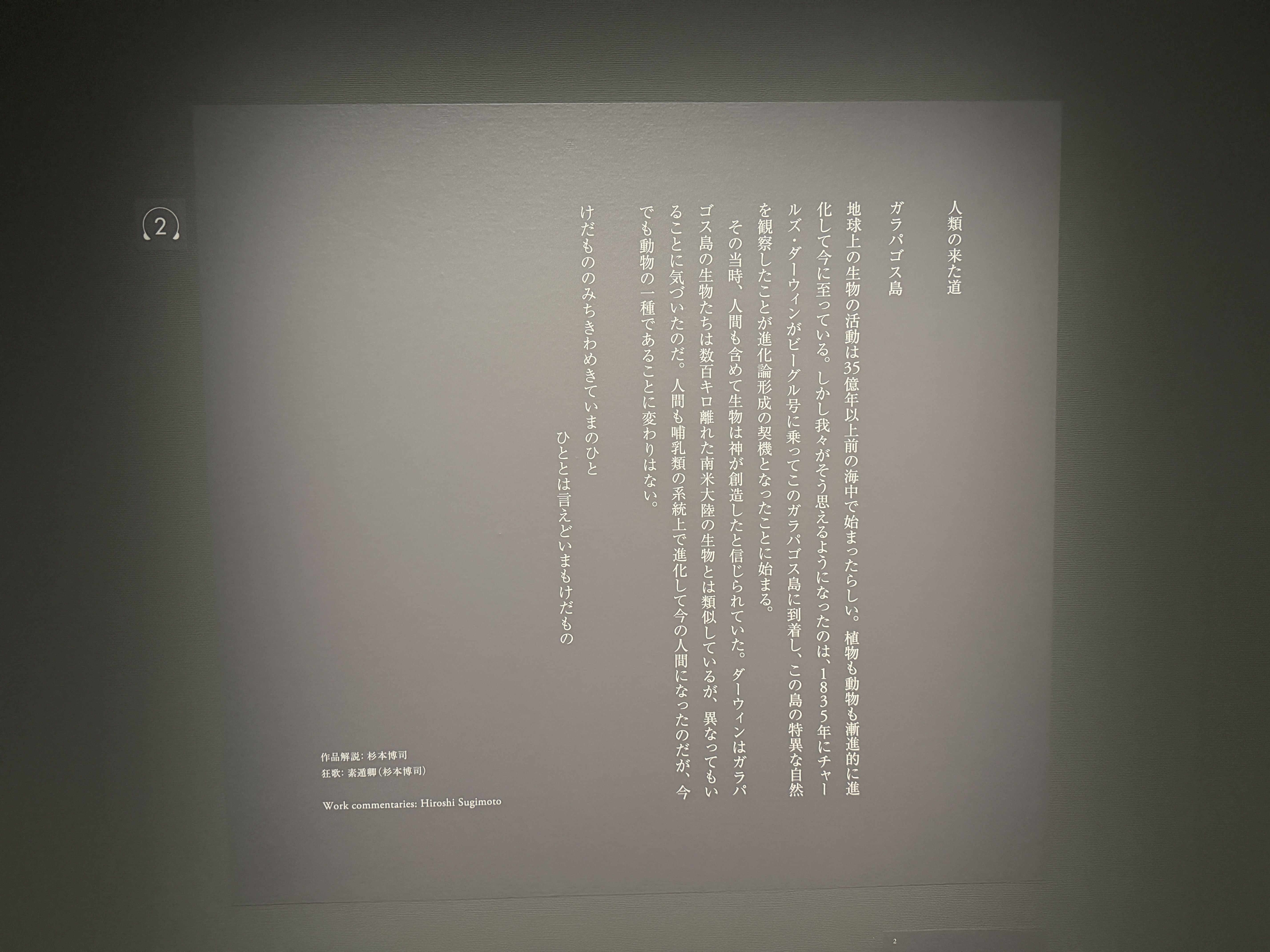
Take the Galápagos, in the series The Road Humans Came By. After an account of how Darwin arrived at the theory of evolution, this is set beside it.
Kedamono no michi kiwamekite ima no hito / hito to wa iedo ima mo kedamono
(Having mastered the way of the beast, the human of today — called human, yet a beast still.)
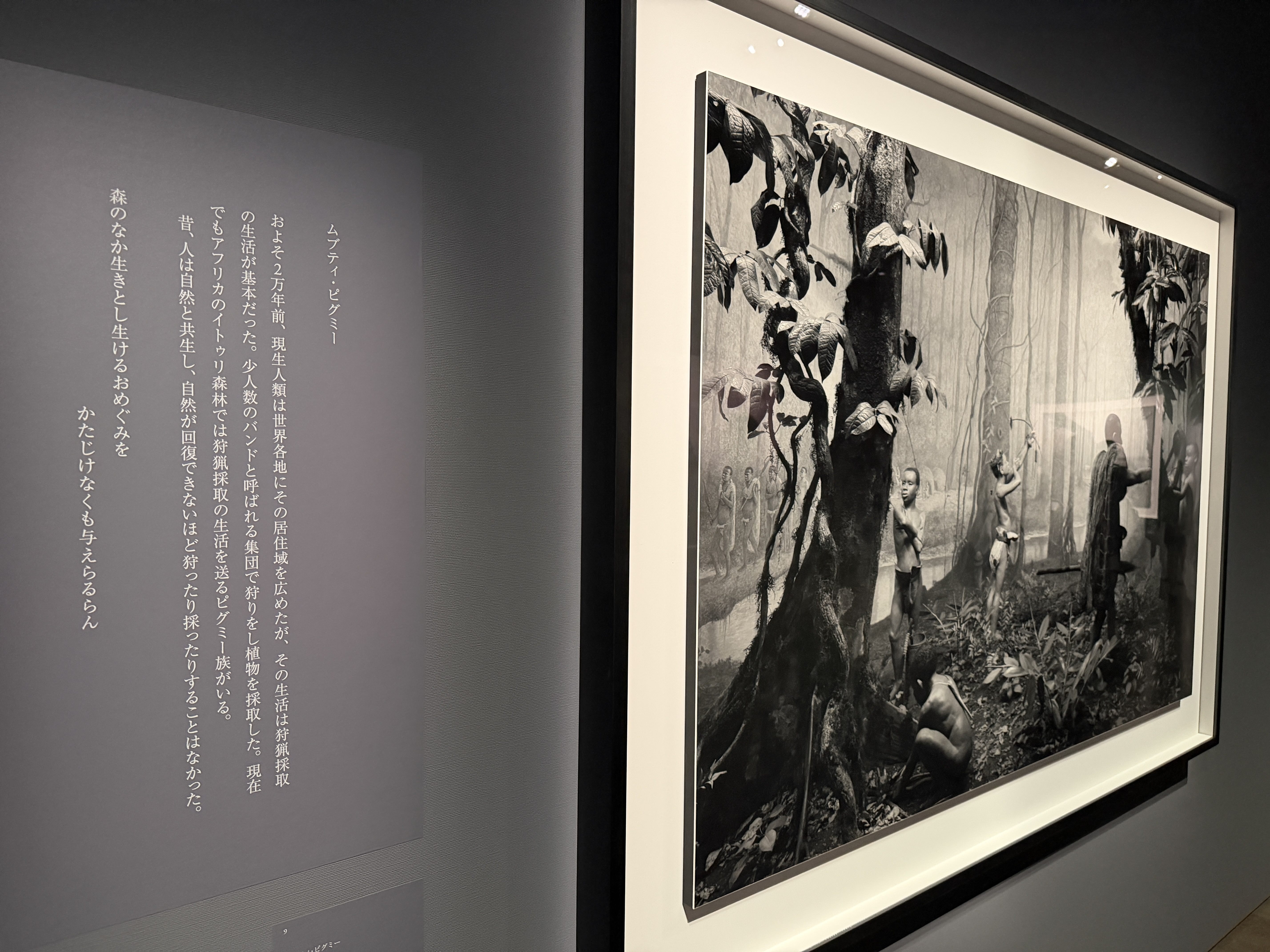
For Mbuti Pygmy, after an account of a hunter-gatherer life, it reads:
Mori no naka ikitoshi ikeru omegumi o / katajikenaku mo ataeraruran
(In the forest, to every living thing, the blessing is given — undeservedly, gratefully received.)
At the opening Sugimoto said that although this is a contemporary art exhibition, introducing kyōka and waka also summons a medieval Japanese form. The model he named was Catching a Catfish with a Gourd, a National Treasure of the Muromachi period, in which the painting and the verses inscribed above it form a single work.
Opinion is divided
The device was being talked about before the show even opened. Writing in the museum’s own web magazine, Sayoko Osawa, chief curator at the Yokohama Museum of Art, notes that the advance word reaching Sugimoto “was all about the kyōka rather than the photographs”.
There are harsher verdicts. Reviewing the show for the note publication Perspective: The View of the Magazine “Shashin”, Motoha Iijima wrote:
Where the photographs open the viewer’s imagination, this string of Japanese runs ahead of it and shuts it down.
The words, the review continues, are “the dregs of a 1990s television commercial, heard somewhere before”, “a cheap turn of phrase merely lined up”, and the result is “nothing but a traffic accident”. https://note.com/shashinmagazine/n/n0581a68f13dd
The quiet tension that rises in front of a Seascape, and a thirty-one-syllable poem talking away beside it, really do not sit well together.
Chapter 1: “Time, Light and Memory”
Three series begun in the 1970s and 1980s, the works that established Sugimoto’s reputation.
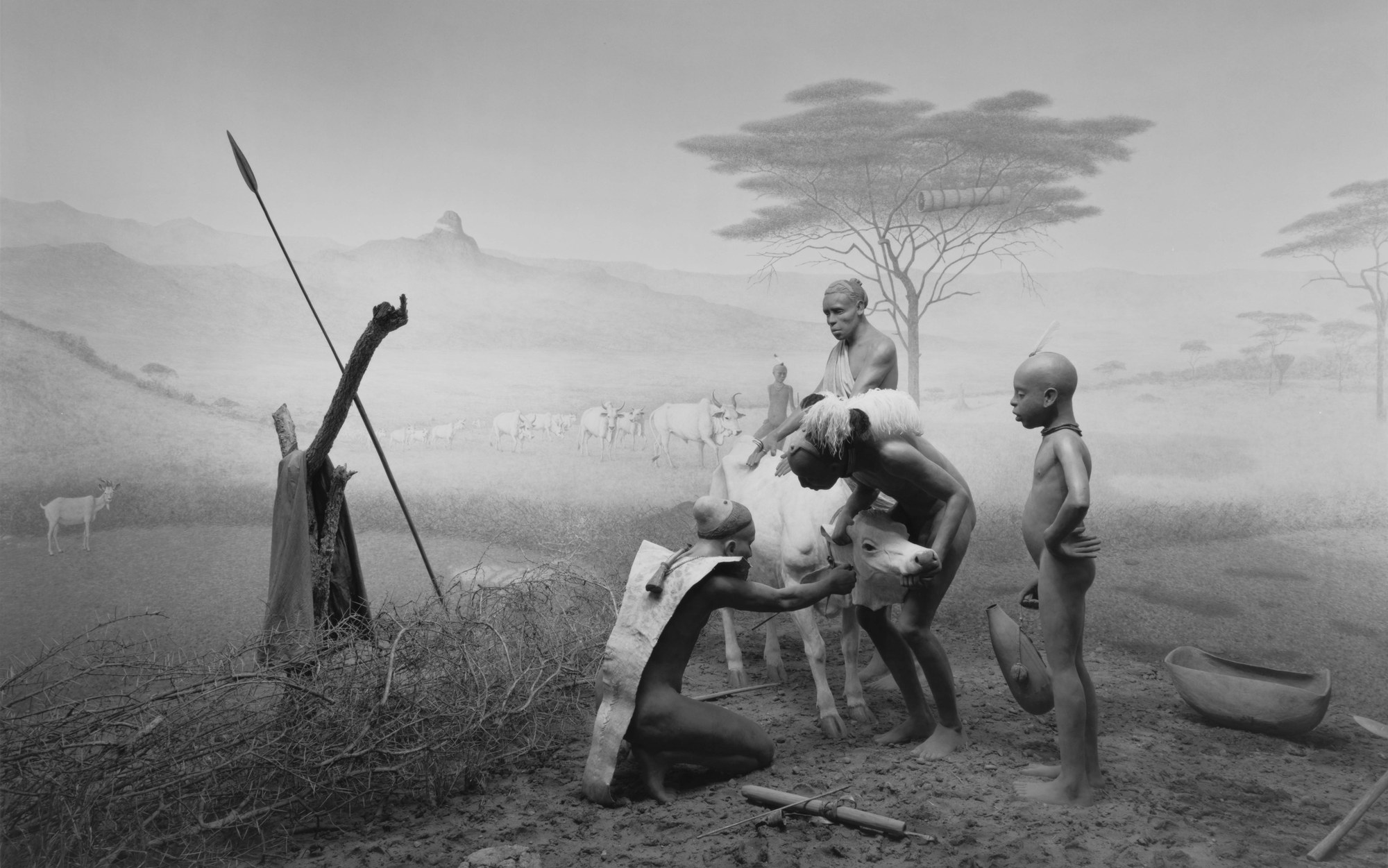
Dioramas
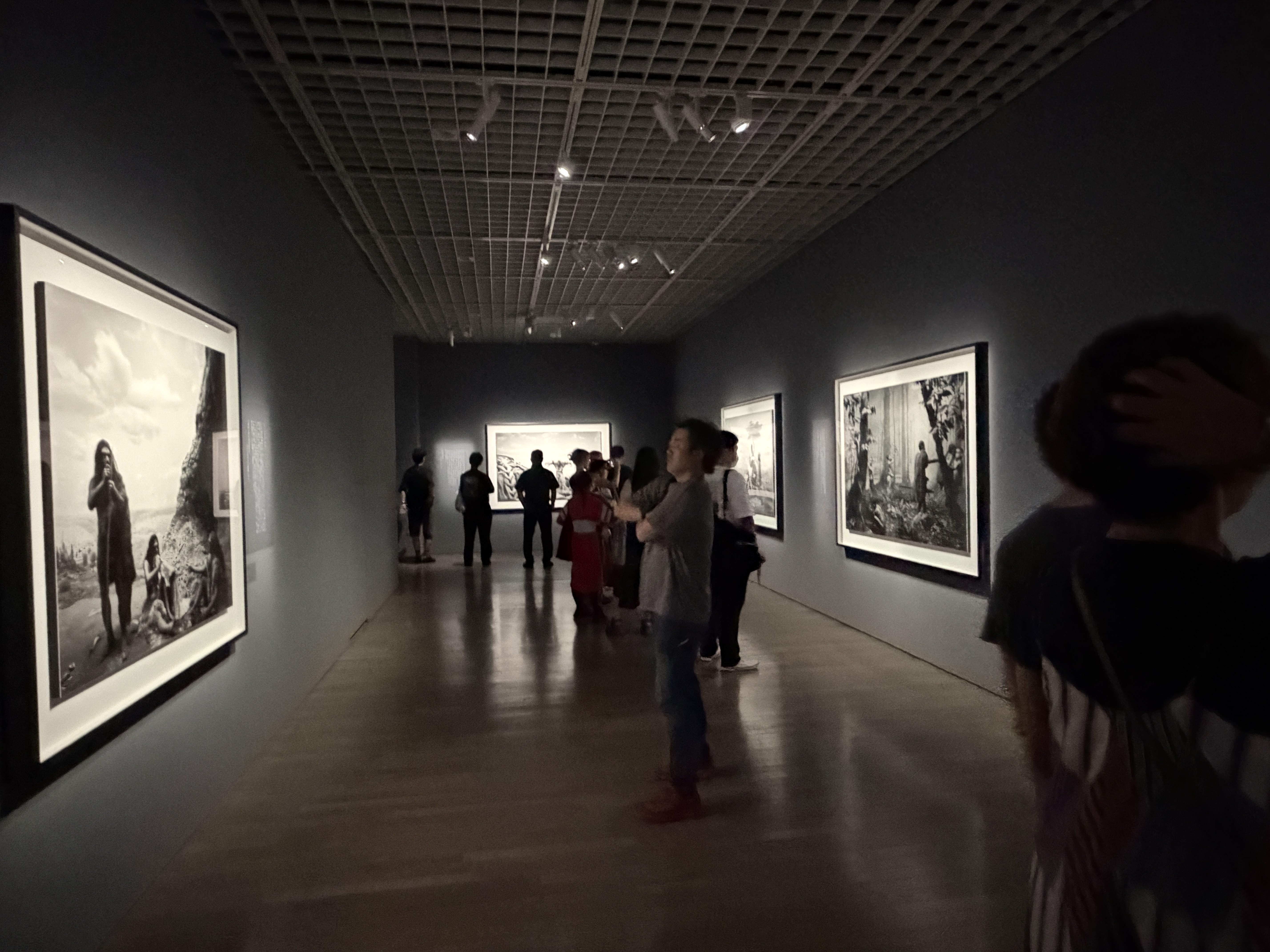
Sugimoto photographed the diorama displays of the American Museum of Natural History in meticulous detail with a large-format camera. This is the series that launched him as an artist. Photography, a medium that is supposed to freeze things in motion, here works in reverse: it lends a moment of apparent life to motionless taxidermy.
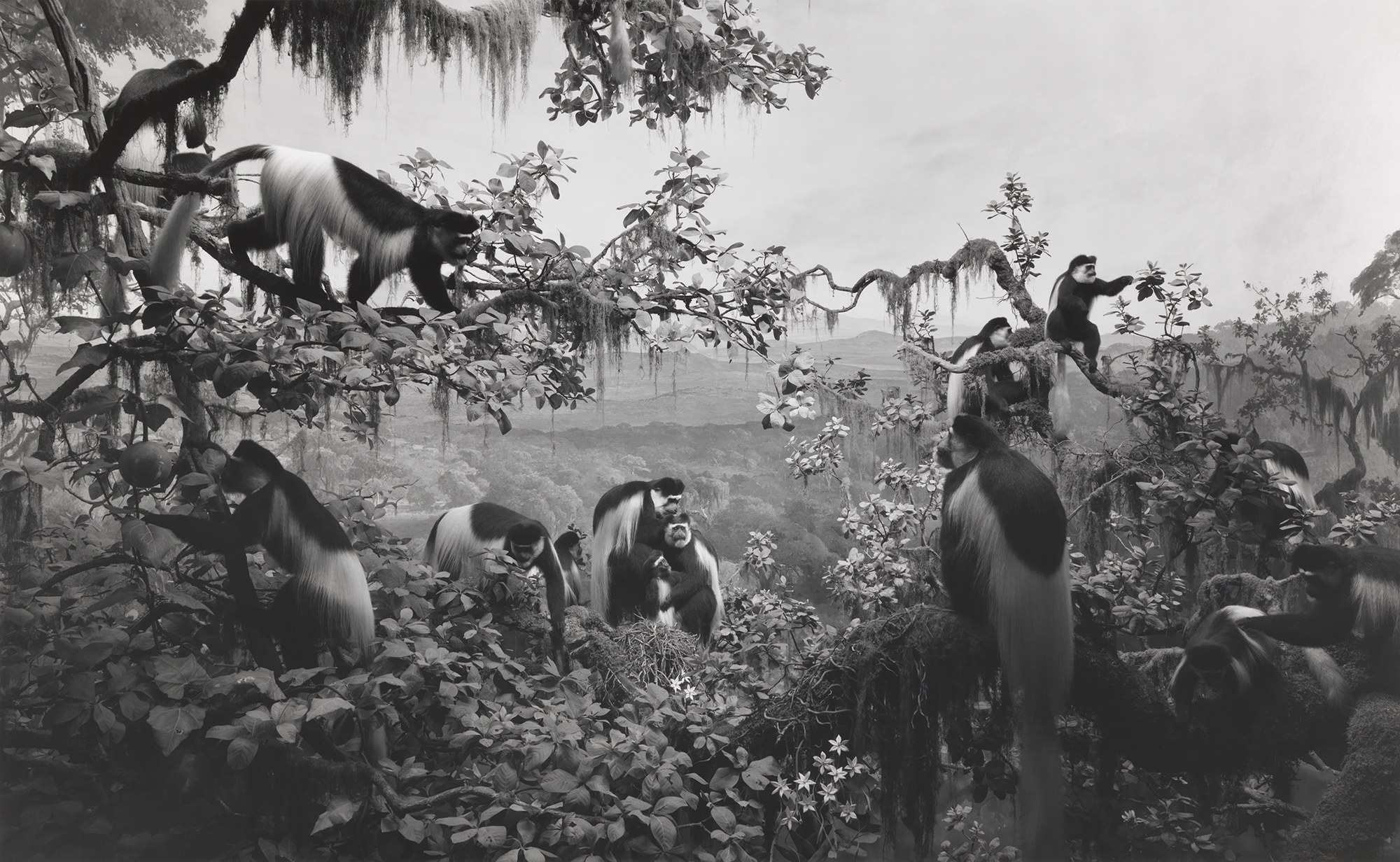
However fake the subject, once photographed it becomes real.
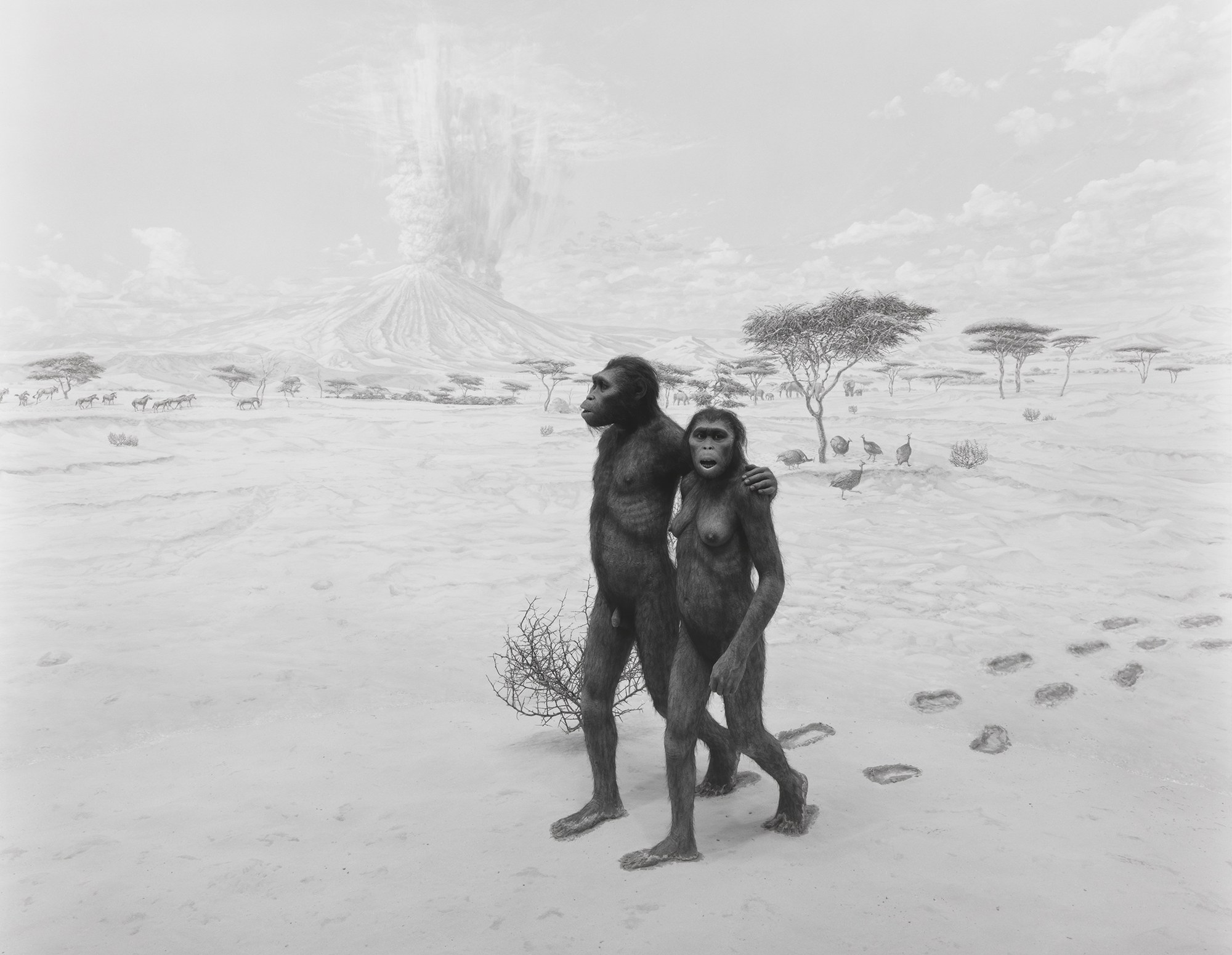
One of the highlights of this exhibition is Pokot, a new work shown here for the first time. Quietly conceived ever since the series began in 1975, it has finally been realised more than half a century later, and the story of human history that runs through the series is presented in coherent form for the first time.
Theaters
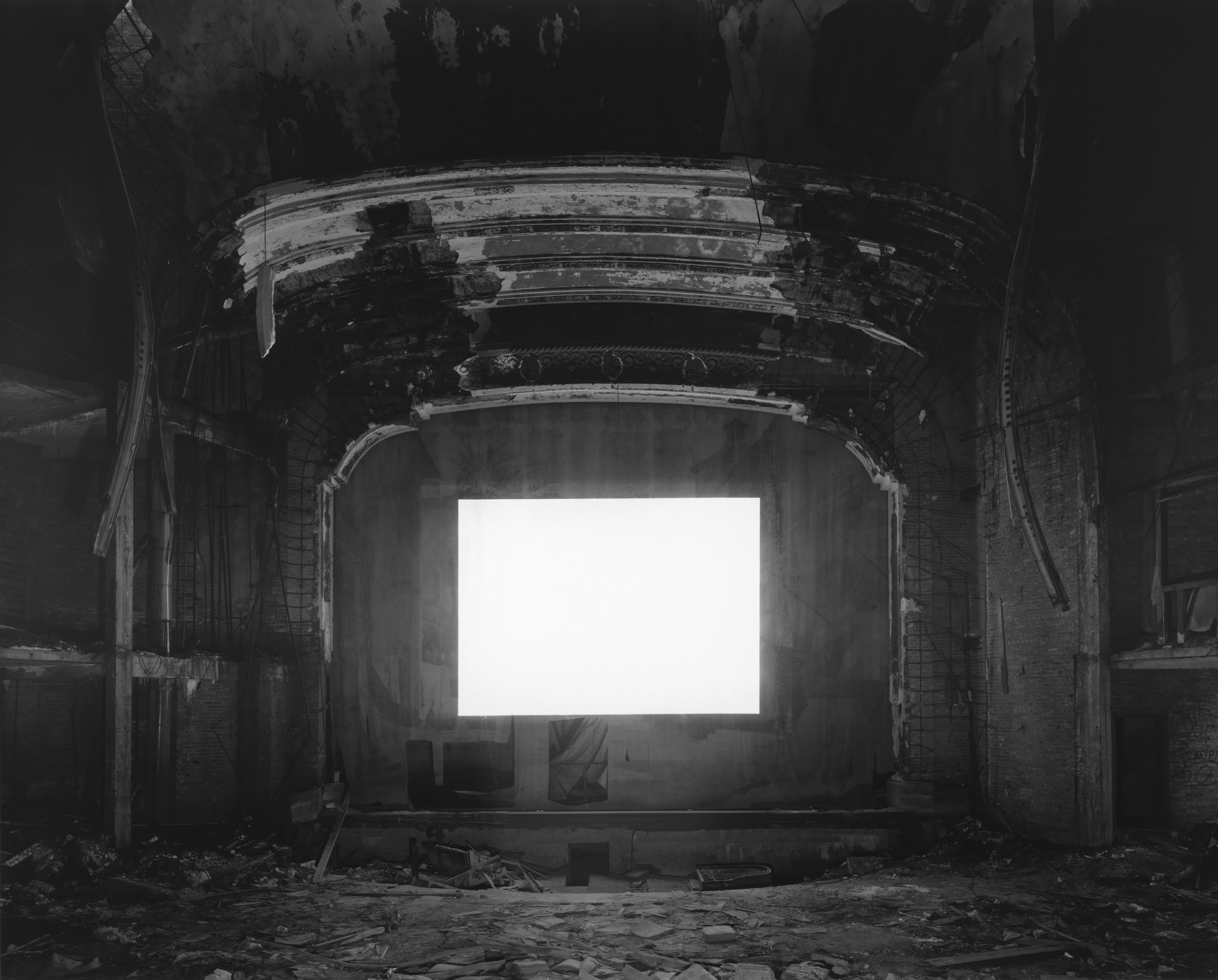
“Suppose you shoot a whole movie in a single frame,” Sugimoto asked himself. His own answer: “You get a shining screen.” Exposing a single film from beginning to end reduces the entire narrative to a rectangle of blinding white light.
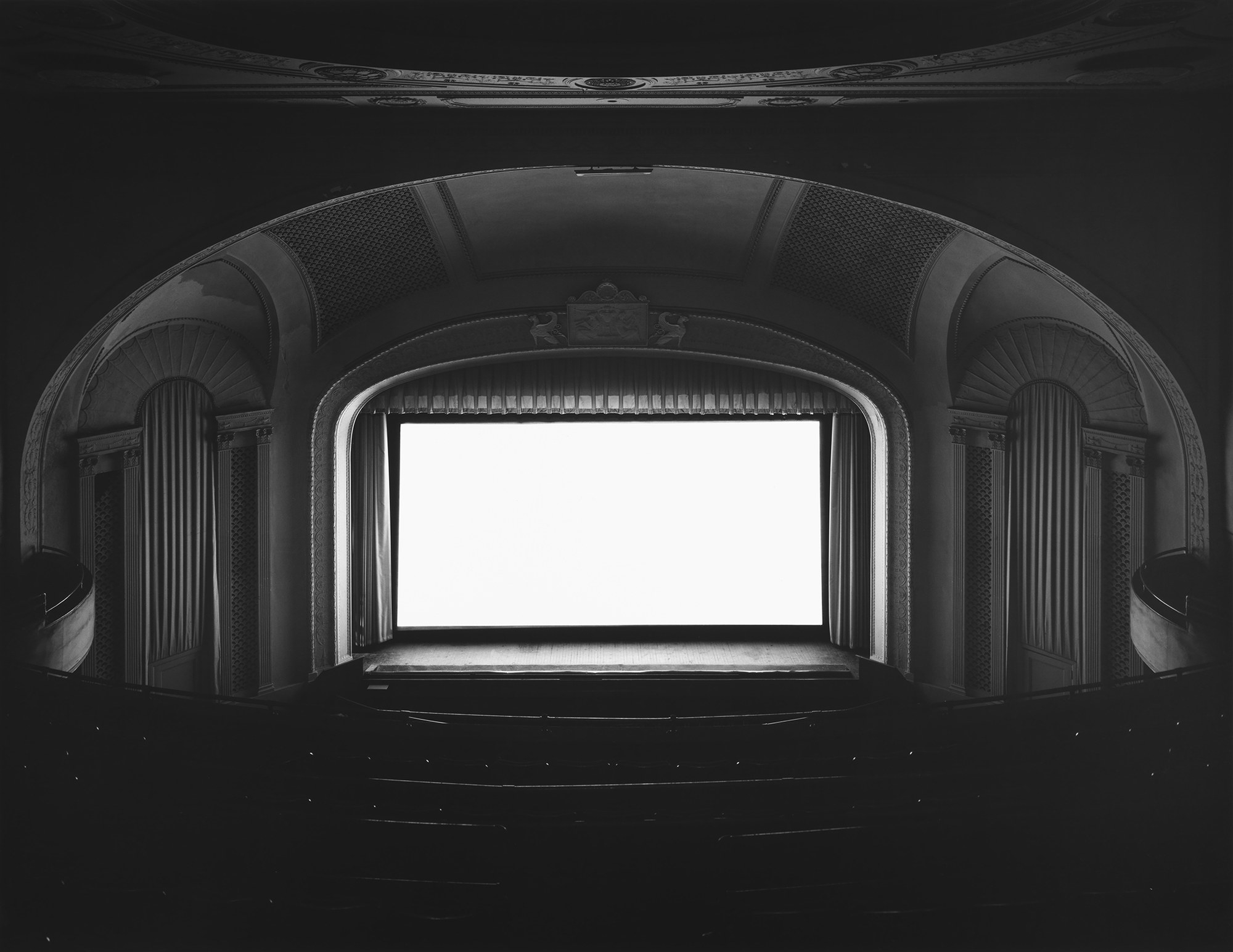
The locations chosen were movie palaces built in the golden age of cinema. By the time Sugimoto began the series, however, cinemas were already in decline. The exhibition argues that his gaze toward “extinction” was already present in this body of work more than forty years ago.
Seascapes
Below the horizon, the sea; above it, the sky. Everything else has been removed from the frame. The series began as an answer to a question Sugimoto set himself: is it possible for a modern human to see the same view that early humans saw? Since Caribbean Sea, Jamaica of 1980 he has photographed seas all over the world in exactly the same composition.
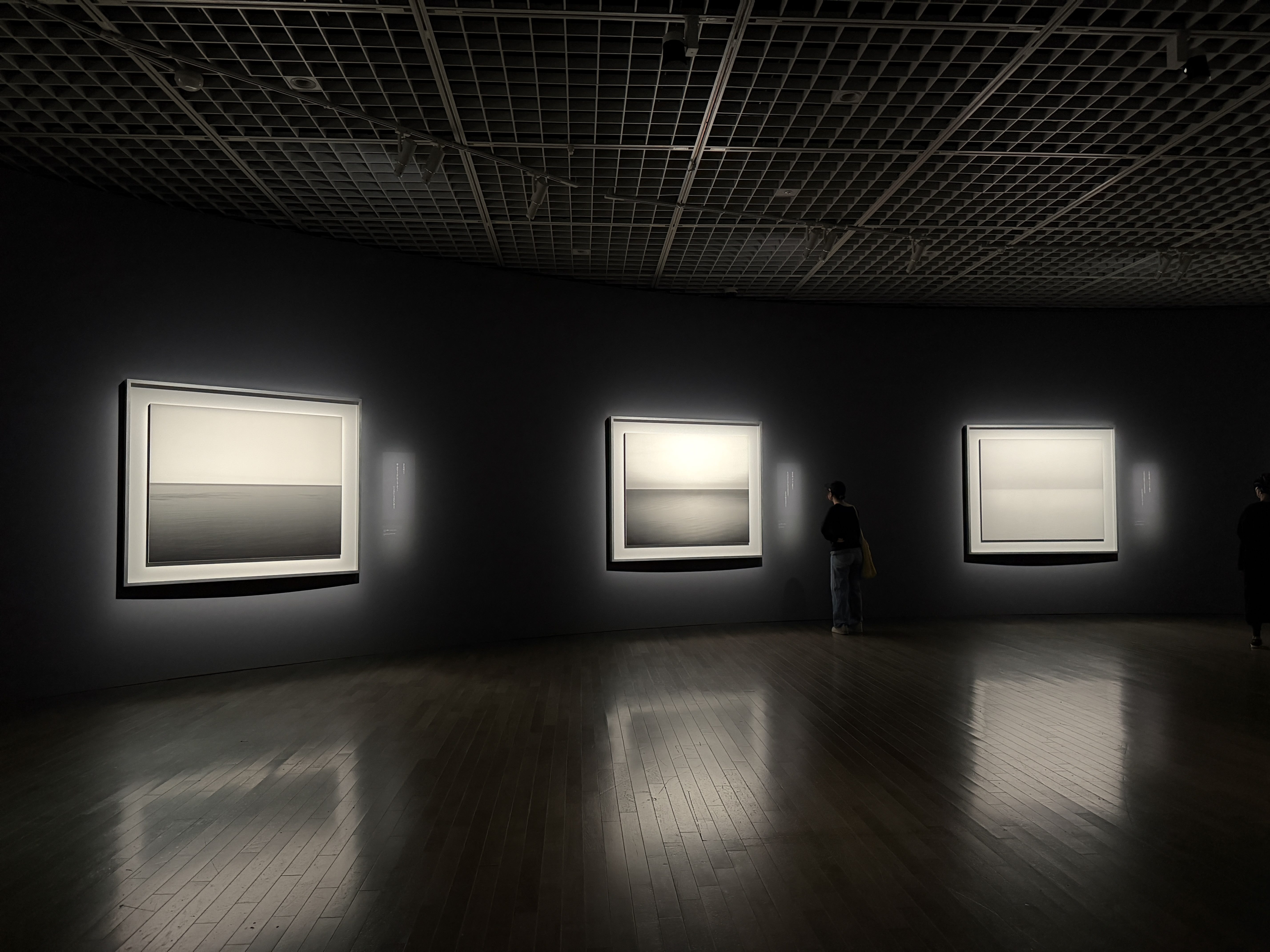
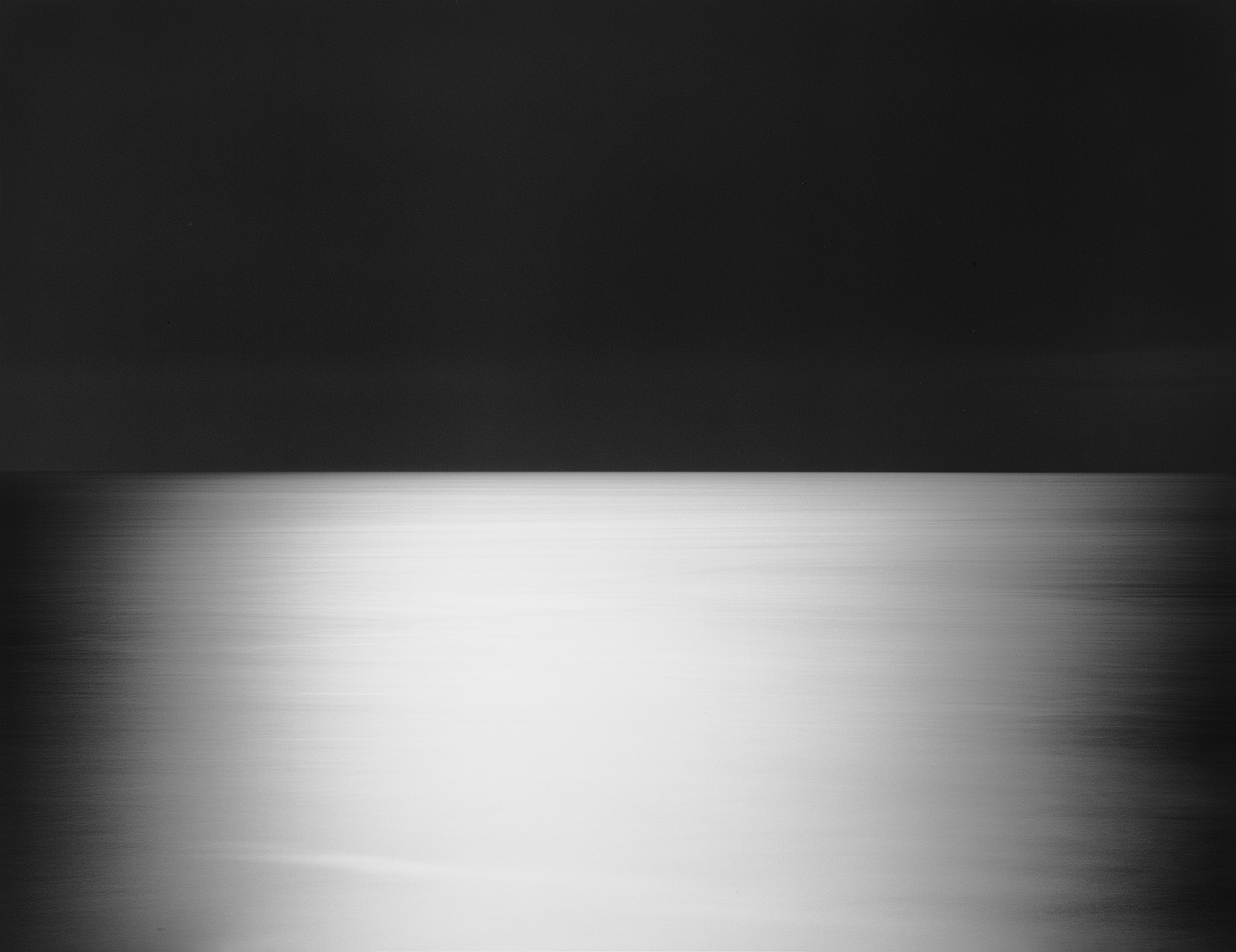
Bay of Sagami, Enoura is a new work from 2025, made at the bay where the Enoura Observatory stands. The same composition, forty-five years apart, hangs beside the early work.
Chapter 2: “Conceptual Forms”
Series developed from the late 1990s onward, taking as their subject the various “forms” produced by human intelligence and imagination.
Architecture
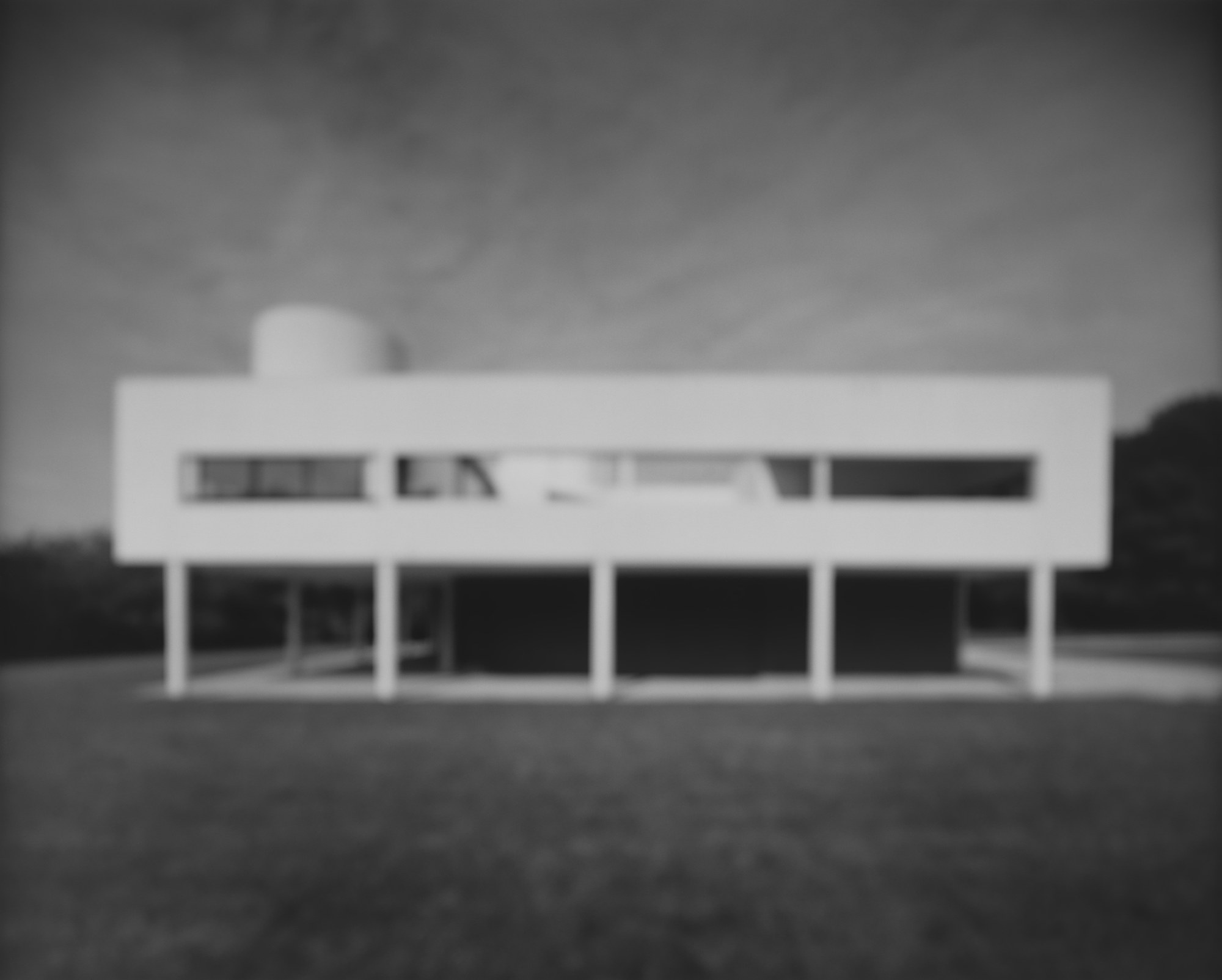
“I thought that by using a large-format camera and throwing the image out of focus, I could reproduce the vision in the architect’s mind before the building was built.” The method he adopted was to set the focal length of the camera to “twice infinity”.
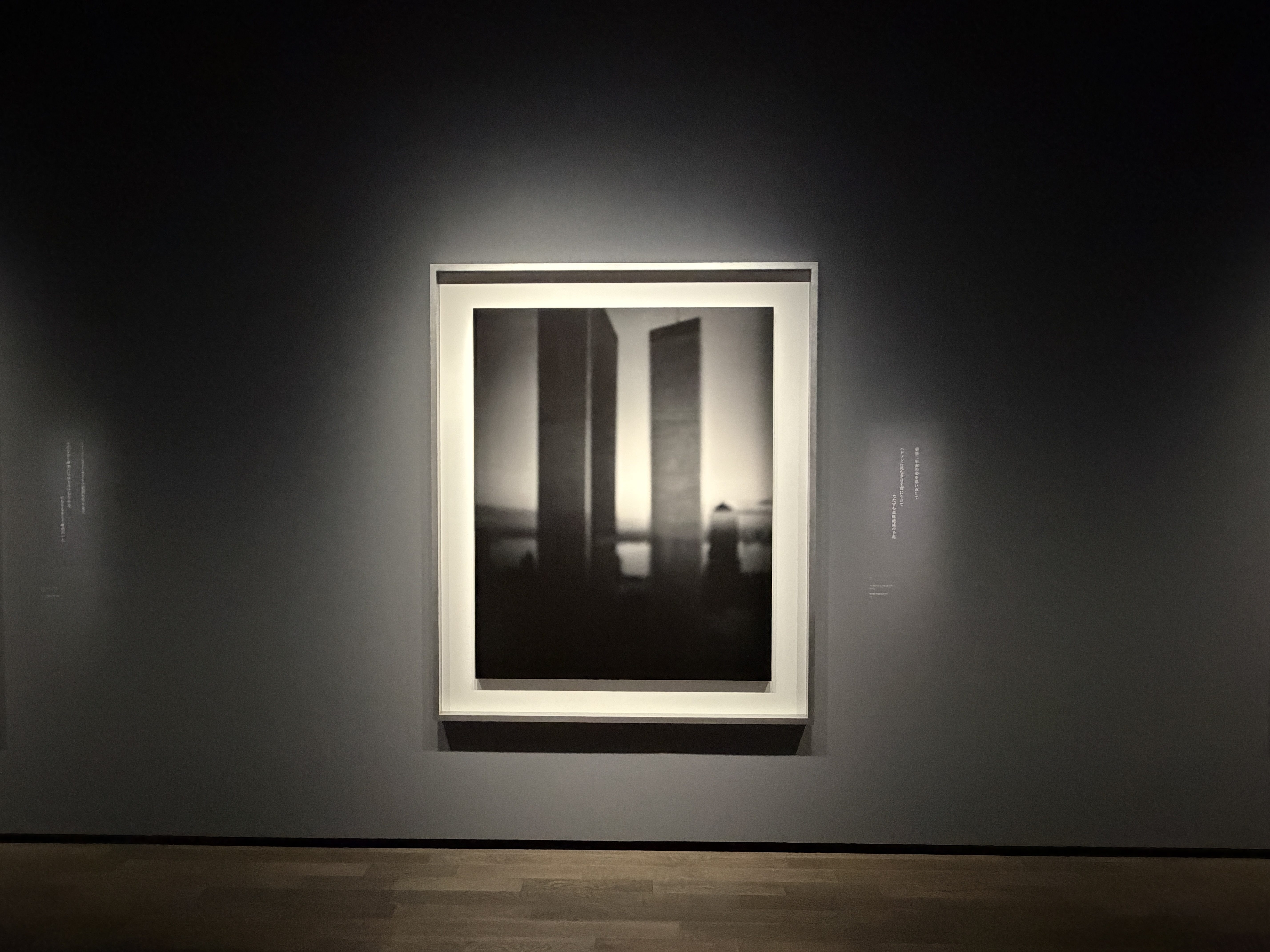
World Trade Center was photographed in 1997 — four years before the building was lost in the attacks of 11 September.
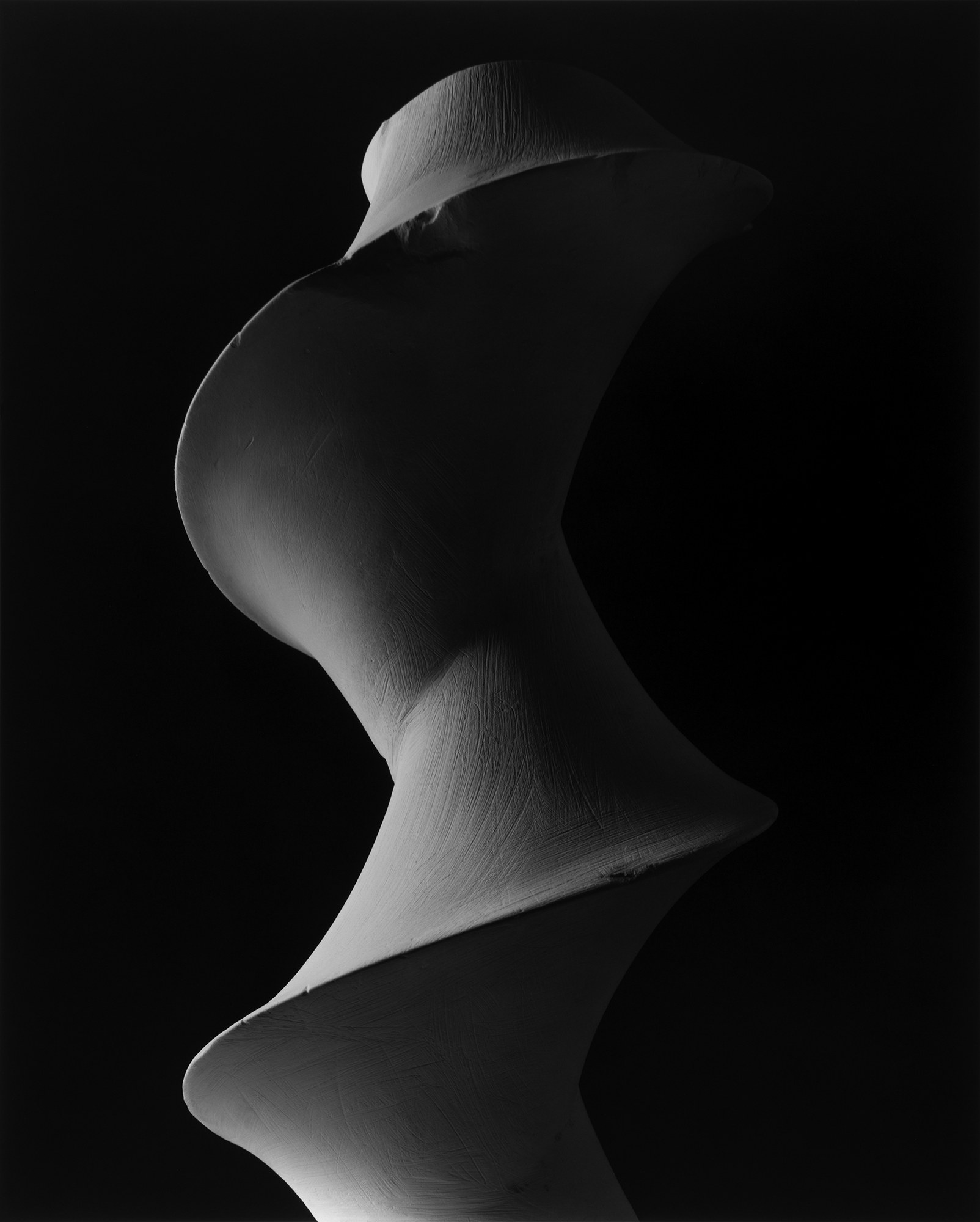
Conceptual Forms
A series photographing plaster models that give three-dimensional form to mathematical surfaces, such as Dini’s surface. Concepts that existed only inside the human mind appear here as matter.
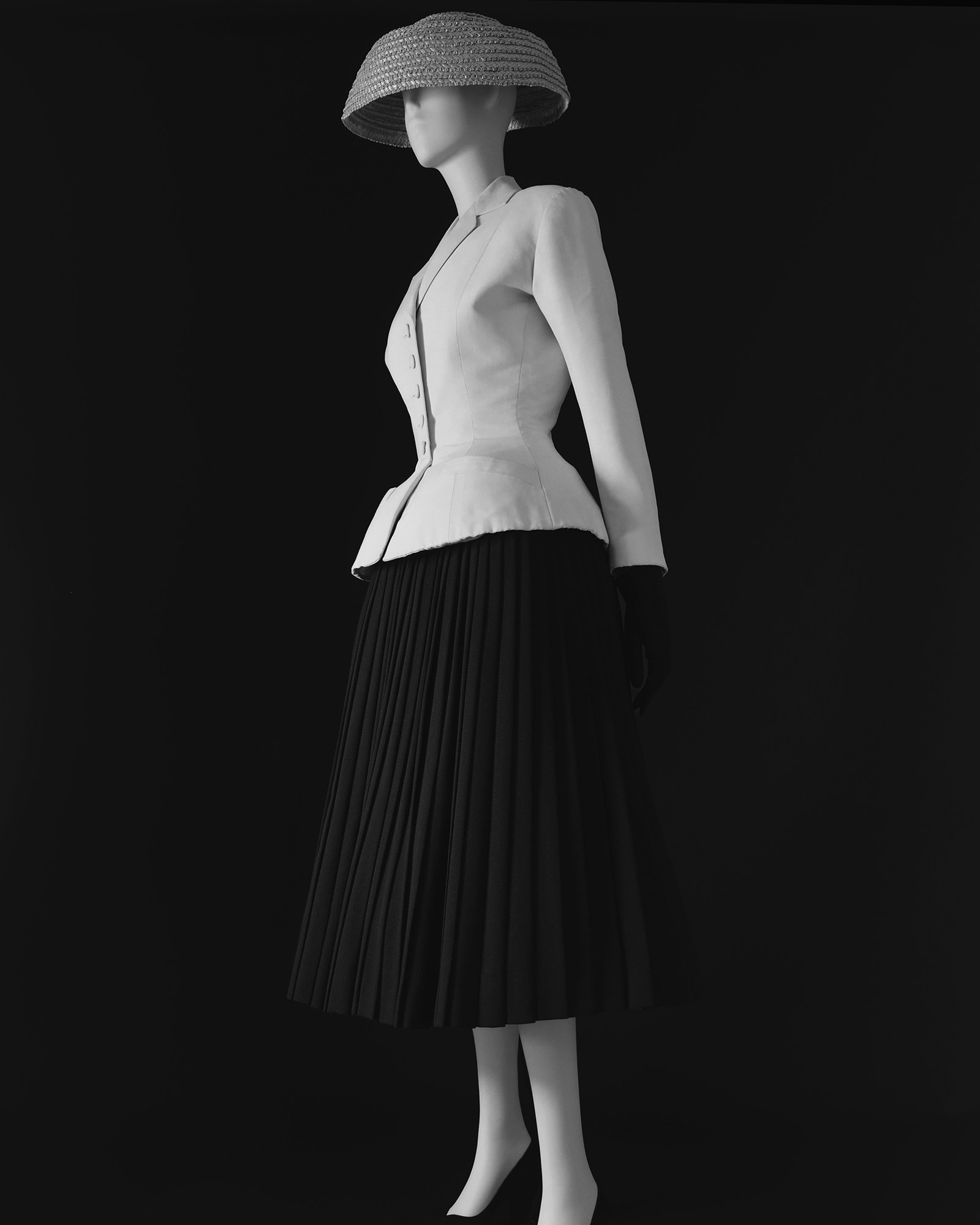
Stylized Sculpture
A body of work that regards fashion “as modern sculpture — the human body and the artificial skin that wraps it”. Shown here for the first time is a new work featuring Christian Dior’s Bar suit — Haute Couture Spring-Summer 1947, the Corolle line. The special sponsor of the exhibition is DIOR.
Chapter 3: “Extinction”
This chapter traces silver halide photography — a medium approaching its end — back to its origins. Six series are shown.
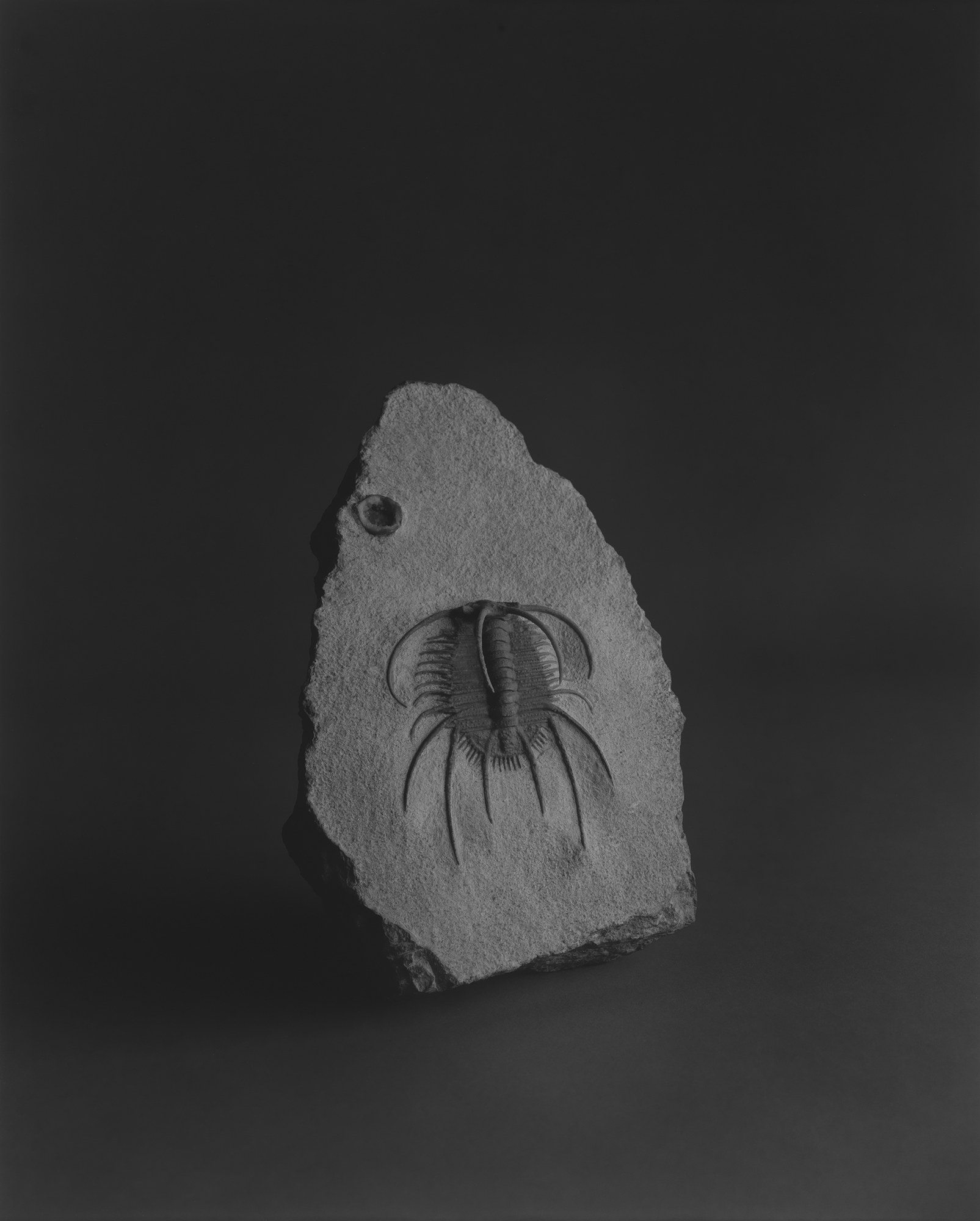
A fossil is an image inscribed not by light but by time. The trilobite stands here as a recording device that predates photography.
Photogenic Drawing
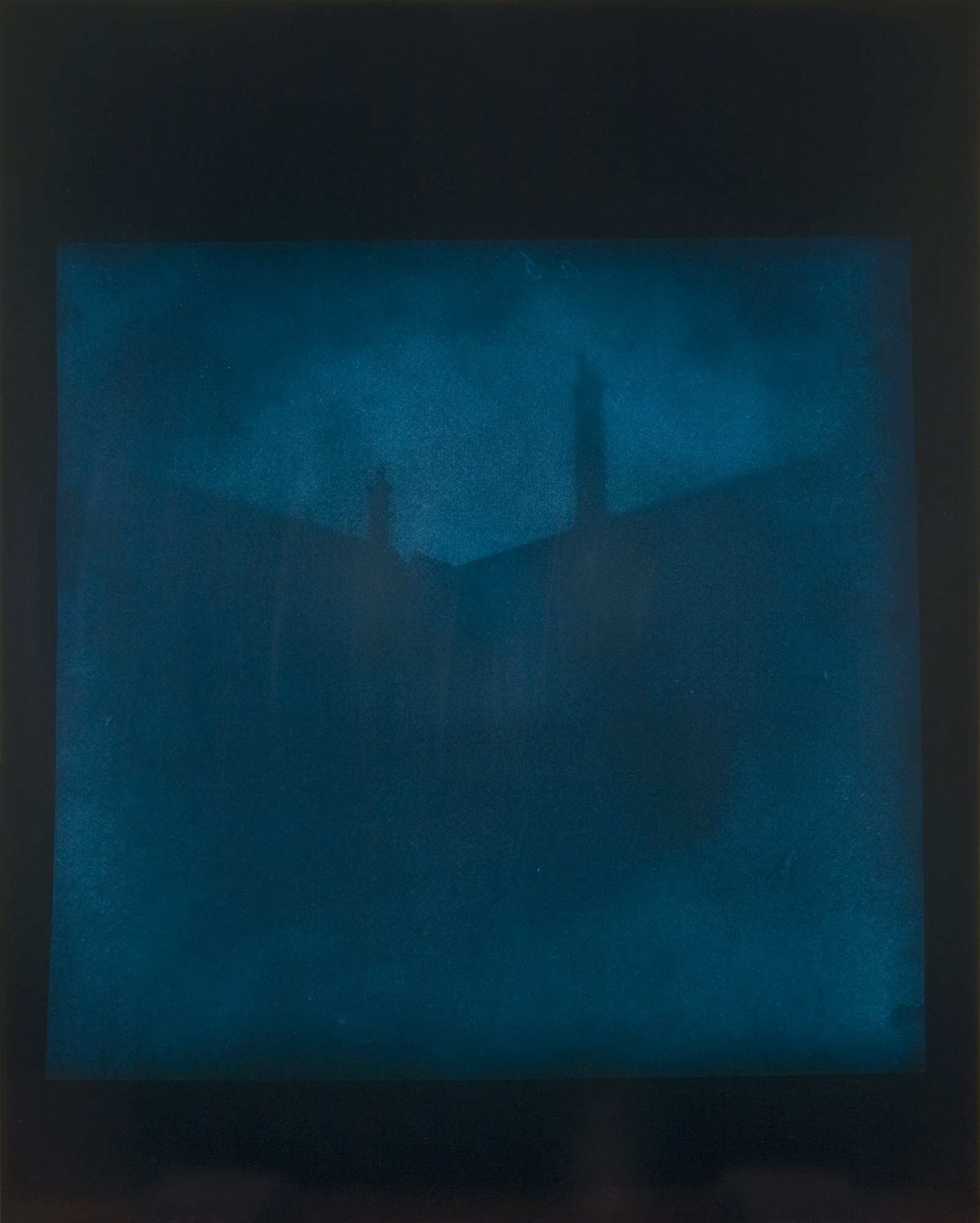
Portraits
“If a stuffed polar bear can be photographed as though alive, then so can a wax figure.” Photographed at Madame Tussauds in London and elsewhere, this series belongs to the lineage of Dioramas. Madame Tussauds was founded in 1835, exactly at the dawn of photography. A face cast in plaster from a living person, and a photograph that captures whatever stands before the lens: both are born of the desire to stop time.
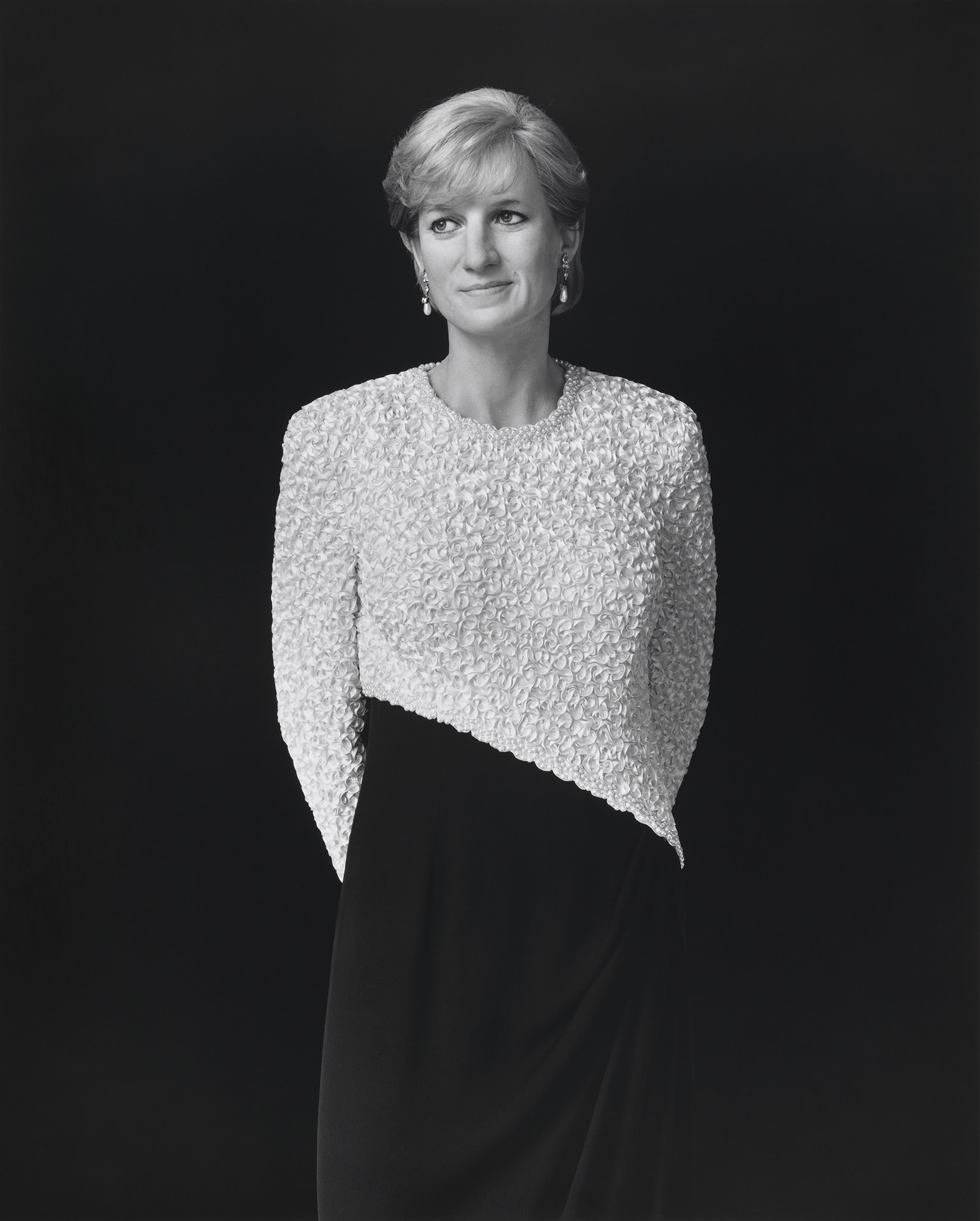
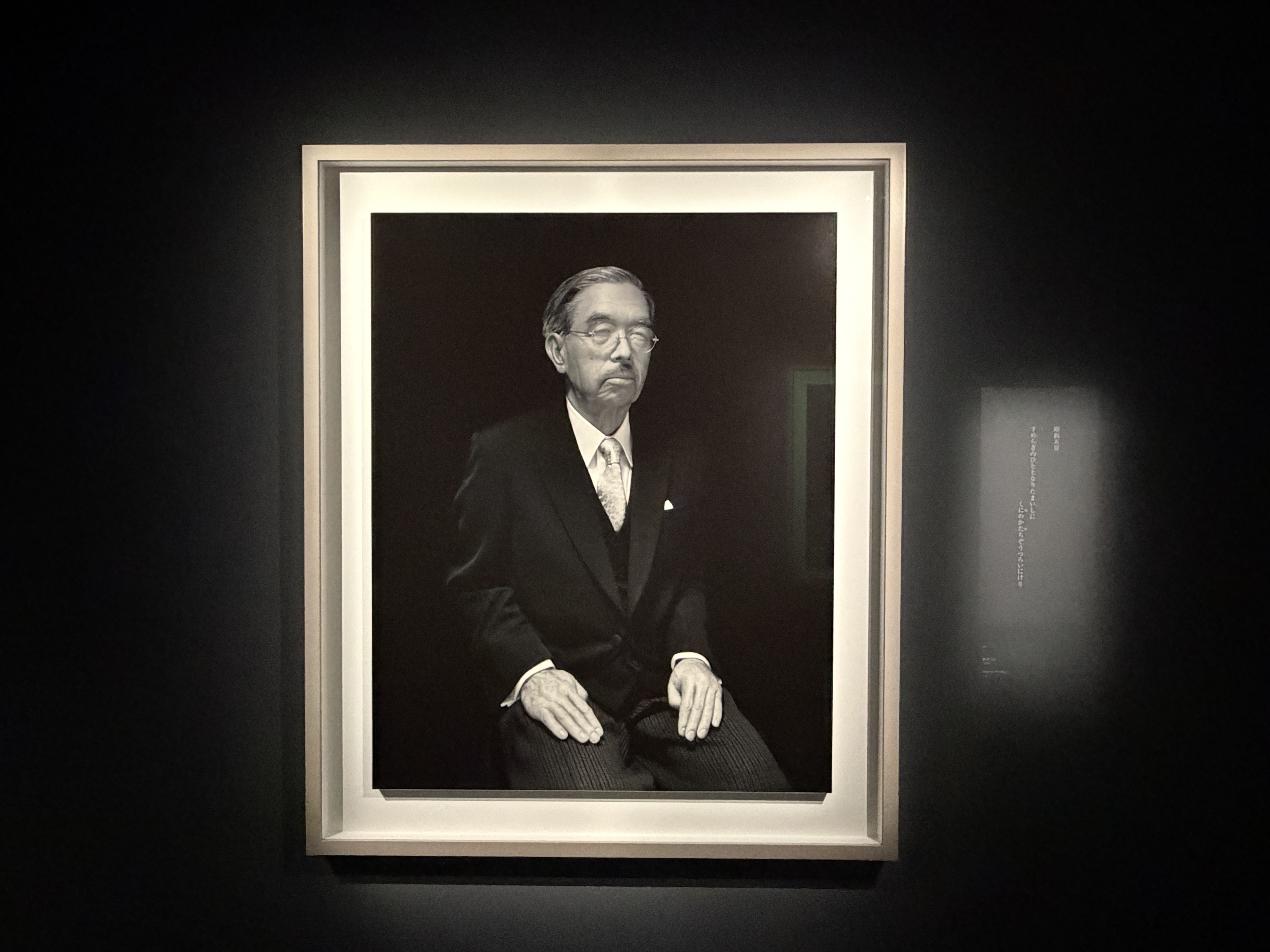
The same series includes Emperor Shōwa. It was made in 1999 from a wax figure at Madame Tussauds in London. The lighting, which Sugimoto has said was studied from Hans Holbein’s portrait of Henry VIII, makes the wax read as skin.
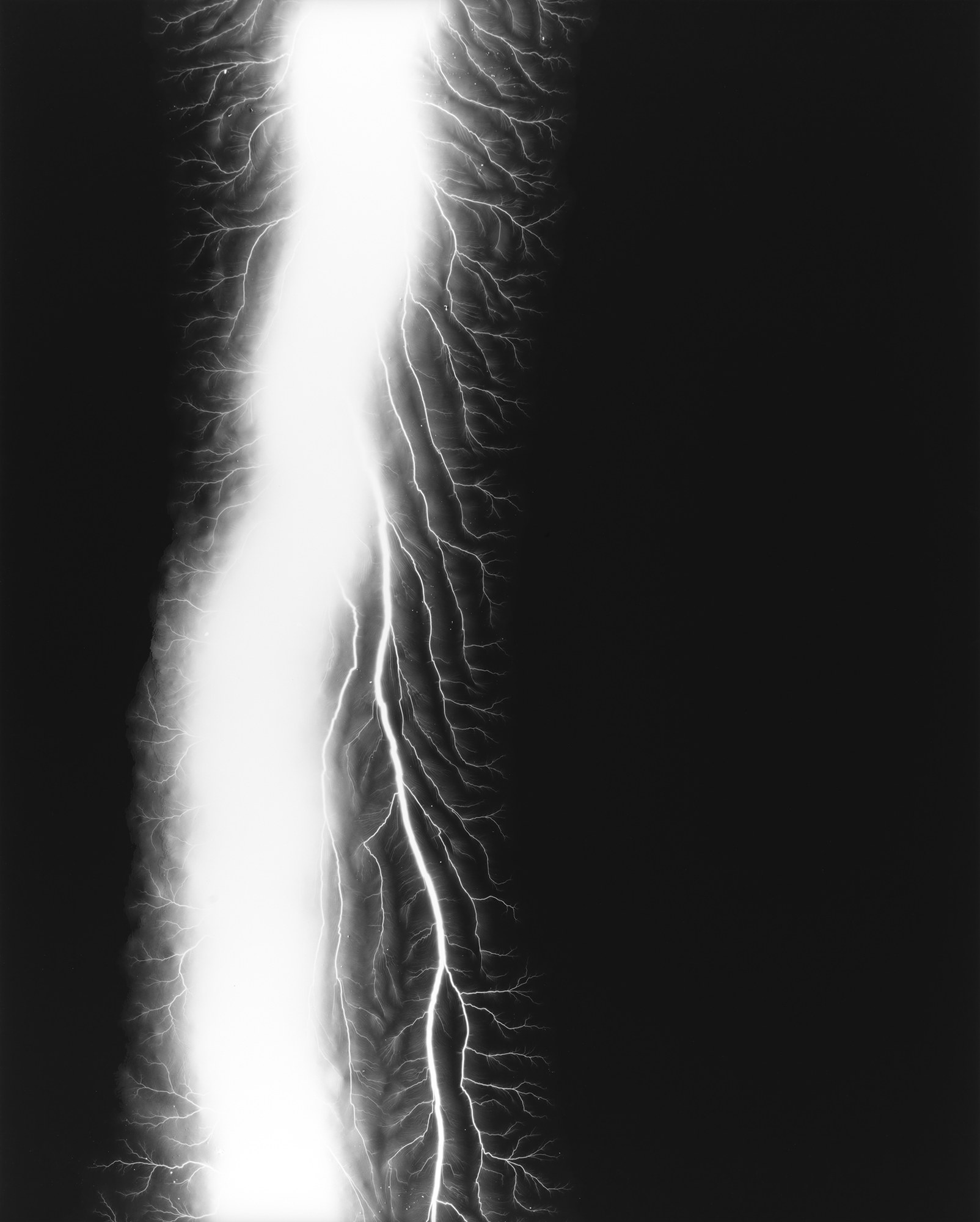
Lightning Fields
A series in which an electrical charge is applied directly to the film. Using neither camera nor lens, it touches the very origin of photography as a record of light itself.
Opticks
A recent series that recreates Newton’s seventeenth-century prism experiments in the refraction of light. The images were shot on Polaroid film, cleaned of noise through a digital process, and printed on large-format colour paper — an exceptional method within Sugimoto’s output. “It feels as though I have been able to paint a new kind of picture using light as pigment,” he writes.
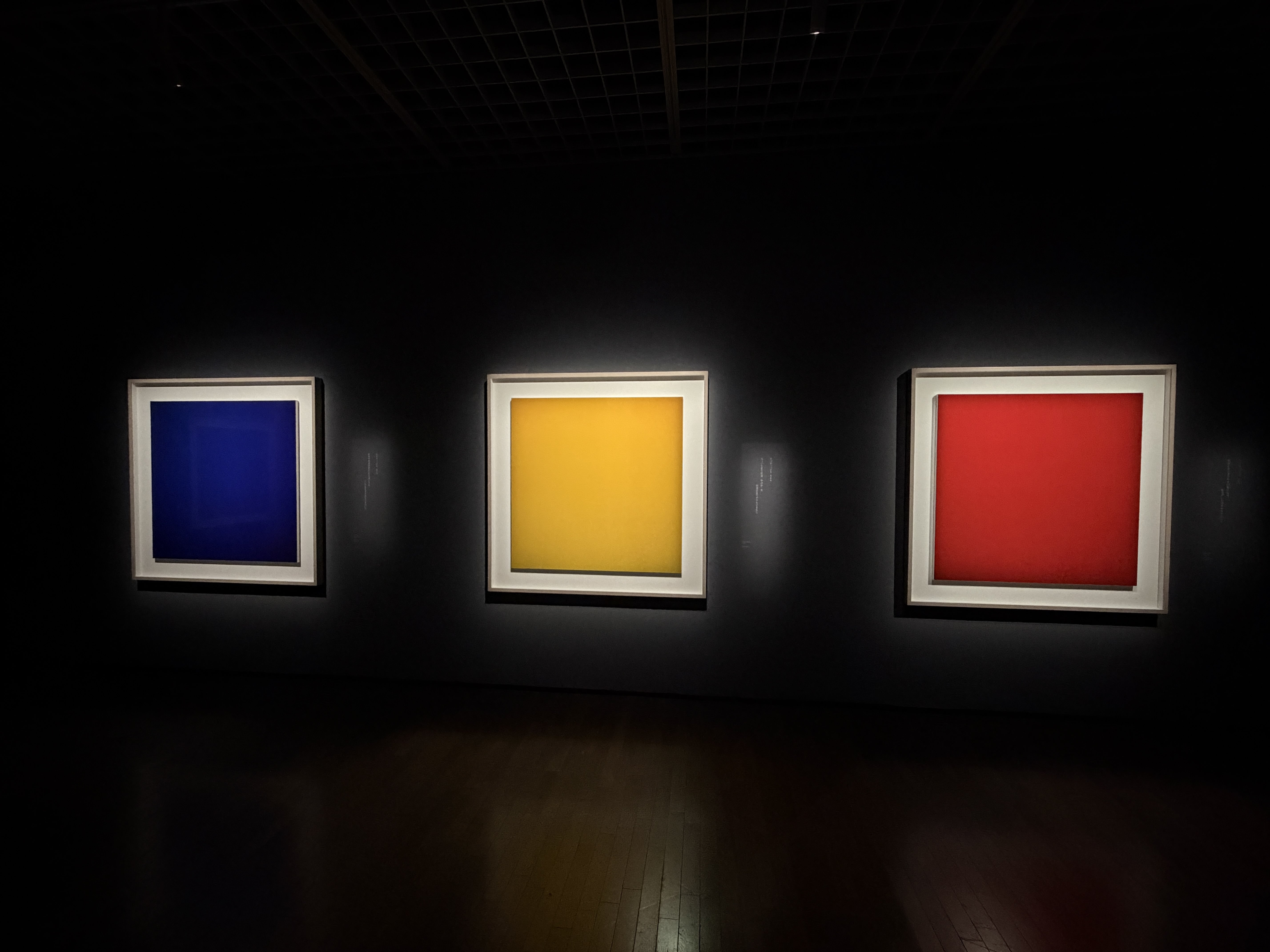
It is a nice touch that an exhibition themed on the extinction of silver halide photography should end with colour works that passed through a digital process.
The gelatin silver print as a material
“Silver halide photography” refers to processes that form an image by exploiting the light sensitivity of silver compounds. The gelatin silver print used in Sugimoto’s work forms the image in a silver-bearing gelatin emulsion coated on paper; it is the most widely used technique for black-and-white photography.
Seen from the buyer’s side, this is not only a question of technique. Everything from shooting to development to printing is handwork done in a darkroom. Once the paper itself disappears from the market, the same work can no longer be printed in the same material. When Sugimoto says he is pulling ten-year-old paper out of the back of his storeroom, he is talking about supply as much as about technique.
Paper that has yellowed and lost most of its sensitivity has a flavour of its own. I find happiness in the fact that the lifespan of silver halide photography and my own lifespan resonate with each other.
An artist entering his late period, the life of the material, and the life of the medium — an exhibition made at the moment when all three arrive together.
The exhibition closes on Sunday 13 September
The museum stays open until 20:00 on Fridays and Saturdays (last admission 30 minutes before closing). The final weekend is likely to be crowded, so it is worth allowing extra time. The same ticket also admits you to the MOMAT Collection (floors 4–2) on the day of your visit.
Hiroshi Sugimoto
Born in 1948. He moved to the United States in 1970 and has worked between New York and Japan since 1974. His early series include Dioramas, Seascapes and Theaters. He founded the architectural office New Material Research Laboratory in 2008 and the Odawara Art Foundation in 2009, and in 2017 opened the Enoura Observatory, a cultural complex ten years in the making. His activities extend to the collecting of antiquities and to the performing arts; “At the Hawk’s Well”, for which he directed the staging and designed the space, was performed at the Paris Opera in autumn 2019. He received the Hasselblad Award in 2001, the Praemium Imperiale (painting) in 2009, the Medal with Purple Ribbon in autumn 2010 and the Officier de l’Ordre des Arts et des Lettres in 2013. He was named a Person of Cultural Merit in 2017 and a member of the Japan Art Academy in 2023.
The images in this article were provided by the press office of “Hiroshi Sugimoto: Extinction”. Unauthorised reproduction is prohibited. The installation views were photographed at the venue by art on.
Stylized Sculpture 120 [Christian Dior, Bar 1947]: Photo: © Hiroshi Sugimoto, Object: © Christian Dior Couture collection, Paris
All other works: © Hiroshi Sugimoto / Courtesy of Gallery Koyanagi