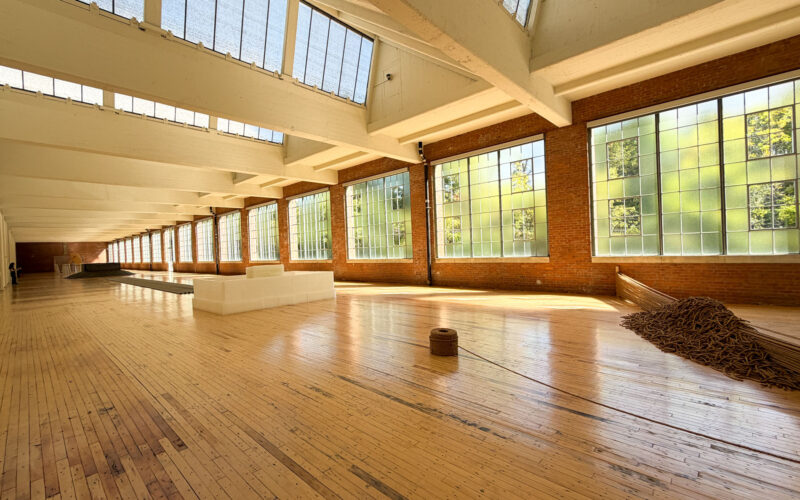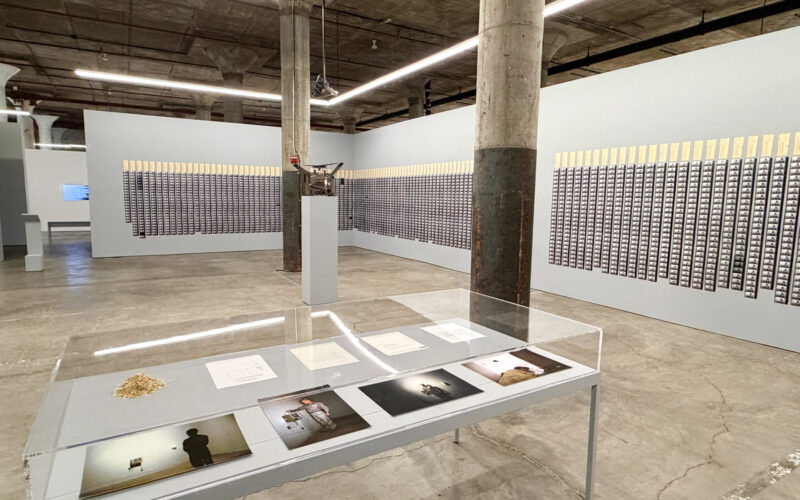
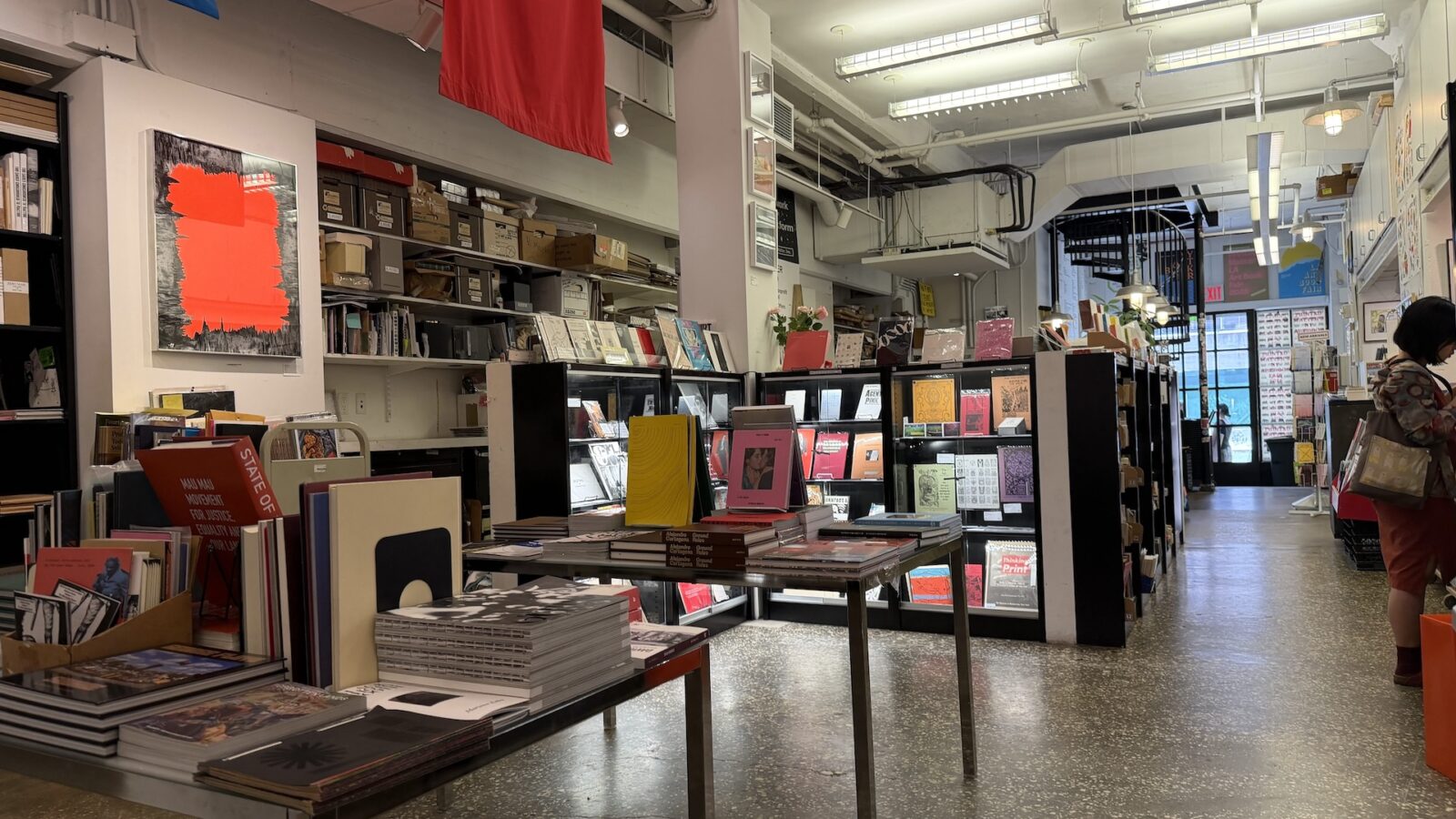
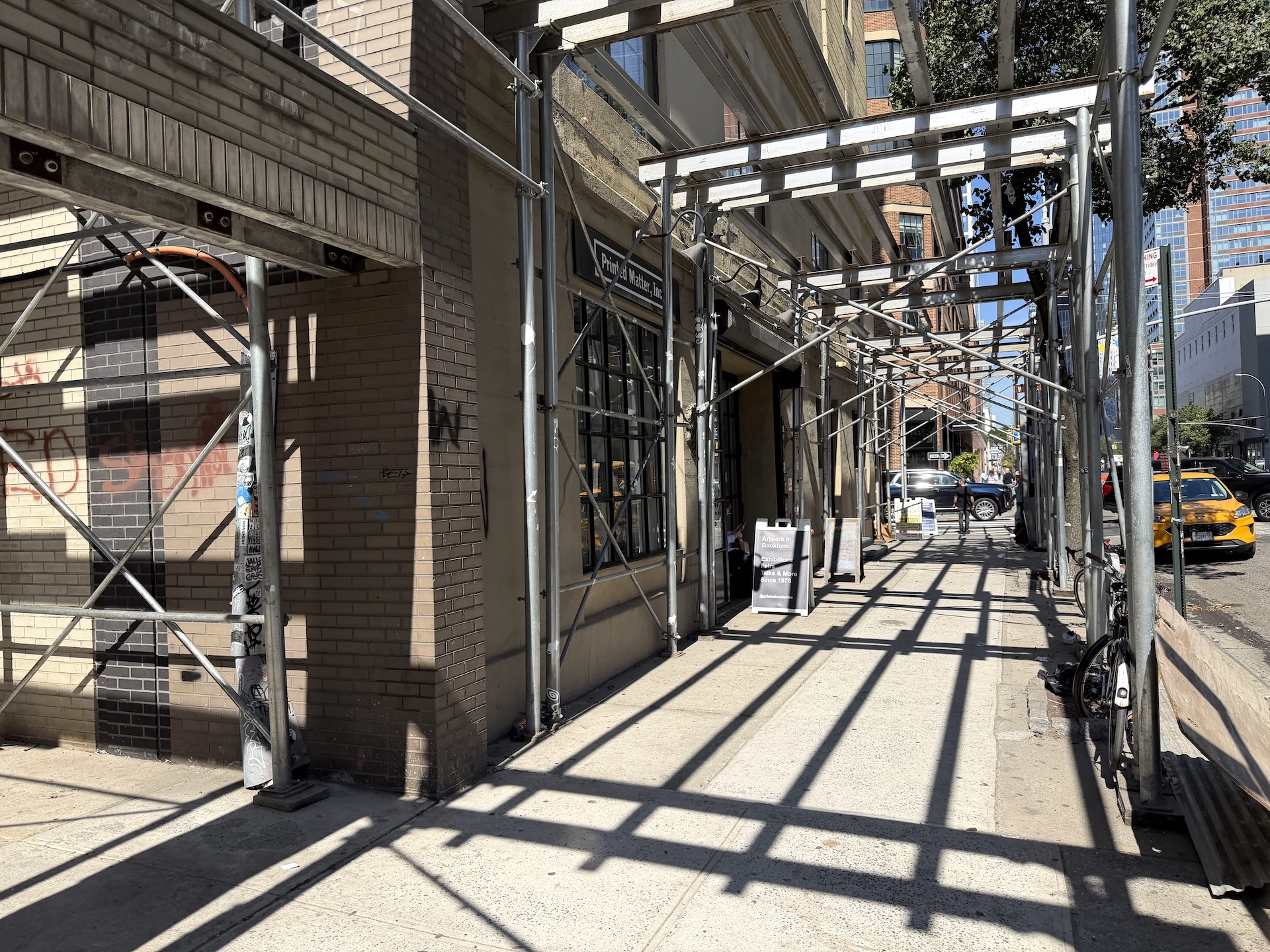
We visited Printed Matter in the Chelsea district of New York.
It is a bookshop devoted to artists’ books, but it is run by a non-profit organisation founded in 1976, which celebrates its fiftieth anniversary this year. The same organisation also runs the NY Art Book Fair, one of the largest art book fairs in the world.
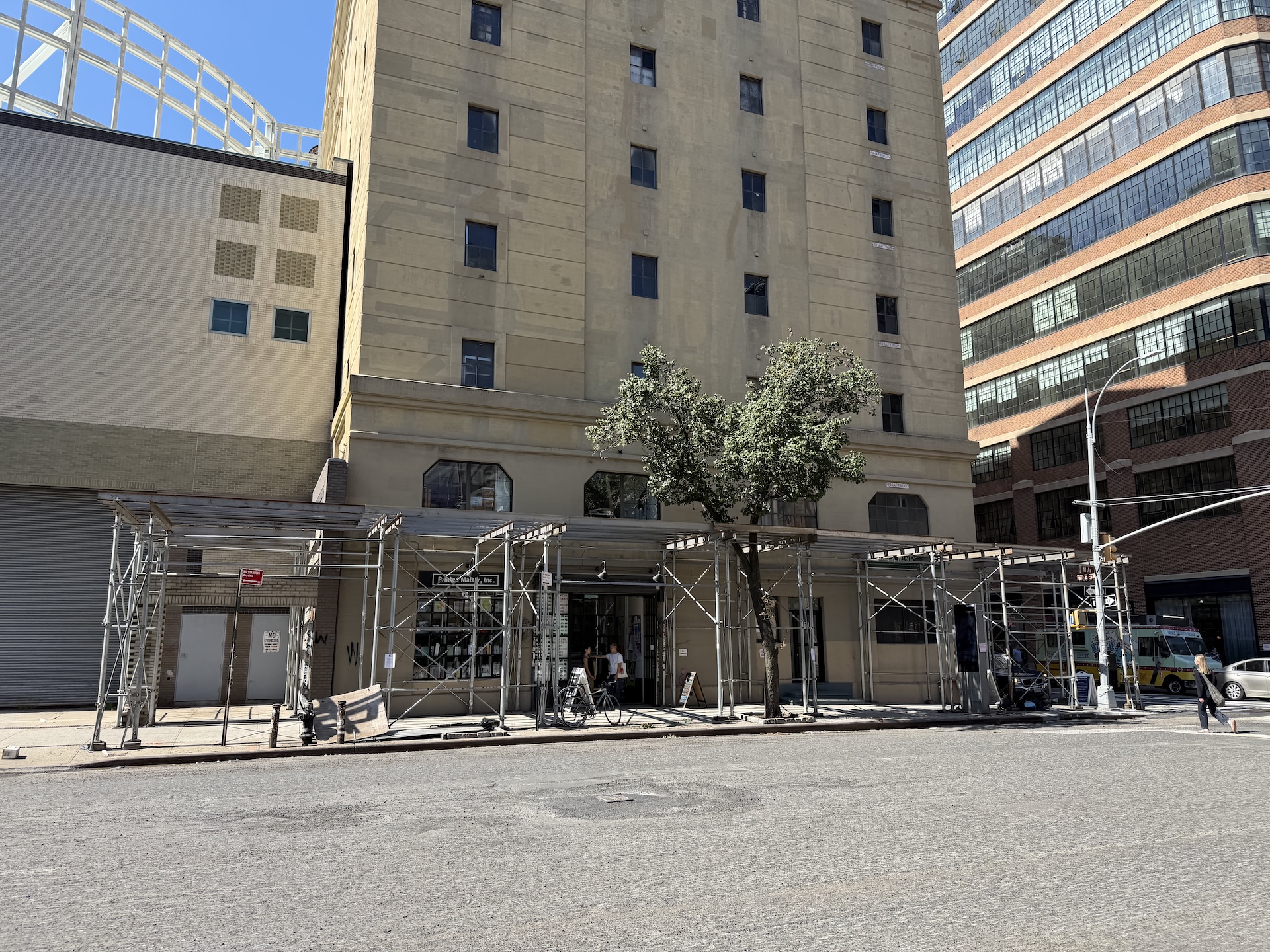
Eleventh Avenue, Chelsea
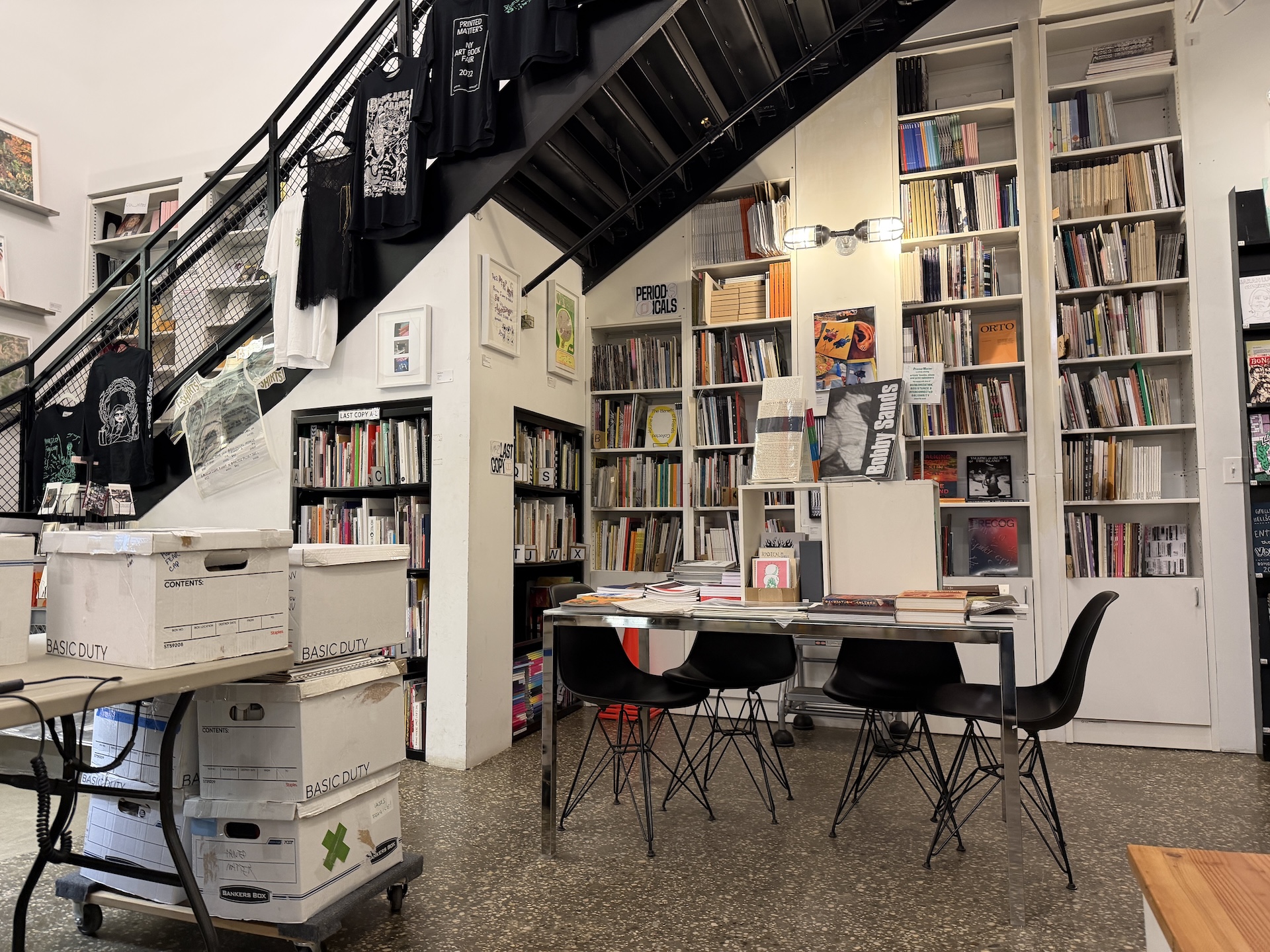
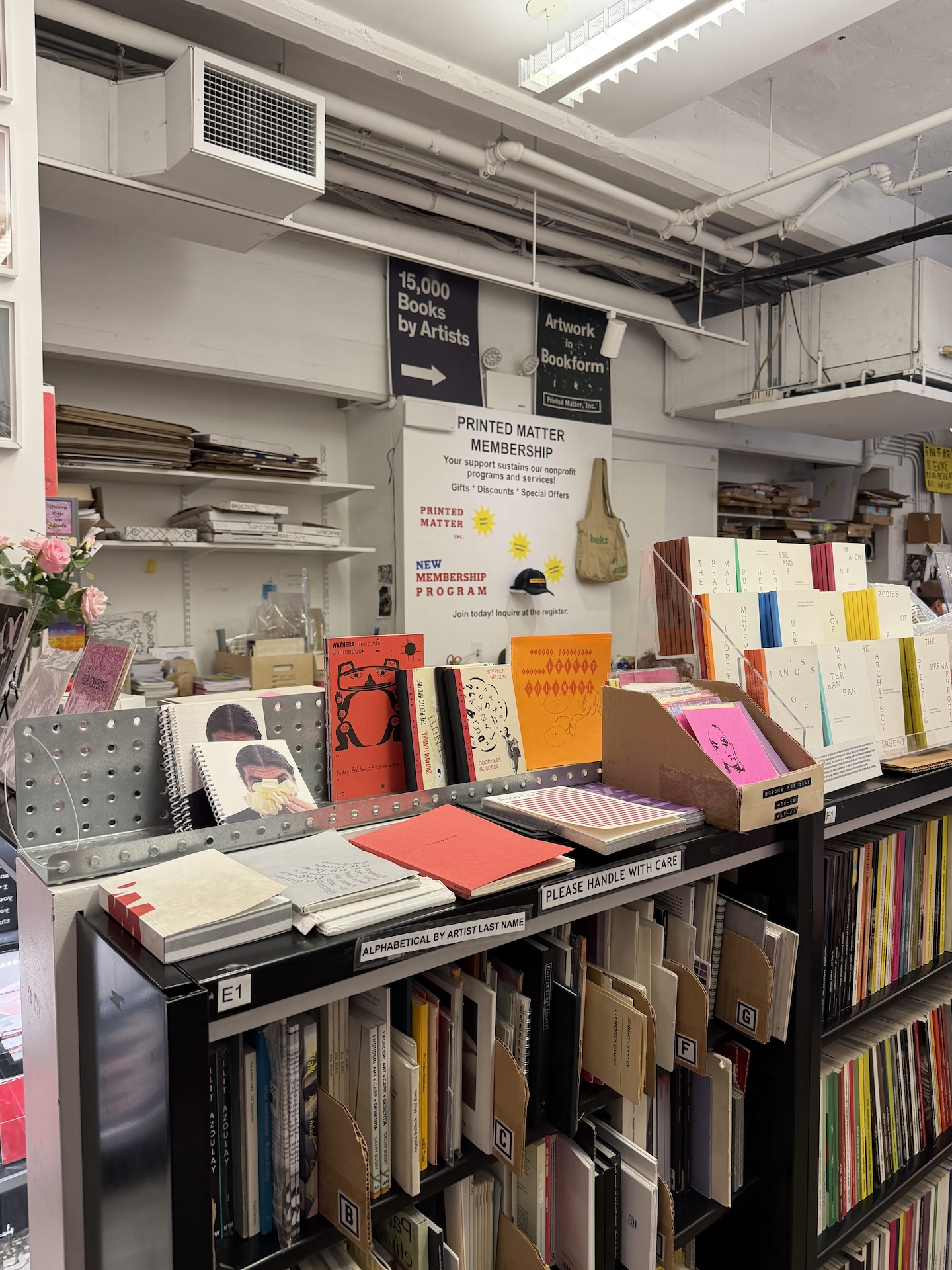
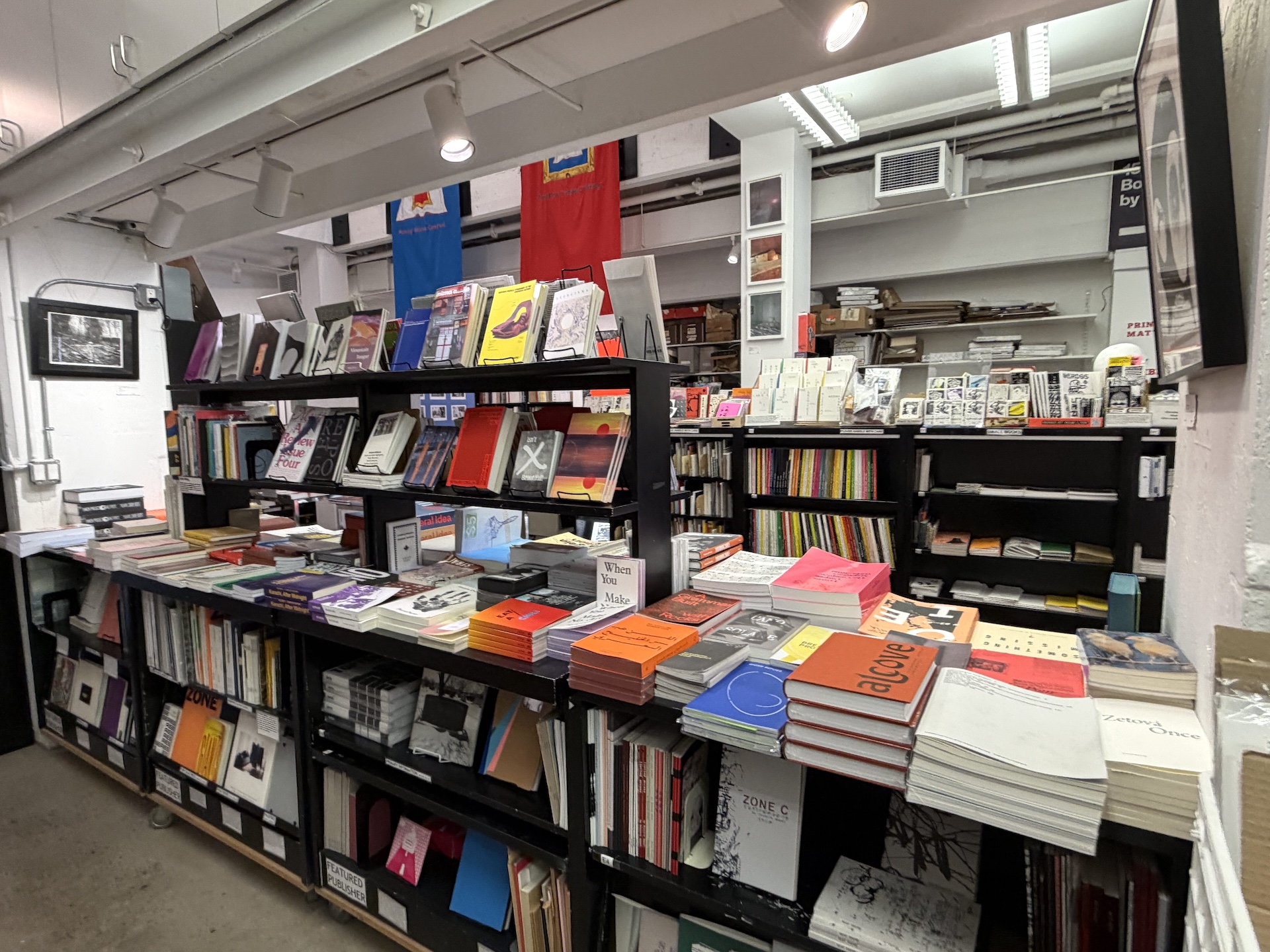
Inside, the bookshelves stand close together, packed with books by all kinds of artists.
It began with Sol LeWitt
The first person to propose founding Printed Matter was the conceptual artist Sol LeWitt.
From the 1960s on, conceptual and performance artists had begun to use books as a place to present their work. A book that could be printed cheaply and in quantity could reach many people without passing through a gallery. Yet at the time there were almost no bookshops or distribution channels willing to handle such books.
In the autumn of 1975, LeWitt visited the critic Lucy Lippard at her home and proposed setting up an organisation to publish and sell artists’ books. That December, LeWitt, Lippard, the painter Pat Steir and others exchanged letters calling for a publishing and distribution system for artists’ books. The following year, 1976, the first shop opened on Lispenard Street in Tribeca.
LeWitt himself had been publishing books since the end of the 1960s. In a programme looking back on its own history, Printed Matter explains that his way of thinking, consistent across his artwork, his political ideals and the way he approached running an organisation, is what led to its founding.
That same winter of 1976, the magazine Art-Rite published an issue devoted to artists’ books. It asked fifty artists and critics for their thoughts on the medium, and responses came from LeWitt and Lippard as well as John Baldessari and Lawrence Weiner, among others. The magazine’s editors, Walter Robinson and Edit DeAk, were also founding members of Printed Matter.
While preparations were under way, the artist Martha Wilson was also planning to start something around artists’ books. She would soon go on to found the space Franklin Furnace.
The two groups agreed to work together, and sorted the roles needed to support artists’ books into three: production and publishing, sales and distribution, and archive and exhibition.
It started as a for-profit company
Printed Matter was not a non-profit when it was founded, but an ordinary company. It reincorporated as a non-profit in 1978 and received tax-exempt status in 1979. Its first director at the time was Ingrid Sischy, who at twenty-seven was appointed editor of the art magazine Artforum and later led Interview magazine for nearly twenty years. Lippard and Sischy described Printed Matter as “a service, an educational vehicle, an artistic practice.”
What is an artists’ book?
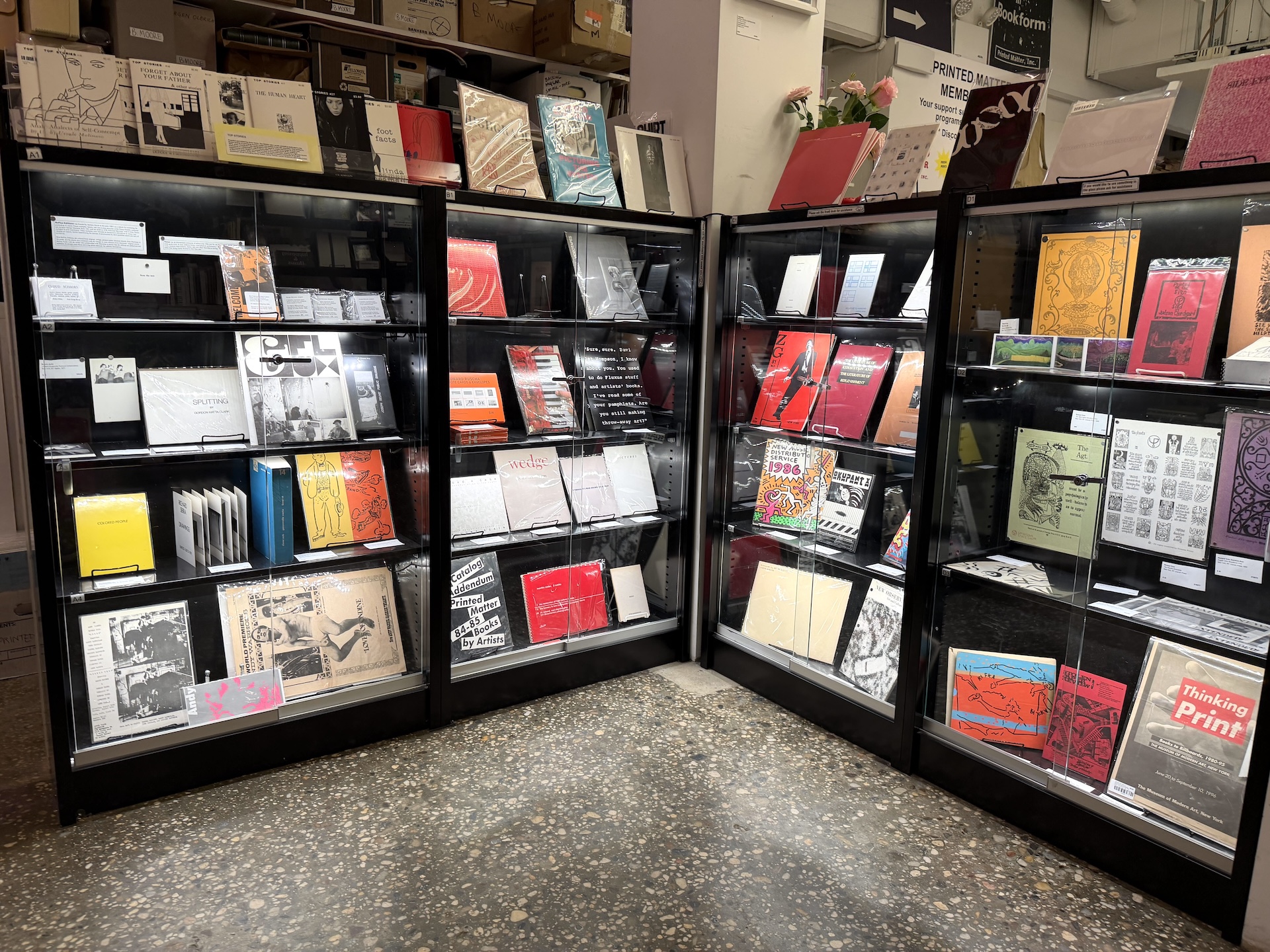
In Japan, the term “art book” is often used for painting collections, monographs and exhibition catalogues alike. What Printed Matter handles is a particular kind of book within that range, known as the artists’ book. The difference between the two lies in whether the book itself is the work. A monograph or catalogue is a book made to introduce works such as paintings or sculptures. An artists’ book, by contrast, is conceived by the artist from the outset as an artwork in the form of a book.
According to Printed Matter, most artists’ books are inexpensive, produced in large numbers and easy for anyone to obtain. Print many copies and distribute them widely, and the work can reach many people without going through a gallery or museum. That was the main aim behind the undertaking.
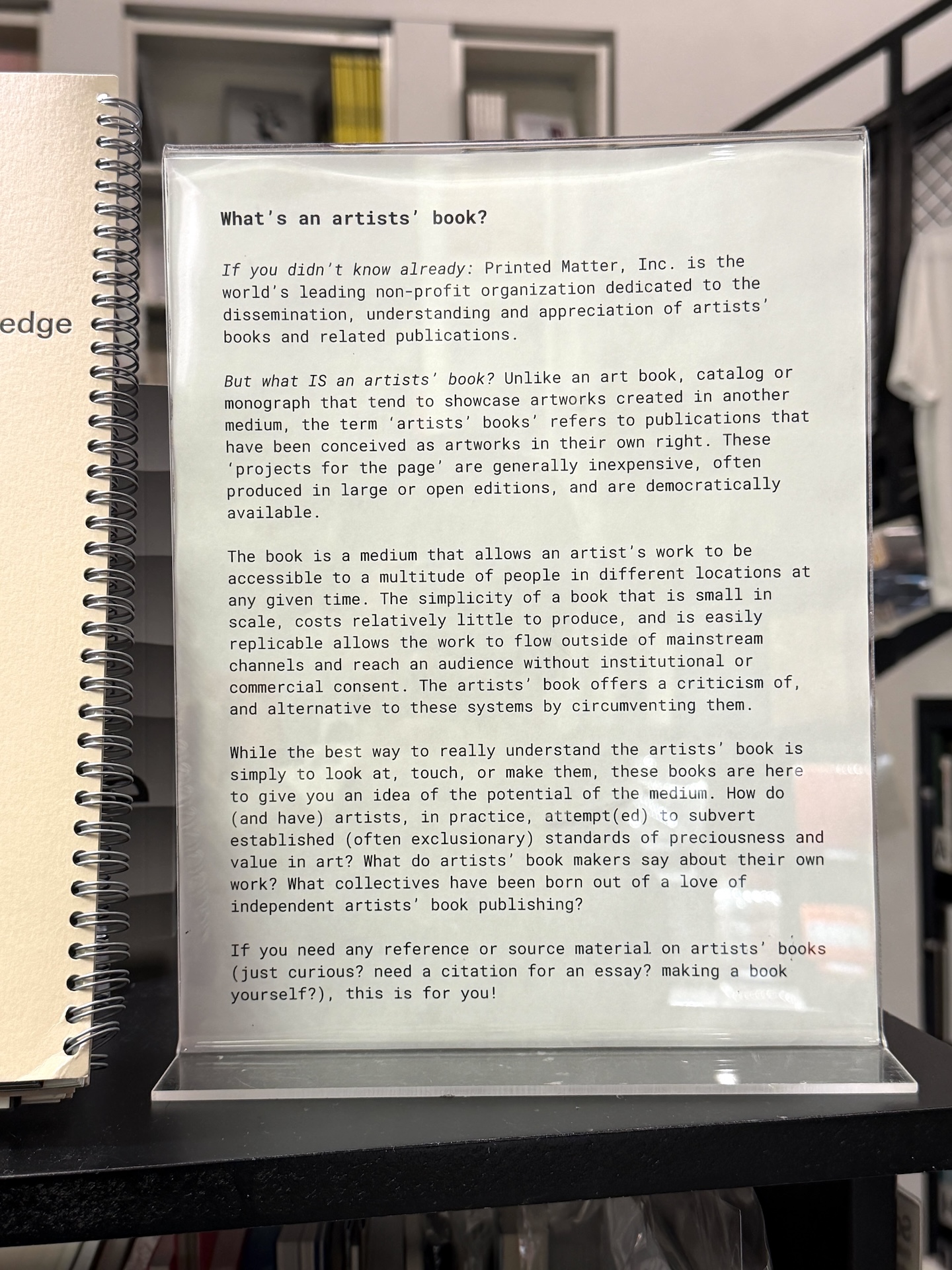
A book is also something you hold and look through page by page. The order of the pages, repetition, the pairing of facing spreads and even the passage of time as you turn them can all become part of the work, and Printed Matter describes this as what makes artists’ books distinctive.
Where artists’ books began
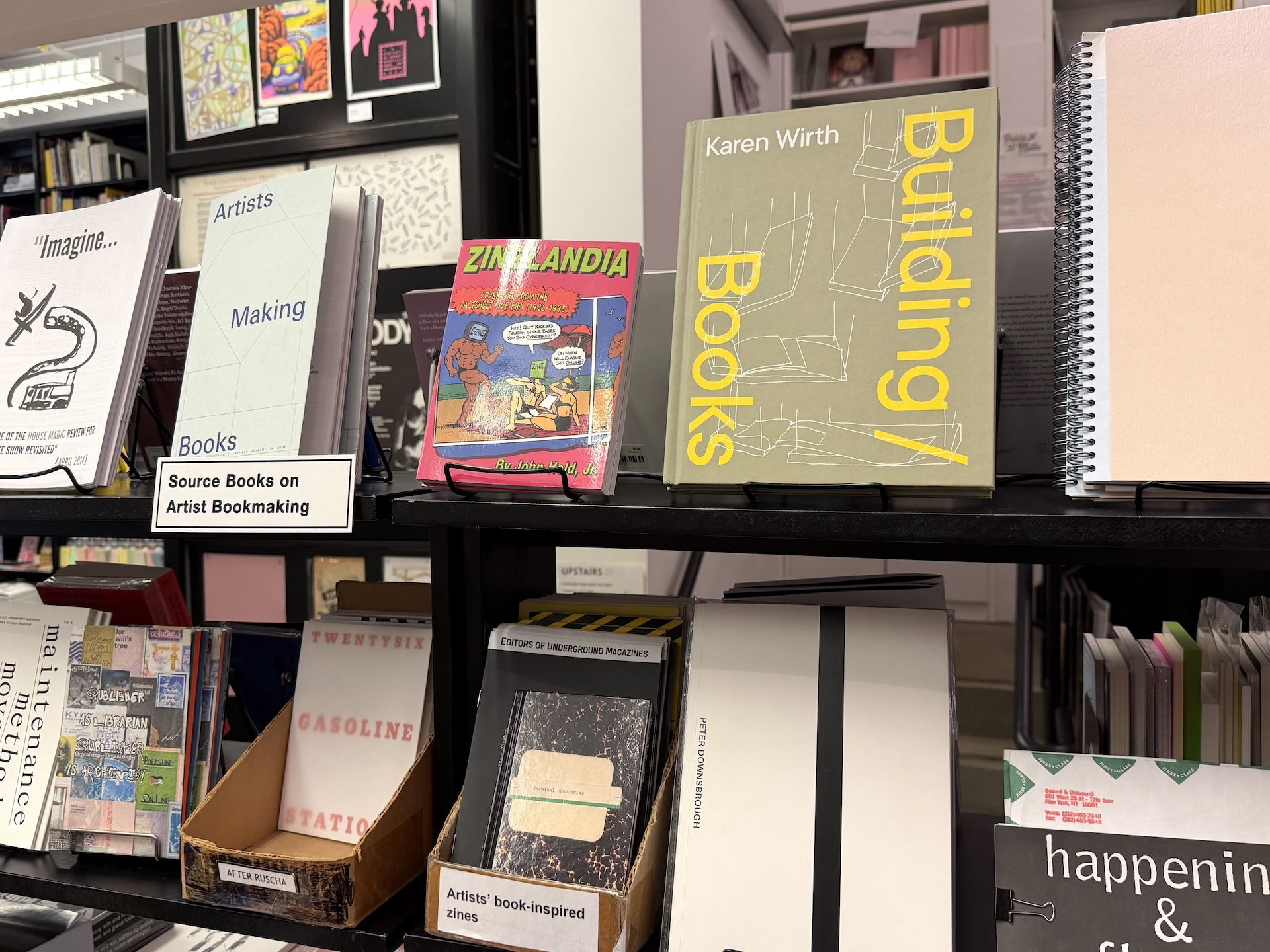
A book often cited as the starting point of the artists’ book is Twentysix Gasoline Stations, self-published by Ed Ruscha in 1963.
It simply photographs and lines up twenty-six gas stations along the highway from Los Angeles to Oklahoma, with almost no explanatory text. The first edition was 400 copies, priced at three dollars.
The Library of Congress declined to accept the book, on the grounds that its form was unorthodox and it contained too little information. Ruscha went so far as to announce the rejection in an advertisement in Artforum.
At Printed Matter’s fiftieth-anniversary benefit dinner this April, it was Ruscha who was honoured.
SoHo, Chelsea and on to Eleventh Avenue
The shop on Lispenard Street lasted thirteen years, and in 1989 it moved to Wooster Street in SoHo. With a larger space and big storefront windows, exhibitions and events grew in number.
In 2001 it moved to Chelsea, which had grown into a gallery district, then to Tenth Avenue in 2005, and since 2015 it has been at its present address on Eleventh Avenue. The shop has moved in step with the shifting centre of the New York art scene. From 2018 to 2024 there was also a second shop inside Swiss Institute in the East Village, but it has since closed, and Chelsea is now the only location.
The shop window is an exhibition space too
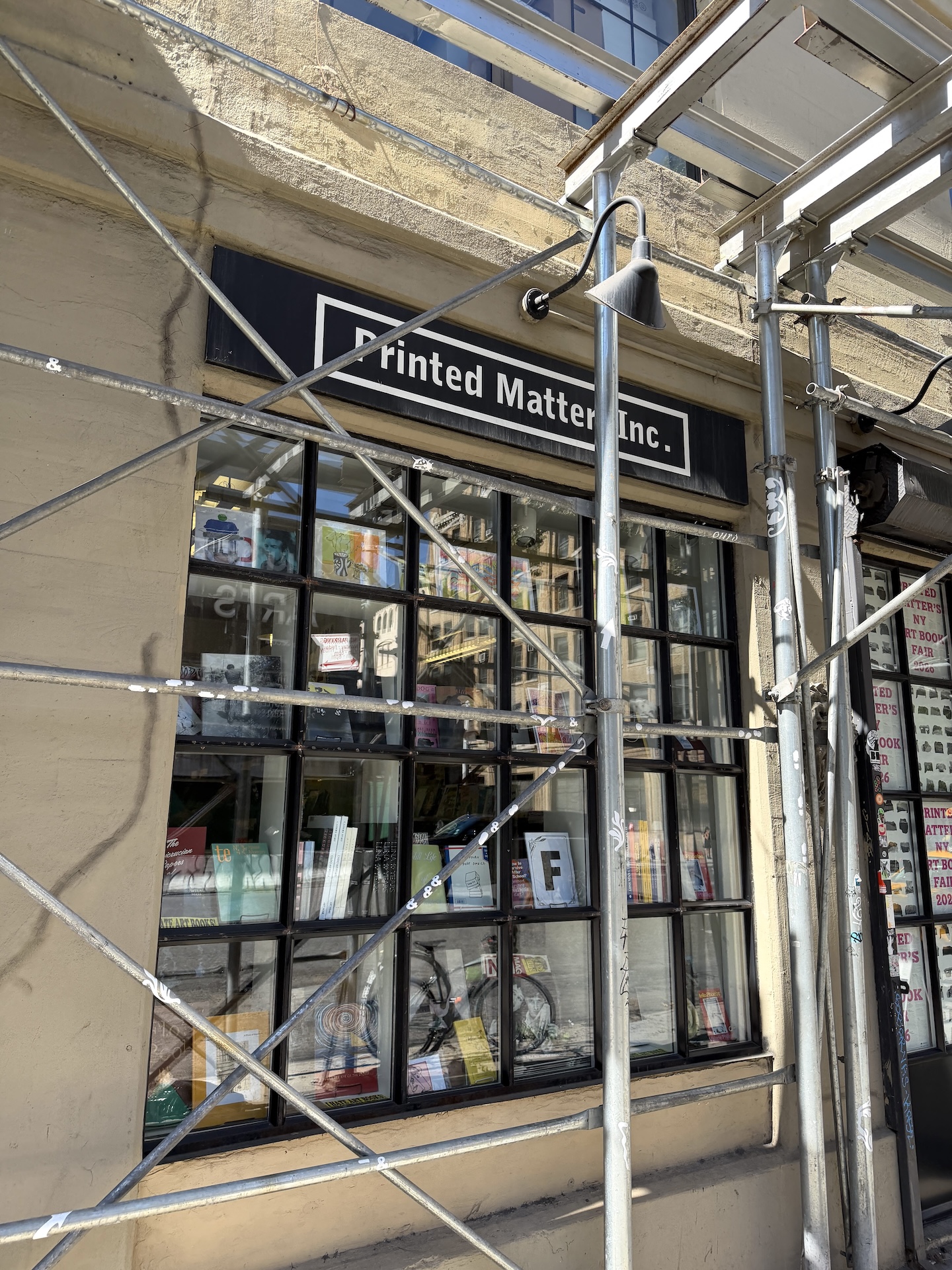
The large window facing the street is used for window installations, in which artists show work made for that particular spot. From 1978 to 1989, Lippard curated the programme herself.
Now on view: Gordon Matta-Clark
The exhibition on view during our visit was “New Openings Against Old Surfaces: On Gordon Matta-Clark’s Walls Paper” (9 September – 29 November 2026). It is the first exhibition to focus on the publications of Gordon Matta-Clark, known for his works cutting into buildings.
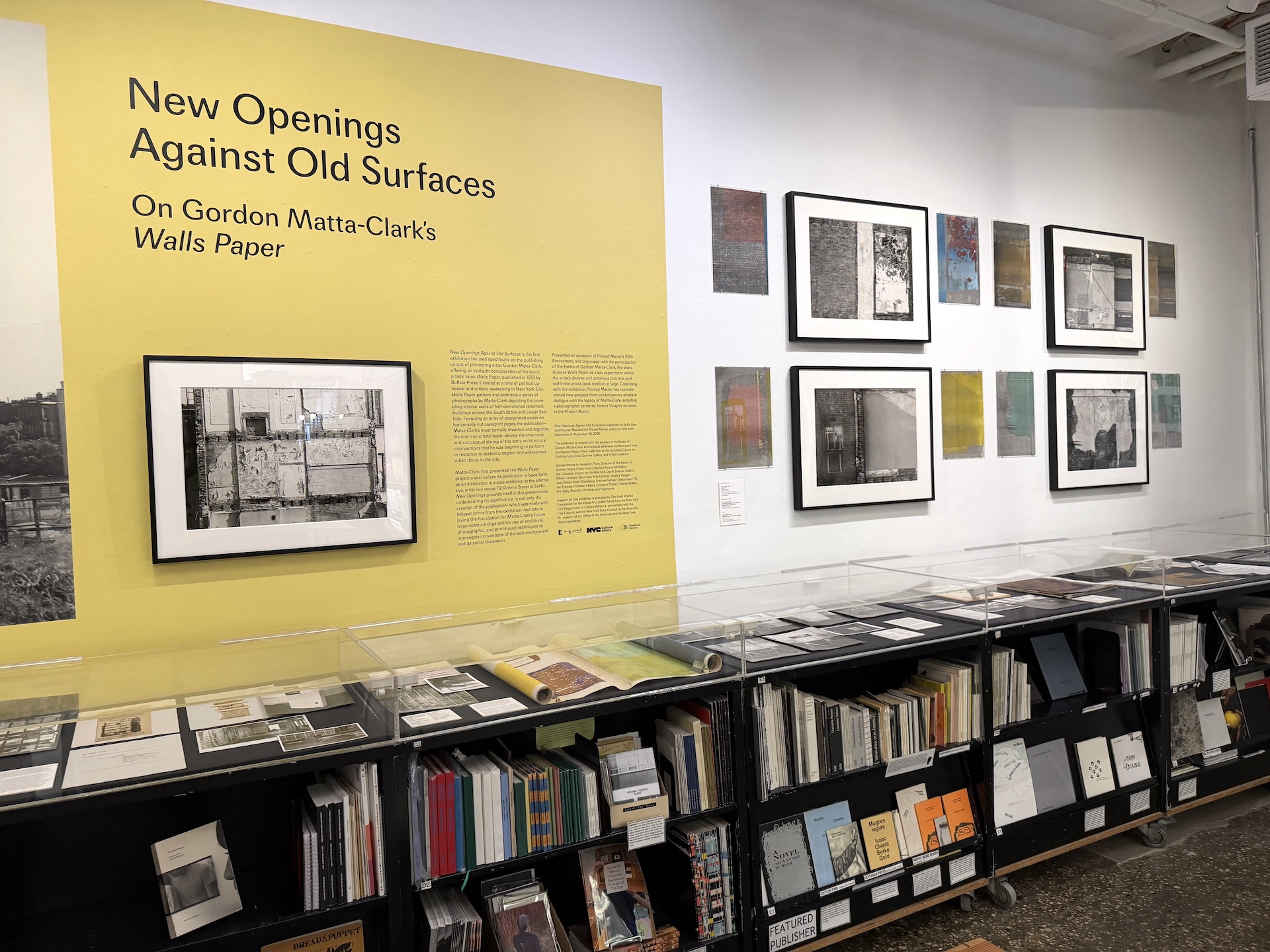
At its centre is Walls Paper, published in 1973. It photographs the exposed interior walls of tenement buildings in the middle of demolition in the South Bronx and the Lower East Side.
Hazy neon colours, recalling peeling wallpaper, are printed over the black-and-white photographs. The newsprint pages were bound and then cut horizontally through the middle, so that the book looks like two booklets, upper and lower, joined into one.
The year before it became a book, in 1972, the work was shown at 112 Greene Street, an artist-run space in SoHo. Long strips of newsprint were pasted from ceiling to floor, and stacks of the same sheets were left for visitors to take home and put up on their own walls.
The exhibition includes original prints used at that time, photographs documenting the printing, test prints and uncut printer’s sheets, as well as a unique hand-cut notebook and the layout for Quadrille, a publication project that was never realised. The show is also part of the fiftieth-anniversary programme.
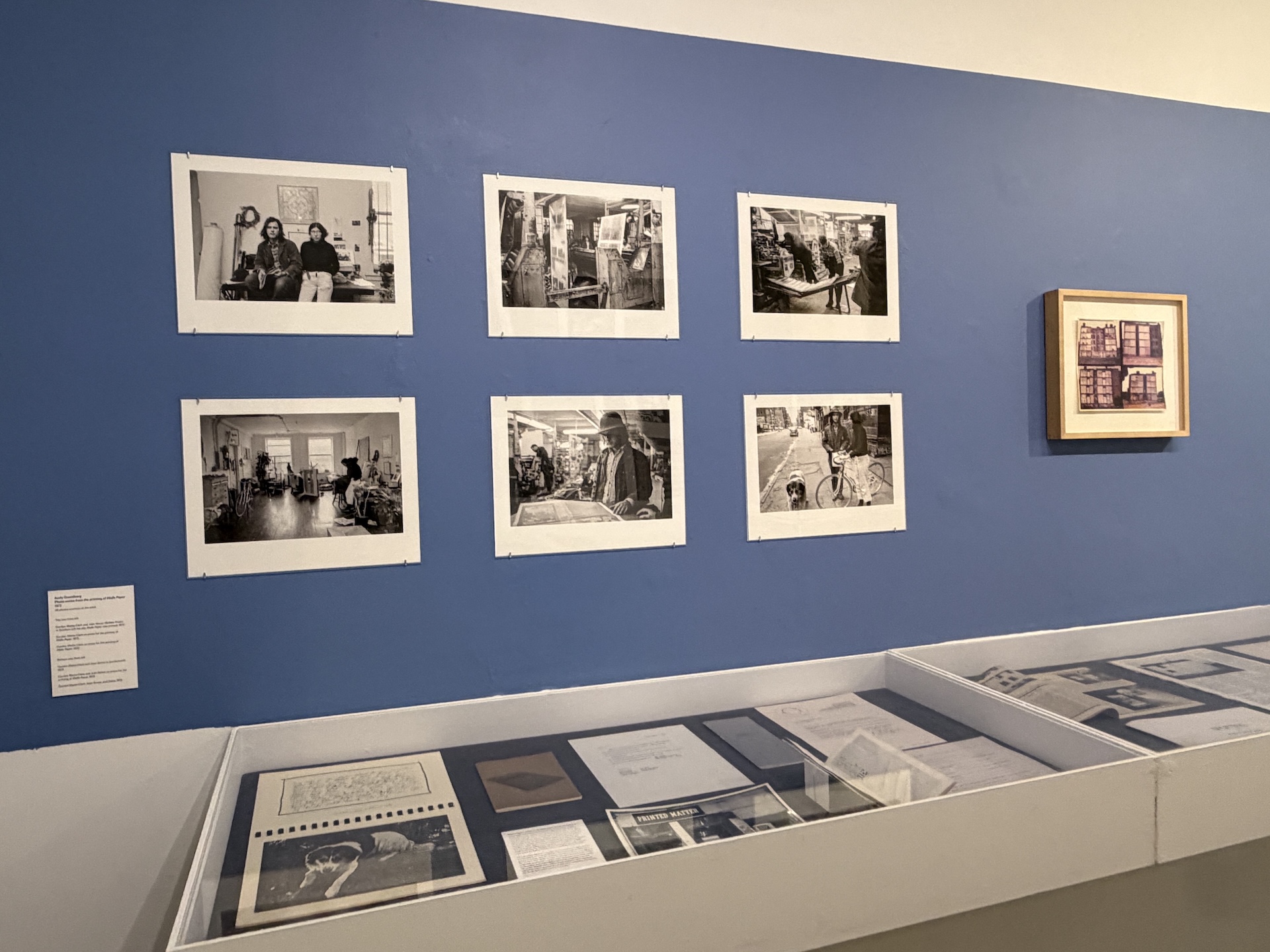
Jessamyn Fiore, director of the Estate of Gordon Matta-Clark, describes the work as carrying the image of a neglected city from the gallery into the home, and finally into the reader’s hands.
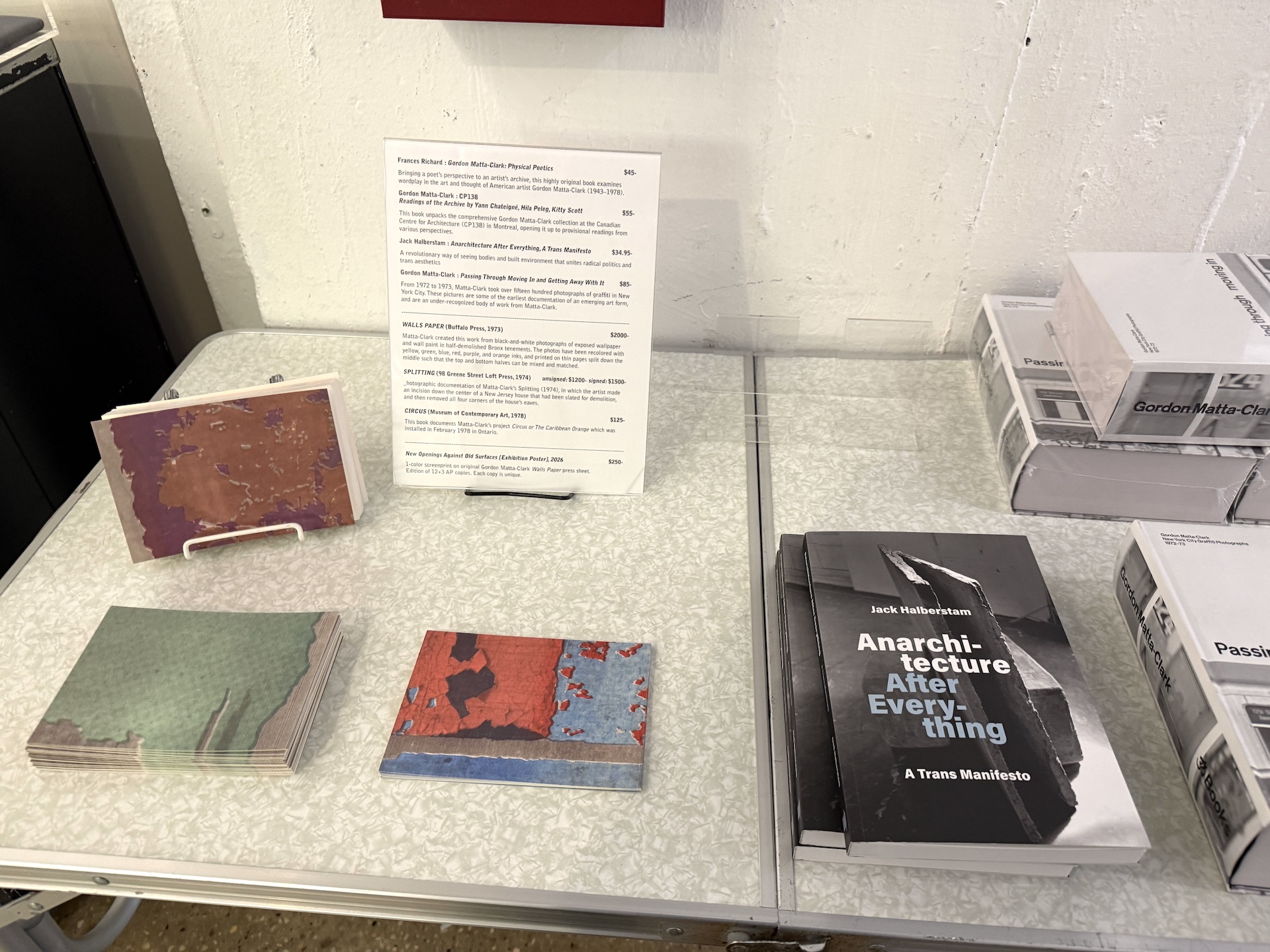
Beside the exhibition is a table of related books, where a copy of Walls Paper from 1973 was on sale for $2,000. The poster made for the exhibition is a one-colour screenprint on an original Walls Paper press sheet, in an edition of 12 plus 3 artist’s proofs, at $250 each. According to the price list, every copy is different.
Anyone can submit a book
Printed Matter accepts submissions of books from artists and publishers around the world at any time.
The requirements are that the book has already been published (self-publishing is fine) and that at least fifty copies have been made. Send one physical copy with the designated form, or bring it to the shop in person, and the staff will review it and reply in about four to six weeks. Accepted books are sold on consignment, with the proceeds split fifty-fifty between the artist and Printed Matter.
The fiftieth anniversary and the NY Art Book Fair
2026 marks fifty years since Printed Matter was founded. MoMA PS1, which also opened in 1976, turns fifty this year too.
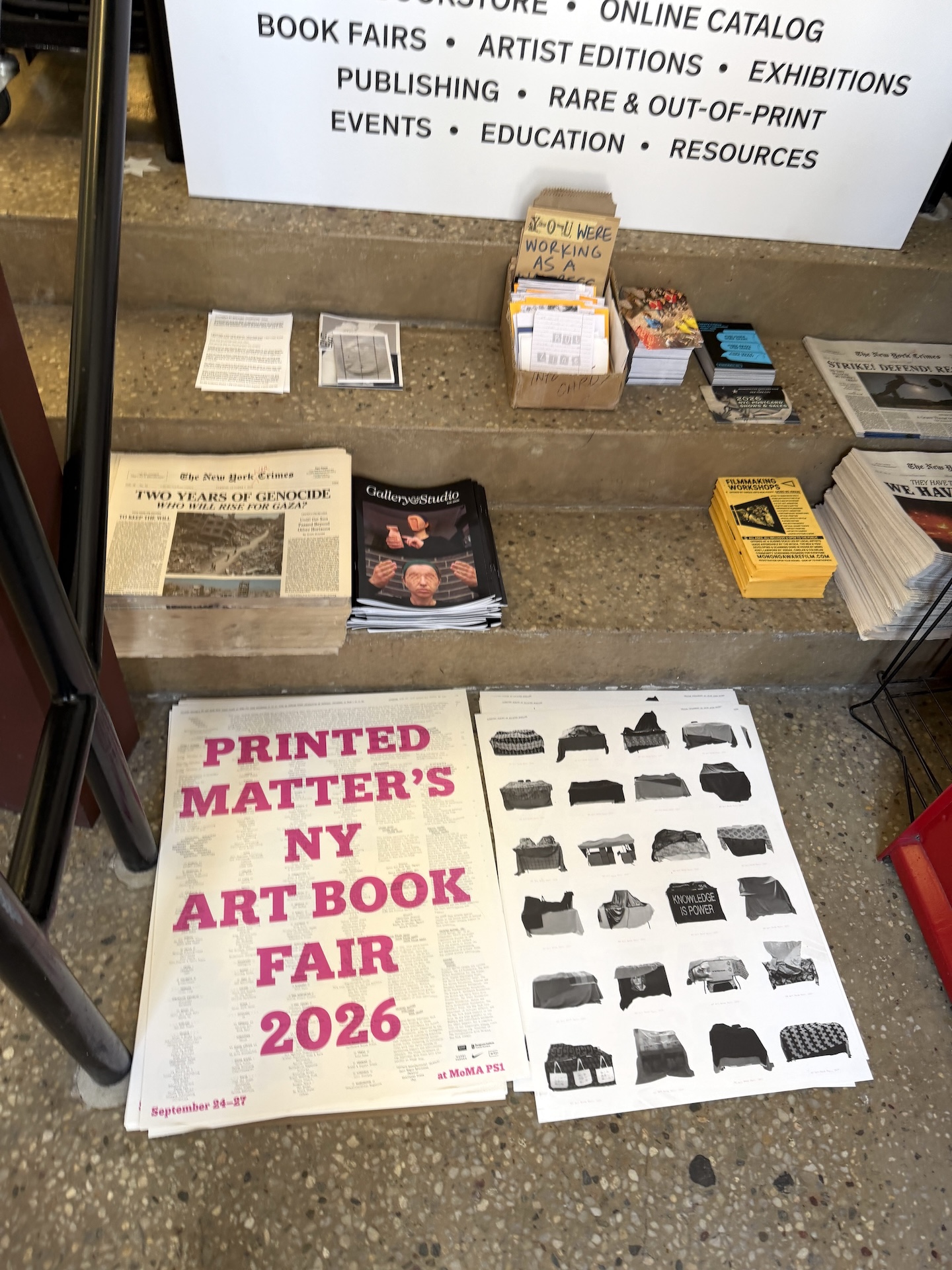
The NY Art Book Fair, which Printed Matter launched in 2006, reaches its twentieth edition this year. The first fair had 73 exhibitors; this year, from 24 to 27 September at MoMA PS1, more than 300 exhibitors from 41 countries will take part. Since 2013 the fair has also been held in Los Angeles.
Our visit
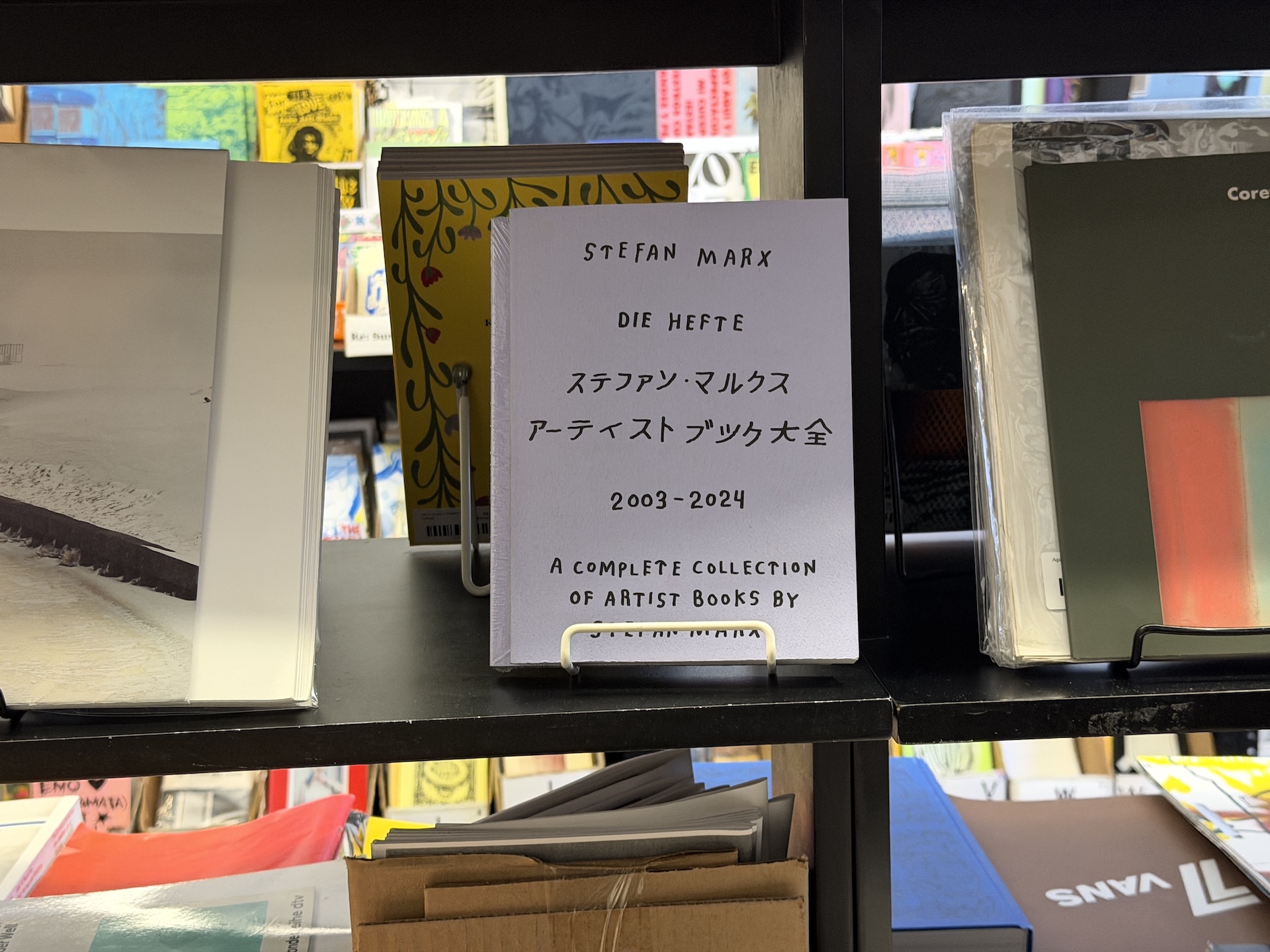
Although it is called an art book shop, what it offers takes many forms. Besides books, it sells prints, stickers, posters, goods and more. Almost everything felt like an artwork that had changed shape from what hangs in a gallery, while still existing as part of the work.
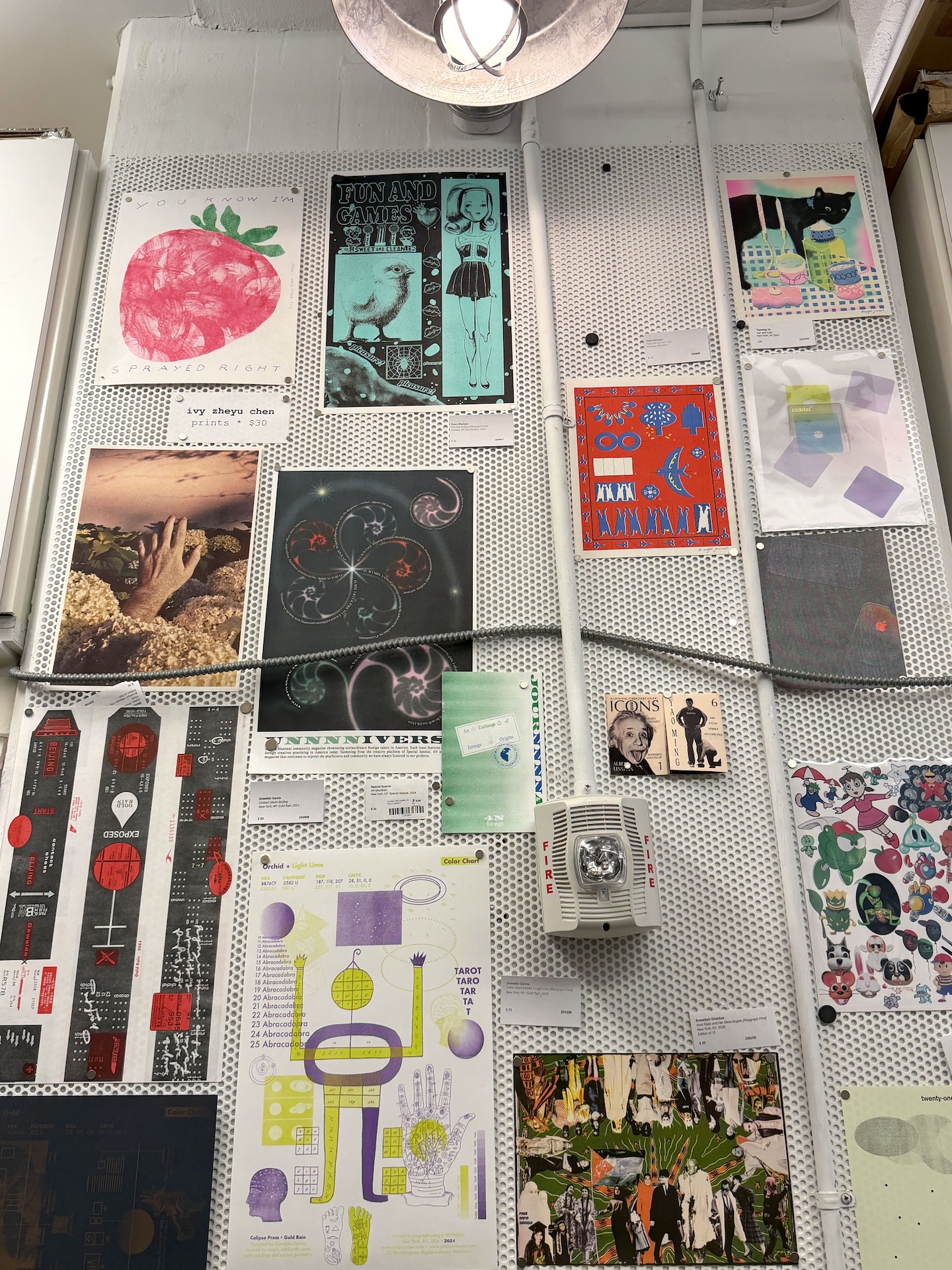
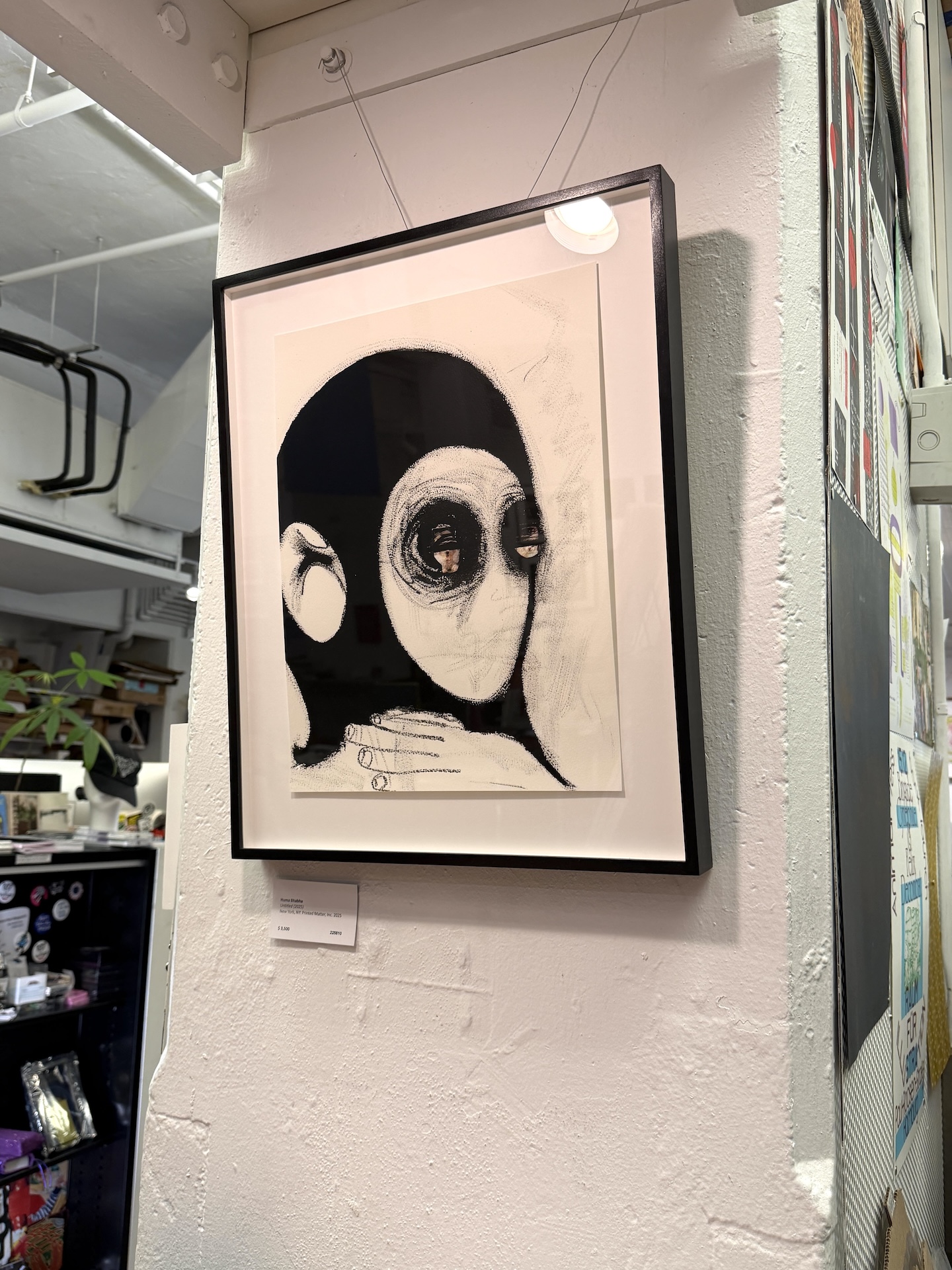
Prices range widely. There are risograph prints at $20 apiece, and a screenprint by Elizabeth Peyton (edition of 100, $2,000) and a signed print by Sterling Ruby (edition of 20, $3,500) were on show and for sale. A work by Huma Bhabha ($3,500) was published by Printed Matter itself in 2025.
It would be impossible to look through every one of the countless books in the shop, and we were overwhelmed by the sheer volume.
Information
Address: 231 Eleventh Avenue, New York, NY 10001 (at the corner of 26th Street)
Hours: Tuesday–Saturday 11:00–19:00, Sunday 11:00–18:00
Closed: Monday (visits by appointment: appointments@printedmatter.org)
Admission free. The shop is fully wheelchair accessible.
Words and photographs: art on editorial team