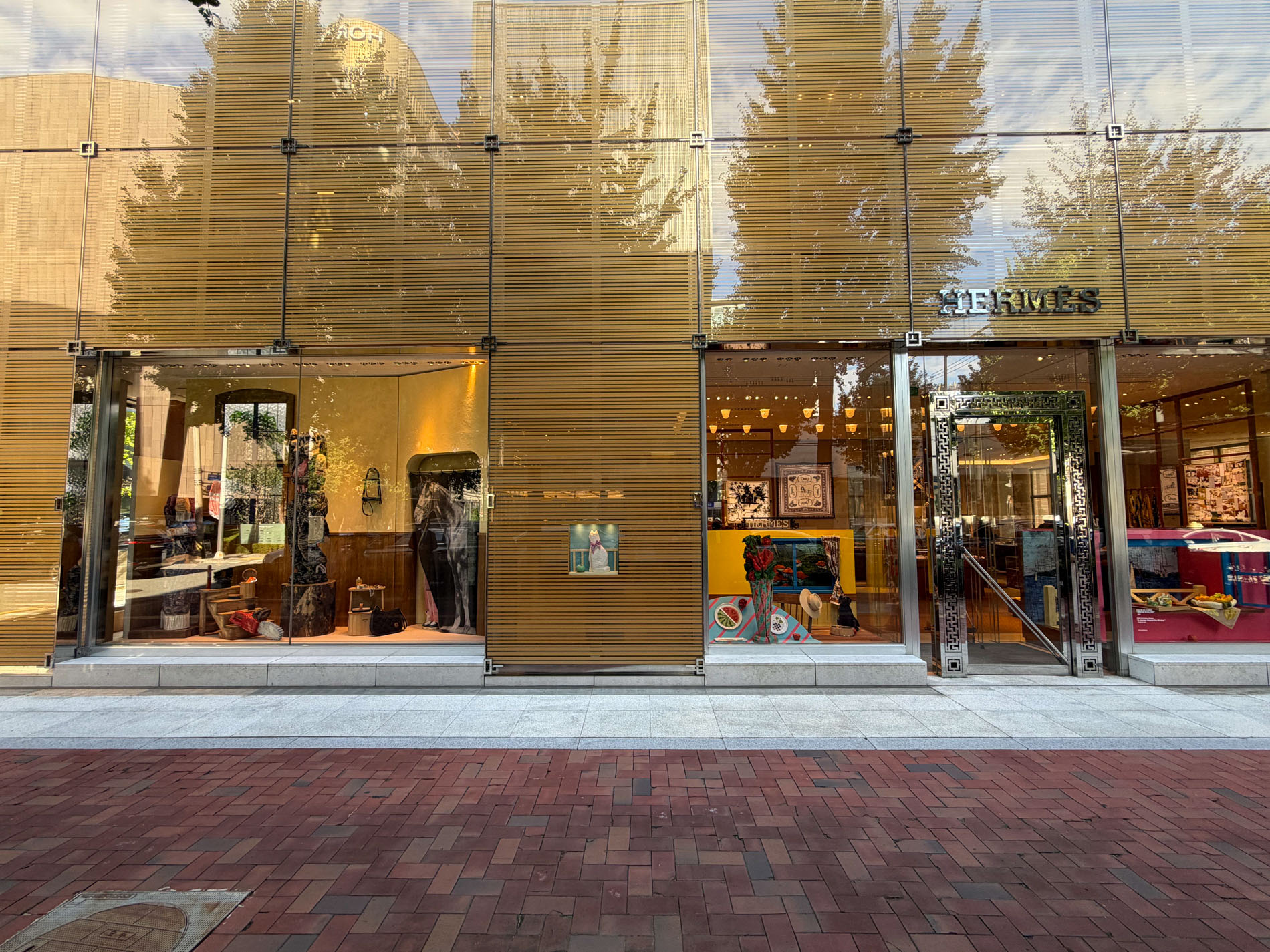
Standing on the corner by Dosan Park in Seoul is Maison Hermes Dosan Park.
Show windows of different colours are set at intervals around the perimeter of a building clad in golden wooden louvres.
Every one of them was filled with sculptures roughly hewn out of wood. The artist behind them is the Korean artist Donghoon Rhee (b. 1991).
The title is “A Journey Beyond the Window”, a journey out beyond the window.
It is the autumn window display project, on view from 5 August to 15 November 2026.
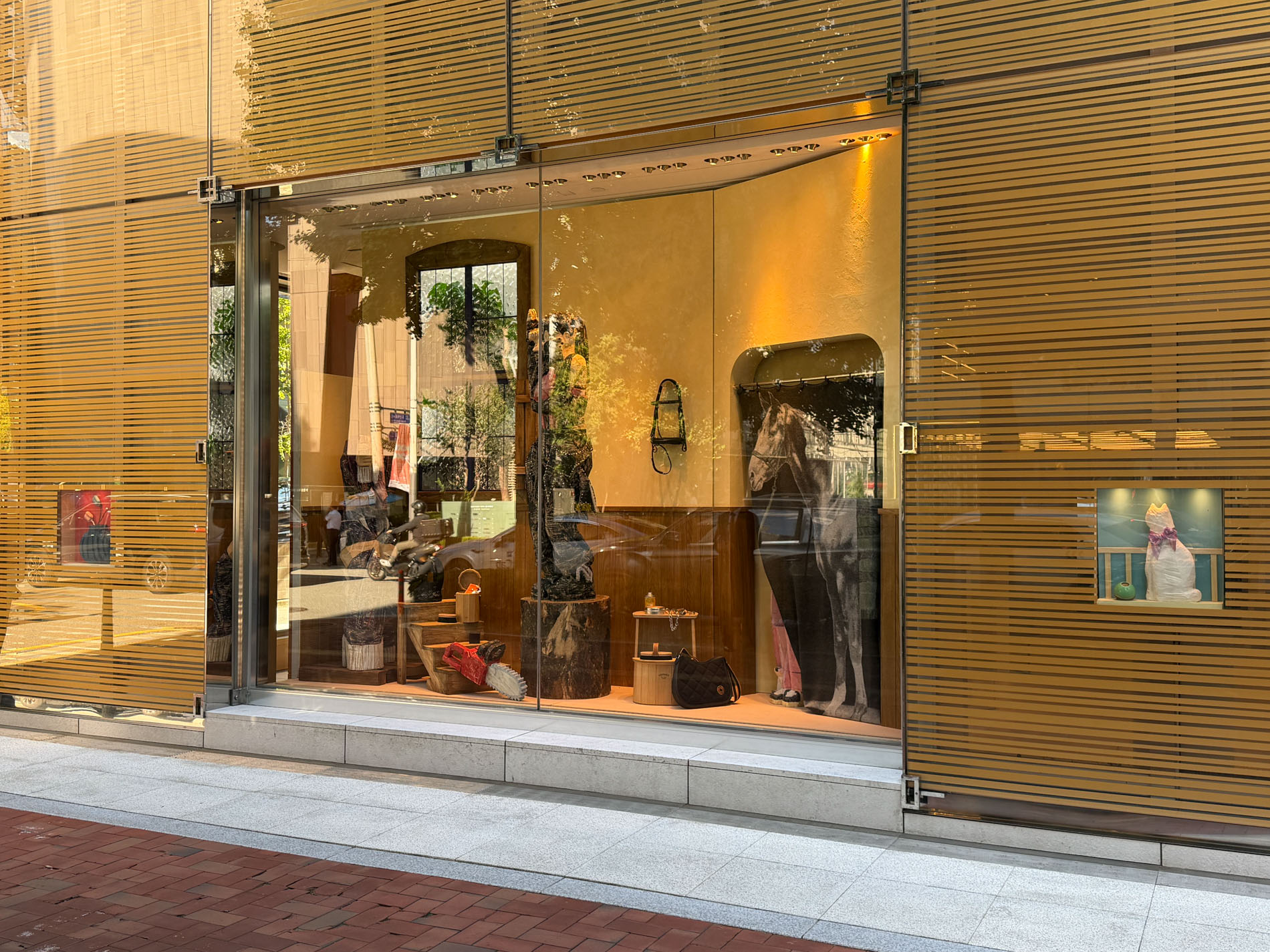
It is hardly unusual for a contemporary artist to be invited into the windows of a luxury house, but what drew my attention to this project is that the works are not placed as a backdrop for the products: the products are lined up inside the work.
Observation to sculpture to painting
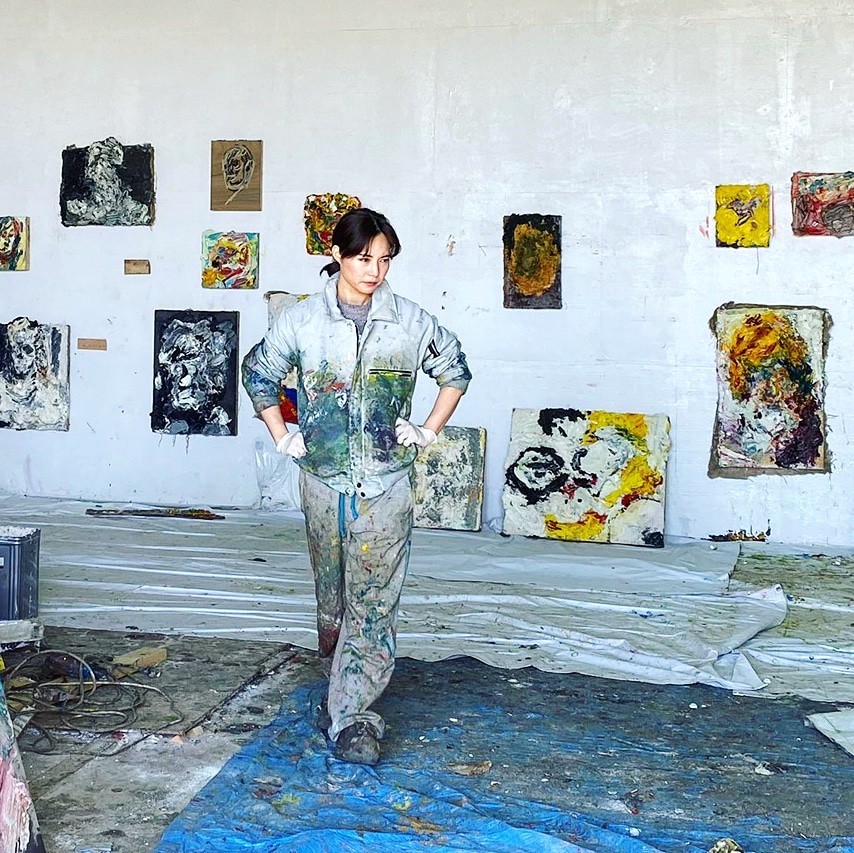
Donghoon Rhee was born in 1991. He graduated in painting from the College of Fine Arts at Kyung Hee University in 2017 and completed his master’s degree in Fine Arts at Seoul National University of Science and Technology in 2020. His starting point was painting, not sculpture.
In his early years, around 2015 to 2016, he was experimenting with transposing literary narrative onto a flat surface. The question of what to paint and how gradually shifted into an interest in the canvas itself as a support, and from there he stepped into sculpture as a way of pushing beyond the edges of painting. The turning point came with the series Hwabyeong (vase, from 2018) and Hwabun (flowerpot, from 2018): he observes the kind of object that appears in a still life, carves it once in wood, then paints that sculpture back onto a flat surface. This working method — observation, sculpture, painting — became the basic structure of his practice.
His materials include Korean red pine, elm, birch and ginkgo. He builds the mass with quick gestures that leave the grain and texture intact, then lays colour over it. The tactile presence of the object and the flat illusion cross over each other on the same surface, which is why his sculpture is described as pictorial.
Carving K-pop choreography into wood
His name became widely known once his motif changed from objects to human movement.
In 2021, at his solo exhibition The statue knows how to dance at Gallery SP in Seoul, the works Black Mamba and Not Shy set out a run of consecutive gestures lifted from K-pop choreography as a single sculptural structure. It was an attempt to transplant the very time of movement into a sculpture that is supposed not to move. The following year it continued into works that folded the same motif back into two dimensions.
In 2022 he made his international debut with the solo exhibition Woman at VSF & milk in Los Angeles: a series in which the synchronised, split-second gestures of performers such as Haerin of NewJeans and Winter of aespa were cut out with a power saw. While he was working, the story goes, he kept plates of Willem de Kooning beside the dance photographs. Rough strokes and the bodies of a contemporary girl group: laying those two over each other was the theme.
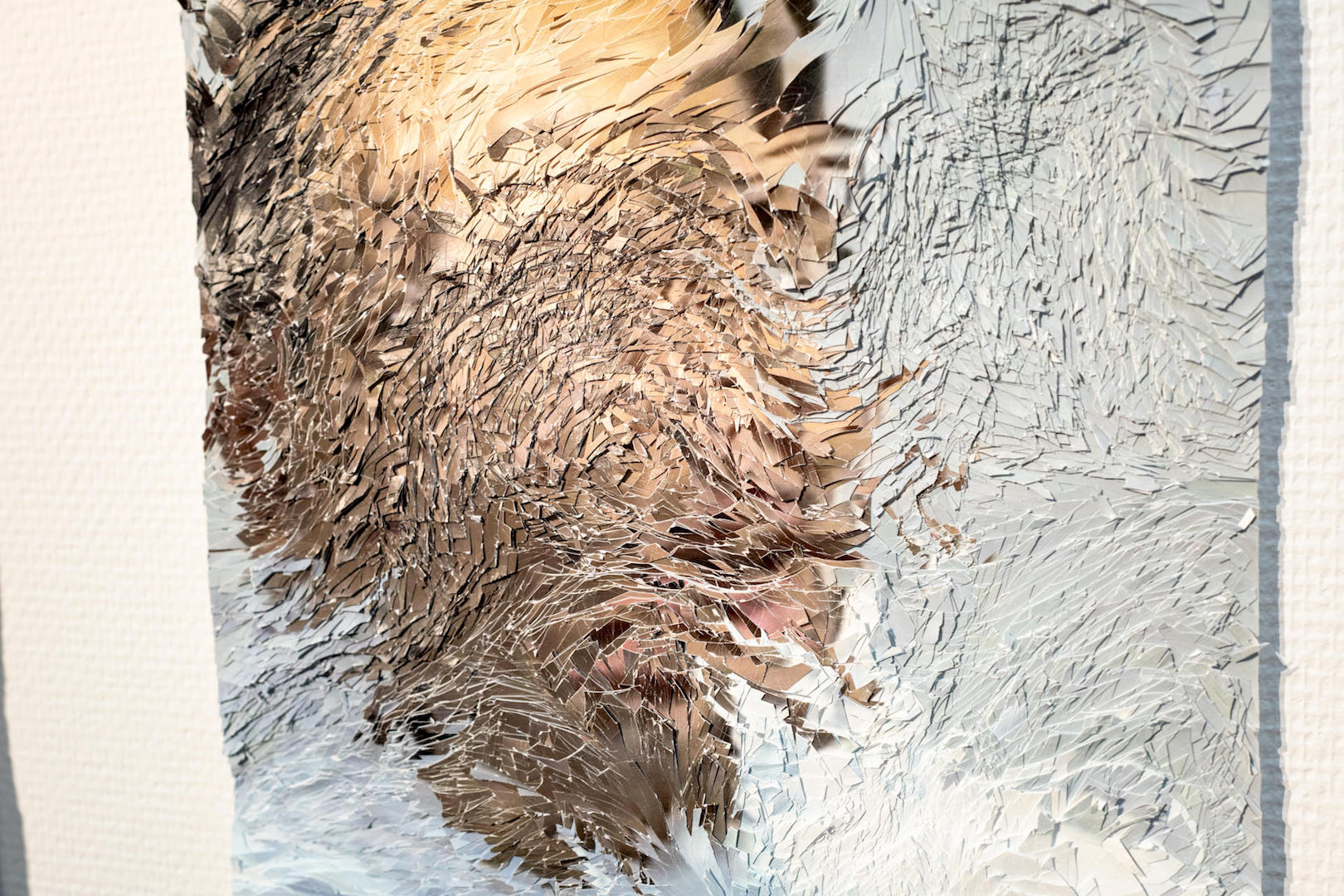
At his 2023 solo exhibition Light Choreography at Gallery SP, he moved from wood to paper. In New Jeans (2023) and the paper relief Compilation 1 (2023), he uses the sag, the creases and the tears of paper to fix the instant of a choreography. The sculpture is fragmented and reassembled, and the result is work in which movement, rather than form, comes to the front.
Collections, and his showings in Japan
His work is held by the Jeju Museum of Contemporary Art, the Ulsan Art Museum and the National Museum of Modern and Contemporary Art, Korea, Art Bank. In 2022 a run of public museum projects followed – Sculptural Impulse at the Buk-Seoul Museum of Art, 2022 NEW RISING ARTIST at the Jeju Museum of Contemporary Art and OBJECT UNIVERSE at the Ulsan Art Museum – and he went on to Salihara Arts Center in Jakarta in 2023, and in 2025 to a residency and the exhibition Symbiotic Planet at Seoul Art Space Geumcheon.
He has also been shown in Japan. He has taken part twice in group exhibitions at biscuit gallery in Tokyo: grid4 (2024) and Second Signal (2025).
A collaboration with Hermes
Maison Hermes Dosan Park opened in November 2006 as the fourth Maison in the world for Hermes.
The ground floor show windows are changed four times a year, at the turn of each season, and each time the space has been given over to artists from Korea and abroad to build a story out of Hermes objects.
For roughly ten years from 2014, this programme was carried by the designer Jackson Hong. The Mystical Summer Festival at Faubourg 24 in the summer of 2024, marking a century since the Paris flagship was extended, was his work as well.
The Call of Adventure
The Hermes annual theme for 2026 is The Call of Adventure (L’appel du large). From bags to make-up and on to store windows around the world, it unfolds broadly as the concept of the house.
Rooms inside the window
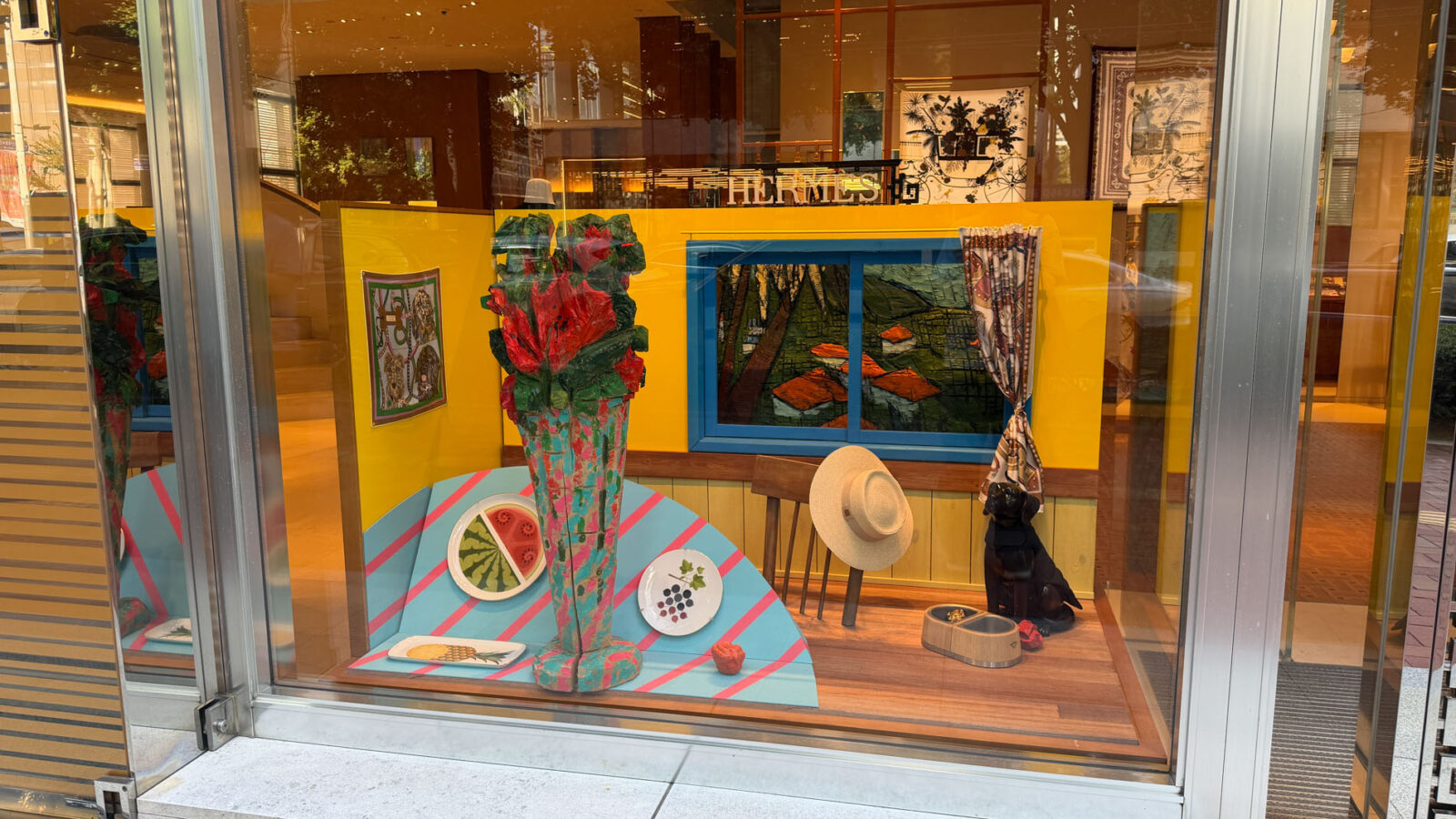
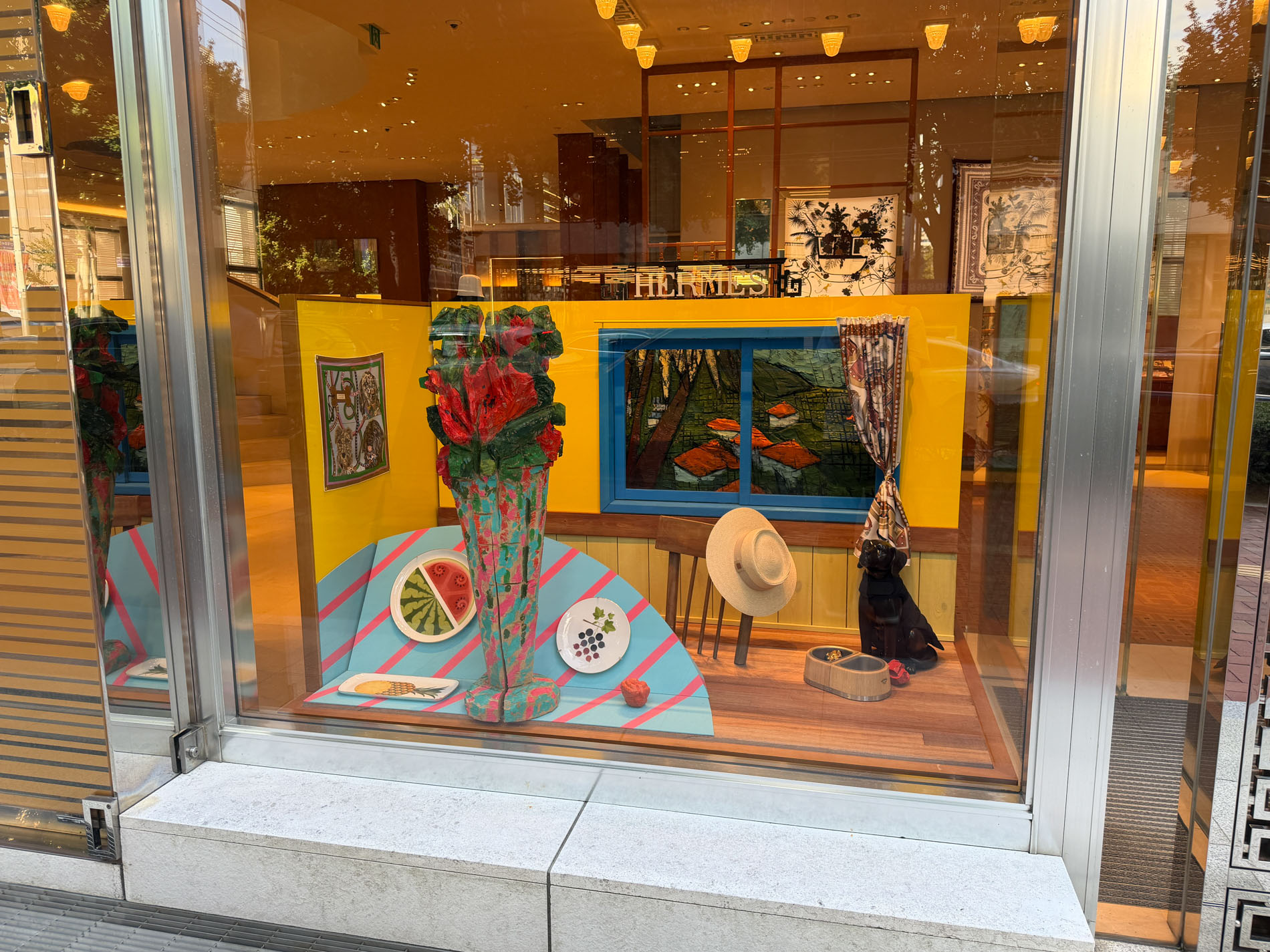
What drew my attention most in this project was a corner where an entire interior had been built. In the yellow-walled room, red flowers stand in a vase carved out of wood, and a plate of watermelon sits on a pale blue table. A landscape spreads out beyond the window as well, and all of it was made up of Donghoon’s wood carving.
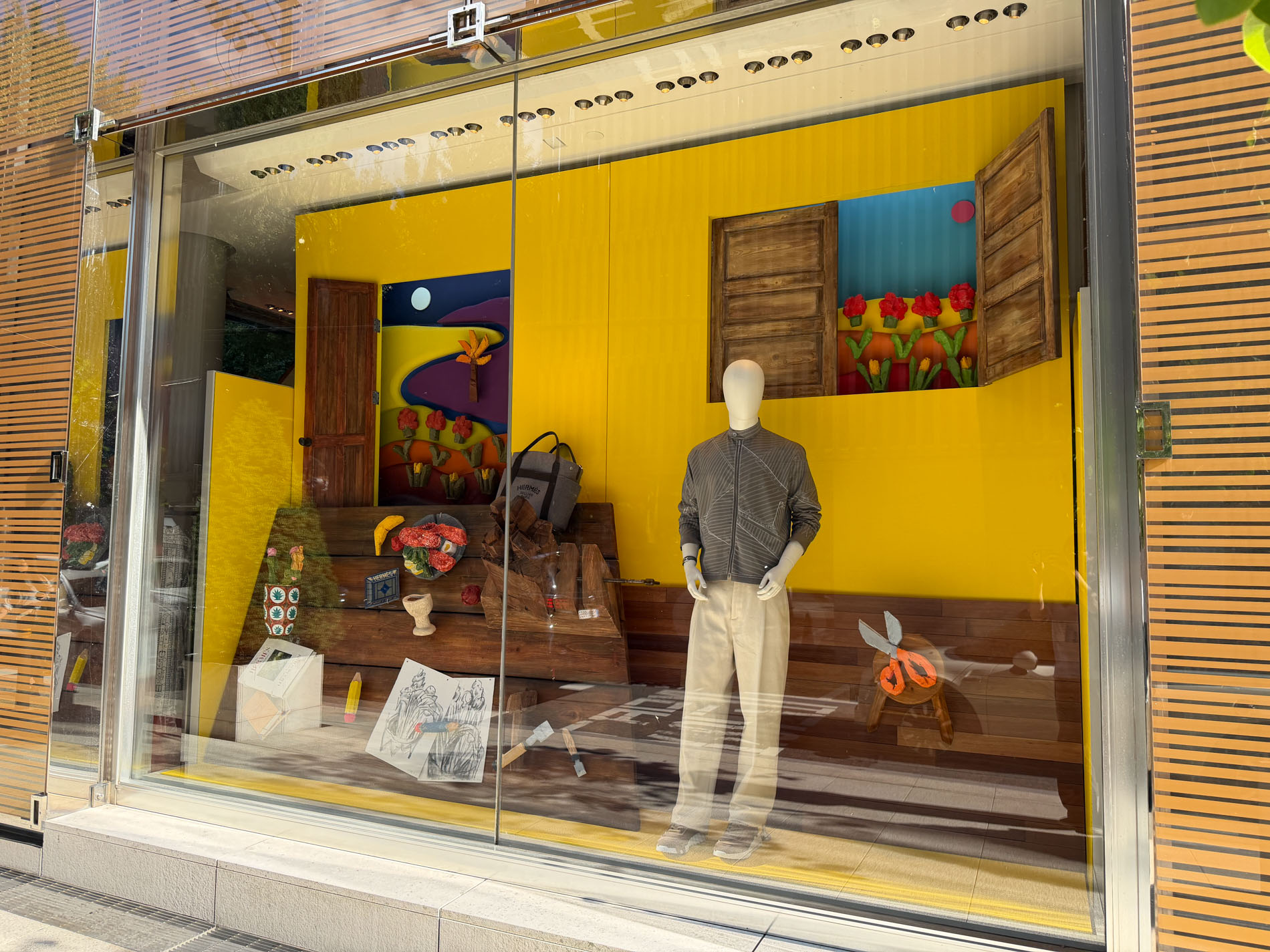
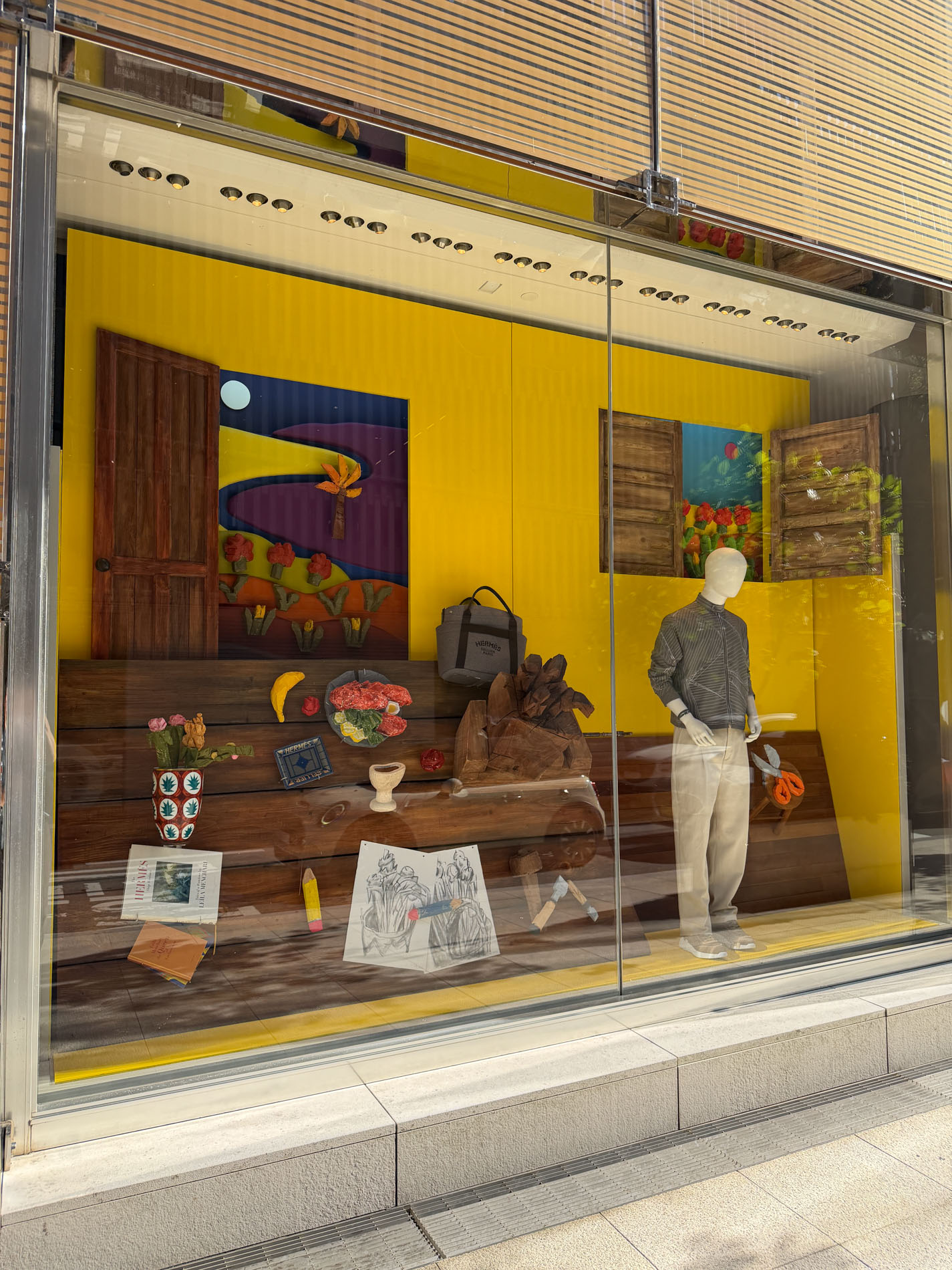
In another yellow room the wooden shutters stand open, and beyond them a tulip field spreads out. On the bench, flowers, a bag and a pair of red scissors. Tools and flowers alike are carved with the same wooden texture.
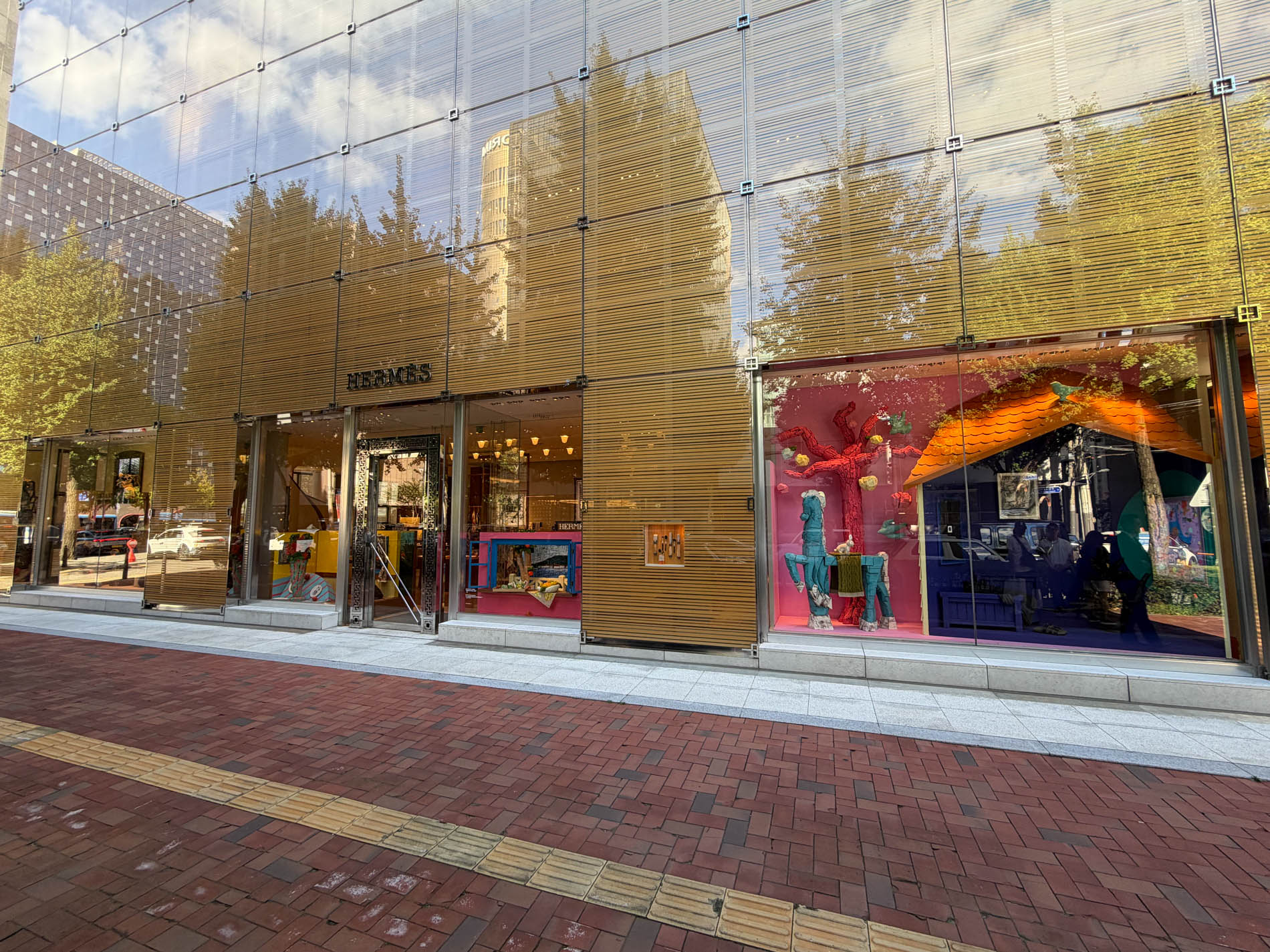
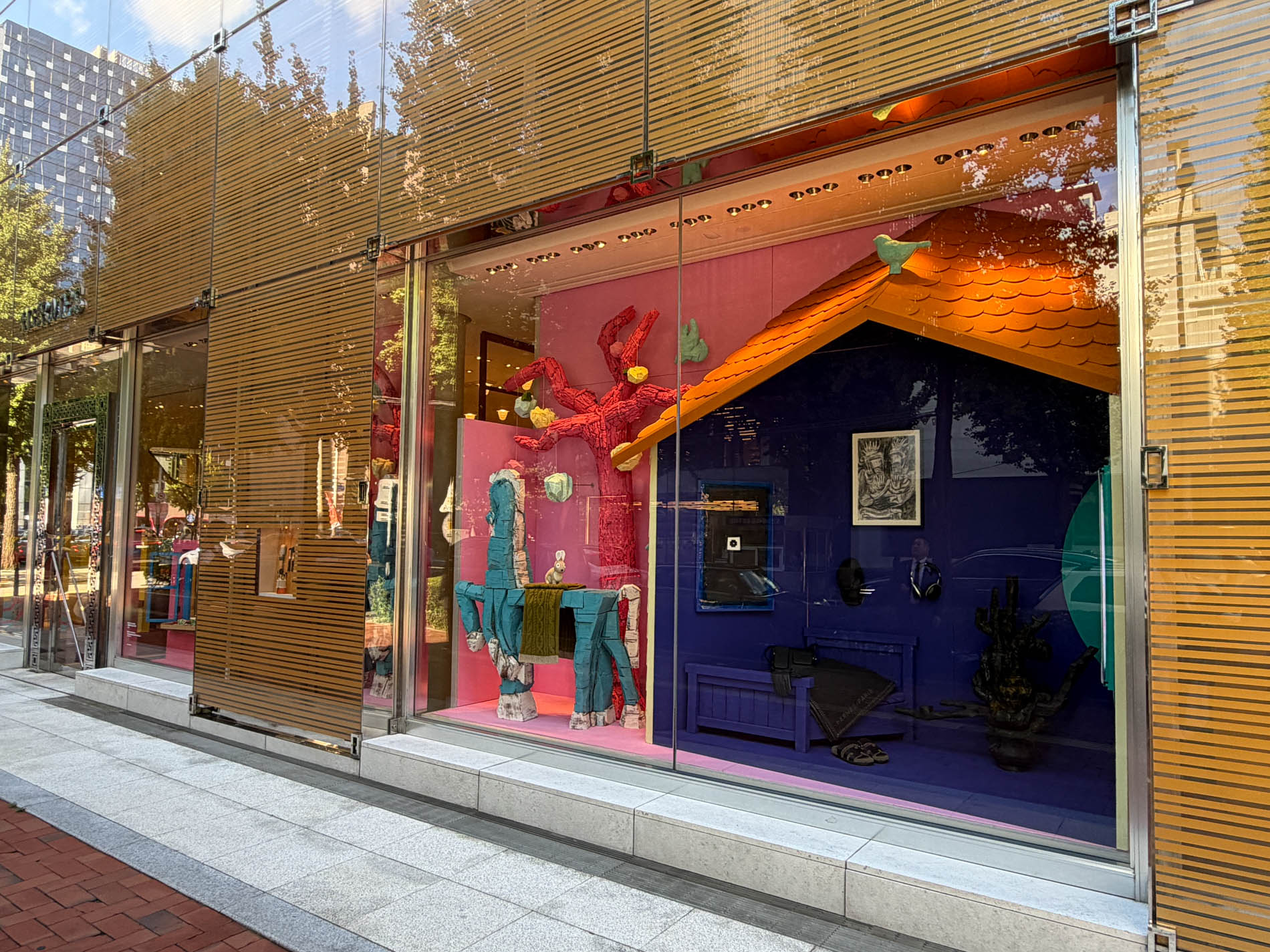
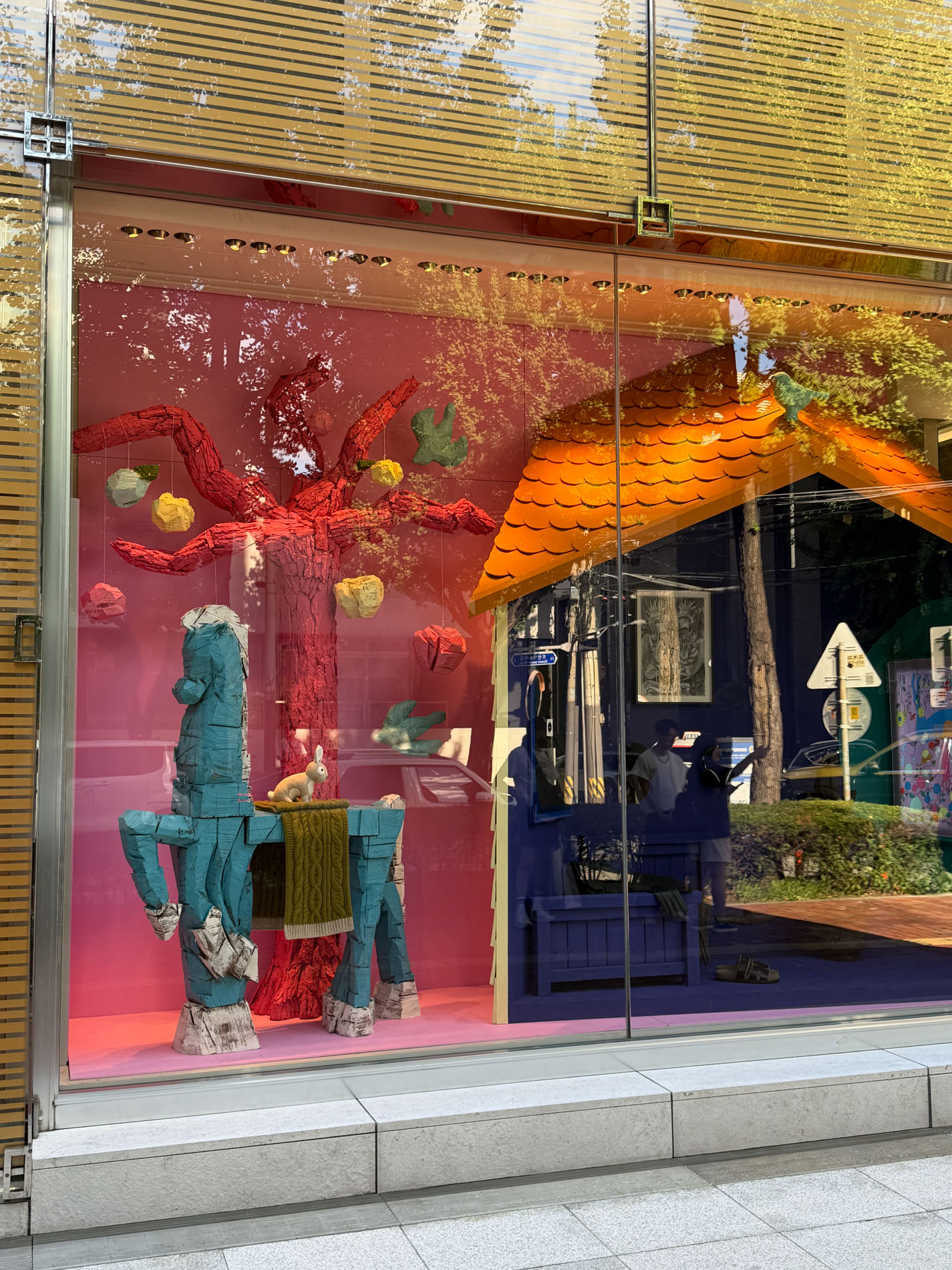
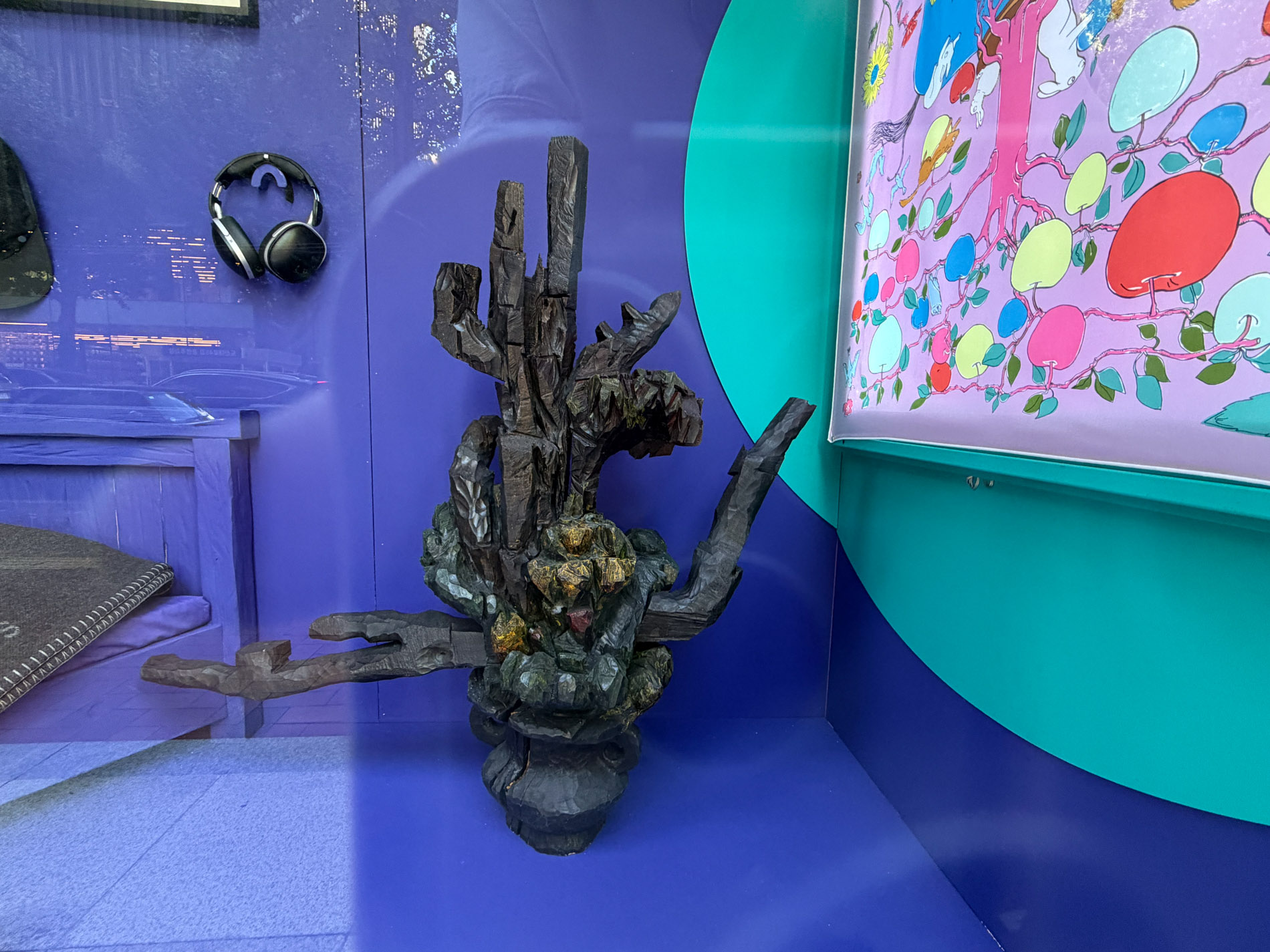
Then there is the tree painted pink, and the blue horse. Fruit hangs from the branches, birds and a rabbit are there too – a cheerful scene.
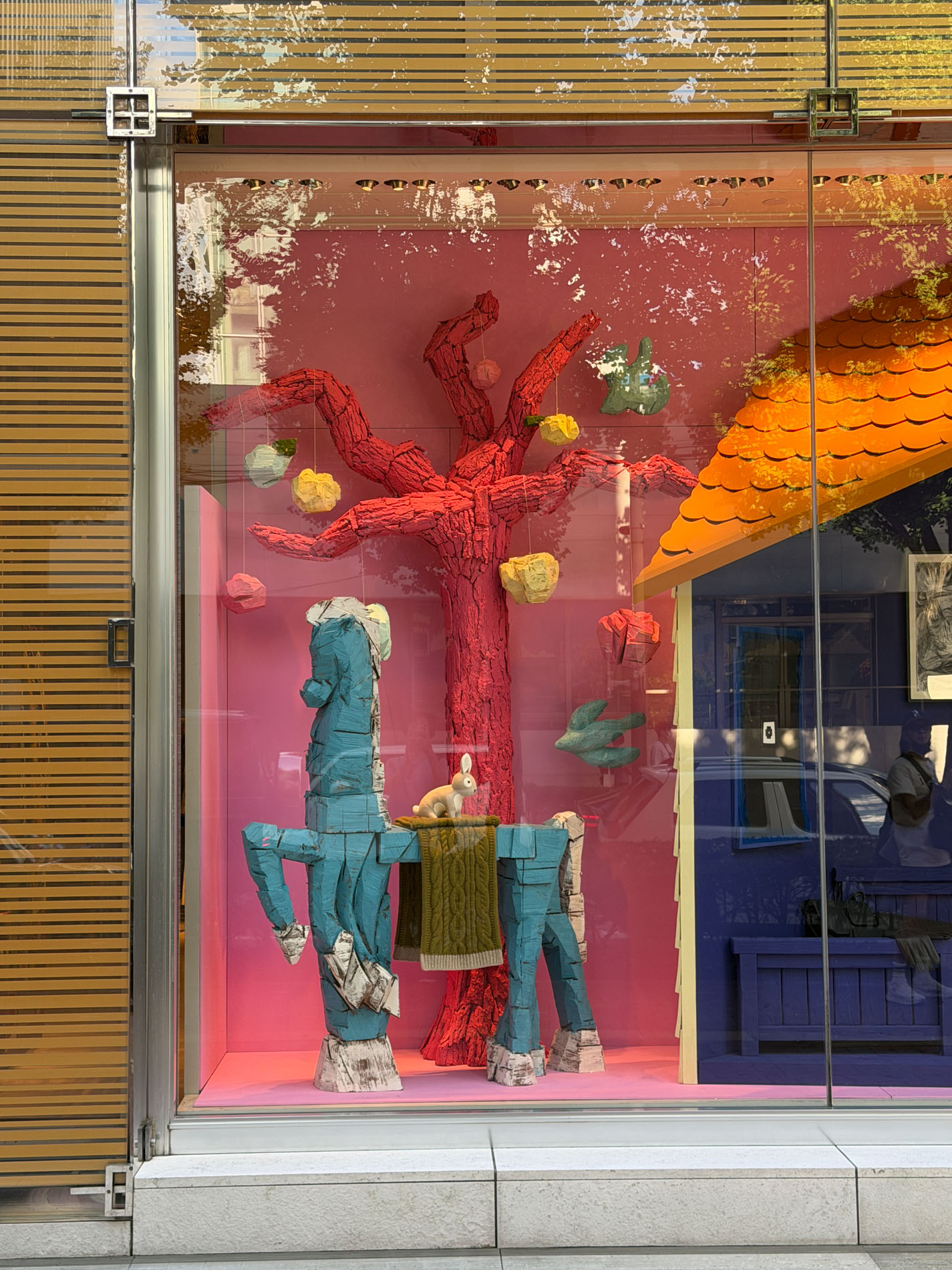
To the right stands a house with an orange tiled roof and deep blue walls. In front, a flat plane of colour; behind, a space with perspective. the movement back and forth between painting and sculpture – the artist’s own theme – rises up here as the depth of a single window.
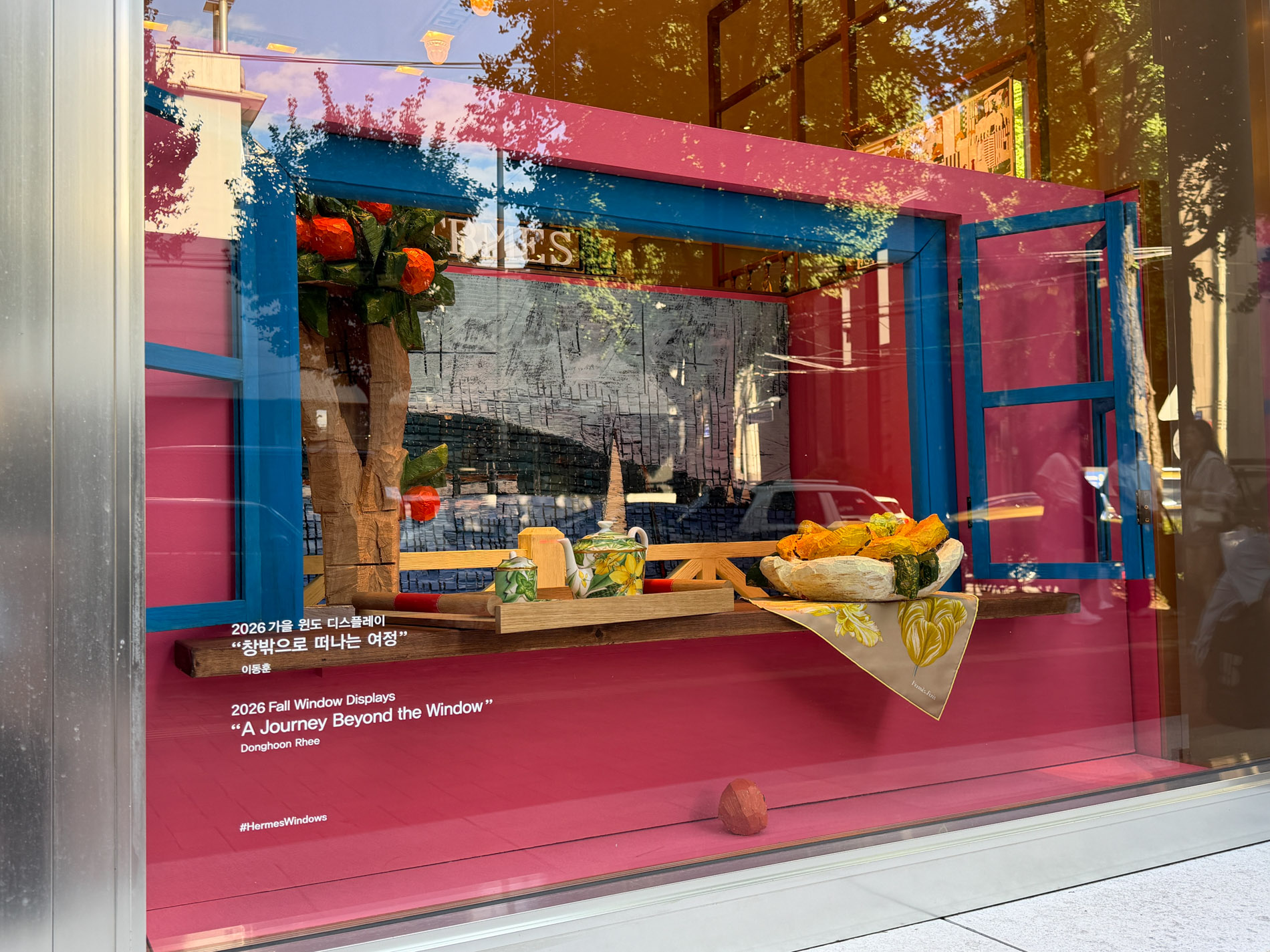
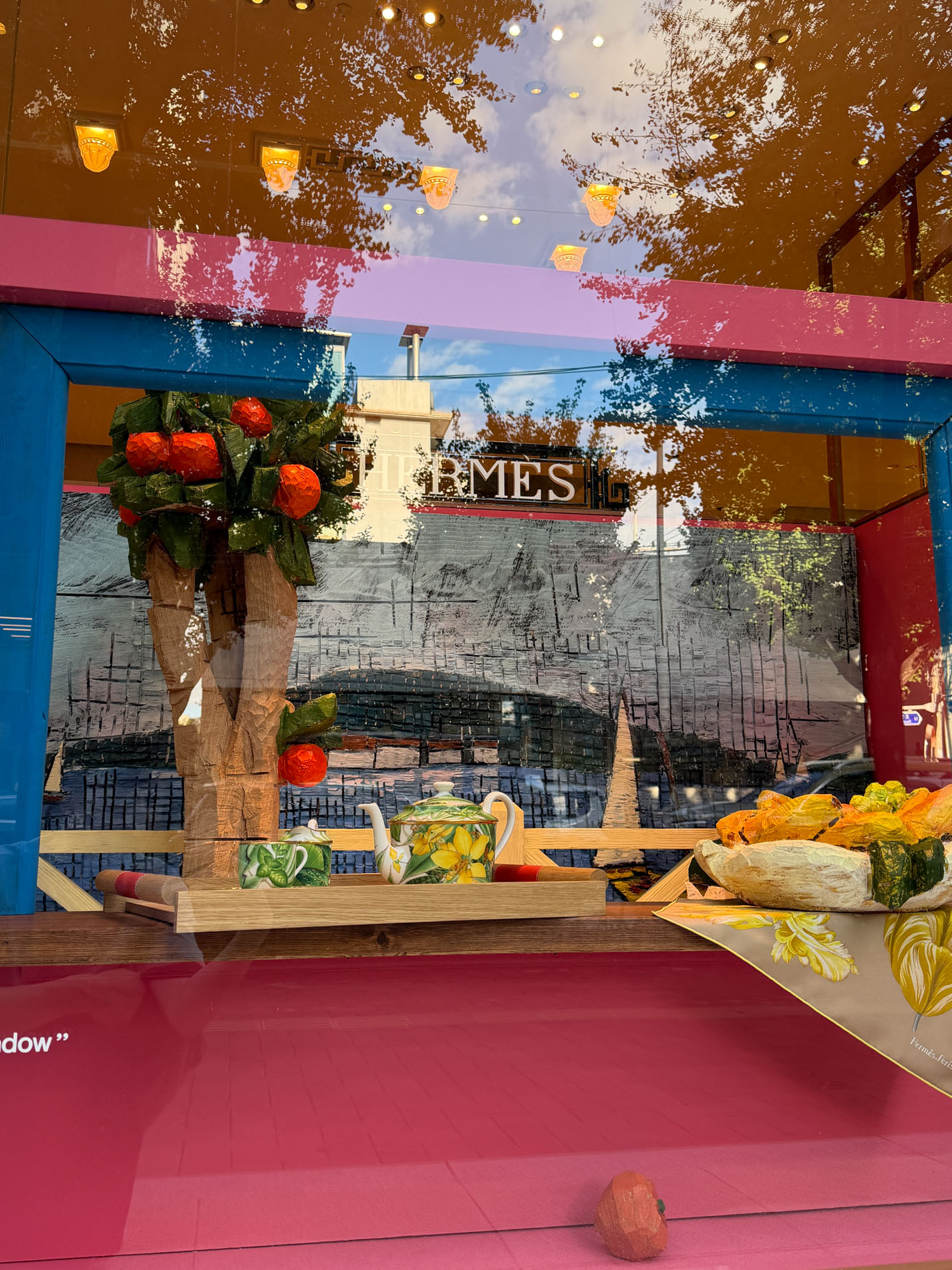
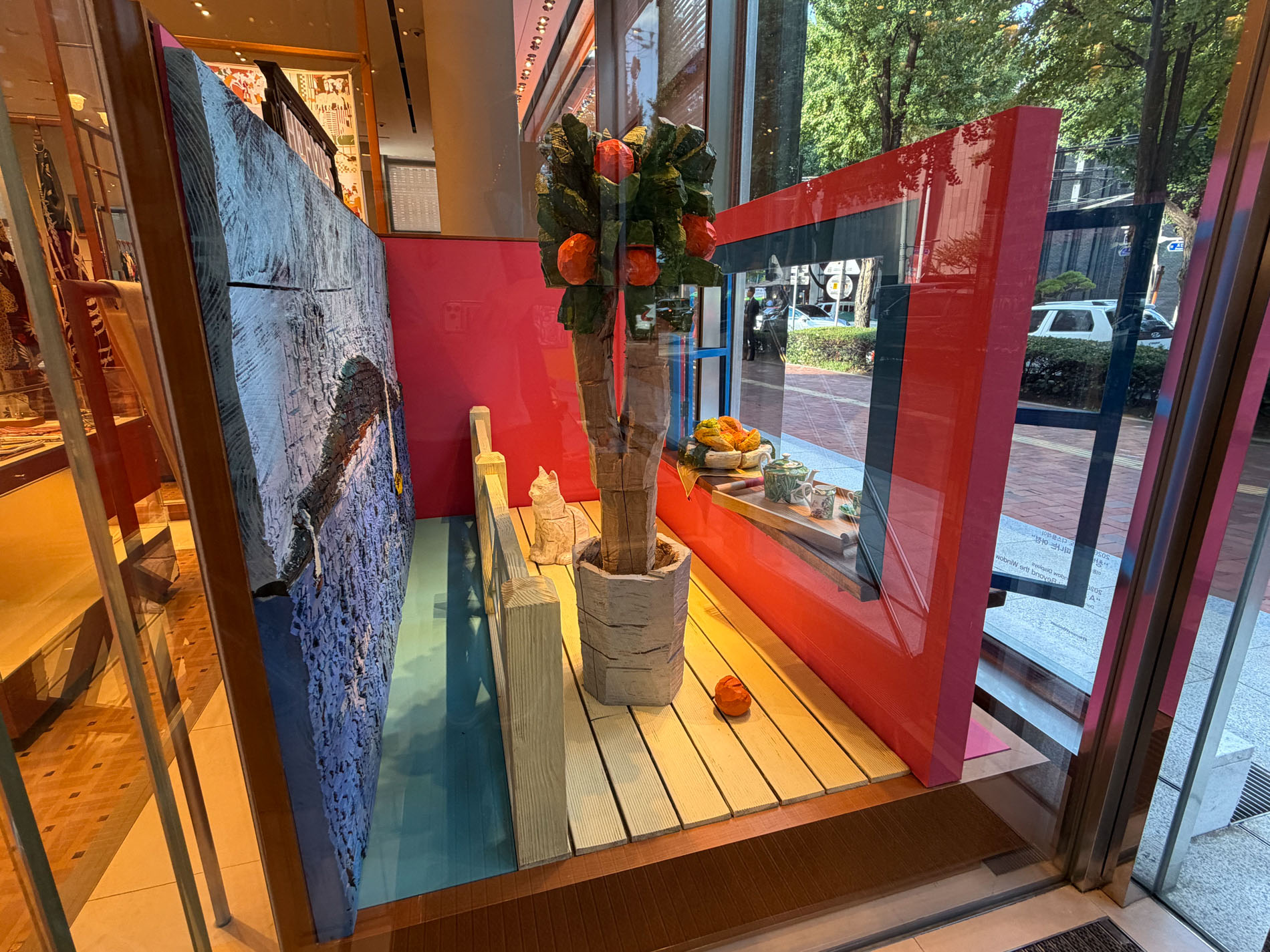
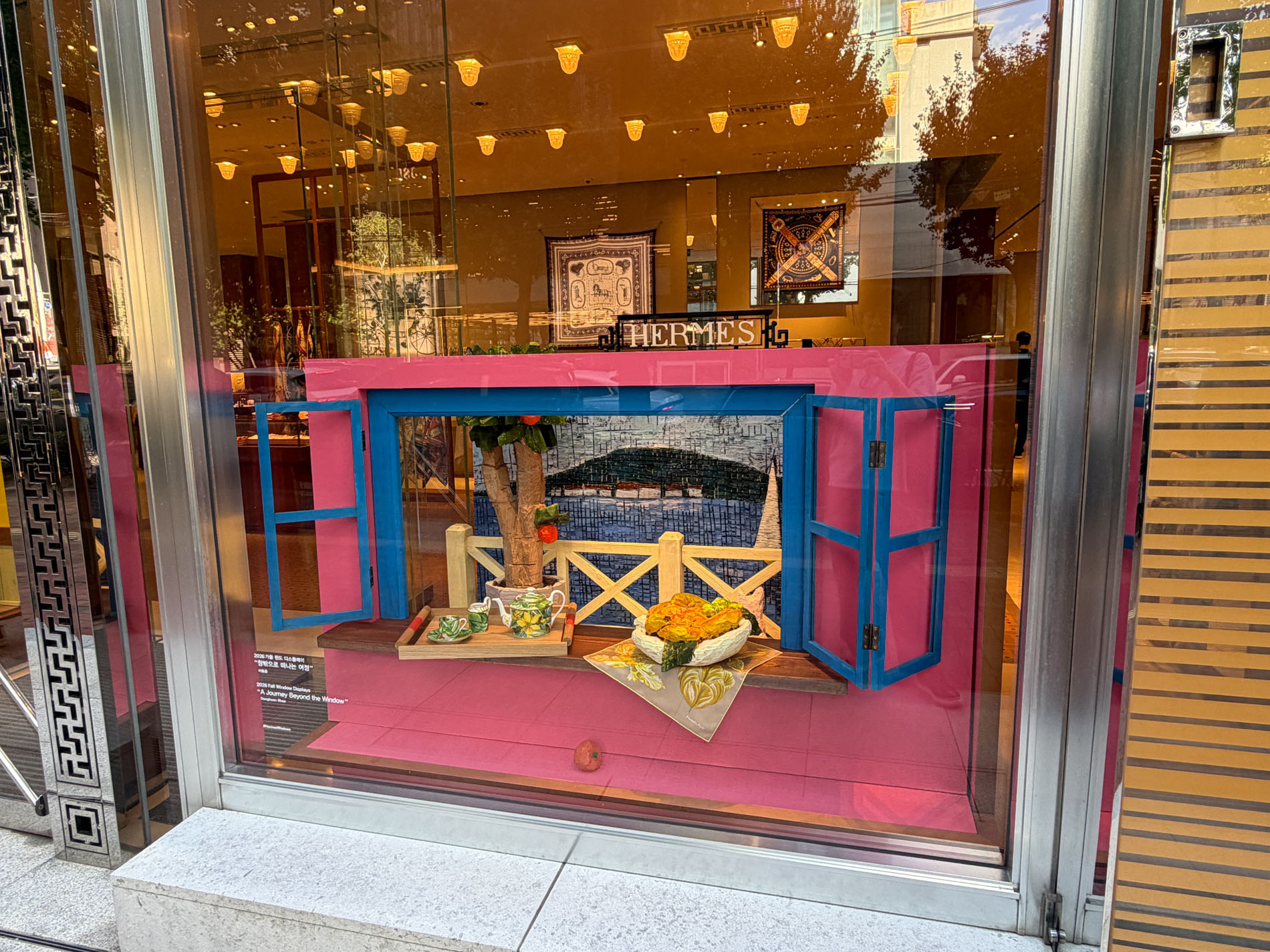
In the window with the table of fruit, every single fruit on the potted tree had been carved. The red frame crops the field of view, and beyond it there is another window again.
The small windows cut into the wooden wall
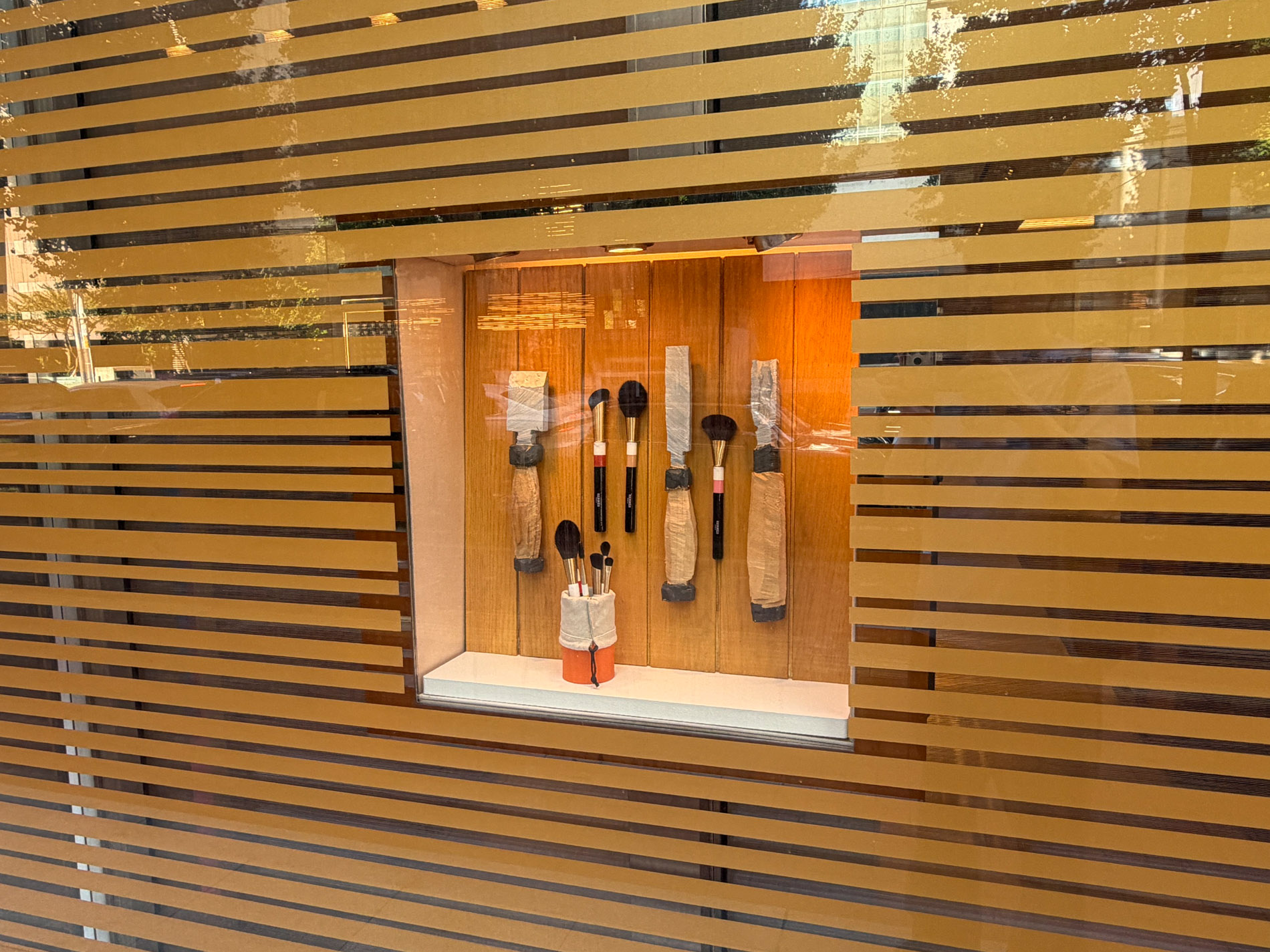
The most interesting part of this display is not, in fact, the large windows. It is the small windows, the size of a picture frame, opened here and there in the louvred wall.
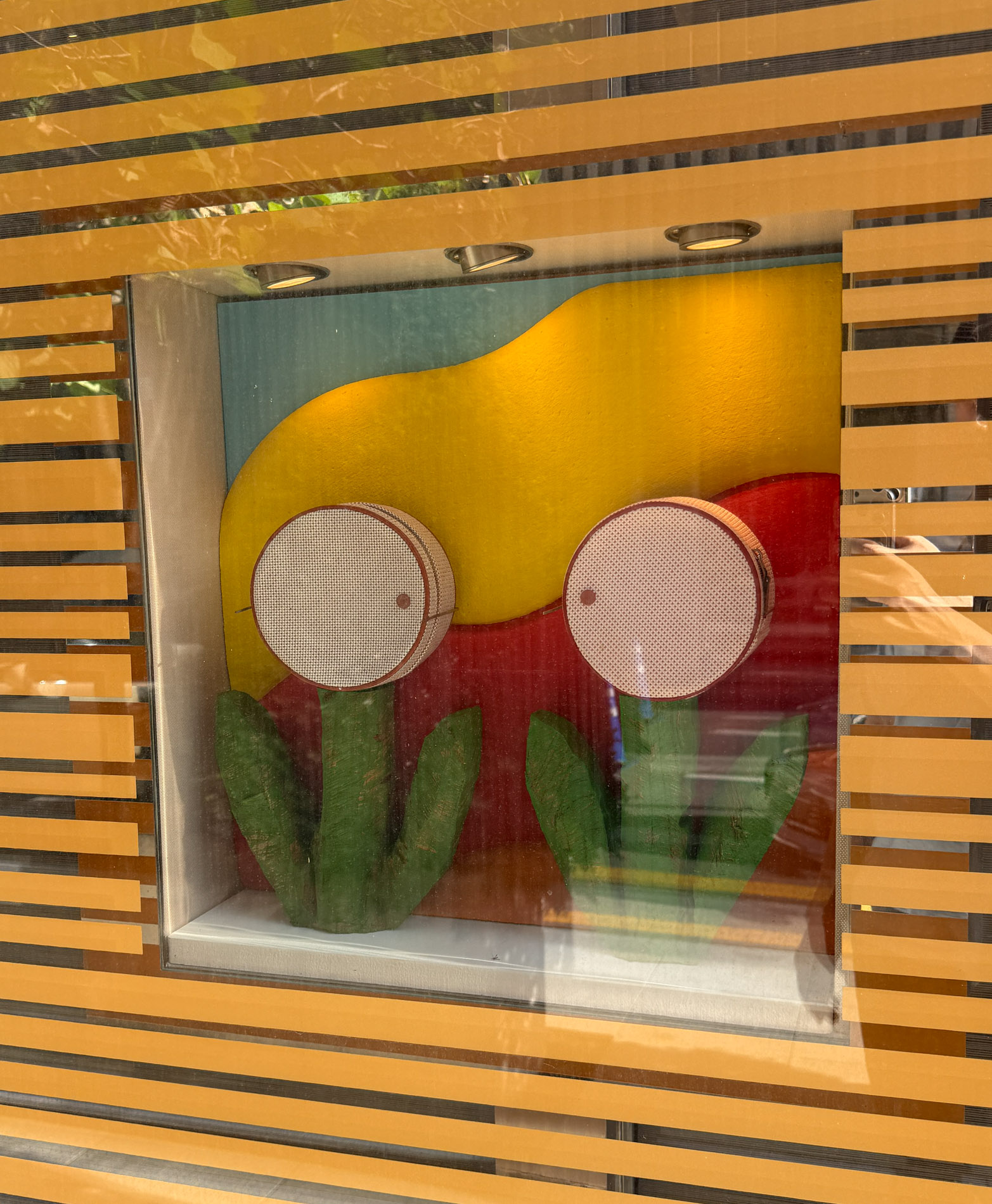
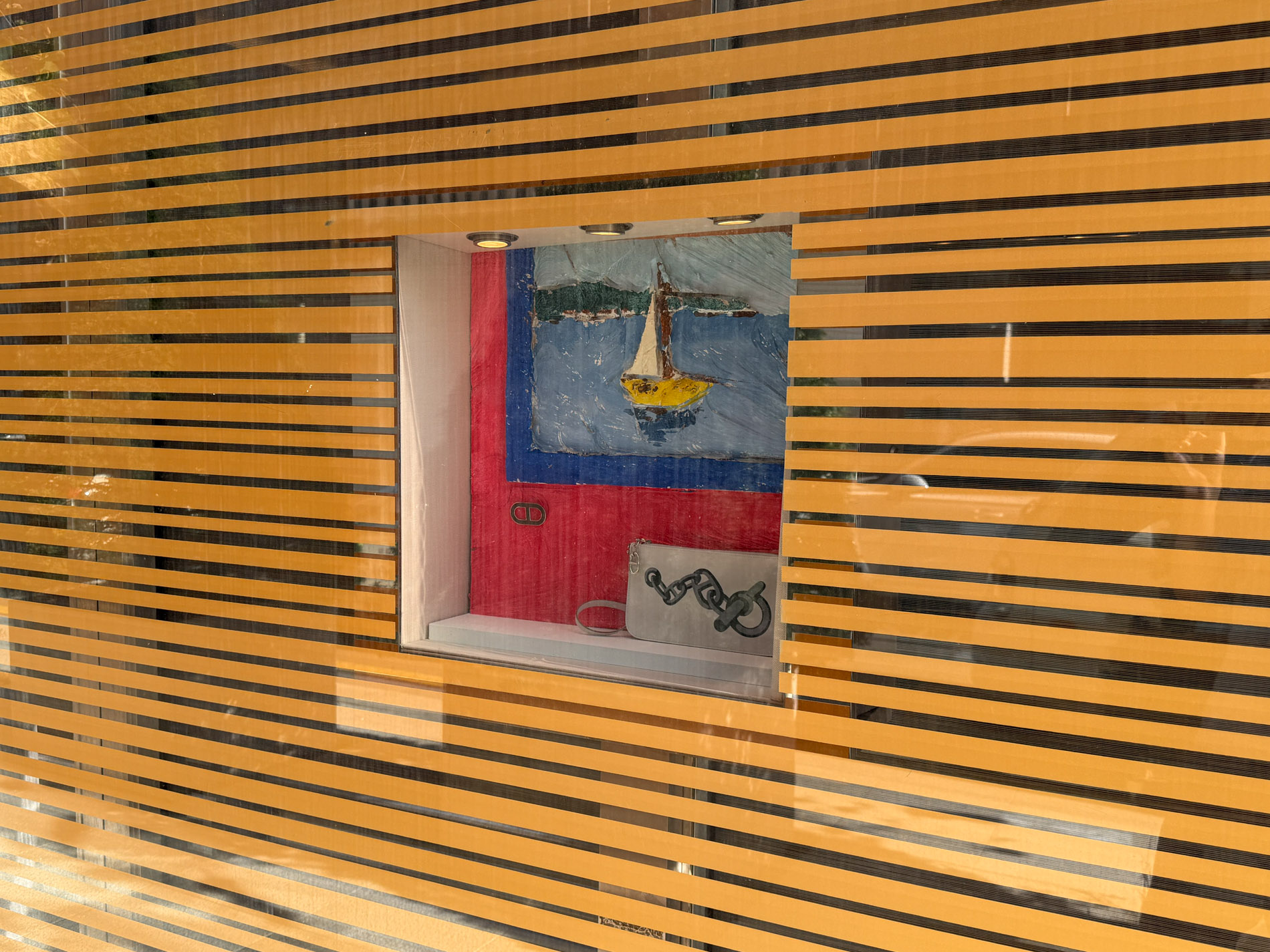
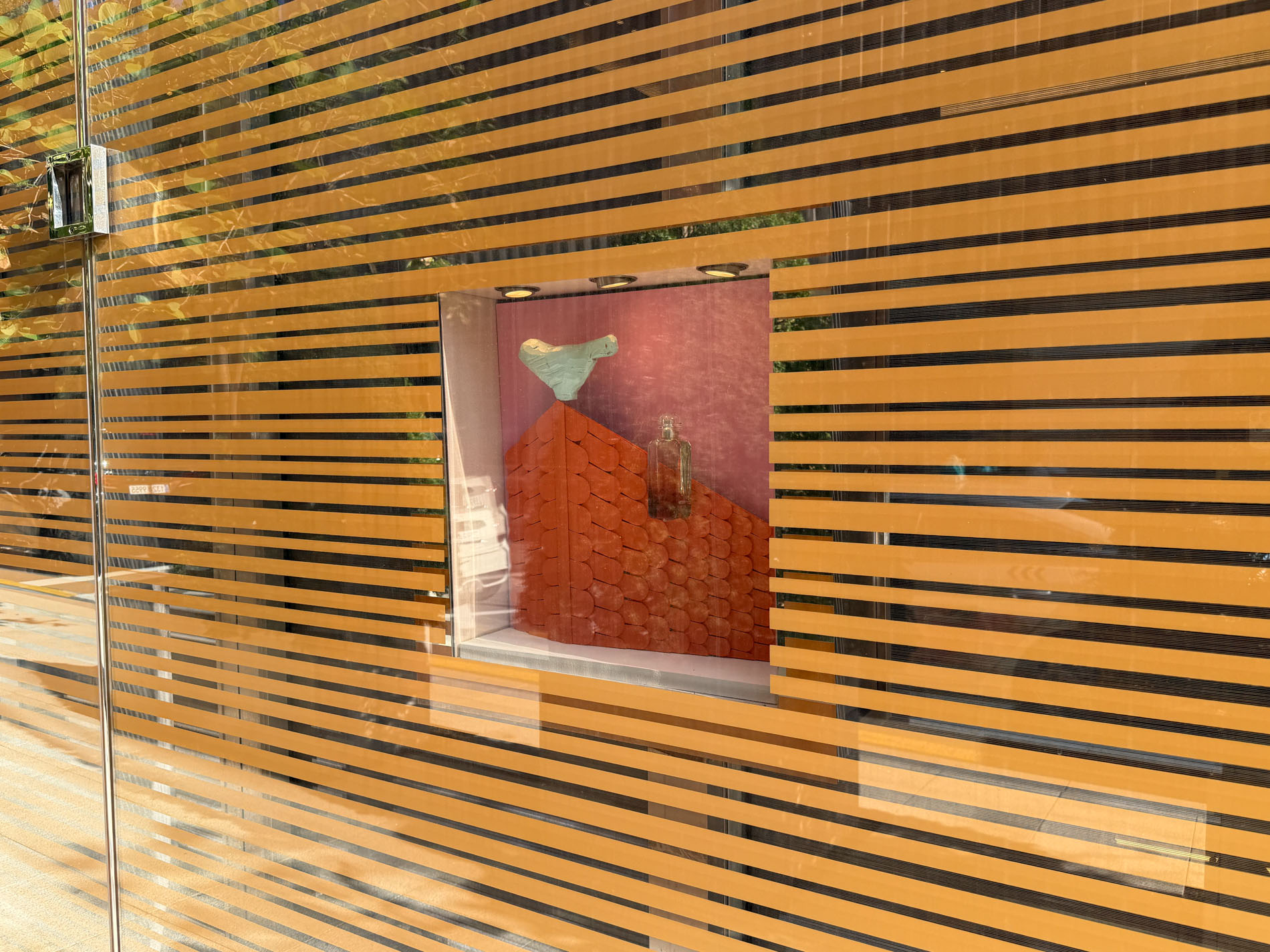
And in the last of the small windows, three leather items rose like flowers out of a blue-painted wooden vessel. the stems are straps, the flowers the products themselves.
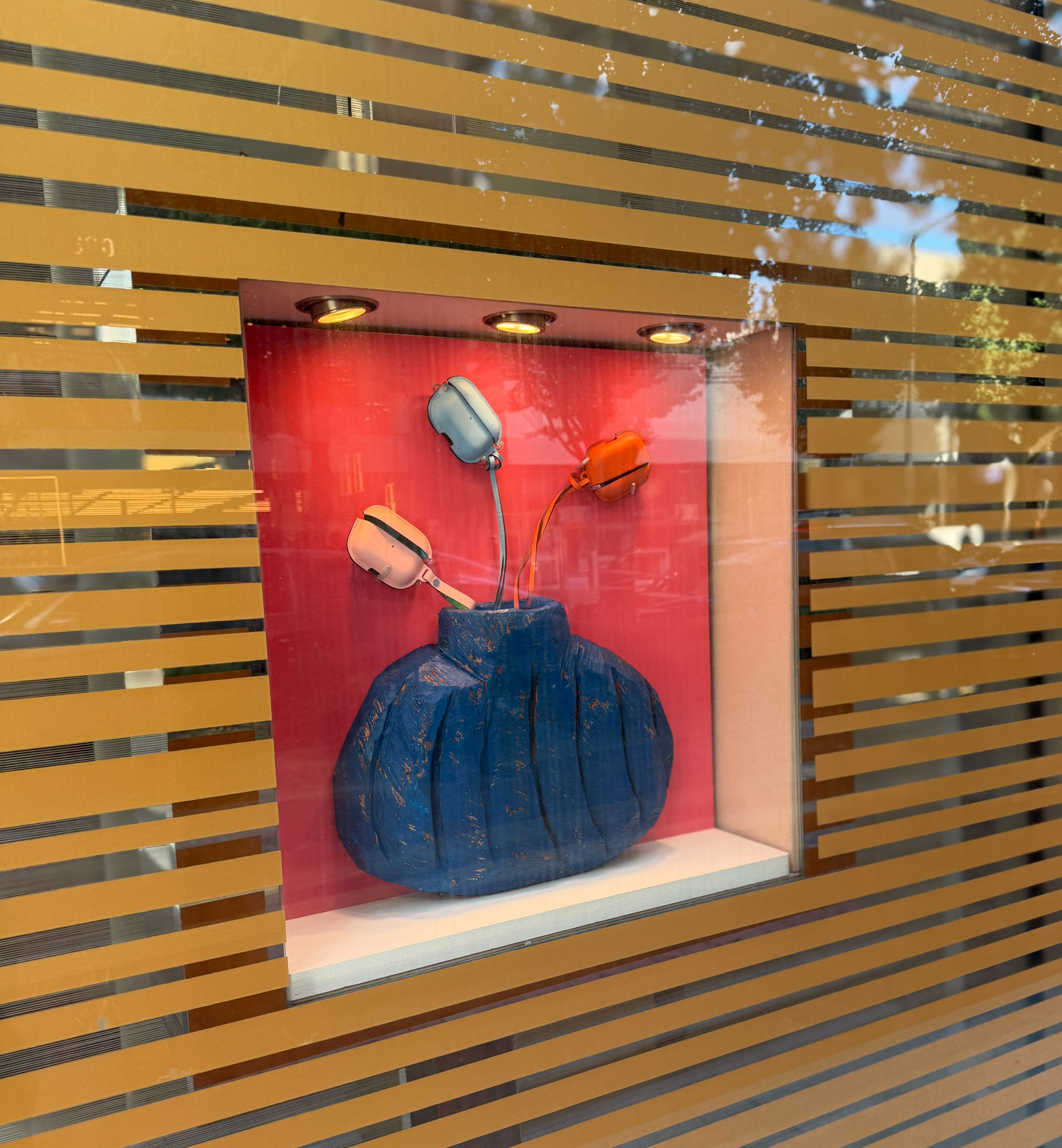
Rather than setting the products beside the work, the products are built into the work itself. Carried this far, the word display is no longer enough.
His wood carving, which leaves the marks of the blade rather than erasing them, speaks the same shared language as the craftsmanship of Hermes in that it shows the trace of the hand. It is a method that does not spell the brand’s craftsmanship out in words.
The display runs until 15 November. Because these are show windows, they can be seen from the street even after closing time. If you have plans to walk around Dosan Park, follow the perimeter of the building and look into them one by one.