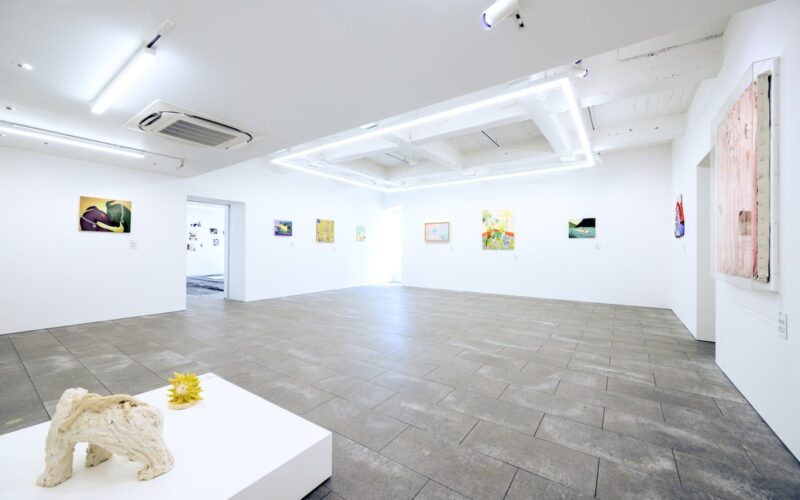
We visited Andrew Edlin Gallery, located on the second floor at 392 Broadway in Tribeca, New York.
The gallery’s owner, Andrew Edlin, is also the proprietor and operator of the Outsider Art Fair (OAF), held each March in New York.
Until summer 2025, the gallery was located at 212 Bowery, on the Lower East Side. Over ten years there, it hosted 83 exhibitions.
The final Bowery show was titled “So Long, Bowery!”—a farewell exhibition gathering artists who had shown there. In September 2025, the gallery moved to its current Tribeca location, on a street where P·P·O·W, Andrew Kreps, and Marian Goodman stand nearby—one of the streets where galleries cluster.
The Gallery that Represented Henry Darger
The gallery opened in 2001. From early on, it introduced self-taught American artists and European Art Brut.
Most notably, from 2006 to 2011 it served as the exclusive representative of the Henry Darger Estate. In 2020, it also mounted “The Double-Sided Dominions of Henry Darger.”
Artists the gallery has represented include Thornton Dial, Ralph Fasanella, Eugene Von Bruenchenhein, Beverly Buchanan, Joe Coleman, Della Wells, Melvin Way, and Dan Miller. It has shown self-taught and academically trained artists side by side, without distinction.
Beyond exhibitions, the gallery also focuses on publishing, having produced monographs on Darger, Dial, Fasanella, Von Bruenchenhein, and others. It is a member of ADAA, the American art dealers’ association.
The Gallery’s Role in the Outsider Art Fair
The renowned Outsider Art Fair began in 1993. In 2012, Edlin’s affiliate company Wide Open Arts acquired the fair, and has been its sole owner ever since.
The 34th edition, held in March 2026 at the Metropolitan Pavilion in Chelsea, featured 68 exhibitors, 13 of them participating for the first time. Attendance had risen 40 percent over the previous year, the majority first-time visitors, according to reports. This year it set a new record, with the venue repeatedly reaching capacity.
The gallery itself continues to exhibit at major fairs including Art Basel Miami Beach, Art Basel Paris, the Armory Show, Frieze, FIAC, and Art Brussels.
“Conduits of the Unseen”
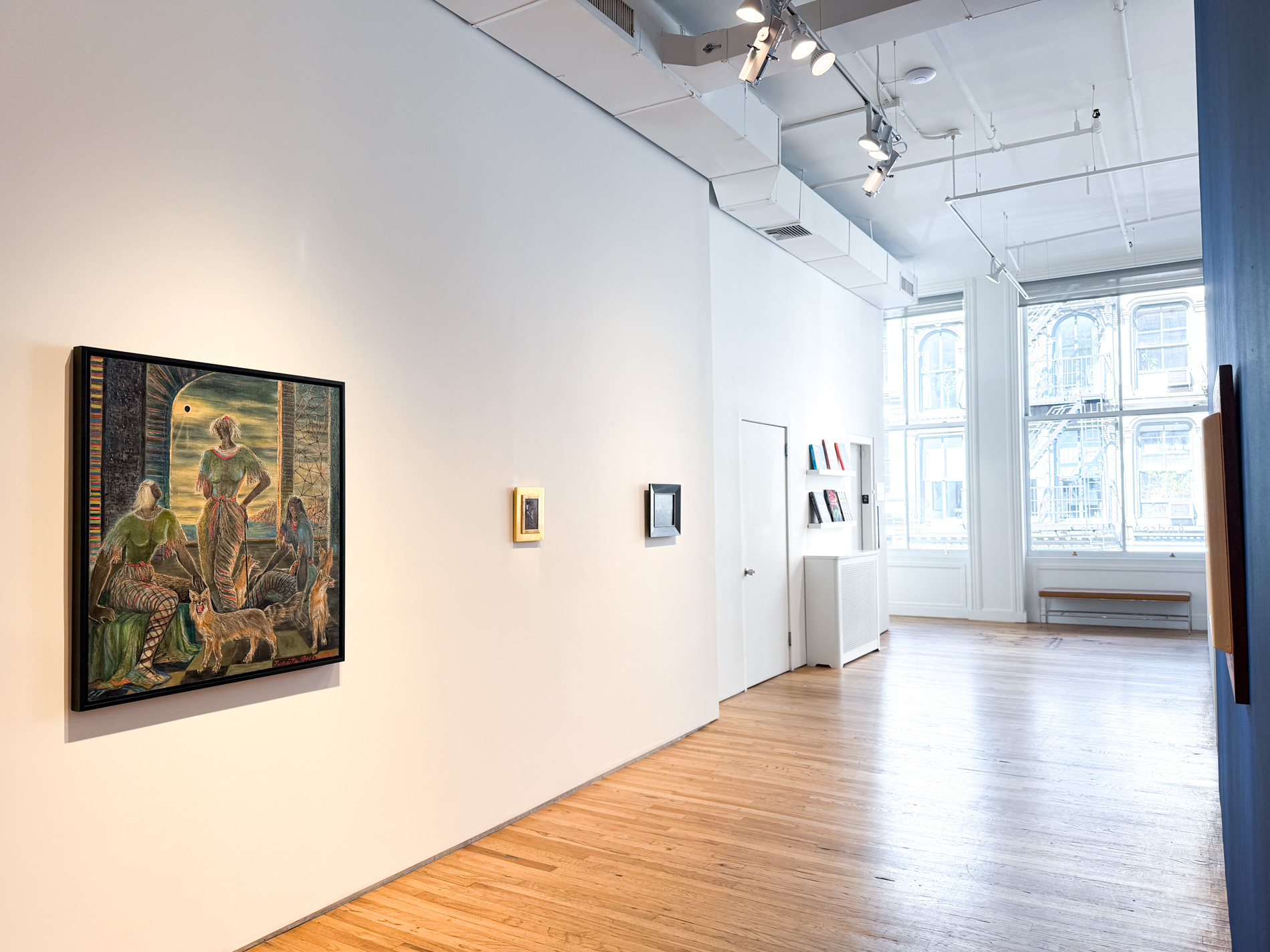
On view at the time of our visit was “Conduits of the Unseen: Women Artists Imagine Other Worlds” (September 9 – October 31, 2026). The title means “pathways for what cannot be seen.”
The exhibition brings together seventeen women artists from the early twentieth century to the present. It is curated by Susan L. Aberth, professor in the Art History and Visual Culture program at Bard College, who teaches Surrealism, Spiritualism, alchemy, Latin American art, and Outsider Art.
Other realities, spirits, cosmic forces, hidden layers of consciousness—the artists are gathered as those who tried to give visible form to such things. Their backgrounds, countries, eras, and beliefs vary; what unites them, the exhibition notes, is the attempt to render inner images into form.
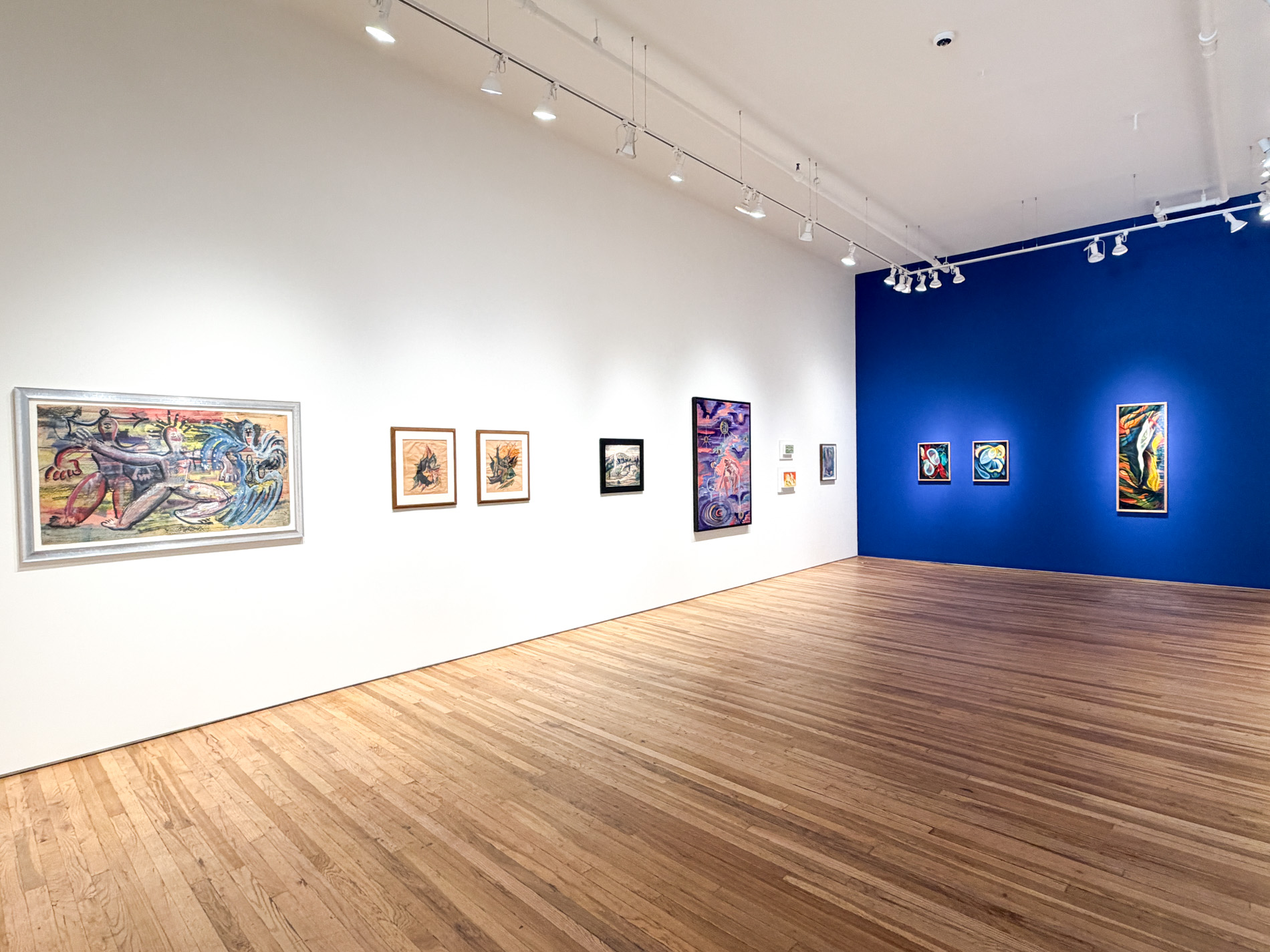
Paulina Peavy
At the center of the exhibition is the American artist and medium Paulina Peavy (1901–1999).
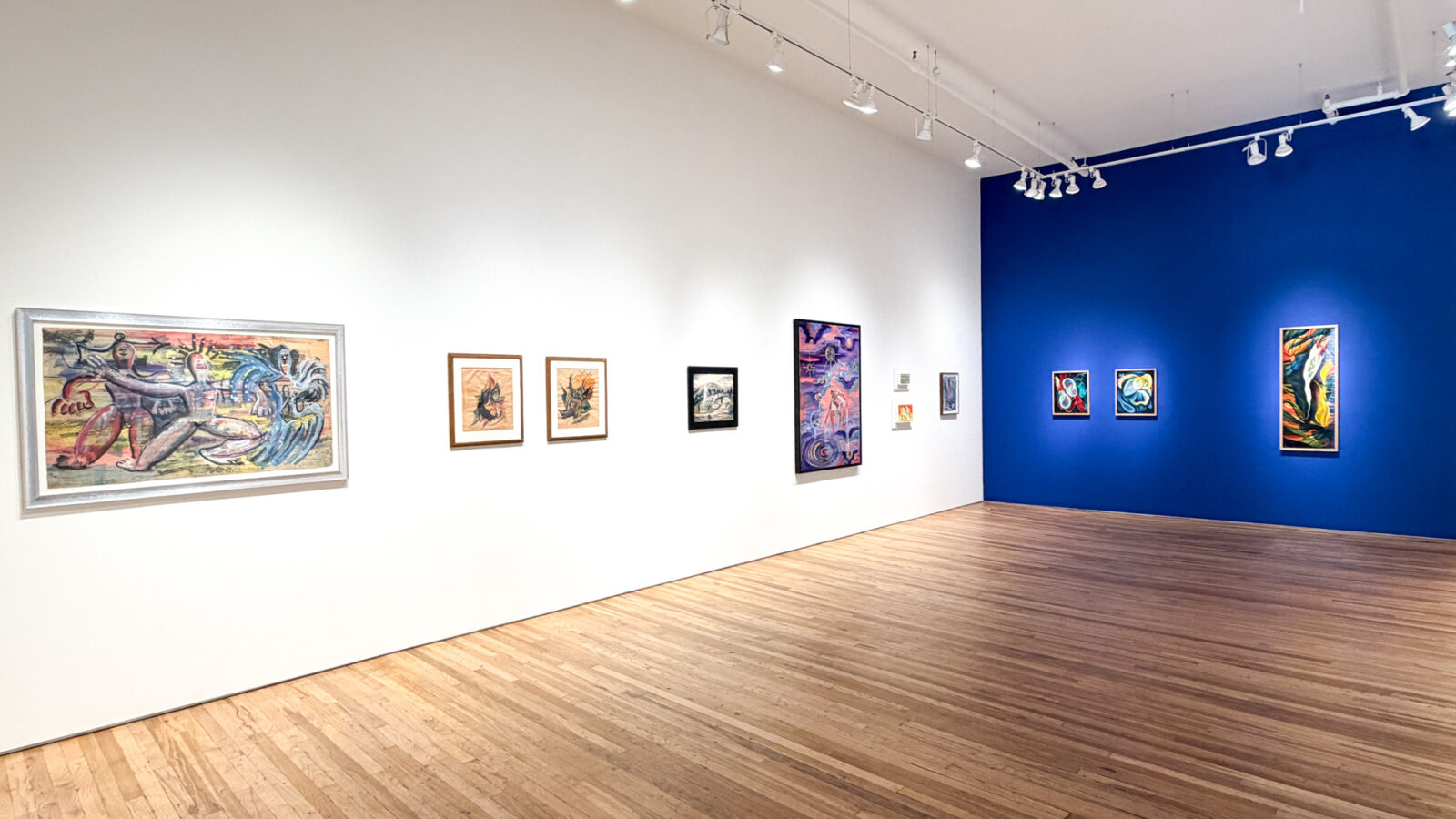
Over several decades, she is said to have transcribed into drawings and paintings a cosmology she received from an entity she called Lacamo. In the exhibition, her oils were grouped together in a corner where the end wall had been painted blue. According to the gallery, masks she made herself to communicate with Lacamo are also on view.
In 2023, the gallery published the first monograph on this artist: “Paulina Peavy: Etherian Channeler,” written by Laura Whitcomb.
Madge Gill
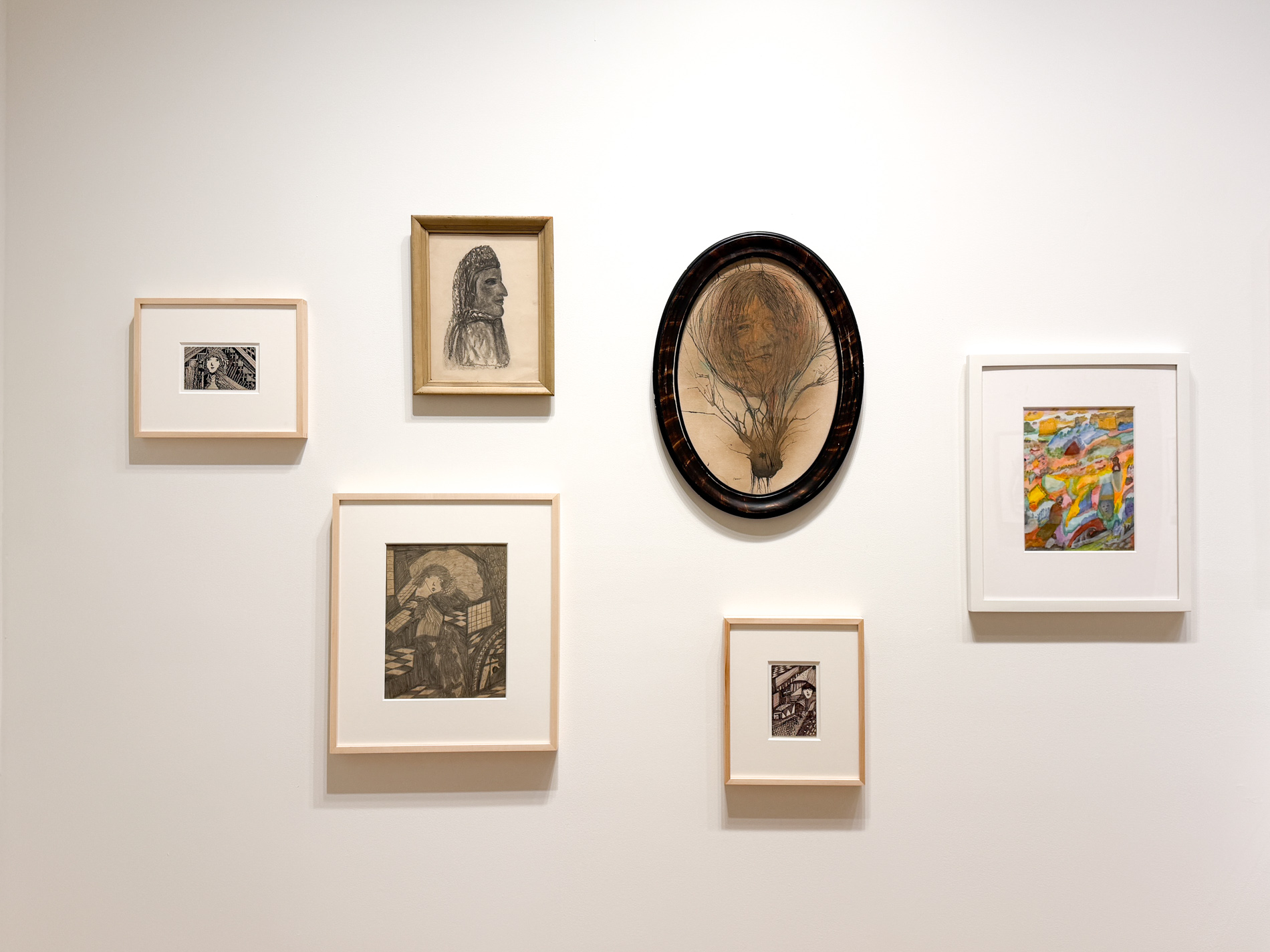
Ink drawings by Madge Gill were also on view. She stands alongside Henry Darger, Aloïse, and Wölfli as one of the leading women of early twentieth-century Outsider Art.
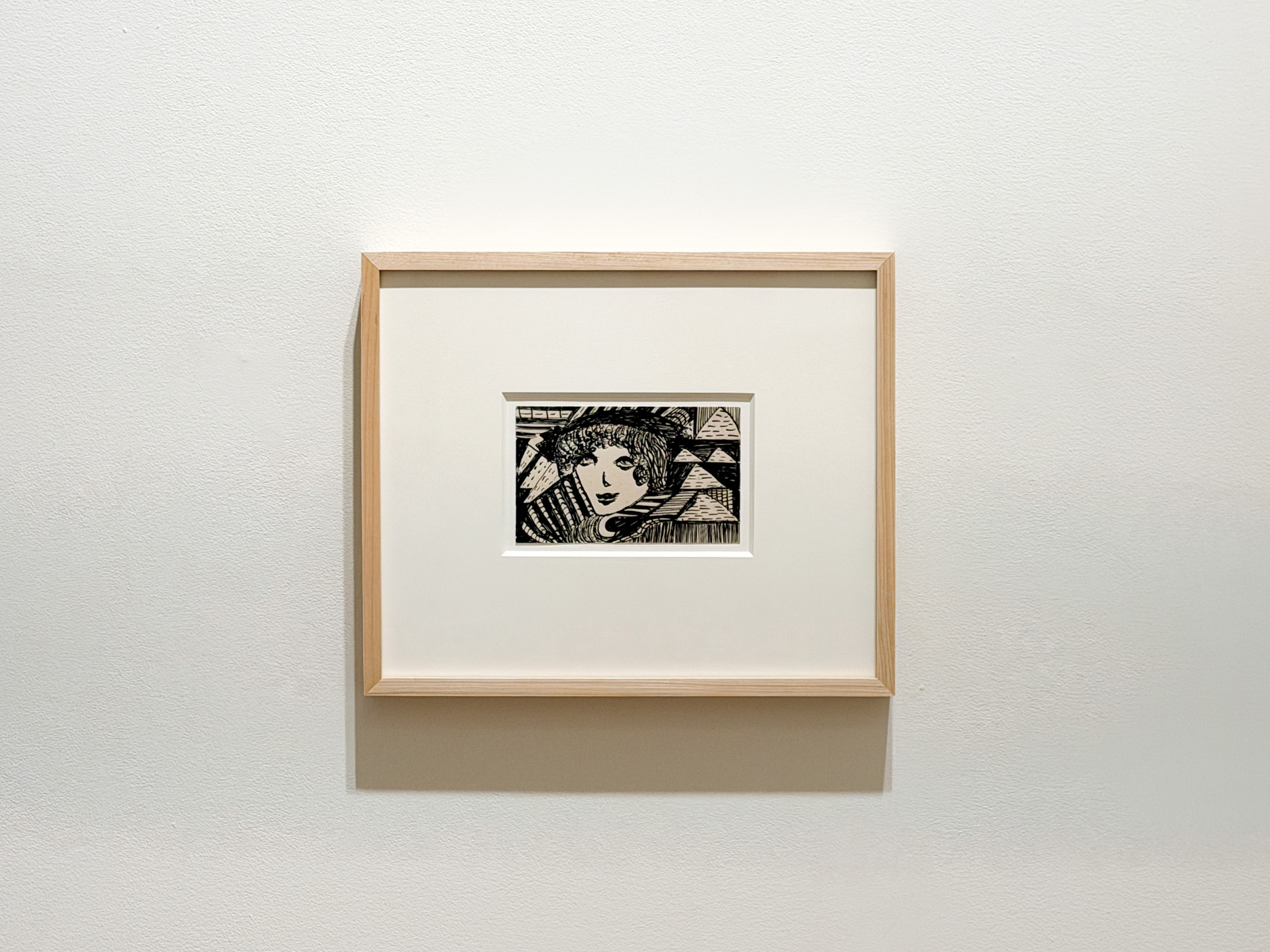
Her works range from palm-sized pieces at 8.9 × 14 cm to tall narrow drawings standing 63 cm high.
Mediums, Theosophy, Surrealism
The other artists in the exhibition deserve mention as well.
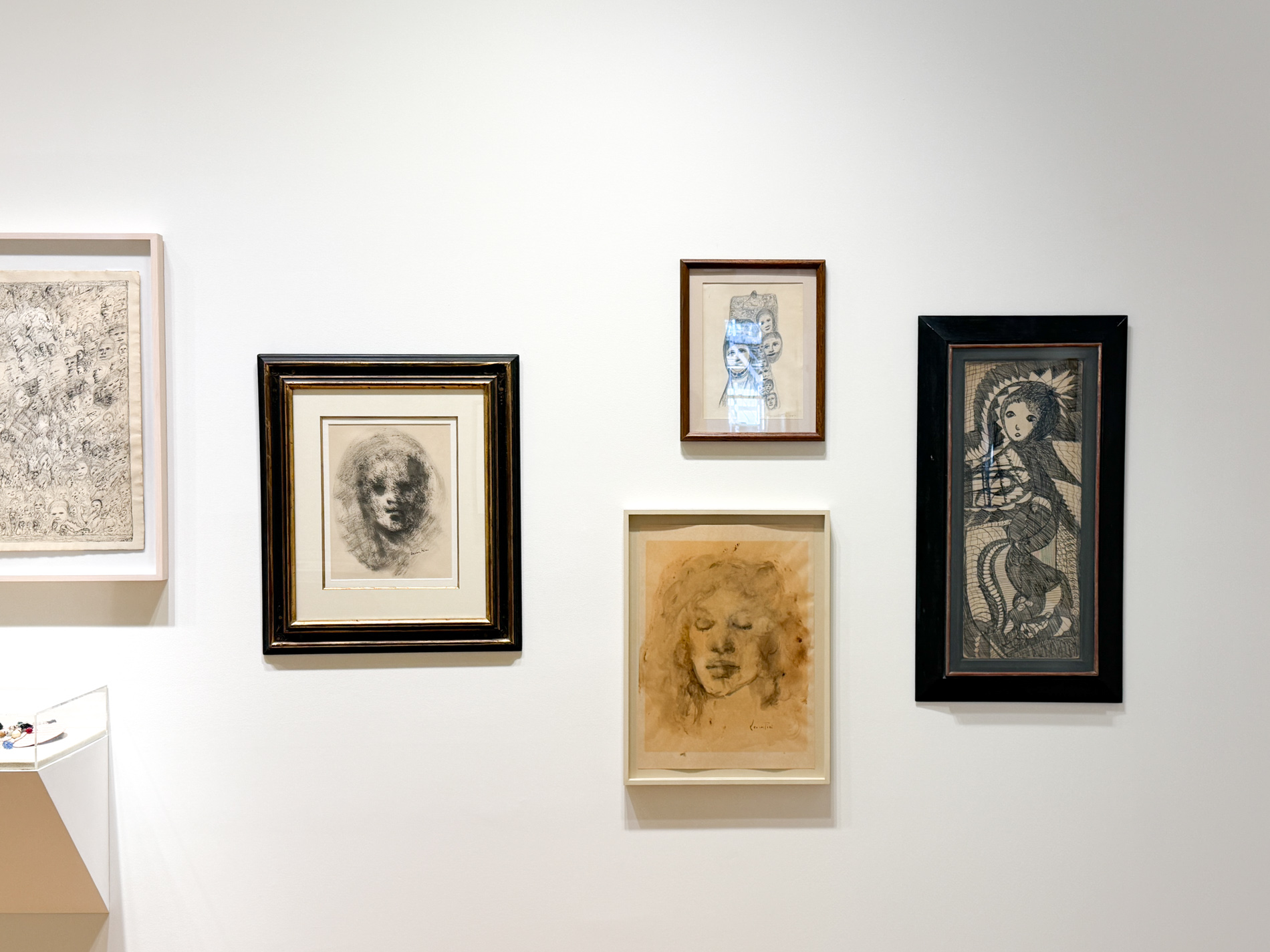
German-born Agatha Wojciechowsky (1896–1986) held séances in New York and practiced clairvoyance and healing. In a glass case lay a notebook densely filled with writing she said she received through communication with spirits. On the wall nearby hung a pencil drawing in which many figures and small faces overlap.
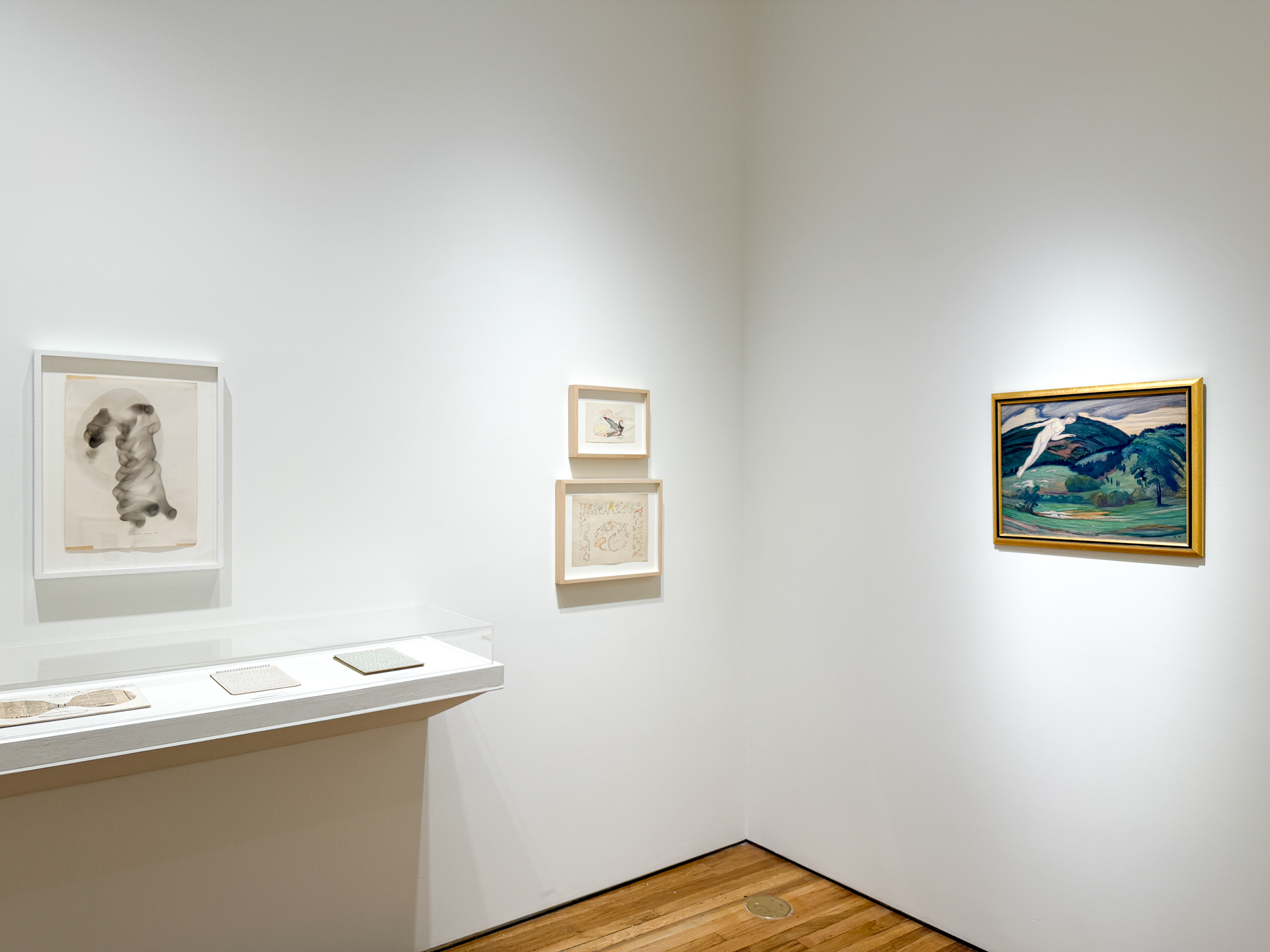
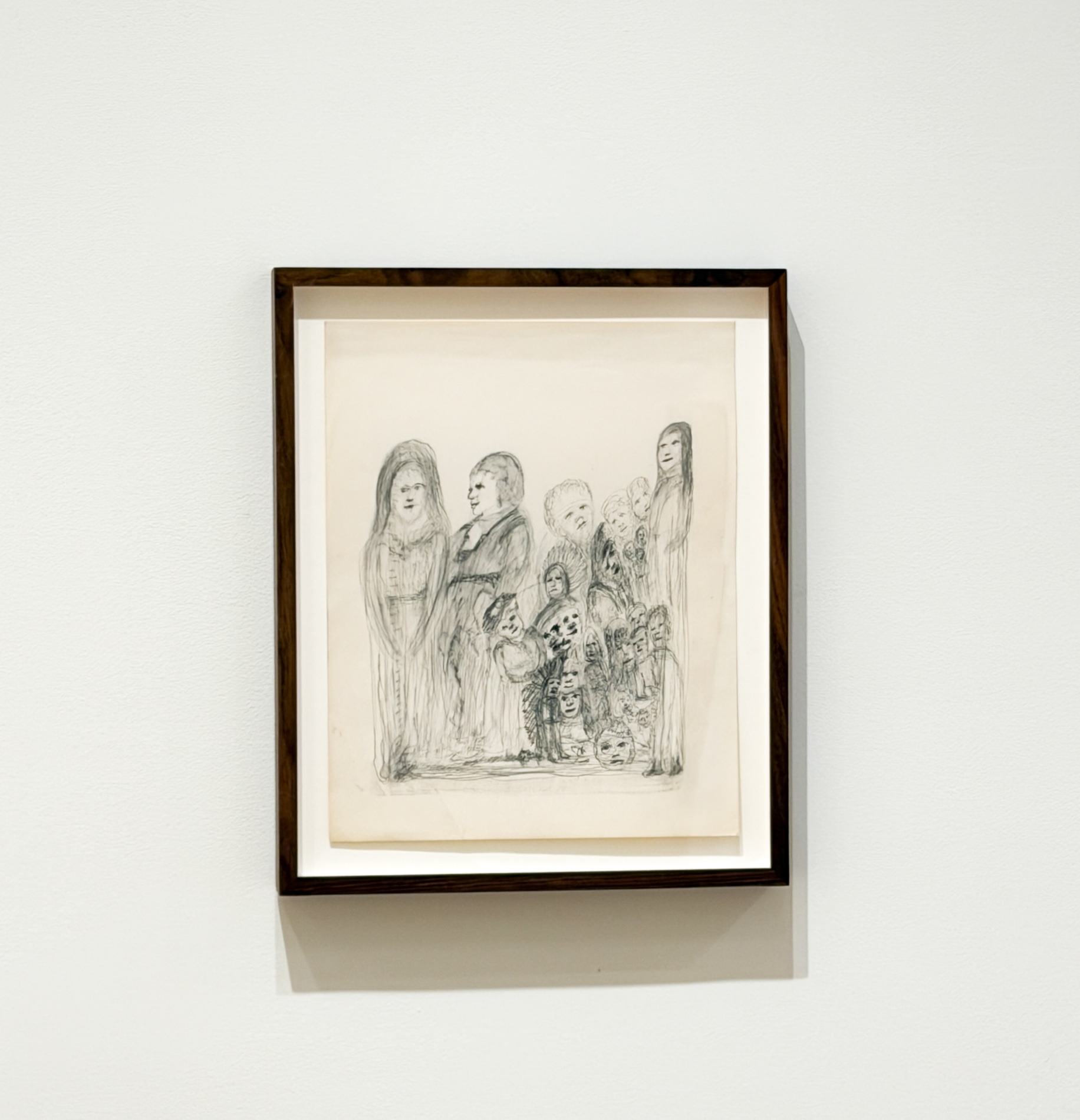
Also on view is a watercolor of a client’s hands, in which, it is said, faces familiar to the client appear.
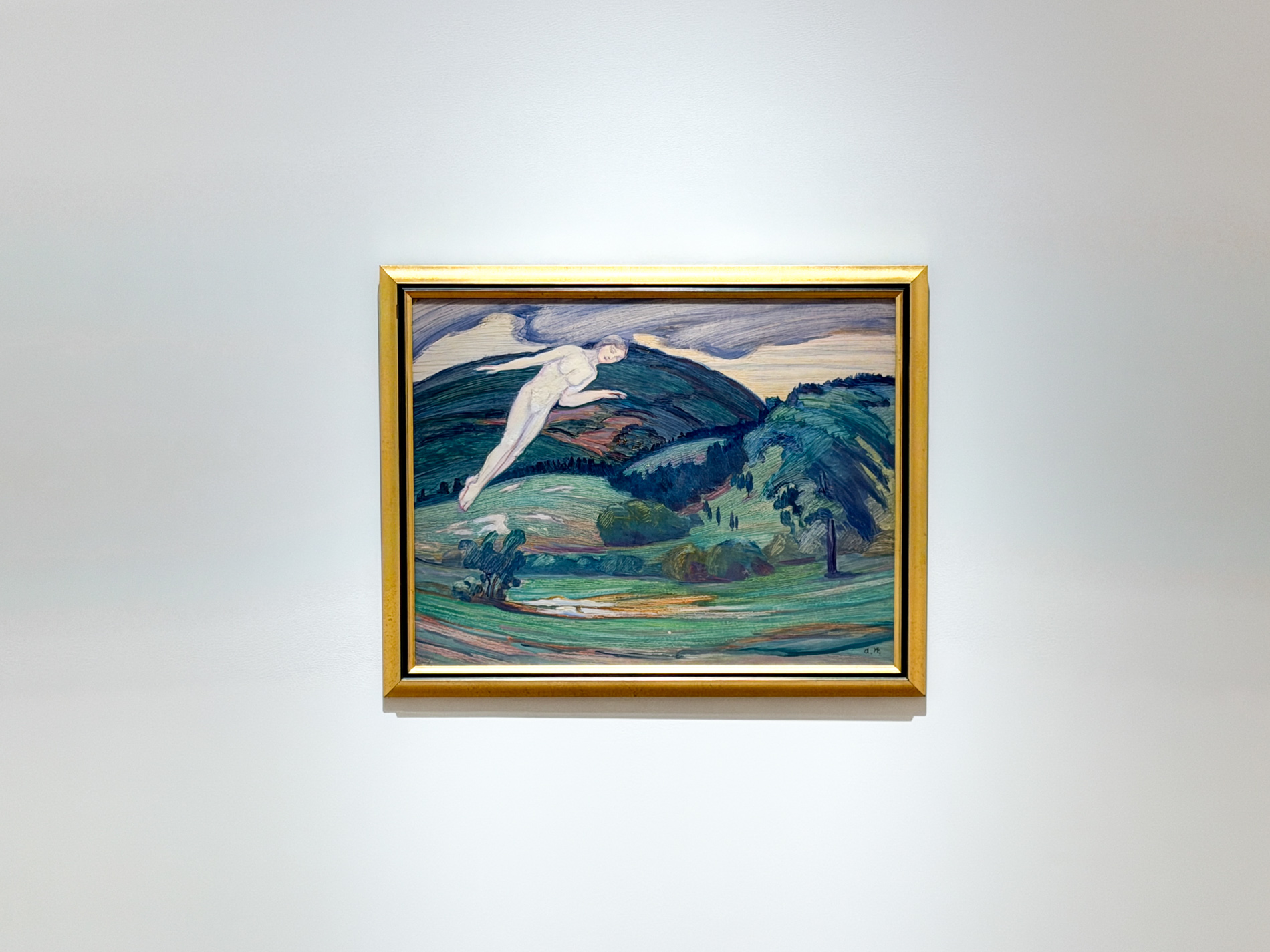
Adele Watson (1873–1947) painted symbolist landscapes. On display was an oil of a nude white figure flying over green hills.
Agnes Pelton (1881–1961) was a practitioner of Theosophy and Agni Yoga, who painted semi-abstract works from images received in meditation. She exerted a strong influence on the Transcendental Painting Group in Santa Fe, New Mexico. One of her best-known works, “The Being: A Transcendental Vision,” is on view.
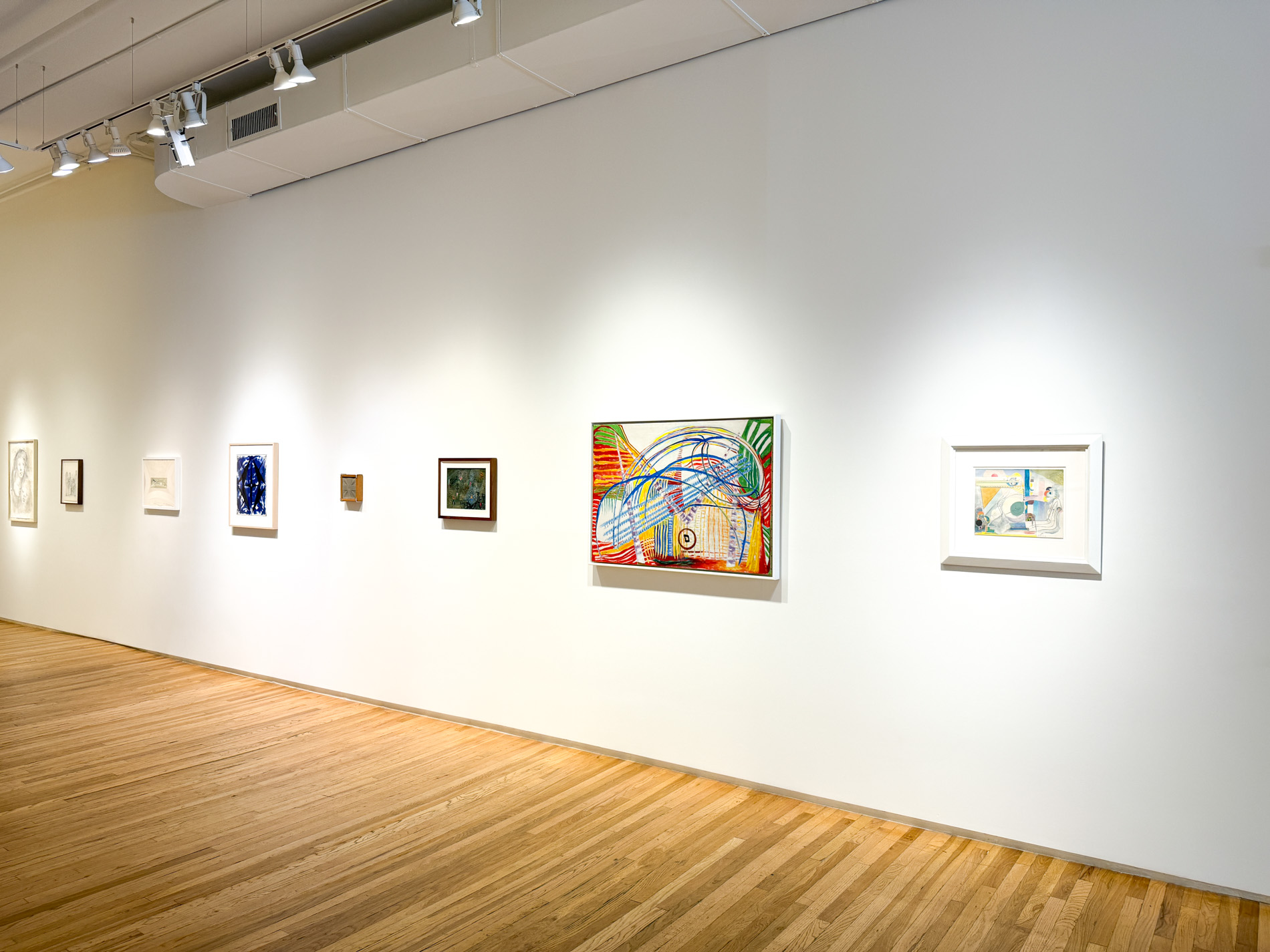
A watercolor titled “Rhythmic” (c. 1940) by Hilla Rebay (1890–1967), co-founder of the Solomon R. Guggenheim Museum, also hangs at the end of the long wall.
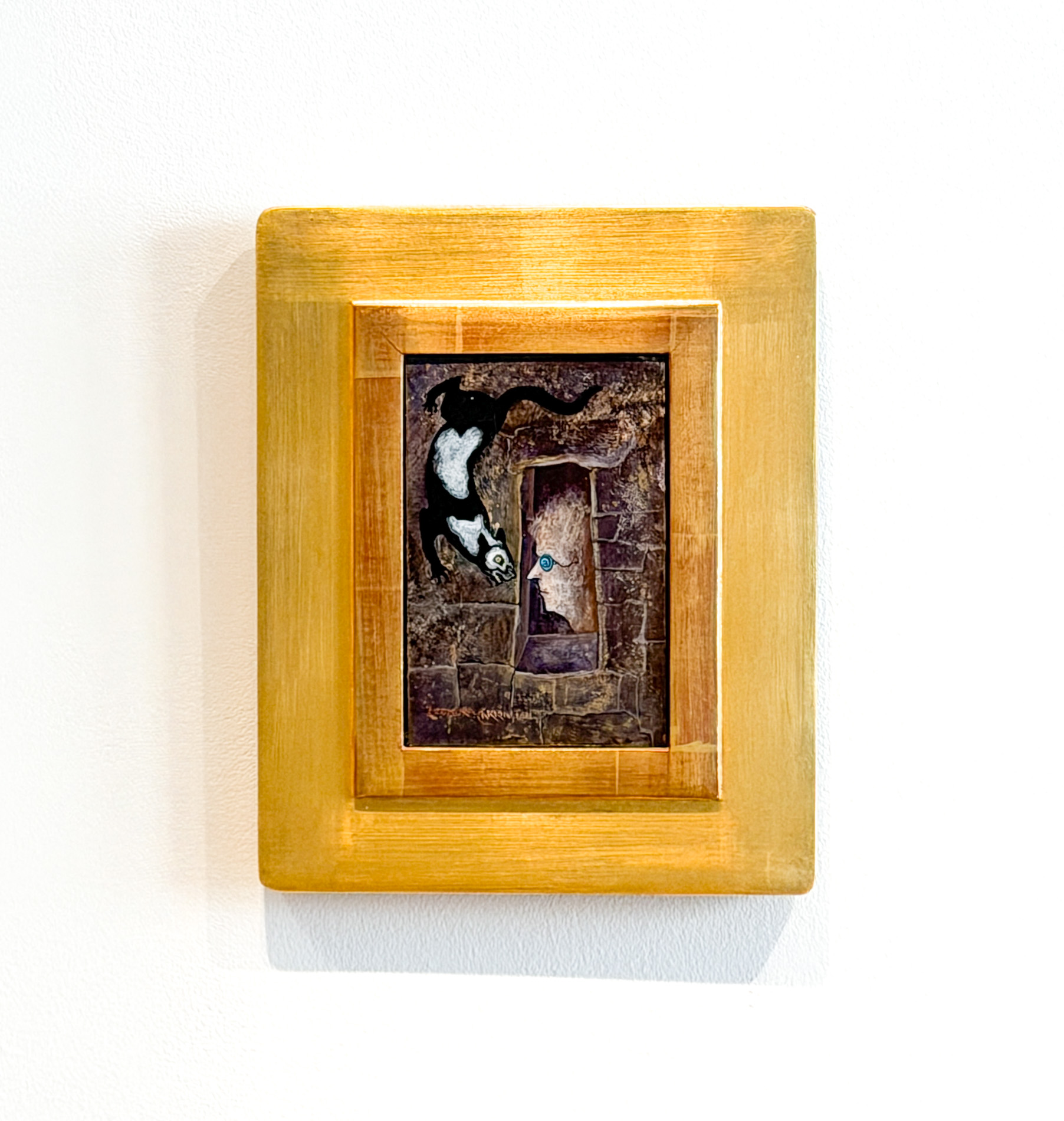
From Surrealism come Leonora Carrington and Leonor Fini. Carrington’s unperformed 1970 play “Opus Siniestrus” is included; its plot is said to concern an old woman fighting the patriarchy and the last egg of humankind. Carrington’s “The Window” (1996) is a small painting roughly 15 cm high, set in a thick gold frame.
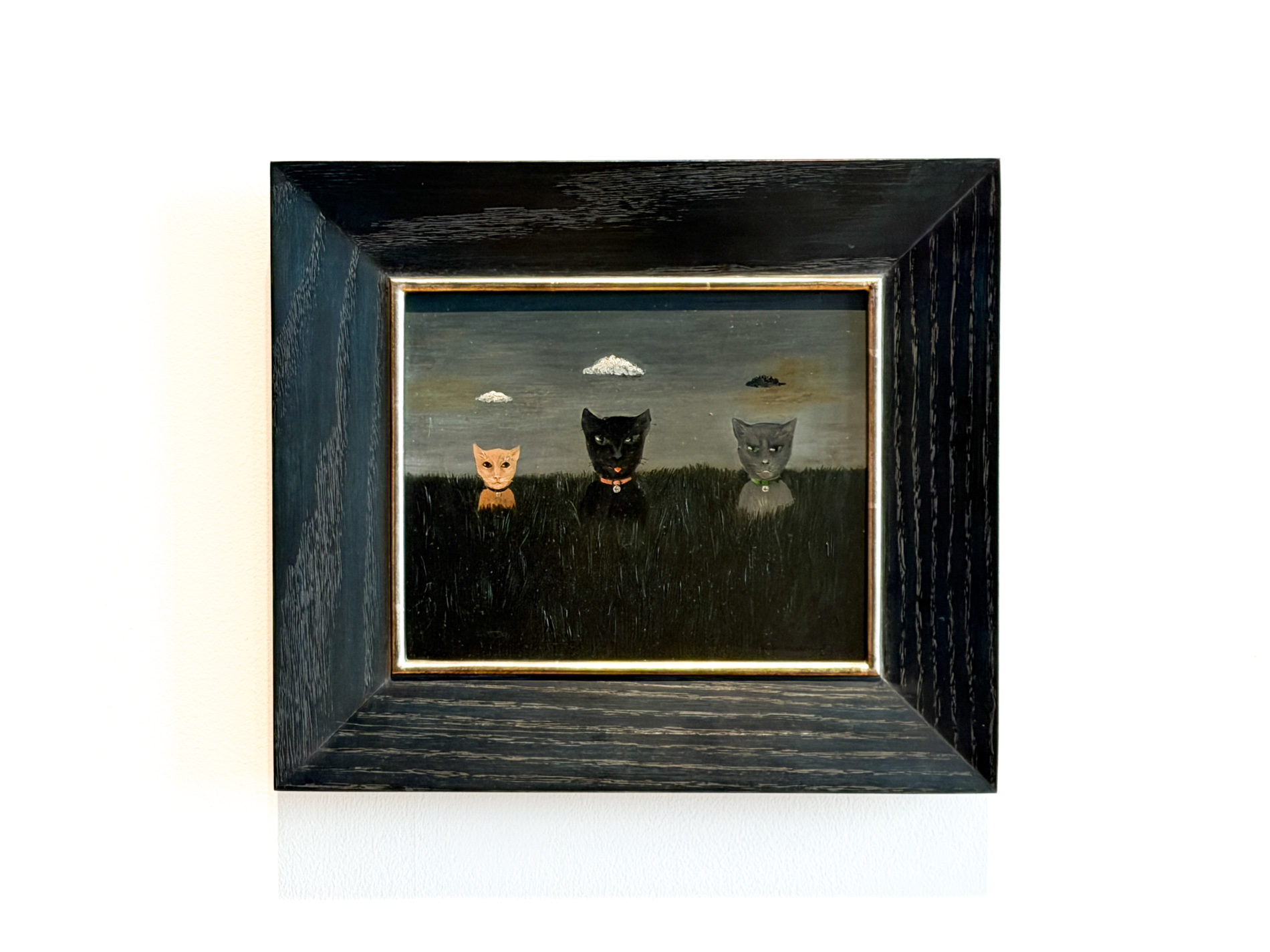
Gertrude Abercrombie’s “Toddy, Possim and Christine” (1954) is a small oil showing three cats peering out from the grass at night. Other works on view include pieces by Emma Kunz, Sylvia Fein, and Irene Rice Pereira.
If You Visit
“Conduits of the Unseen” runs through October 31, 2026.
The address is 392 Broadway, 2nd Floor, New York, NY 10013. The gallery is open Tuesday through Saturday, 10 am – 6 pm, with free admission. The nearest subway is Canal Street, and P·P·O·W occupies another floor of the same building. It makes a good starting point for a tour of Tribeca’s galleries.
Text and photos: art on editorial